Comrades Dispatch · 01 Oct 2026 (PDF)
In this edition
- Rising India’s Household Debt and its Implications Economic Scenario
- Surging Sulphur Prices: Impact on India Economic Scenario
- Gandak River Floods in Bihar Geography
- End of Operation Inherent Resolve in Iraq International Relations
- Niyamgiri Hills Places in News
- Bharat Maritime Insurance Pool (BMIP) Schemes & Initiatives
- Green Energy Corridor Phase-III Schemes & Initiatives
- India’s Security Doctrine: Shift Towards Deterrence by Punishment Security
Economic Scenario
Rising India’s Household Debt and its Implications
Source Why in News?- India is witnessing a significant rise in household debt, while net financial savings have declined from pandemic-era highs. This trend raises concerns about the sustainability of credit-driven consumption and increasing reliance on future income.
- Rising Debt-to-GDP Ratio: Household debt has grown rapidly, rising from 39.2% of GDP in March 2021 to 42% in June 2023, and reaching 45.5% by September 2025.
- Plunge and Slow Recovery in Net Financial Savings (NFS):
- Household NFS peaked at 15% of GDP in Q1 2020–21 due to precautionary pandemic savings, before dropping to 5.1% in 2022–23 and 5.3% in 2023–24.
- Recent government data points to a modest recovery toward 6% in 2024–25, still below the historical baseline of 7–8%.
- Surge in Financial Liabilities: Gross financial liabilities increased from 3.9% of GDP in 2020-21 to 6.4% in 2023-24, indicating a higher propensity to borrow even as economic growth revived.
- Composition of Household Debt:
- Shift from Assets to Consumption: Traditionally, housing loans (which create tangible assets) dominated household borrowing. Today, non-housing retail loans, primarily used for consumption, constitute 54.9% of total household debt (as of March 2025).
- Rise of Unsecured Credit: The rapid expansion of personal loans, credit cards, consumer durable loans, and Buy-Now-Pay-Later (BNPL) schemes has outpaced housing, agriculture, and business loans.
- High Income Commitment: As of March 2024, these non-housing retail loans consumed 25.7% of household disposable income, locking up future earnings to pay for past consumption.
- Savings Patterns: Household allocation to Mutual Funds (MFs) has seen a massive surge, growing from just 2.1% of financial asset flows in 2020-21 to 7% in 2023-24, showing a clear pivot from contractual return assets (like bank deposits) to growth-oriented market assets.
- Drivers of Rising Household Debt
- Digital Lending and Frictionless Credit: Fintech platforms, BNPL schemes, and instant pre-approved loans have drastically reduced credit access barriers, blurring the distinction between affordability and borrowing capacity.
- Sluggish Real Wage Growth: Stagnant real earnings across unorganized, informal, and entry-level service sectors have forced households to lean on credit to bridge the cost-of-living gap.
- Debt as a Substitute for Social Safety Nets: Escalating out-of-pocket expenses in healthcare, quality schooling, housing rent, and elderly care compel households to borrow for essential needs in the absence of comprehensive social security.
- Behavioral and Lifestyle Shifts: Post-pandemic optimism, combined with consumer aspirational culture, has normalized debt-financed lifestyle upgrades and discretionary consumption.
- Crowding Out Private Investment:
- Household savings are the primary source of funds for both government borrowing and corporate investment.
- A decline in household savings reduces the pool of funds available for Gross Capital Formation, potentially slowing down long-term infrastructure and industrial growth.
- The Consumption Debt Trap: While credit can boost short-term demand, rising EMIs reduce future disposable income and may create a vicious cycle of borrowing. Households may take fresh loans or use credit cards to repay existing EMIs, with average borrower debt rising 23% between 2023 and 2025.
- K-Shaped Inequality: Rising debt-servicing costs can divert spending from education and nutrition, weakening long-term productivity. Meanwhile, high-income households accumulate wealth through financial assets, while lower-income groups increasingly rely on debt for basic needs, widening the wealth gap.
- Banking Sector Vulnerabilities: Unsecured, non-housing retail loans exposes banks and NBFCs to sudden Non-Performing Asset (NPA) spikes, especially given the highly volatile income streams of gig and informal sector workers relying on this debt.
- Current Account Deficit (CAD) Stress:
- If domestic savings fall, the country has to rely more on foreign capital to fund its investments, which can worsen the Current Account Deficit.
- Lower household savings can increase reliance on Foreign Portfolio Investment (FPI) and external borrowing. With FPIs withdrawing a record Rs 1.66 lakh crore from India in 2025, such dependence can heighten vulnerability to capital outflows, global shocks and financing stress.
- Vulnerability of the Informal Sector:
- According to the RBI Annual Report 2024–25, income growth remains uneven, with gains concentrated in the formal sector.
- Informal workers, self-employed individuals and casual labourers often face stagnant or volatile incomes, making regular savings and repayment of unsecured debt more difficult.
- Illusion of Welfare:
- A fundamental risk for policymakers is confusing access to credit with an actual improvement in economic welfare. Debt has become a mechanism for postponing, rather than resolving, income constraints.
- Recognizing this systemic risk, the RBI was forced to intervene by significantly raising risk weights on consumer credit in November 2023 to intentionally cool down the aggressive marketing of digital, unsecured loans.
- Impact on Monetary Policy Transmission:
- Rising household leverage can make consumption more sensitive to changes in interest rates.
- Highly indebted households face an immediate change in EMI and debt-servicing burdens when lending rates change, potentially transmitting monetary-policy tightening to household consumption more rapidly.
- Gold-Backed Borrowing and Collateral Illusion:
- Rising gold prices increase collateral value, allowing households to borrow more against the same jewellery.
- However, higher collateral value does not improve income or repayment capacity, potentially creating an illusion of financial strength while increasing household leverage.
- Enforce Strict Debt-to-Income (DTI) Caps:
- The RBI must establish early warning systems and mandate stringent DTI limits to prevent over-leveraging.
- Curbs on algorithm-based, pre-approved unsecured credit are necessary to stop fintech platforms from pushing households beyond their repayment capacity.
- Pivot to Asset-Based Borrowing: Financial regulations should incentivize wealth-generating credit (such as housing, education, and MSME loans) while actively penalizing high-yield, short-term consumption loans like BNPL through sustained higher risk weights.
- Focus on Real Wage Growth: Policy must pivot toward creating high-quality, formal-sector jobs. Strengthening the manufacturing sector through Production Linked Initiative’ (PLI) schemes can provide the stable income growth needed to outpace debt.
- Incentivize Long-Term Wealth Creation: To rebuild depleted Net Financial Savings (NFS), policymakers should deploy low-cost fintech advisory frameworks that guide retail investors toward structured, inflation-beating assets like Equity-Linked Savings Schemes (ELSS), and Systematic Investment Plans (SIPs).
- Strengthen Social Protection and Income Security: Since borrowing may arise from medical expenses, education, unemployment and everyday household needs, stronger healthcare protection, social security and stable income growth can reduce distress borrowing.
- India’s household debt is not a problem merely because it is rising. The real concern is when borrowing substitutes for adequate income. While productive and asset-building credit can support growth, excessive consumption debt can weaken household resilience. India therefore needs income-led growth, stronger social security and responsible credit so that households can finance their aspirations through rising incomes rather than against their future.
Surging Sulphur Prices: Impact on India
Source Driven by the Russia-Ukraine war and escalating conflicts in West Asia, international sulphur prices have witnessed an unprecedented surge (USD 280 per tonne in July 2025 to USD 1,050 per tonne in July 2026), significantly increasing India’s import burden and threatening critical supply chains in both agriculture and metal processing.- By-Product Dependency: About 92% of global sulphur is produced as a non-discretionary by-product of petroleum refining and natural-gas processing. Only 8% is extracted directly through mining from natural deposits or sulphur-rich minerals like pyrites.
- Global Leaders: China is the world’s largest producer, followed by the US, Russia, Saudi Arabia, and the UAE.
- Emerging Structural Deficit: The global sulphur market slipped into a structural deficit by 2024, with demand (72.8 MT) outstripping the total supply (70.8 MT) in 2025.
- The EV Battery Connection:
- A major new driver of demand is the metals processing industry. Sulphuric acid is crucial for High-Pressure Acid Leach (HPAL) plants used to extract nickel from laterite ores.
- This nickel is an indispensable component for manufacturing electric vehicle (EV) batteries, a sector seeing booming demand, particularly in Indonesia.
- Russia-Ukraine Supply Shock:
- Repeated Ukrainian drone strikes on Russia’s Astrakhan gas-processing plant severely damaged sulphur recovery infrastructure.
- Consequently, Russia to manage domestic demand restricted its industrial sulphur exports until 31st December 2026.
- India’s Import Vulnerability:
- Despite being among the top ten producers of sulphur with 3.7 MT, India relies on imports to meet its demand (India imports over 52% of the fertilizer sector’s sulphur requirement).
- India’s imports have grown over the years, with West Asian producers contributing to about 90% of its total imports.
- In 2025, India imported 2.25 MT of sulphur, of which 2.02 MT came from West Asia. Russia accounted for 0.15 MT (6.5%).
- Economic Impact on India: With no immediate end to geopolitical uncertainties, India faces a higher import bill and an increased agricultural fertilizer subsidy burden, which could have cascading effects on both food security and inflation.
Geography
Gandak River Floods in Bihar
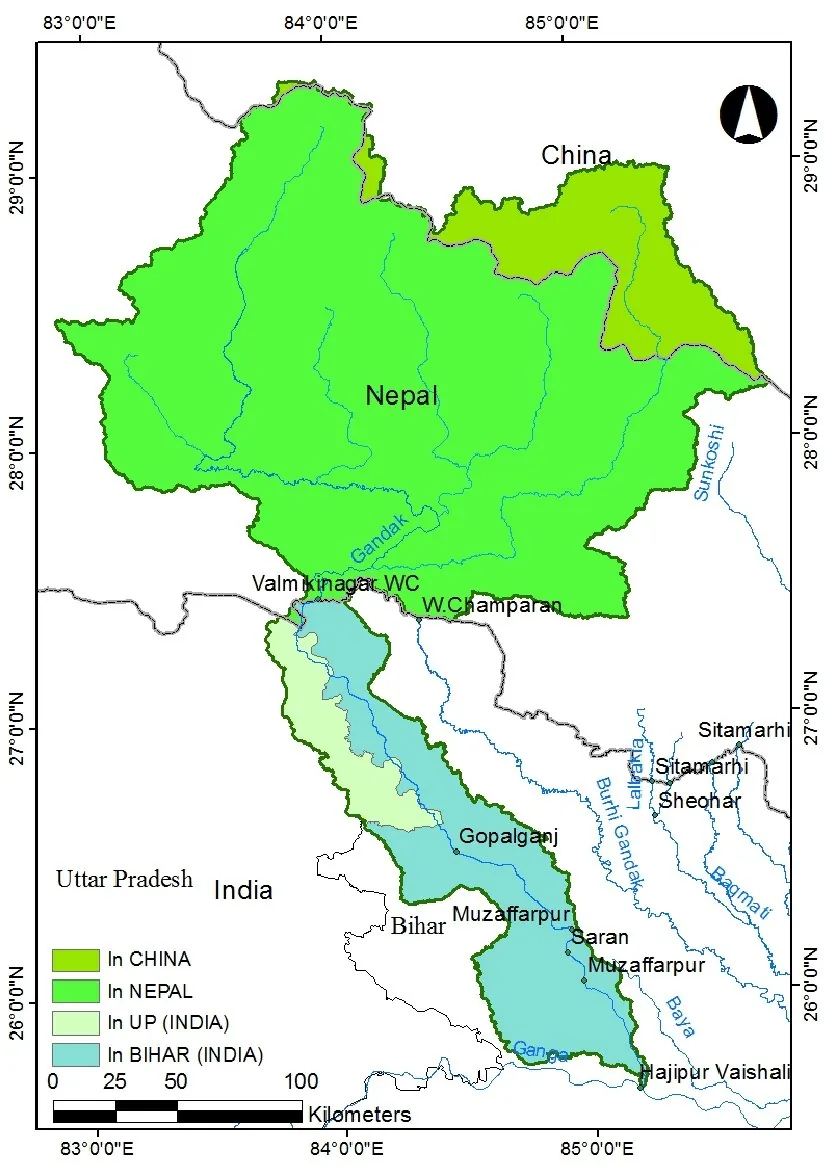
Source Recently, heavy rainfall in Nepal’s catchment areas caused the Gandak River to swell and breach embankments in parts of Bihar, particularly West Champaran.- About: The Gandak River, known as the Narayani in Nepal, is an important transboundary Himalayan river and a tributary of the Ganga.
- Origin and Course: It originates near the Tibet–Nepal border, flows through Nepal’s Mustang region, crosses the Indo-Nepal border near Triveni Dham, and enters Bihar near Valmikinagar.
- Course in India: From Valmikinagar, the Gandak flows through the plains of Bihar and Uttar Pradesh, passing through areas such as West Champaran and other north Bihar districts before joining the Ganga near Hajipur–Sonepur (Harihar Kshetra) in Bihar.
- Major Tributaries: Major rivers of the Gandaki system include the Kali Gandaki, Trishuli, Budhi Gandaki, Marsyangdi, Seti, Madi and Daraudi.
- Valmikinagar Barrage: Located near the Indo-Nepal border, the barrage is an important structure for irrigation and regulation of Gandak waters. Heavy inflows from Nepal can lead to very high downstream discharge during intense monsoon rainfall.
- Ecological Importance: The Gandak ecosystem supports species such as the gharial, Gangetic dolphin and turtles, while also sustaining agriculture, settlements and cultural landscapes along its course.
International Relations
End of Operation Inherent Resolve in Iraq
Source The United States military officially completed its troop withdrawal from Iraq, concluding the 12-year Operation Inherent Resolve, an international mission launched in 2014 to defeat the Islamic State (IS). The withdrawal marks a significant shift in the security and geopolitical landscape of West Asia.- Historical Background: American forces invaded Iraq in 2003 and overthrew the authoritarian Ba’athist regime of President Saddam Hussein. Following a withdrawal in 2011, US troops were invited back by the Iraqi government in 2014 to combat the rampant expansion of the Islamic State, which had captured nearly a third of the country’s territory.
- Iraq:
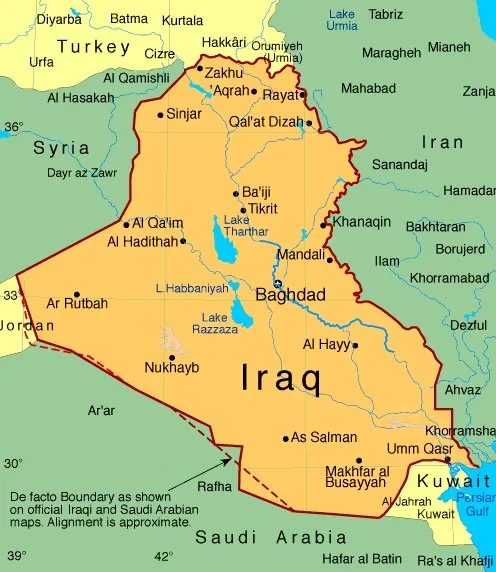
- It is a West Asian country located in the historic region of Mesopotamia, meaning the “land between rivers.”
- It shares borders with Turkey to the north, Iran to the east, Kuwait and the Persian Gulf to the southeast, Saudi Arabia to the south, Jordan to the southwest, and Syria to the west.
- Rivers: The country’s geography and agriculture are defined by the Tigris and Euphrates rivers. They flow southeast across the country and merge to form the Shatt al-Arab before emptying into the Persian Gulf.
- Terrain: The landscape consists of the Syrian Desert in the west, the fertile Mesopotamian alluvial plain in the center, and the rugged Zagros Mountains in the northeast (Kurdish region).
 Geopolitical Implications
- Opening for Iran:
- Iran and its allied Shia militias (such as Kataib Hezbollah) have celebrated the US exit as a victory for their “axis of resistance”.
- The withdrawal creates a strategic vacuum that Iran is likely to exploit to deepen its political and military influence over Iraq’s central government.
- Threat of IS Resurgence:
- ISIS lost its territorial control in Iraq in 2017, though sleeper cells and insurgent networks remain active.
- Iraqi security officials and analysts warn that the absence of US airpower, surveillance, and logistical support could give these extremist cells the operational breathing room to regroup.
- Vulnerability of the Kurdish Region:
- The Kurdistan Regional Government (KRG) in northern Iraq is highly concerned about the withdrawal.
- The region has frequently been targeted by drone and ballistic missile attacks from Iran-backed factions, and the removal of US defense systems from Erbil leaves them highly exposed.
Places in News
Niyamgiri Hills
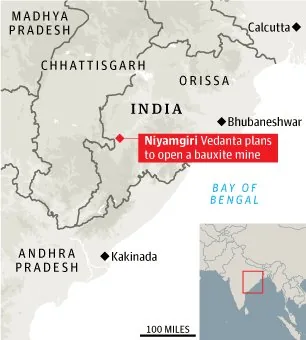
Source Recent calls to revive bauxite mining in Odisha’s Niyamgiri Hills have renewed concerns among tribal groups and environmental activists over indigenous rights and ecological protection.- About: Niyamgiri is a forested hill range of the Eastern Ghats, spread across Rayagada and Kalahandi districts of Odisha, with elevations of roughly 700–1,400 metres.
- Tribal Significance: The hills are home to the Dongria Kondh, a Particularly Vulnerable Tribal Group (PVTG) that depends on the forests, streams and traditional agriculture for its livelihood.
- Sacred Landscape: The Dongria Kondh regard Niyamgiri as the abode of their supreme deity Niyam Raja, making the hills central to their cultural and religious identity.
- Ecological Importance:
- Niyamgiri supports rich biodiversity, perennial streams, forests and climate-resilient agro-ecosystems and performs important functions such as water conservation, carbon sequestration and regulation of local climate.
- It supports river systems including the Vamsadhara (Bansadhara) and Nagavali and has wider ecological significance.
- Biodiversity: It hosts a rich variety of wildlife, including the leopards, sloth bears, and giant squirrels.
- Gram Sabha Significance: In 2013, following the Supreme Court’s direction, 12 Gram Sabhas in Rayagada and Kalahandi unanimously rejected the proposed mining project, making Niyamgiri a landmark case in the recognition of Forest Rights Act, 2006-based community, cultural and religious rights.
Schemes & Initiatives
Bharat Maritime Insurance Pool (BMIP)
Source Why in News?- Recently, World Maritime Day 2026 was observed on 24th September 2026 under the theme “From Policy to Practice: Powering Maritime Excellence,” highlighting the need for resilient and effective maritime systems.
- In this context, India’s Bharat Maritime Insurance Pool (BMIP) has gained significance as part of the country’s efforts to strengthen maritime resilience and reduce external dependence on maritime insurance.
- Maritime Trade Backbone: Maritime routes are central to India’s trade, energy security and economic growth, carrying crude oil imports, merchandise exports and other critical cargo.
- Extensive Maritime Infrastructure: India operates 12 Major Ports and 217 Non-Major Ports that handle diverse cargo across the country. During 2025–26, these ports handled around 1,668 million metric tonnes of cargo, reflecting the growing role of maritime trade in economic development.
- Long Coastline Advantage: India has a coastline of around 11,098 kilometres, providing strategic advantages through natural harbours, port locations and access to major international sea routes.
- Strategic Coastal Presence: Several coastal States and Union Territories provide opportunities for maritime trade, port-led development, coastal industries and blue economy activities.
- Vast Exclusive Economic Zone (EEZ): India’s 2.4 million square kilometre EEZ provides sovereign rights over marine resources, fisheries and other economic activities, strengthening maritime resource security.
- Extensive Inland Waterways: India has over 14,500 kilometres of inland waterways, including rivers, canals and backwaters, offering an efficient and cost-effective mode of freight transportation.
- Maritime Livelihood Support: The maritime sector supports the livelihoods of over 30 million people, including fishers, port workers, seafarers and shipbuilding professionals, highlighting its socio-economic importance.
- Marine Insurance Dependence: Despite growing maritime trade, India remains significantly dependent on foreign marine insurance providers, resulting in an annual outflow of about USD 45–60 million in P&I premiums, apart from other marine insurance payments abroad.
- About: BMIP is India’s first domestic maritime insurance pool, approved on 18th April 2026 and formally launched on 12th May 2026, with coverage capacity of ₹13,906.50 crore (USD 1.5 billion) and sovereign backing of ₹12,980 crore (USD 1.4 billion).
- Objective: It aims to reduce dependence on foreign insurers, strengthen domestic maritime insurance capacity and ensure affordable and uninterrupted insurance coverage during global disruptions.
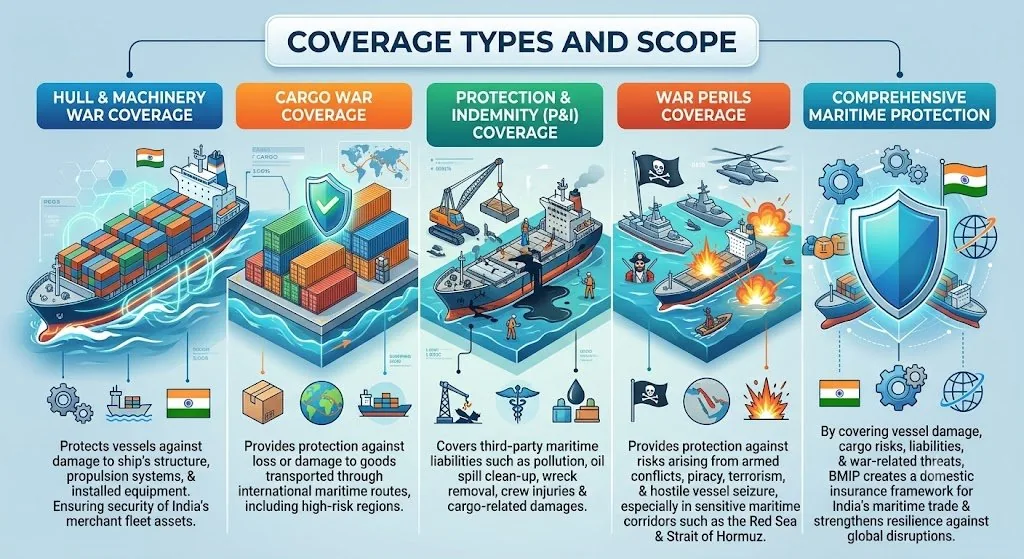
- Coverage and Eligibility: It covers Hull & Machinery, Cargo, Protection & Indemnity (P&I) and War risks for Indian-flagged vessels, vessels owned, managed or controlled by Indian entities, and cargo vessels originating from or destined for India.
- Implementation: BMIP enables Indian insurers to independently cover higher-value Indian vessels, strengthening domestic capability in maritime risk insurance. BMIP has an initial tenure of 10 years, extendable up to 15 years.
- Operational Mechanism: Policies are issued by participating domestic insurers, while risks are collectively reinsured among Pool members according to their committed capacity.
- Claims Management: Claims up to USD 100 million are met through accumulated reserves and reinsurance recoveries; for larger claims, the sovereign guarantee is activated after exhaustion of Pool reserves.
- Administration and Governance: GIC Re acts as the Pool Administrator, supported by a Governing Body for oversight and an Underwriting Committee for risk assessment and financial sustainability.
- Nature of Protection: BMIP provides specialised protection against vessel and cargo war risks, third-party liabilities, pollution, wreck removal, crew injuries, piracy, terrorism and hostile vessel seizure.
- Growing Maritime Dependence: India’s maritime sector has expanded significantly, with the Indian-flag fleet reaching 1,609 ships and 14.33 million GT in mid-2026, reflecting a growth of around 36% in tonnage since 2015. Around 95% of India’s trade value and 70% of trade volume moves through maritime routes, highlighting the strategic importance of shipping infrastructure.
- Maritime Insurance as an Economic Necessity: Marine insurance acts as an invisible lifeline of global trade by protecting ships, cargo and maritime operations. Hull and Machinery insurance covers vessels, Cargo insurance protects goods, Protection and Indemnity (P&I) covers liabilities such as pollution and crew injuries, while War Risk insurance provides protection against piracy and conflicts.
- Dependence on Foreign P&I Clubs: India has historically relied heavily on the 13 international P&I clubs under the International Group of P&I Clubs, which collectively insure around 90% of the world’s large ships. This dependence on foreign insurers creates vulnerabilities due to possible withdrawal of coverage, higher premiums or externally driven decisions.
- Geopolitical Risks and Trade Disruptions: Conflicts and instability in key maritime regions such as the Red Sea and Strait of Hormuz have affected shipping operations and insurance costs. Since India’s energy imports largely depend on sea routes, disruptions in insurance availability can impact trade and energy security.
- Building Domestic Insurance Expertise: India previously lacked sufficient institutional capacity in marine underwriting and claims management. BMIP aims to develop indigenous expertise, strengthen domestic insurance capabilities and reduce dependence on global insurance hubs.
- Strengthening Maritime Resilience: By providing sovereign-backed and domestic insurance capacity, BMIP enhances the affordability, availability and reliability of maritime insurance, strengthening India’s shipping ecosystem and preparedness against global risks.
- Operational Scale: As of 7th September 2026, BMIP had issued 3,000 Cargo War, 92 Hull War-risk and 3 Protection & Indemnity (P&I) policies, indicating its rapid operationalisation.
- Continuity and Lower Insurance Costs: Since its launch, BMIP has ensured uninterrupted War-risk insurance coverage for Indian maritime stakeholders. War-risk insurance premiums have declined by around 35–40% from their peak during the West Asia conflict.
- First P&I Policy under BMIP: On 30th July 2026, the first P&I policy under BMIP was issued to the Shipping Corporation of India Limited by New India Assurance Company Limited, providing protection against third-party maritime liabilities.
- First Hull & Machinery War-risk Policy: BMIP’s first policy was issued on 12th May 2026 to M/s Hoger Offshore and Marine Private Limited for a vessel operating through conflict zones, providing domestic protection against war-related maritime risks.
- Protecting Industrial Supply Chains: A Marine Cargo War Policy was issued to Vedanta Sterlite Copper Limited for imports, demonstrating BMIP’s role in protecting critical industrial trade flows.
- Wider Economic Coverage: Coverage extended beyond shipping companies to firms such as Balrampur Chini Mills Limited, showing that manufacturers, commodity traders and other businesses dependent on maritime transport can also benefit.
- Strategic Impact: BMIP strengthens India’s maritime resilience and domestic insurance capacity, while reducing dependence on overseas insurers and supporting reliable insurance protection during global disruptions.
 Conclusion
- The Bharat Maritime Insurance Pool (BMIP) marks an important step towards strengthening India’s maritime financial independence and trade resilience. By building domestic insurance capacity, improving claims reliability and reducing dependence on foreign insurers, BMIP can support India’s expanding shipping and port ecosystem. In the long term, it can help position India as a regional maritime insurance hub in the Indian Ocean Region and strengthen its role in shaping maritime risk management.
Green Energy Corridor Phase-III
Source Why in News?- The Union Cabinet recently approved the Green Energy Corridor Phase-III (GEC-III) scheme with a massive outlay of Rs 1.86 lakh crore. The initiative aims to build a robust Intra-State Transmission System (InSTS) to evacuate up to 135 GW of renewable energy across various States and Union Territories by FY 2032-33.
- About: The GEC is a critical national infrastructure initiative implemented by the Ministry of New and Renewable Energy (MNRE) to efficiently integrate renewable electricity with conventional power stations, ensuring grid stability and helping India meet its climate change commitments.
- Origin & Need: Stemming from a 2012 Power Grid Corporation of India Limited (PGCIL) study, the project was launched in 2015 to upgrade existing power grids that were incapable of handling the erratic and geographically dispersed nature of large-scale renewable generation.
- Key Features of GEC:
- Inter-State Transmission System (ISTS):
- Develops high-voltage transmission lines to evacuate power across state boundaries from renewable energy-rich states to high-demand regions via the central grid.
- Central Financial Assistance (CFA) will offset intra-state transmission charges, helping reduce power costs for end users.
- Intra-State Transmission System (InSTS): Focuses on strengthening local transmission networks to distribute renewable energy efficiently within different districts of the same state.
- Renewable Energy Management Centres (REMCs):
- Utilizes real-time data and forecasting tools to balance the irregular generation patterns of solar and wind power.
- They operate across the Southern, Western, and Northern Regions in coordination with State, Regional, and National Load Dispatch Centres (NLDC).
- Grid Stability Mechanisms: Deploys Reactive Power Compensation (RPC) to correct voltage fluctuations and Energy Storage Systems (ESS) (like grid-scale batteries) to store excess power for dispatch during peak demand or low generation periods.
- Inter-State Transmission System (ISTS):
- GEC Phase-I:
- Being implemented across eight renewable-rich states (Tamil Nadu, Rajasthan, Karnataka, Andhra Pradesh, Maharashtra, Gujarat, Himachal Pradesh, and Madhya Pradesh).
- It aims to integrate 24 GW of renewable energy through 9,700 ckm of transmission lines and 22,600 MVA of substation capacity, with completion targeted by FY 2027.
- GEC Phase-II:
- It envisages 10,750 ckm of transmission lines and 27,500 MVA of substation capacity to integrate and evacuate around 20 GW of renewable energy across 7 States: Gujarat, Himachal Pradesh, Karnataka, Kerala, Rajasthan, Tamil Nadu and Uttar Pradesh.
- Implemented during 2021–22 to 2025–26, with CFA to reduce transmission charges and keep electricity costs lower.
- It supports India’s energy security, reduces carbon emissions, and generates employment, while aligning with the target of integrating over 500 GW of non-fossil fuel-based capacity by 2030.
- Green Energy Corridor Phase-III (GEC-III)
- Evacuation Capacity: Aims to evacuate up to 135 Gigawatt (GW) of renewable energy across various States and Union Territories.
- Focus on Intra-State Grid: Focuses exclusively on strengthening and expanding the InSTS to connect renewable-rich zones directly with regional load centers.
- Grid-Scale Storage (BESS): Integrates 50 GWh of Battery Energy Storage Systems (BESS) at generator terminals and critical nodes to address renewable intermittency, prevent peak-hour curtailment, manage grid congestion, and provide round-the-clock power during non-solar hours.
- Project Execution Mechanism:
- Greenfield Projects: Executed through Tariff Based Competitive Bidding (TBCB) under a Build-Own-Operate-Maintain (BOOM) framework.
- Brownfield Projects: Network upgrades and system-strengthening works undertaken on a Cost Plus Basis (CPB).
- Nodal Agencies: State Transmission Utilities (STUs) serve as the principal implementing bodies in coordination with private and public Transmission Service Providers (TSPs).
- Target Timeline: Slated for full commissioning and operationalization by FY 2032–33.
- Strategic Alignment:
- Serves as a critical infrastructure backbone to help India achieve its expanded target of 900 GW of installed non-fossil fuel capacity by 2035, while driving domestic battery manufacturing and grid management capabilities.
- By strengthening domestic transmission and storage capability, GEC-III can reduce dependence on fossil-fuel-based balancing generation and improve the system’s ability to absorb variable solar and wind power, thereby supporting long-term energy security.
Security
India’s Security Doctrine: Shift Towards Deterrence by Punishment
Source Why in News?- The Defence Minister of India outlined a decisive shift in India’s national security doctrine at DefCon 2026. He cautioned policymakers against the “perimeter fallacy” and announced that India’s strategic approach has formally evolved from “strategic containment” and “deterrence by denial” toward a proactive posture of “deterrence by punishment”.
- Definition: The term “perimeter fallacy” refers to the misconception or assumption that national security can be understood and managed solely by safeguarding a country’s physical, geographical boundaries.
- Fluidity of Modern Threats: While territorial borders remain geographically fixed, the nature of modern conflict has evolved, making the boundaries of threats highly fluid. Security threats are increasingly borderless and extend far beyond conventional battlefields.
- New Fronts of Warfare: Relying only on border fortifications and troop deployments is inadequate to combat modern-day vulnerabilities such as drone and unmanned system incursions, cyberattacks, disinformation campaigns, and lone-wolf attacks.
- Economic & Energy Security Integration:
- Security is no longer limited to the military domain. Hostile actors can bypass physical borders to disrupt critical supply chains and damage the economy.
- For instance, India’s heavy reliance on imported crude oil makes global chokepoints, such as the Strait of Hormuz, a critical vulnerability that directly impacts national security.
- Deterrence: It refers to the strategy of discouraging adversaries from undertaking hostile actions by influencing their assessment of risks and costs. It works by creating uncertainty about the success of an attack and increasing the expected consequences of aggression.
- Deterrence by Denial: Historically, India relied heavily on this strategy, operating on the logic that an attack will fail because defensive measures (like fortifying borders or hardening domestic targets) will successfully thwart it.
- Deterrence by Punishment:
- In contrast, the new approach of “deterrence by punishment” focuses on shifting from merely preventing attacks to imposing credible and unacceptable costs on adversaries after hostile actions.
- Its effectiveness depends on credible retaliatory capabilities, clear signalling, and political-military preparedness to respond decisively when red lines are crossed.
- Kinetic Retaliation: This paradigm shift has been practically demonstrated through successive, high-impact military actions. The 2016 Surgical Strikes, the 2019 Balakot air strikes, and Operation Sindoor (2025) clearly establish India’s resolve to cross physical borders to dismantle terror infrastructure directly at its source.
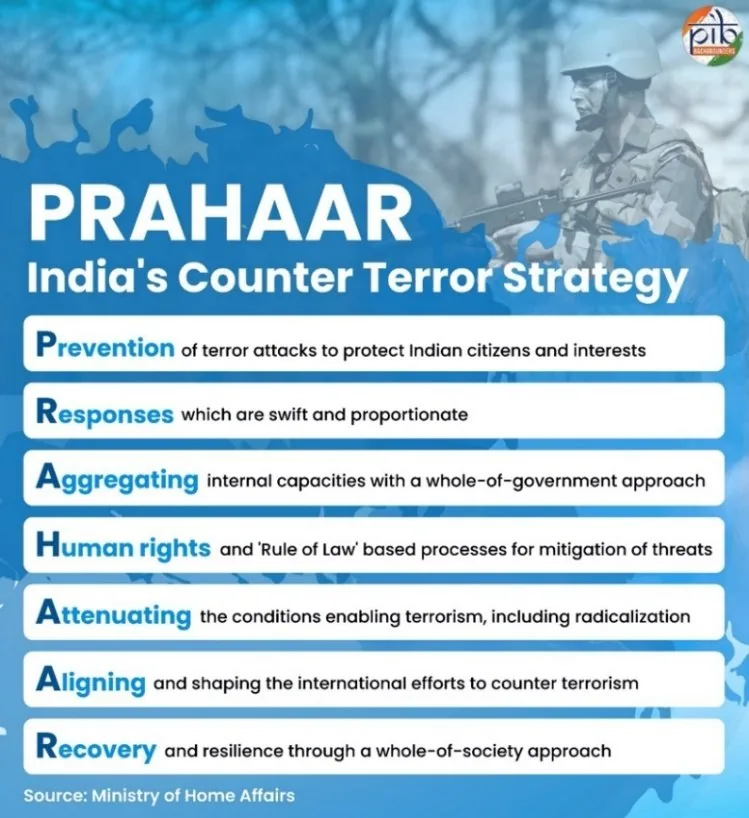
- The PRAHAAR Strategy: To institutionalize this proactive stance, India formulated PRAHAAR, its first comprehensive National Counter-Terrorism Policy and Strategy. It explicitly mandates a “zero-tolerance” approach, replacing ad-hoc reactive measures with an intelligence-driven, “whole-of-government” framework aimed at neutralizing asymmetric threats before they materialize.
- Diplomatic and Economic Coercion:
- Deterrence by punishment extends beyond the battlefield into aggressive statecraft. India has successfully leveraged diplomatic measures in the Financial Action Task Force (FATF) and other multilateral institutions, ensuring that Pakistan remains isolated on the global stage.
- Actions such as keeping the Indus Waters Treaty (1960) in abeyance, suspending bilateral trade, and closing the Attari-Wagah Integrated Check Post, alongside multilateral diplomacy and credible military power, reflect India’s broader multi-domain security approach.
 What are the Challenges to India’s Security Architecture?
- The “Perimeter Fallacy” and Borderless Threats:
- Focusing disproportionately on physical frontiers leaves the nation vulnerable to non-kinetic, borderless vectors such as state-sponsored cyber warfare, autonomous drone swarms, and AI-driven disinformation campaigns targeting domestic social cohesion.
- The November 2025 Red Fort car bombing highlighted how terrorists can combine physical operations with encrypted digital communication. It showed that digital networks can enable asymmetric threats beyond conventional border security.
- Critical Energy and Maritime Chokepoints: India relies on imports for over 85% of its crude oil. Chokepoints such as the Strait of Hormuz and shipping corridors in the Red Sea/Gulf of Aden (vulnerable to non-state actors like Houthis) expose the economy to severe freight spikes, supply disruptions, and insurance surcharges.
- Supply Chain Dependencies in Critical Technologies: Reliance on external suppliers for semiconductors, advanced electronics, Active Pharmaceutical Ingredients (APIs), and rare earth elements leaves India’s military-industrial complex vulnerable to geopolitical coercion and global supply shocks.
- Two-Front Collusive Gray-Zone Warfare:
- The operational convergence between China and Pakistan manifests not only in conventional threats but in “gray-zone” tactics—actions below the threshold of open war.
- This includes border infrastructure expansion, cyber espionage, proxy insurgencies, and intelligence sharing, such as China providing intelligence support to Pakistan during India’s Operation Sindoor.
- Grassroots Technological Asymmetry: While apex agencies like the National Critical Information Infrastructure Protection Centre (NCIIPC) and Indian Cyber Crime Coordination Centre (I4C) possess advanced capabilities, state-level police forces face technical deficits in digital evidence extraction, drone interception, and counter-terror investigation under the Bharatiya Sakshya Adhiniyam (BSA), 2023.
- Operationalizing Integrated Theatre Commands (ITCs): Move rapidly toward creating integrated theater commands (Western, Eastern, and Maritime) to ensure unified resource allocation, joint planning, and swift tri-service kinetic retaliatory execution under the Chief of Defence Staff (CDS).
- Deepening Defense Indigenization and R&D:
- Expand the Positive Indigenization Lists (currently covering 5,500+ items) to reduce import dependencies in frontline platforms.
- Scale up the iDEX (Innovations for Defence Excellence) initiative and ensure that the 25% defense R&D budget earmarked for private industry and academia translates into sovereign intellectual property for electronic warfare, quantum encryption, and counter-drone systems.
- Critical Infrastructure Hardening: Mandate automated, real-time cyber telemetry sharing between public utilities, the banking sector, telecom infrastructure, and CERT-In to prevent systemic collapses triggered by cross-border cyber intrusions.
- Securing Strategic Economic Buffers:
- Expand the capacity of Strategic Petroleum Reserves (SPRs) beyond the current 9.5-day commercial buffer to build resilience against maritime blockades.
- Diversify maritime trade through alternate logistics frameworks such as the India-Middle East-Europe Economic Corridor (IMEC).
- Whole-of-Government Law Enforcement Convergence: Institutionalize mandatory, real-time integration between national intelligence grids (NATGRID, Samanvaya platform) and local police stations to disrupt proxy terror networks, illicit terror finance, and cyber syndicates before they manifest into national crises.
- Strengthening Multi-Domain Security: India needs coordinated preparedness across land, maritime, cyber, space, economic and information domains to address evolving threats.
- India’s doctrinal shift from passive border containment to proactive deterrence by punishment marks a pragmatic adaptation to modern, multi-domain warfare. By integrating kinetic readiness with economic resilience, critical energy security, and institutional frameworks like PRAHAAR, the nation establishes a credible threshold against asymmetric aggression.