Comrades Dispatch · 06 Oct 2026 (PDF)
In this edition
- India’s 1st WASH-Focused Social Bond Banking & Finance
- 2026 Nobel Prize in Physiology or Medicine: Optogenetics Health & Medicine
- India–Switzerland Relations International Relations
- Legislative Privileges: Balancing with Constitutional Rights Polity & Governance
- India’s 1st 3D-Printed Rural Housing Pilot Launched in Andhra Pradesh Schemes & Initiatives
- India’s Rising Supercomputing Ecosystem Science & Technology
- India’s 1st 5.56 km Free-Space Quantum Key Distribution Link Demonstrated Science & Technology
- Surya: Indian Navy’s 1st Indigenously Built Fleet Support Ship Security
Banking & Finance
India’s 1st WASH-Focused Social Bond
Source NABKISAN Finance Limited has listed India’s first Social Bond dedicated exclusively to the Water, Sanitation and Hygiene (WASH) sector on the National Stock Exchange (NSE).- About the WASH Bond: The NABKISAN bond is a 5-year bond carrying an 8.10% coupon rate and maturing in September 2031.
- Credit Rating: The issue received the highest domestic credit ratings of CRISIL AAA (Stable) and CARE AAA (Stable), reflecting a high degree of creditworthiness as assessed by the rating agencies.
- Use of Proceeds: The ₹180 crore raised will be used to expand access to safe drinking water, sanitation and hygiene solutions in rural and underserved communities, with the objective of improving health, livelihoods and quality of life.
- About Social Bonds: Social bonds are debt instruments whose proceeds are earmarked for projects with defined social objectives, such as affordable housing, healthcare, education, livelihoods or, in this case, water, sanitation and hygiene.
- Institutional Framework: NABKISAN Finance Limited is a subsidiary of NABARD, while Water.org supported the transaction as Technical Advisor and Knowledge Partner.
- Significance: The WASH Bond demonstrates how capital market instruments can mobilise private investment for development priorities, strengthen sustainable finance and support inclusive and sustainable rural development.
Health & Medicine
2026 Nobel Prize in Physiology or Medicine: Optogenetics
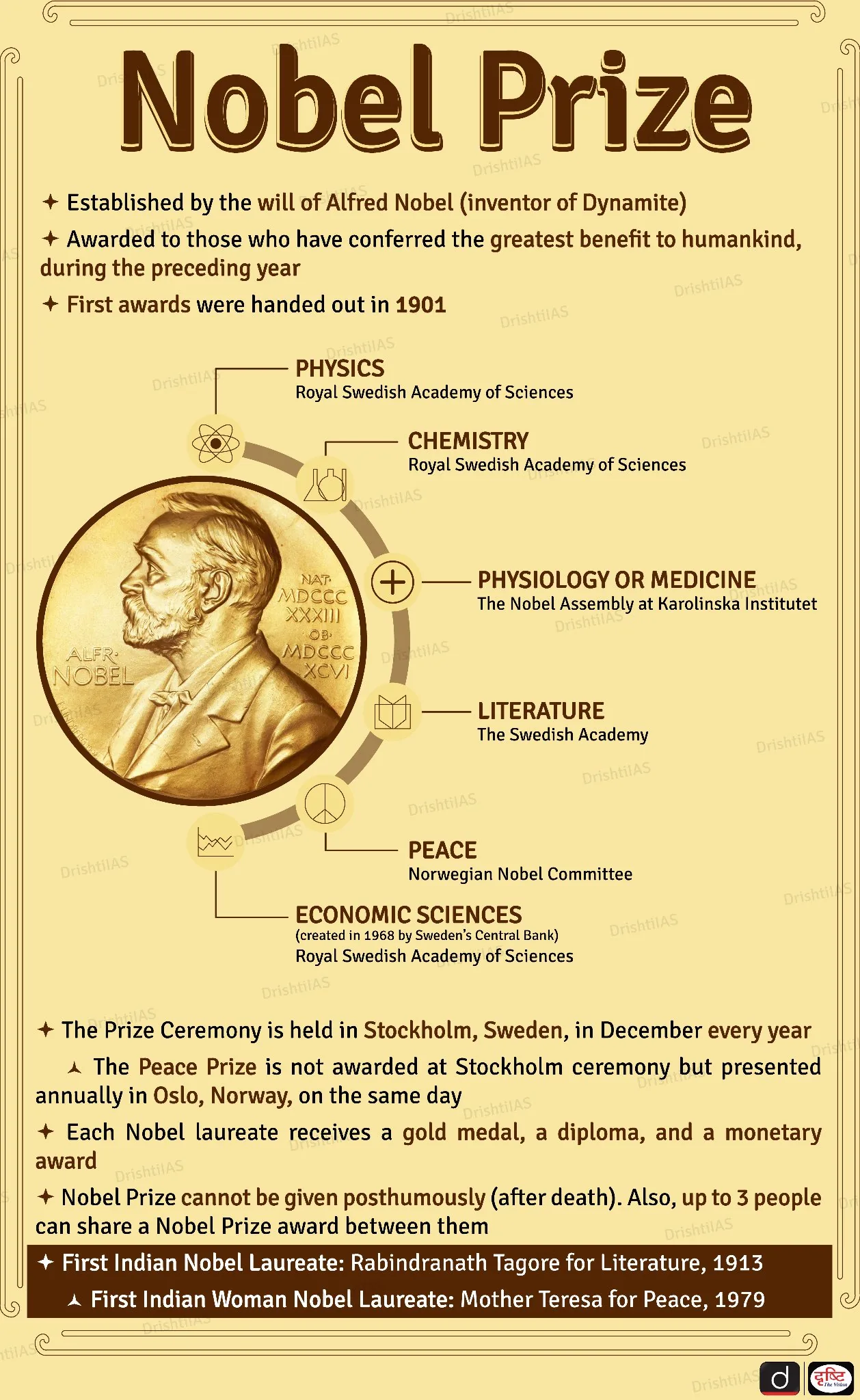
Source Why in News?- The 2026 Nobel Prize in Physiology or Medicine was jointly awarded to three scientists Karl Deisseroth (USA), Peter Hegemann (Germany), and Georg Nagel (Germany).
- They were honoured for their revolutionary discoveries concerning “light-gated ion channels and optogenetics,” a breakthrough technology that allows scientists to control specific brain cells (neurons) using light.
- About: Optogenetics (from opto, meaning light, and genetics) is a biological technique that uses light to control the electrical activity of specific nerve cells in living tissues.
- The Core Concept:
- The human brain has around 90 billion nerve cells intertwined in complex circuits.
- Traditional methods to study the brain (like electrodes or drugs) act bluntly, stimulating broad areas of the brain indiscriminately.
- Optogenetics solves this by allowing scientists to switch individual neural circuits on or off with millisecond precision using flashes of light.
- Historical Context: In the 1970s, Nobel Laureate Francis Crick speculated that since nerve signals travel extremely fast, light would be the ideal, instantaneous tool to control them. This trio of scientists turned Crick’s “far-fetched” vision into a reality.
- Peter Hegemann & Georg Nagel (The Microbiologists):
- Hegemann (Humboldt University of Berlin, Germany) and Nagel (University of Würzburg, Germany) discovered channelrhodopsin, a light-sensitive protein found in algae.
- They identified that when channelrhodopsin is exposed to blue light, it acts as a physical gate (an ion channel) that opens up, allowing positive ions to flow and generate an electrical impulse.
- Karl Deisseroth (The Neuroscientist):
- Deisseroth (Stanford University and HHMI Investigator, USA) inserted the algal channelrhodopsin gene into mammalian (rat) neurons.
- Used tiny optical fibres to deliver blue light into the brains of living mice. When activated by blue light, channelrhodopsin opened ion channels and triggered electrical impulses, enabling scientists to precisely control specific neural circuits and behaviours.
- The key breakthrough was that the protein itself combines light detection and ion-channel activity, effectively acting as a molecular light switch for electrically active cells.

-
Significance
- Unprecedented Brain Mapping:
- By selectively turning specific neurons on or off, optogenetics allows scientists to map neural circuits responsible for memory, emotions and movement.
- It may help establish cause-and-effect relationships between neural activity and behaviour. This overcomes limitations of older brain-mapping methods.
- Understanding Neurological Disorders:
- Optogenetics may allow more precise stimulation of the auditory nerve than current electrical cochlear implants.
- By isolating malfunctioning neural circuits, researchers can gain deep insights into psychiatric and neurological disorders such as Parkinson’s disease, Alzheimer’s, schizophrenia, depression, and epilepsy.
- Improved Neural Interfaces: Researchers also hope optogenetics could improve technologies such as cochlear implants by enabling more precise stimulation of the auditory nerve.
- Beyond the Brain:
- The technique is now being utilized to study how the nervous system interacts with other organs in the body, including the heart and the gut (Enteric Nervous System).
- Optogenetics may help restore vision in patients with retinal disorders such as retinitis pigmentosa.
- Unprecedented Brain Mapping:
-
Challenges and Human Application
- Gene Therapy Requirement: It requires genetically modifying the brain cells to express the light-sensitive protein, which carries clinical risks.
- Light Penetration: The human skull and scalp block visible light. Getting light deep into the brain currently requires surgically implanting fibre-optic cables.
International Relations
India–Switzerland Relations
Source Why in News?- The President of the Swiss Confederation engaged in comprehensive bilateral talks with the Indian Prime Minister in New Delhi. The state visit marked the first anniversary of the entry into force of the landmark Trade and Economic Partnership Agreement (TEPA) between India and the European Free Trade Association (EFTA).
- During the visit, the two countries agreed to deepen cooperation in trade, investment, defence, nuclear energy, and infrastructure.
- Migration and Mobility Partnership (MMP) Agreement: Facilitates legal movement of talent while curbing irregular migration and trafficking. It provides multiple-entry visas valid for up to 5 years (with stays up to 6 months per visit) and renewable 1-year student permits.
- Exchange of Young Professionals (YPS) Agreement: Enables an annual exchange of 300 young professionals (scalable to 500) for temporary employment and skill enhancement, backed by a strict 30/90-day verification timeline.
- Transport and Infrastructure MoU: Formalizes collaboration between India’s Ministry of Road Transport and Highways (MoRTH) and Switzerland’s Federal Department of Economic Affairs, Education and Research (EAER) in sustainable mobility, specifically electric vehicles (EVs), ropeways, circular economy, and alpine tunneling technologies.
- Science and Research Framework: A Letter of Intent (LoI) between India’s Department of Science and Technology (DST) and the Swiss National Science Foundation (SNSF) to support joint, long-term scientific and exploratory research.
- Startup and Technology Transfer (AIT India): An agreement between DST and Zurich University of Applied Sciences to roll out the Indo–Swiss Academia–Industry Training program to support early-stage science and deep-tech startups.
- Strategic Expansion: Both nations agreed to open new frontiers in defence equipment manufacturing, military exchanges, civilian nuclear energy, and ethical Artificial Intelligence (AI) governance.
- Historical & Diplomatic Ties: Diplomatic ties were established through the Treaty of Friendship signed in New Delhi in 1948, one of independent India’s first such treaties.
- Bilateral Trade:
- Switzerland was India’s 15th-largest trading partner in FY 2024–25, with total trade of USD 23.27 billion.
- India’s Exports: Organic chemicals, jewellery, metals, textiles, electrical equipment, pharmaceuticals, agricultural products and machinery.
- Swiss Exports: Gold bullion, chemicals, pharmaceuticals, machinery, transport equipment, precision instruments and watches.
- Economic & Commercial Engagements:
- India–EFTA TEPA: Implemented in October 2025, the pact serves as the bedrock of modern trade, carrying a commitment from EFTA states to mobilize USD 100 billion in Foreign Direct Investment (FDI) and generate 1 million direct jobs in India over 15 years.
- FDI & Corporate Presence:
- Switzerland ranks among the top European investors in India.
- Switzerland invested USD 10.87 billion in India between April 2000 and June 2025, making Switzerland India’s 12th-largest source of FDI globally.
- Science, Technology, and Education:
- Bilateral research is driven by the Indo-Swiss Joint Research Programme (ISJRP).
- India is an Associate Member State at CERN (European Organization for Nuclear Research) in Geneva, reflecting deep scientific collaboration (symbolized by the iconic Nataraja statue gifted by India installed at CERN).
- About:
- EFTA is an intergovernmental organization set up in 1960 under the Stockholm Convention, for the promotion of free trade and economic integration to the benefit of its four Member States.
- It consists of four countries: Iceland, Liechtenstein, Norway, and Switzerland.
- Relation to EU:
- EFTA is not a customs union. Each member sets its own external tariffs, and none of them are members of the European Union (EU).
- While Iceland, Liechtenstein, and Norway are part of the EU single market via the European Economic Area (EEA), Switzerland relies on separate bilateral agreements with the EU.
- India–EFTA Desk:
- Launched by Invest India as a single-window investment facilitation mechanism to strengthen economic ties and support EFTA investments under TEPA.
- India is EFTA’s 5th-largest trading partner, with USD 24.4 billion in two-way trade in 2024–25, while Switzerland is India’s largest EFTA trading partner.
 What are the Key Challenges in the India–Switzerland Relations?
- Lack of Bilateral Investment Treaty (BIT): Swiss investors currently lack explicit treaty protection in India, as India terminated its older bilateral investment treaties in 2017. Switzerland is pushing for a quick conclusion of a new investment protection pact.
- Intellectual Property Rights (IPR) and Pharmaceutical Patents:
- Swiss multinational pharmaceutical corporations have long raised concerns over Indian patent laws, particularly Section 3(d) of the Patents Act, 1970 (which prevents “evergreening”).
- Switzerland seeks stricter data exclusivity and patent term extensions, which conflicts with India’s role as the “pharmacy of the world” supplying affordable generic drugs.
- Structural Trade Deficit: India faces a persistent trade deficit with Switzerland, heavily skewed by significant imports of Swiss gold bullion, high-end precision machinery, and pharmaceuticals.
- Realizing the $100B TEPA Pledge:
- The EFTA bloc’s $100 billion investment commitment is not backed by government guarantees; it depends entirely on whether private European companies choose to invest.
- The real operational challenge for India is maintaining a competitive business climate to secure these phased targets: attracting USD 50 billion over the first 10 years, and the remaining USD 50 billion across the following 5 years.
- Divergent Geopolitical Approaches: While Switzerland maintains its traditional neutrality and hosts Western-led initiatives like the Ukraine Peace Summit, India prioritizes strategic autonomy, avoids bloc sanctions, and maintains multi-aligned ties, resulting in contrasting diplomatic approaches to global conflict resolution.
- Operationalize TEPA Investment Channels: Under India-EFTA Investment Desk fastrack joint monitoring mechanisms to direct Swiss capital into priority sectors under India’s Production Linked Incentive (PLI) schemes—especially precision engineering, renewable energy, and medical devices.
- Collaborative Pharmaceutical Models: Shift the IPR discourse from litigation to co-development. Encourage Swiss pharma firms to set up clinical research, API manufacturing, and R&D centers in India through joint ventures.
- Harness Swiss Engineering for Indian Infrastructure: Integrate Swiss alpine tunneling, avalanche protection, and ropeway engineering into India’s complex border road networks and Himalayan connectivity projects (e.g., Char Dham route, urban ropeways).
- Deepen High-Tech & Green Hydrogen Synergy: Leverage Swiss research leadership in green hydrogen, carbon capture, and quantum technology to support India’s climate targets under the National Green Hydrogen Mission.
- India–Switzerland relations are evolving from trade-focused ties towards a broader strategic partnership covering technology, defence, nuclear energy and investment. Strengthening TEPA implementation and addressing patent and investment-protection issues will be key to deeper cooperation.
Polity & Governance
Legislative Privileges: Balancing with Constitutional Rights
Source Why in News?- A seven-judge Constitution Bench of the Supreme Court, headed by Chief Justice of India, closed a two-decade-old reference case (N. Ravi and others v. Speaker, Legislative Assembly, Chennai and others) as “infructuous”.
- The case concerned the conflict between legislative privileges and the fundamental right to freedom of speech and expression, the Court deliberately kept the substantive questions of law open to be adjudicated in a future, appropriate case.
- About:
- Legislative privileges are the special rights, immunities, and exemptions enjoyed by the two Houses of Parliament, State Legislatures, their committees, and their individual members.
- These constitutional safeguards are essential to secure the independence, dignity, and effective functioning of legislative bodies, allowing lawmakers to discharge their duties without fear of external interference or legal reprisal.
- Types of Parliamentary Privileges:
- Collective Privileges: Rights belonging to the House as a whole. Key examples include the right to regulate internal proceedings, the right to publish its reports and debates, the power to exclude strangers from the House, and the authority to punish members or outsiders for contempt or breach of privilege.
- Individual Privileges:
- Rights granted to lawmakers in their individual capacity.
- Key examples include absolute freedom of speech within the Parliament and freedom from arrest in civil cases during parliamentary sessions.
- Constitutional Provisions:
- Article 105: Deals comprehensively with the powers, privileges, and immunities of the Houses of Parliament, its members, and its committees.
- Article 194: Deals with the corresponding powers, privileges, and immunities of State Legislatures, their members, and committees.
- Articles 122 and 212: Bar courts from questioning parliamentary or State legislative proceedings merely on grounds of procedural irregularity; however, legislative actions remain open to limited judicial review for substantive illegality or constitutional violations.
- Article 105(3): Empowers Parliament to define its privileges by law.
- Lack of Codification: Articles 105(3) and 194(3) empower Parliament and State Legislatures to define their privileges by law. Until codified, their privileges continue as those existing immediately before the commencement of the relevant provisions of the 44th Constitutional Amendment Act, 1978.
- Privilege Notice:
- A Privilege Notice (or Motion) is a formal notice given by a Member of Parliament alleging a breach of parliamentary privilege, rights, immunities, or the dignity of the House.
- It may be initiated against MPs or outsiders for acts such as misleading the House, withholding facts, or making disparaging remarks against members.
- Committee of Privileges:
- It is a Standing Committee of the Parliament that acts as a quasi-judicial body to investigate cases of breach of privilege.
- Composition:
- Lok Sabha: It consists of 15 members nominated by the Speaker.
- Rajya Sabha: It consists of 10 members nominated by the Chairman.
- Functions:
- Once a Privilege Notice is admitted by the Speaker/Chairman, it is often referred to the Committee of Privileges.
- The Committee investigates the facts, determines if a breach has occurred, and submits a report recommending a specific course of action (such as a reprimand, an unconditional apology, or even suspension/expulsion) to the House.
- Limitations:
- Parliamentary freedom of speech is subject to the Constitution, rules and procedures of Parliament under Article 118.
- Article 121 prohibits MPs from discussing the conduct of Supreme Court or High Court judges in Parliament, except when a motion for their removal is under consideration.
- Key Supreme Court Precedents
- Pandit M.S.M. Sharma v. Sri Krishna Sinha (1959): Ruled that legislative privileges under Article 194(3) prevail over a citizen’s fundamental right to freedom of speech under Article 19(1)(a).
- Special Reference No. 1 of 1964 (Keshav Singh Case): Ruled that Fundamental Rights do not automatically yield to legislative privileges, and constitutional courts have the power of judicial review over a legislature’s penal actions.
- Raja Ram Pal v. Hon’ble Speaker, Lok Sabha (2007): Ruled that the exercise of parliamentary privilege, including the expulsion of members, is not absolute and is subject to judicial review.
- Amarinder Singh v. Special Committee, Punjab Vidhan Sabha (2010): Ruled that privileges cannot be weaponized to punish a member’s past executive actions or conduct unrelated to the actual functioning of the House.
- Alagaapuram R. Mohanraj v. Tamil Nadu Legislative Assembly (2016): Ruled that legislative privilege exists to protect the independent functioning of the House, not to protect the personal reputation of the Chief Minister or the ruling party.
- Sita Soren v. Union of India (2024): The Supreme Court unanimously overruled the 1998 P.V. Narasimha Rao judgment (which granted immunity to MPs who accepted bribes for voting in Parliament), holding that lawmakers do not enjoy constitutional immunity from criminal prosecution for accepting bribes, as bribery is not part of their legislative functions.
- Article 194(3) vs Article 19(1)(a):
- While Article 194 grants uncodified privileges to lawmakers, Article 19(1)(a) guarantees every citizen the fundamental right to freedom of speech and expression (which inherently includes the freedom of the press).
- The conflict arises when legislatures invoke privileges to punish citizens or journalists for criticizing their proceedings.
- Threat to Personal Liberty (Article 21):
- When legislatures order arrests or imprisonment for alleged breaches of privilege, it directly impacts the personal liberty of citizens.
- Petitioners have argued that any action affecting liberty must satisfy constitutional guarantees of fairness, due process, and protection against arbitrariness.
- Used as a “Sword” instead of a “Shield”:
- Privileges are meant to be a protective “shield” for lawmakers to speak freely on the floor of the House.
- Critics argue they are increasingly weaponized as a “sword” to stifle external criticism, punish political opponents, or protect the reputation of the party.
- Chilling Effect on the Press: Invoking breach of privilege against investigative journalism or critical editorials creates an atmosphere of fear, fundamentally undermining the press’s role as the watchdog of a parliamentary democracy.
- Clash with Constitutional Supremacy:
- Unlike the UK (which has Parliamentary Sovereignty), India operates under Constitutional Supremacy.
- Therefore, critics argue that no legislative privilege should be allowed to bypass Part III of the Constitution (Fundamental Rights).
- Codification of Privileges:
- The most sustainable solution is for the Parliament and State Legislatures to finally codify their privileges under Articles 105 and 194.
- This will provide clear boundaries and prevent the arbitrary use of privilege against citizens.
- Harmonious Construction: The judiciary and the legislature must apply the doctrine of harmonious construction to ensure that the dignity of the House is maintained without imposing a “chilling effect” on investigative journalism and the fundamental right to free speech.
- Judicial Review: While legislatures must be free to manage their internal affairs, any penal action (like imprisonment) that touches upon the fundamental rights of citizens must remain subject to strict judicial review to uphold the rule of law.
Schemes & Initiatives
India’s 1st 3D-Printed Rural Housing Pilot Launched in Andhra Pradesh
Source India’s first national-level pilot project for constructing rural houses using 3D Concrete Printing (3DCP) under Pradhan Mantri Awas Yojana-Gramin (PMAY-G) was launched in Andhra Pradesh.- Objective: It aims to construct 177 houses at a cost of approximately ₹14 crore, with completion targeted within six months.
- About 3D Concrete Printing: It is a form of construction-scale additive manufacturing in which a computer-controlled robotic printer converts digital Building Information Modelling (BIM) designs into physical structures by depositing specially formulated concrete in successive layers.
- Material Requirements and Automation: The technology relies on material science and automation, requiring concrete mixtures with suitable extrudability, buildability and rapid-setting properties to ensure successive layers retain their shape without collapsing.
- Significance: The technology can reduce construction time, material waste, labour requirements and dependence on conventional formwork, enabling faster, cost-effective and standardised affordable housing.
- Wider Applications: Beyond rural housing, 3DCP can support disaster-relief shelters, remote-area housing, defence fortifications and rapidly deployable public infrastructure.
- Challenges: 3DCP still relies on conventional or hybrid construction methods for components such as foundations, structural reinforcement, roofing, electrical systems and plumbing.
- India’s First 3D-Printed House: India’s adoption of construction-scale 3D printing gained momentum in 2021, when IIT Madras and startup Tvasta unveiled the country’s first 3D-printed single-storey house on the IIT Madras campus.
- Global Evolution: Construction-scale 3D printing has evolved from experimental applications to commercial use across regions such as the US, China, Europe and West Asia, with Dubai emerging as a major hub for large-scale construction 3D printing.
Science & Technology
India’s Rising Supercomputing Ecosystem
Source Why in News?- India’s supercomputing ecosystem has come into focus with the deployment of 40 supercomputers having a combined capacity of 68 PetaFLOPS (PF) under the National Supercomputing Mission (NSM) as of September 2026. The Mission is simultaneously developing indigenous servers, system software, high-speed interconnects, cooling technologies and specialised applications.
- About:
- Supercomputers combine large numbers of processors or computing nodes that work simultaneously to process massive datasets and solve complex problems much faster than conventional computers.
- High-speed connections enable these nodes to exchange data efficiently. Supercomputers are therefore sometimes called parallel computers, as multiple CPUs can work on solving a single calculation at a given time.
- Measuring Computing Power: Supercomputer performance is measured in FLOPS (Floating Point Operations Per Second). 1 teraFLOPS (TF) equals one trillion operations per second, while 1 petaFLOPS (PF) equals one quadrillion operations per second.
- Exascale Computing: The world’s fastest supercomputer achieves around 2.19 exaflops in 2026, equivalent to about 2.19 quintillion calculations per second.
- Importance and Applications: Supercomputers enable complex simulations, massive-data processing and advanced scientific research across climate, healthcare, space, agriculture and engineering. High-performance computing supports applications such as crop-yield prediction, disease-outbreak tracking, drug discovery and flood-impact forecasting.
- Growing Demand in India: India generates nearly 20% of the world’s data, while applications such as Artificial Intelligence, weather forecasting and space research require increasing computing capacity.
- Government Focus: The Government is expanding access to supercomputing infrastructure across research institutions to strengthen indigenous capabilities and advance Aatmanirbhar Bharat.
- Launch and Outlay: The National Supercomputing Mission (NSM) was launched in April 2015 with an outlay of about ₹4,500 crore.
- Nodal Ministries: The Mission is jointly steered by the Department of Science and Technology (DST) and the Ministry of Electronics and Information Technology (MeitY).
- Core Objective: NSM aims to build self-reliance in supercomputing, strengthen India’s high-performance computing capabilities and support research, innovation and societal applications.
- Implementation: The Mission is implemented by the Centre for Development of Advanced Computing (C-DAC), Pune, and the Indian Institute of Science (IISc), Bengaluru.
- Build Approach: NSM follows a “Build approach” consisting of three concurrent phases—assembly, manufacturing, and design and manufacturing support—to expand supercomputing infrastructure while developing indigenous capabilities.
-
Current Status of the National Supercomputing Mission
- Indigenous Supercomputing Ecosystem: NSM is building self-reliance across supercomputer design, development, manufacturing, system software and specialised applications, reducing dependence on imported technologies.
- Planned Computing Capacity: The Mission plans to establish 50 supercomputers with a cumulative capacity of over 123 PF (Petaflops) across academic and research institutions in India.
- PARAM Series: PARAM 8000, developed by C-DAC and unveiled in 1991, marked India’s entry into indigenous supercomputing with a speed of 1 gigaflop. The series later evolved to systems such as PARAM Yuva (54 teraflops), supporting applications including weather forecasting and computational fluid dynamics.
- Current Supercomputing Infrastructure: As of September 2026, India had deployed 40 supercomputers with a combined capacity of 68 PF, including 13 high-end systems above 1 PF, 12 mid-range systems between 500 TF and 1 PF, and 15 systems below 500 TF. These systems have been built locally and commissioned across the country.
- Capacity Building: The Mission is expanding HPC infrastructure, specialised applications, research and development, and human resource development, with locally built systems commissioned across the country.
- Contribution to Sustainable Development: NSM contributes to 11 SDGs through applications such as flood prediction, forest-fire management, climate modelling, HPC training, indigenous technology development and research-industry collaboration.
-
Applications of Supercomputing under NSM
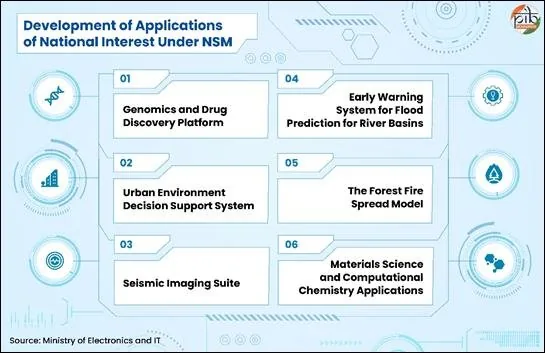
- Genomics and Drug Discovery: The platform analyses large molecular datasets to support drug discovery and testing. During COVID-19, it helped screen existing drugs and predict potential side effects, including cardiac risks.
- Urban Environment Management: The system uses detailed weather and air-pollution models to predict heavy rainfall and pollution levels, helping cities strengthen preparedness and mitigate risks.
- Seismic Imaging: Advanced algorithms are used to map subsurface geological structures, supporting oil and gas exploration. Its performance is comparable to commercial seismic imaging tools.
- Flood Prediction: The Early Warning System uses data analysis and predictive models to forecast floods up to two days in advance. It is being used for the Mahanadi River basin to protect communities and infrastructure.
- Forest Fire Prediction: The Forest Fire Spread Model combines satellite remote sensing and computational modelling to predict fire behaviour and spread. It has been tested in areas including the Sikkim Himalayas.
- Materials Science and Computational Chemistry: HPC-based tools enable simulations of atoms, molecules and alloys, helping researchers study their behaviour and properties.
- Rudra Series of Servers: The Rudra servers, indigenously designed and developed by C-DAC, provide the processing power required for complex calculations, simulations and AI workloads. Their technology has been transferred to Indian Electronics Manufacturing Services (EMS) partners for manufacturing.
- PARAM Rudra Supercomputers:
- PARAM Rudra systems are built using indigenously designed and manufactured Rudra servers and an indigenous system software stack. They support advanced research in astronomy, material science, atomic physics and earth sciences.
- As of September 2026, 6,000 Rudra servers had been deployed in PARAM Rudra supercomputers, with another 1,500 servers under manufacturing.
- High-Speed Interconnect Network: India has developed and tested an indigenous high-speed interconnect network with speeds of 100 Gbps and 200 Gbps, enabling faster communication and data transfer between computing nodes.
- Indigenous Cooling Technology: Indigenous cooling technology has been developed and demonstrated and is currently in the deployment stage. It helps maintain operating temperatures of HPC systems while improving power efficiency.
- HPC System Software: A complete High-Performance Computing (HPC) system software stack has been developed and integrated with supercomputing systems to enable their efficient operation and management.
- PARAM Shavak: PARAM Shavak is an indigenously designed and manufactured “supercomputing-in-a-box” developed to meet the HPC and AI computing needs of students and researchers in engineering colleges and universities.
- HPC Applications for National Needs: Indigenous HPC applications have been developed for areas such as genomics and drug discovery and deployed for organisations including the India Meteorological Department (IMD), Central Water Commission (CWC), Central Pollution Control Board (CPCB), and Ministry of AYUSH.
- Expanding HPC User Base: NSM infrastructure has supported over 16,000 researchers, including more than 2,900 PhD scholars, across 400+ institutions. As of September 2026, the systems had executed over 1.5 crore compute jobs and contributed to more than 1,990 research publications.
- HPC and Deep Learning Awareness: Workshops across India introduce students, researchers and faculty to High-Performance Computing (HPC) and Deep Learning (DL).
- Hackathons and Bootcamps: HPC and DL hackathons and bootcamps provide hands-on experience and encourage problem-solving in HPC, Artificial Intelligence (AI) and Generative AI.
- Faculty Development: Faculty, including those from non-computer science disciplines, receive training in HPC, AI, Machine Learning (ML) and DL through programmes conducted in collaboration with AICTE.
- EduHPC and Online Learning: The EduHPC Workshop provides annual HPC training to faculty, while the High-Performance Scientific Computing Course on the SWAYAM platform, under NPTEL, helps learners build a strong foundation in HPC.
- HPC Shiksha Portal: The portal provides HPC resources, recorded lectures and learning materials, enabling students and teachers to gain practical experience.
- NSM Users Forum: The forum enables users across NSM sites to discuss technical issues, resolve queries and share knowledge and best practices.
- National Knowledge Network: NKN serves as the backbone of India’s supercomputing ecosystem under NSM, connecting supercomputing facilities across academic and research institutions through a high-speed national network. It facilitates access to advanced computing resources, collaboration and sharing of computational resources and scientific knowledge across geographical boundaries.
- India’s supercomputing journey has progressed from PARAM 8000 in 1991 to an increasingly indigenous High-Performance Computing ecosystem under the National Supercomputing Mission. The development of PARAM Rudra, Rudra servers, high-speed interconnect networks, indigenous cooling technologies, HPC system software and applications for national needs demonstrates India’s growing technological capabilities.
India’s 1st 5.56 km Free-Space Quantum Key Distribution Link Demonstrated
Source Why in News?- India has successfully demonstrated its first 5.56 km Free-Space Quantum Key Distribution (QKD) link. The field trial established a secure quantum communication channel between BISAG-N (Bhaskaracharya National Institute for Space Applications and Geo-informatics) and IIT Gandhinagar. The demonstration was executed in collaboration with QNu Labs, an Indian deep-tech startup.
- Quantum Key Distribution (QKD):
- It is a secure communication method that uses the quantum properties of photons to exchange cryptographic keys between two distant parties.
- It does not transmit the actual message through quantum states. Instead, QKD securely establishes an encryption key, which is then used by conventional systems to encrypt and decrypt the actual data.
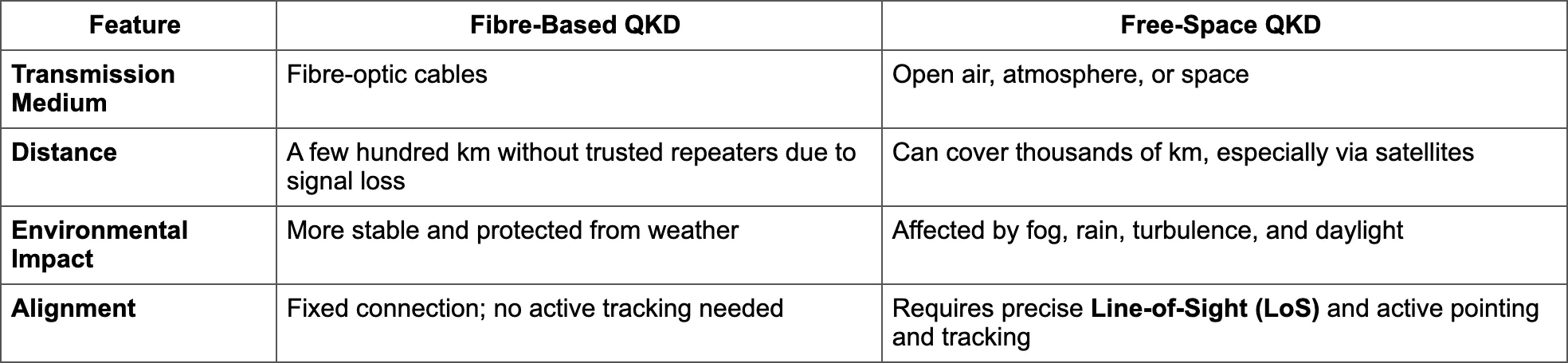
- Free-Space QKD is a quantum-secure communication technology that transmits encryption keys through laser beams in open air, eliminating the need for physical fibre-optic cables.
- QKD relies on Heisenberg’s Uncertainty Principle and the No-Cloning Theorem.
- Heisenberg’s Uncertainty Principle: According to quantum mechanics, measuring a quantum system inherently alters it. If an eavesdropper tries to intercept the photons, the quantum state collapses, instantly alerting the communicating parties of a breach.
- No-Cloning Theorem: It states that it is physically impossible to create a perfect, identical copy of an unknown quantum state, preventing hackers from secretly duplicating the transmitted keys.
- Eavesdropper Detection:
- QKD does not transmit the actual message. Instead, it generates a secure cryptographic key used to encrypt the data.
- Any attempt to intercept or measure the quantum states disturbs them and introduces detectable errors, allowing the users to detect eavesdropping and discard the compromised key.
- Atmospheric Challenges: Unlike fibre-based QKD, free-space QKD requires direct line-of-sight between transmitter and receiver. Precise alignment is necessary, while atmospheric turbulence and ambient light pollution can distort or weaken the optical signal.
- The recent 5.56 km trial is a major leap from earlier short-distance tests (like the 300m test in 2021). Key highlights include:
- Quantum Bit Error Rate (QBER): Measures the proportion of quantum bits received incorrectly. Lower QBER means a more reliable and secure quantum channel. In the 5.56 km trial, QBER remained below 5%.
- Advanced Tracking: The trial successfully utilized QNu Labs’ precise Pointing, Acquisition, and Tracking (PAT) system to perfectly align the laser beam across open air over the entire distance.
- Two-Layered Security Architecture:
- The demonstration combined QNu Labs’ hardware (Armos) with BISAG-N’s software (Vedic Kavach).
- This created a hybrid setup where QKD was layered with Post-Quantum Cryptography (PQC) (encryption algorithms designed to remain secure against quantum computers).
- If the physical atmospheric link drops temporarily due to weather, the mathematical PQC software continues to protect the data.
- Significance for India:
- Precursor to Satellite QKD: Free-space terrestrial QKD is a key stepping stone toward satellite-based quantum communication, as both rely on transmitting quantum signals through the atmosphere between line-of-sight optical terminals.
- National Security: As quantum computers become advanced enough to break classical encryption algorithms, this technology provides a “quantum-safe” shield for defence, strategic infrastructure, and financial networks against future cyber threats.
- National Quantum Mission Target: India’s National Quantum Mission (NQM) aims to develop satellite-based secure quantum communication between ground stations separated by up to 2,000 km, along with a 2,000-km inter-city QKD network using optical fibre.
Security
Surya: Indian Navy’s 1st Indigenously Built Fleet Support Ship
Source Defence Minister launched Surya (FSS-1), the Indian Navy’s first indigenously built Fleet Support Ship, at Hindustan Shipyard Limited (HSL), Visakhapatnam. He also laid the keel of FSS-5 and inaugurated upgraded shipbuilding facilities.- About Fleet Support Ships (FSS): FSS are large auxiliary naval vessels designed to replenish warships and submarines at sea with fuel, lubricants, ammunition, food, stores and personnel, allowing naval formations to remain deployed without frequently returning to port.
- FSS Programme: HSL is constructing five Fleet Support Ships for the Indian Navy under a single contract. The vessels have around 43,500-tonne displacement and about 82% indigenous content, strengthening domestic defence shipbuilding under Atmanirbhar Bharat.
- Features of Surya: The ship is about 223.6 m long and 31.5 m wide, can attain around 20 knots, and is designed for missions lasting about 60 days. It can carry nearly 20,000 tonnes of diesel, 2,500 tonnes of aviation turbine fuel and 1,000 tonnes of fresh water, besides ammunition and other supplies.
- Operational Capabilities: Surya can replenish multiple naval vessels at sea, including through alongside, stern and helicopter-based transfers. It has onboard maintenance facilities, a helicopter deck and self-defence systems against missiles, torpedoes and mines, enabling operations across the Indian Ocean Region and beyond.
- Strategic Significance: The FSS fleet will substantially enhance the Indian Navy’s blue-water capability, operational endurance and maritime reach, especially for carrier battle groups and surface action groups operating far from Indian shores.
- Shipbuilding Infrastructure: HSL’s upgraded 235-metre Slipway No. 4 and 300-tonne Goliath Crane will enable construction and launching of vessels up to 45,000 DWT, enhancing India’s capacity to build larger and more complex naval platforms.