> ## Documentation Index
> Fetch the complete documentation index at: https://signals.joincomrades.com/llms.txt
> Use this file to discover all available pages before exploring further.
# 08 Oct 2026 · Dispatch
> Comrades Dispatch of 08 Oct 2026, by news group.
> **[Comrades Dispatch · 08 Oct 2026 (PDF)](https://dl.joincomrades.com/d/08-10-26)**
***
## In this edition
1. [Nobel Prize in Chemistry 2026: Non-Linear Effects & Autocatalysis](#h-1) Awards & Recognition
2. [Living Planet Report 2026](#h-2) Environment & Ecology
3. [Recapture of Kidal in Mali](#h-3) International Relations
4. [SAREX-2026](#h-4) Military Exercises
5. [Air Marshal Ashutosh Dixit Appointed 29th Chief of the Air Staff](#h-5) Persons in News
6. [Reconstitution of Department-Related Parliamentary Standing Committees](#h-6) Polity & Governance
7. [Nuclear Power on the Moon](#h-7) Space
8. [OJ 287: Rare Binary Black Hole System](#h-8) Space
## Awards & Recognition
### Nobel Prize in Chemistry 2026: Non-Linear Effects & Autocatalysis
[Source](https://www.drishtiias.com/current-affairs-news-analysis-editorials/news-analysis/08-10-2026#37891)
**Why in News?**
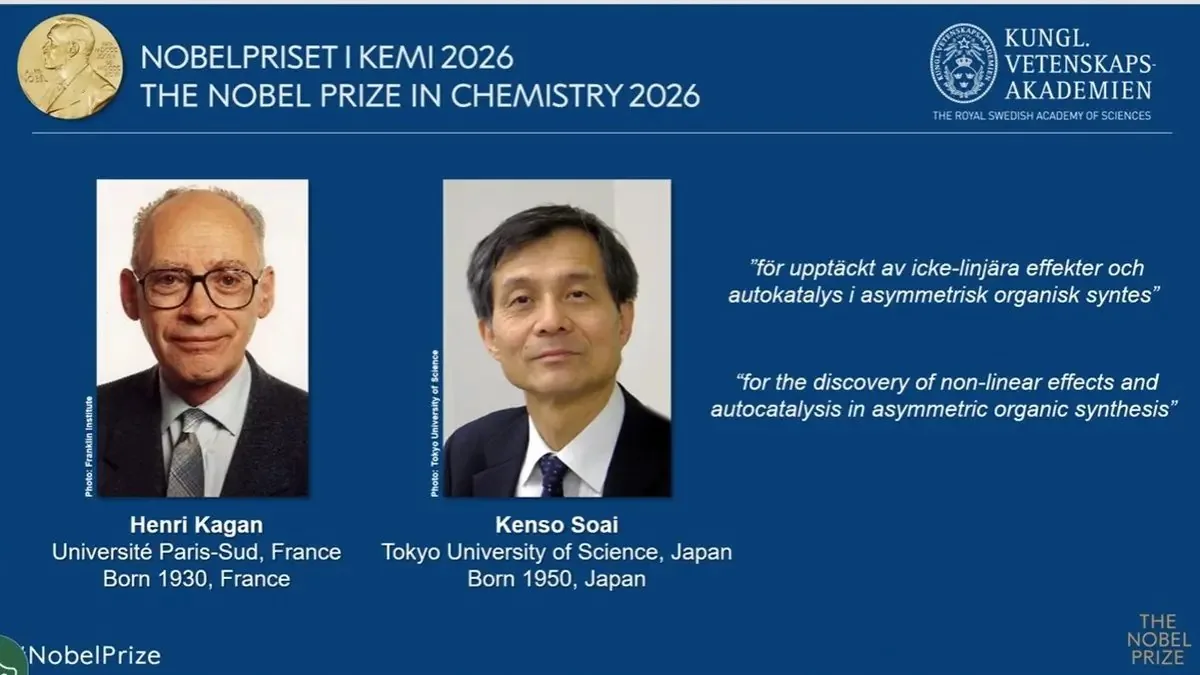
* The Royal Swedish Academy of Sciences has awarded the Nobel Prize in Chemistry 2026 to Henri B. Kagan (Université Paris-Sud, France) and Kenso Soai (Tokyo University of Science, Japan). They were honoured for their groundbreaking “discovery of non-linear effects and autocatalysis in asymmetric organic synthesis”.
* Their foundational work explains how chemical reactions can amplify small asymmetries in molecules, solving a century-old mystery regarding how biological life came to overwhelmingly favor specific molecular structures.
**What is Molecular Asymmetry or Chirality?**
* **Chiral Molecules:** Many fundamental molecules, including amino acids (the building blocks of proteins), exist in two forms that are non-identical mirror images of each other. This property is known as chirality, derived from the Greek word for "hand".
* **Left-Handed and Right-Handed Variants:** Just like human hands, these molecules cannot be perfectly superimposed on one another. They are often referred to as left-handed and right-handed variants (enantiomers).
* **Homochirality in Life:**
* While the two variants are chemically identical in a symmetrical environment, living organisms overwhelmingly favour and use only one form.
* For instance, the proteins in human cells are exclusively made up of "left-handed" amino acids.
* **The Century-Old Puzzle:**
* Traditional chemical syntheses in the laboratory typically produce equal amounts of both mirror-image molecules (known as a racemic mixture).
* For decades, scientists struggled to understand how biological life evolved to be strictly "homochiral" (having molecules of only one of the two possible mirror-image forms).
What are the Key Facts About the Nobel Prize in Chemistry 2026?
* **Breakthrough:**
* Before Kagan's research, chemists operated on a strict assumption: they believed the purity of a chemical product would always directly mirror the purity of the catalyst used.
* If a catalyst mixture was 80% left-handed and 20% right-handed, scientists assumed the resulting product would have that exact same 80/20 ratio (a linear relationship)
* The 2026 Nobel laureates discovered chemical mechanisms that can selectively drive reactions to produce exclusively one of the two possible mirror images.
* **Henri Kagan's Contribution (1986):**
* Henri Kagan discovered that chiral catalysts can produce a much greater chiral imbalance than expected.
* When catalyst molecules pair up, opposite-handed pairs are less active, suppressing the minority form. This allows the majority-handed catalyst to dominate the reaction, producing a product with a disproportionately high excess of one mirror-image molecule.
* This phenomenon, known as the non-linear effect, became an important clue in understanding chiral amplification and biological homochirality.
* **Kenso Soai’s Autocatalysis (1995–2003):**
\[!NOTE] Note: In 1953, physicist Charles Frank proposed that biological homochirality could emerge through three conditions: A chiral catalyst drives an asymmetric reaction. One enantiomer is amplified while the other is suppressed. The product acts as its own catalyst through autocatalysis, creating a self-reinforcing cycle. Kagan’s non-linear effects supported the second condition, while Soai’s asymmetric autocatalysis demonstrated the third, providing an experimental basis for understanding the possible emergence of homochirality.
* Building on Kagan’s work, Kenso Soai demonstrated that a tiny initial chiral imbalance could be dramatically amplified through autocatalysis, where a chemical product catalyses the formation of more of itself.
* **The Soai Reaction (1995):** Soai discovered a chiral 5-pyrimidyl alkanol that could act as a catalyst for its own formation. This was a major breakthrough in asymmetric synthesis.
* **The Snowball Effect (2003):** Soai showed that even a very small initial excess of one mirror-image molecule could be dramatically amplified. The dominant form catalyses the formation of more molecules of the same handedness, causing the imbalance to grow with each reaction cycle.
* This self-amplifying process can drive a mixture towards very high enantiomeric purity, providing an important experimental model for understanding how biological homochirality may have emerged from a tiny initial molecular asymmetry.
**Significance**
* **Pharmaceutical Manufacturing:** Many drugs exist as enantiomers, where one form may provide the desired therapeutic effect while the other may have reduced or harmful effects. Kagan and Soai’s work has strengthened the foundations of asymmetric synthesis, enabling chemists to selectively produce the desired enantiomer.
* **Origin of Life:** Their work offers a possible chemical explanation for biological homochirality. It shows how a tiny initial molecular imbalance could be amplified into a strong preference for one molecular handedness.
* **Materials Science:** Chiral control is increasingly important in designing advanced materials with specific molecular, optical, and electronic properties.
* **Agrochemicals and Fragrances:** Enantioselective synthesis helps produce specific enantiomers of pesticides, fragrances, and other specialty chemicals, improving efficiency, selectivity, and performance.
## Environment & Ecology
### Living Planet Report 2026
[Source](https://www.drishtiias.com/current-affairs-news-analysis-editorials/news-analysis/08-10-2026#37898)
**Why in News?**
* WWF (World Wide Fund for Nature) and the Zoological Society of London (ZSL) released the Living Planet Report 2026, titled "The Science of Hope". The report is published every two years. ZSL manages the Living Planet Index (LPI) in partnership with WWF.
* It finds that monitored wildlife populations fell by an average of 73% between 1970 and 2022. The 2026 report also notes that the energy, food and finance systems must reach "positive tipping points" before 2030, the deadline of the Kunming-Montreal Global Biodiversity Framework (GBF).
What are the Key Findings of the Living Planet Report 2026?
* **Global Living Planet Index:**
* The Global Living Planet Index (LPI) recorded a 73.2% decline in the average relative abundance of monitored vertebrate populations between 1970 and 2022, equivalent to an average annual decline of about 2.5%.
* The index measures relative population abundance, not the total number of animals or species lost. Thus, a 73% decline does not mean 73% of animals or species have disappeared.
* Around 50% of monitored populations remain stable or are increasing, but these gains are outweighed by severe declines in other populations.
* **Ecosystem-Specific Declines:**
* **Freshwater Ecosystems:** Suffered the steepest collapse at 85%, driven by habitat fragmentation, water extraction, pollution, and damming.
* **Terrestrial Ecosystems:** Declined by 69%, primarily due to agricultural expansion and deforestation.
* **Marine Ecosystems:** Recorded an average decline of 59%, driven by overfishing, plastic pollution, and warming oceans.
* **Regional Decline:**
* The Latin America and Caribbean region recorded the steepest decline of 95% between 1970 and 2022, followed by Africa at 80%, Asia-Pacific at 49%, North America at 28%, and Europe and Central Asia at 23%.
* However, a lower decline does not necessarily indicate healthier ecosystems, as significant biodiversity loss in North America and Europe occurred before the LPI’s 1970 baseline.
* Approximately half of global GDP, worth around USD 58 trillion in 2023, depends to varying degrees on nature and its ecosystem services, highlighting the economic risks associated with biodiversity degradation.
* **Drivers of Biodiversity Loss:**
* Habitat loss and degradation (30%), overexploitation (23%) and climate change (14%) together account for about 67% of loss while pollution, invasive species and other drivers account for the remaining 33%.
* Agriculture is the largest single cause of habitat loss. Energy use drives climate change.
* **Global Comeback Precedents:** Targeted interventions have delivered measurable recoveries across diverse species, including green turtles, bluefin tuna, southern African elephants, and global wild tigers.
* **Positive Tipping Points:**
* The report identifies early positive tipping points (stages where sustainable technologies or practices begin to accelerate rapidly and become self-reinforcing) across energy, food and finance.
* The report identifies three phases of systemic transformation — enabling, accelerating and stabilising. Energy is accelerating, while food and finance remain in the enabling phase and need faster action before 2030.
* Solar power is becoming the cheapest source of new electricity in most countries, while clean power met all new global electricity demand in 2025 and fossil fuels fell below 60% of global electricity generation for the first time since the 1940s.
* Electric mobility is also expanding rapidly, with EVs accounting for over 25% of new car sales in 2024 and India emerging as a key innovation centre.
* At the same time, progress in food and finance is visible through science-based targets for sustainable supply chains, the EU Deforestation Regulation, Denmark’s planned agricultural carbon tax, and national food-system commitments, signalling a broader shift towards sustainable development.
* **Other Biodiversity Indicators:** Besides the LPI, the report highlights the Red List Index (RLI), which tracks changes in species' extinction risk, and the Biodiversity Intactness Index (BII), which measures how much of a region's original biodiversity remains relative to pre-industrial conditions.
What is the Status of India’s Biodiversity and Conservation Data?
* **India’s Biodiversity Profile:** Occupying merely 2.4% of the world’s geographical land area, India harbors nearly 8% of global flora and 7.5% of global fauna, is one of 17 megadiverse countries, and hosts portions of 4 of the 36 global biodiversity hotspots.
* **High Endemism:** Approximately 28% of plant species and over 30% of animal species in India are strictly endemic (found nowhere else on Earth).
* **The Assessment Gap:**
* Of the 7,516 Indian animal species evaluated under the IUCN Red List, 1,012 are classified as threatened (Vulnerable, Endangered, or Critically Endangered).
* However, this evaluation covers only 7.2% of India’s documented animal diversity.
* **National Red List Assessment Initiative (2025-2030):** Unveiled at the IUCN World Conservation Congress in Abu Dhabi (2025), this national framework aims to bridge critical data gaps by producing indigenous National Red Data Books for flora and fauna by 2030.
* Species Recovery in India
* **Nilgiri Tahr (Tamil Nadu):**
* Project Nilgiri Tahr, a dedicated initiative for Tamil Nadu’s state animal in collaboration with the Wildlife Institute of India (WII), and IUCN.
* It recorded an increase in the tahr population from 1,303 (2025) to 1,364 (2026) through synchronized surveys, radio-collaring, and habitat mapping.
* **Vulture Recovery and Toxic Drug Ban:** Catalyzed by India’s landmark ban on the veterinary use of diclofenac, captive breeding at the Jatayu Conservation Breeding Centre (Pinjore, Haryana) operated jointly by the Haryana Forest Department and the Bombay Natural History Society (BNHS) along with habitat protection in the Segur Plateau and Mudumalai Tiger Reserve, enabled Madhya Pradesh’s vulture census to rise to 12,981 in 2025 (up from 8,397 in 2019).
* **Asiatic Lion (Gir/Saurashtra, Gujarat):** Supported by continuous scientific monitoring and local community support, the wild population of Asiatic lions in Gujarat expanded from 674 in 2020 to 891 in 2025.
* **Greater One-Horned Rhinoceros (Assam):** Grassland management, invasive weed eradication, and anti-poaching measures in high-density habitats like Pobitora Wildlife Sanctuary have stabilized and expanded rhinoceros populations.
* **India’s First Dugong Reserve:**
* Established across 448 sq km in Palk Bay (Tamil Nadu), backed by net-loss compensation schemes for local fishermen.
* A 2026 WII assessment confirmed a baseline population of 270 dugongs (158 in Palk Bay and 112 in the Gulf of Mannar).
* **Project Tiger (1973):** From a historic low in the 20th century, India's tiger population has rebounded to 3,682 (as per the 2022 census), making India home to over 75% of the global wild tiger population.
* **Cheetah Reintroduction:** Project Cheetah represents the world’s first intercontinental large wild carnivore translocation, aimed at restoring India's historic evolutionary balance.
* **Snow Leopard and Clouded Leopard Protection:**
* India’s maiden scientific population assessment in 2024 estimated 718 snow leopards, heavily aided by high-altitude pastoral women in Kibber (Himachal Pradesh).
* Meghalaya has structured an action plan across 14 priority landscapes to secure genetic corridors for the elusive clouded leopard.
* **Innovative Conservation Financing:** Dedicated state-level initiatives, such as Tamil Nadu’s Endangered Species Conservation Fund (prioritizing lesser-known species like the mahseer, striped hyena, Madras hedgehog, lion-tailed macaque, and hornbill), alongside global commitments like the Phoenix Species Project (USD 200 million by Re:wild and the Bezos Earth Fund), provide a reliable funding template for non-charismatic fauna.
**What are the Persistent Challenges for India's Wildlife?**
* **Habitat Fragmentation:** Linear infrastructure (highways, railways, canals) slicing through protected areas prevents genetic dispersal and increases wildlife mortality (e.g., elephant train hits).
* **Human-Wildlife Conflict (HWC):** As animal populations grow inside shrinking protected areas, species spill over into human-dominated landscapes, leading to crop damage, livestock depredation, and retaliatory killings.
* **Invasive Alien Species:** Weeds like Lantana camara and Prosopis juliflora are degrading native forest ecosystems, reducing the carrying capacity of herbivore populations.
* **Poaching and Illegal Wildlife Trade:** While mega-fauna poaching has reduced, the illegal trade in pangolins, star tortoises, and exotic birds remains a lucrative organized crime.
* **Climate Change:** Erratic monsoons, frequent forest fires, and rising sea levels (threatening the Sundarbans tigers) are altering natural habitats.
**What Measures are Needed for Effective Wildlife Conservation?**
* **Statutory Mainstreaming & Fiscal Devolution:** Integrate wildlife corridor protection into infrastructure planning via PM Gati Shakti and ensure predictable sub-state conservation outlays by unfreezing and deploying State CAMPA funds alongside the revamped Integrated Development of Wildlife Habitats (IDWH) scheme.
* **Targeted Funds for Non-Charismatic Fauna:** Operationalize the landscape priorities of the National Wildlife Action Plan (NWAP 2017–2031) by replicating state-level mechanisms—like Tamil Nadu’s Endangered Species Conservation Fund—to direct dedicated budgetary lines toward neglected taxa (e.g., Great Indian Bustard, Dugong, Caracal).
* **Statutory Community Rights & Co-Management:** Operationalize Section 36C/36D of the Wild Life (Protection) Amendment Act, 2022 (notifying Conservation & Community Reserves) and harmonize it with Community Forest Resource (CFR) rights under the FRA, 2006, shifting indigenous groups from fringe subjects to statutory co-managers.
* **Frontline Tech Modernization & Field Science:** Scale smart-patrolling infrastructure like M-STrIPES and e-Surveillance beyond tiger reserves into territorial divisions; conduct Wildlife Institute of India (WII) field training modules for frontline staff in wildlife forensics, GIS habitat mapping, and invasive species eradication.
* **Global Alignment & Innovative Blended Finance:**
* Update the National Biodiversity Strategy and Action Plan (NBSAP) to fulfill Target 3 (30x30 target) of the KMGBF.
* Bridge the domestic funding gap by unlocking multilateral capital from the Global Biodiversity Framework Fund (GBFF) and mandatory CSR outlays (Companies Act, 2013).
* **One Health Institutional Integration:** Institutionalize the National One Health Mission (NOHM) through permanent coordination between MoEFCC, the Ministry of Health, and the Department of Animal Husbandry to execute cross-sectoral wildlife disease surveillance and contain zoonotic spillovers at forest frontiers.
* **Reforming Nature-Negative Finance:**
* The report estimates that approximately USD 7.3 trillion flowed into activities harmful to nature in 2023, compared with only USD 220 billion for nature protection and restoration.
* It advocates redirecting environmentally harmful subsidies and closing the annual biodiversity finance gap of approximately USD 1.3 trillion.
**Conclusion**
* The divergence between global wildlife collapse and India’s local conservation successes underscores that extinction crises are not an inevitability of modern development. When long-term political will, scientific rigor, reliable financing, and community stewardship converge, ecosystems possess an extraordinary capacity to rebound, advancing the Sustainable Development Goals (SDGs), particularly SDG 14 (Life Below Water) and SDG 15 (Life on Land).
## International Relations
### Recapture of Kidal in Mali
[Source](https://www.drishtiias.com/current-affairs-news-analysis-editorials/news-analysis/08-10-2026#37889)
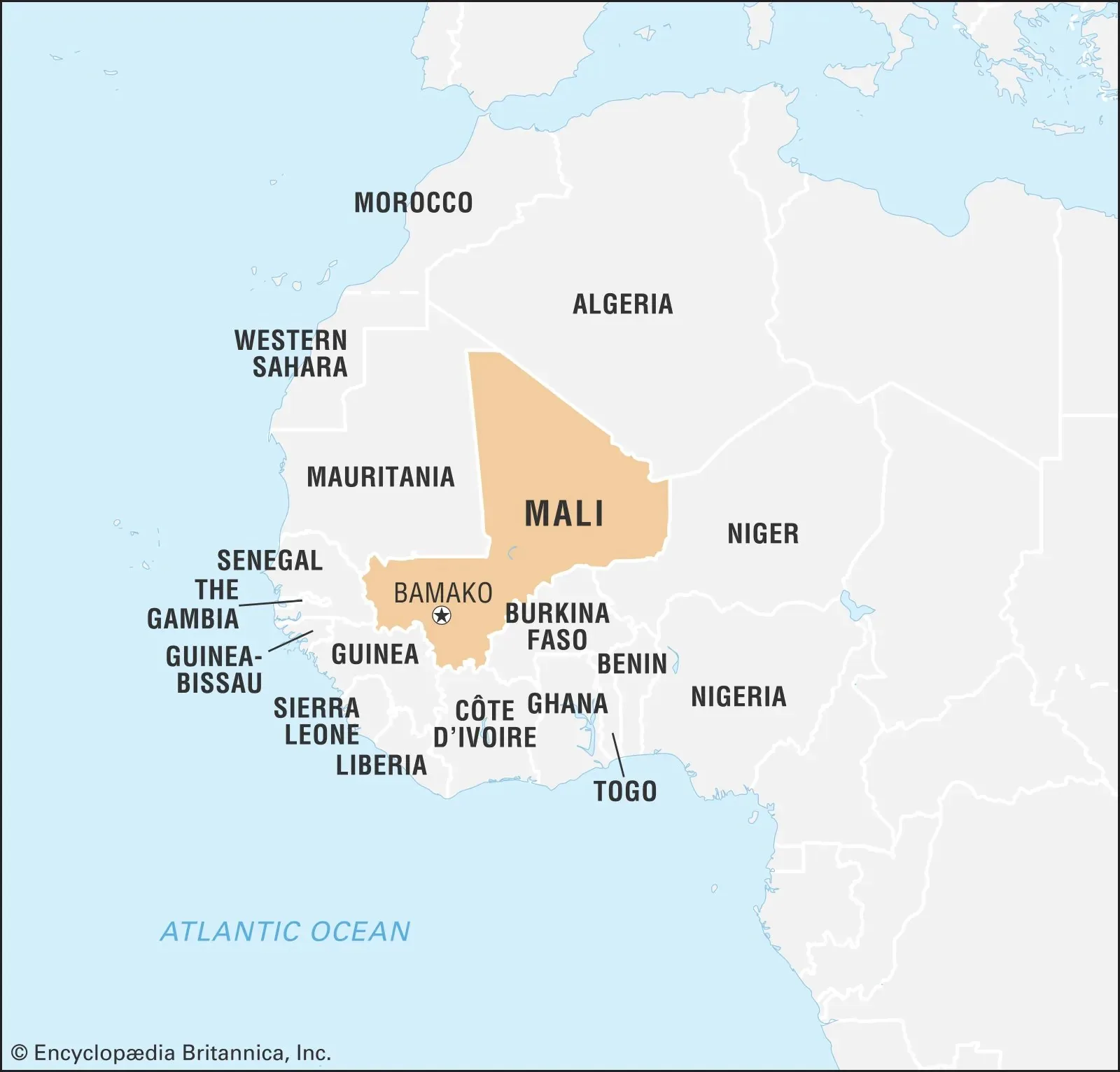
The Malian Armed Forces (FAMA), backed by Russia’s Africa Corps, have regained control of the strategic northern city of Kidal after the Tuareg-led Azawad Liberation Front (FLA) announced a controlled withdrawal. The development is a symbolic boost for Mali’s military government, though it does not mark a decisive end to the wider insurgency.
* **Geographical & Strategic Significance:**
* Located in the Sahel region near the Algerian border, Kidal is a highly strategic desert transit hub.
* It serves as a major political and symbolic centre of the Tuareg separatist movement and the idea of ‘Azawad’ (the name used by the ethnic Tuareg population for their desired independent state in northern Mali).
* **Symbol of State Sovereignty:**
* For the central military government based in Bamako, recapturing Kidal restores a crucial symbol of state sovereignty over its northern peripheries.
* Its rugged Adrar des Ifoghas mountain massif has historically harbored insurgents and provided immense leverage over cross-border trade and smuggling networks.
**Mali**
* **Geography:** Mali is bordered by seven nations: Algeria to the north, Niger and Burkina Faso to the east, Côte d’Ivoire and Guinea to the south, and Senegal and Mauritania to the west.
* **Relief and Prominent Landforms:** Notable topographic features include the Mandingue Plateau, the Bandiagara Escarpment (Dogon Plateau), the Iforas Massif (Adrar des Ifoghas) in the northeast, and Mount Hombori Tondo (1,155 m), which is the highest point in Mali.
* **River:** The Niger River runs through Mali, acting as its primary economic artery.
* **Historical Civilizations:** Historically part of the precolonial Ghana, Mali, and Songhai empires, the country hosts renowned cultural hubs such as Timbuktu (trans-Saharan trade crossroad), Djenné (Sudano-Sahelian architecture and Great Mosque), and the cliffside settlements of the Bandiagara Escarpment.
* **Culture:** Major ethnic groups include the Bambara, Fulani, Dogon, and Tuareg.
* **Protected Areas & Conservation:** Major biodiversity reserves include the Boucle du Baoulé National Park, the Ansongo-Ménaka Animal Reserve, and the Gourma (Douentza) Elephant Reserve.
## Military Exercises
### SAREX-2026
[Source](https://www.drishtiias.com/current-affairs-news-analysis-editorials/news-analysis/08-10-2026#37886)
The 12th National Maritime Search and Rescue Exercise (SAREX-2026) is set to be inaugurated, with a Search and Rescue (SAR) demonstration scheduled off the Paradip coast, Odisha.
* The exercise is being organised by the Indian Coast Guard (ICG) and includes 32 observers from 30 countries, strengthening international interoperability.
* The Indian Coast Guard (ICG) is an Armed Force of the Union constituted under the Coast Guard Act, 1978, responsible for safeguarding India’s maritime interests and sovereign rights.
* It acts as the central coordinating authority for oil-spill response in India’s maritime zones.
* **Participating Forces and Assets:** The exercise will involve the ICG, Indian Navy and Indian Air Force (IAF), deploying 15 ICG ships, 2 Indian Navy ships, 2 Dornier aircraft, 3 Advanced Light Helicopters, 1 Chetak helicopter, 1 C-130J aircraft and Mi-17 helicopters.
* **Objective:**
* It will simulate a Mass Rescue Operation involving simultaneous aeronautical and maritime emergencies.
* The scenario includes a passenger aircraft carrying 228 persons ditching at sea and colliding with container vessel MV Zumba.
* **Significance:** SAREX-2026 supports India’s vision of SAGAR and MAHASAGAR by developing a faster, technology-enabled and internationally coordinated maritime SAR framework.
## Persons in News
### Air Marshal Ashutosh Dixit Appointed 29th Chief of the Air Staff
[Source](https://www.drishtiias.com/current-affairs-news-analysis-editorials/news-analysis/08-10-2026#37888)
Air Marshal Ashutosh Dixit has been appointed as the 29th Chief of the Air Staff (CAS). He will succeed Air Chief Marshal Amar Preet Singh, who will superannuate on 31st October 2026.
* **Service Profile:** Commissioned into the Fighter Stream of the Indian Air Force in 1986 he has flown aircraft including Mirage-2000, MiG variants, Jaguar, IL-78, Hawk and Tejas. He has nearly four decades of service, over 3,500 hours of flying experience, and is an Experimental Test Pilot and Qualified Flying Instructor.
* **Key Appointments:** Before becoming Vice Chief of the Air Staff, he served as Air Officer Commanding-in-Chief, Central Air Command, and later as Chief of Integrated Defence Staff to the Chairman, Chiefs of Staff Committee (CISC).
* **Operations and Exercises:** He has participated in Operation Safed Sagar, Operation Rakshak, Exercise Cope India and Operation Sindoor. He has also commanded a frontline fighter air base in the Western Sector and a premier fighter training base in the Southern Sector.
* **Awards:** He has received the Vayu Sena Medal (2006), Vishisht Seva Medal (2011), Ati Vishisht Seva Medal (2023) and Param Vishisht Seva Medal (2026).

## Polity & Governance
### Reconstitution of Department-Related Parliamentary Standing Committees
[Source](https://www.drishtiias.com/current-affairs-news-analysis-editorials/news-analysis/08-10-2026#37890)
**Why in News?**
* Recently, the Lok Sabha Speaker and Rajya Sabha Chairman reconstituted various Department-related Parliamentary Standing Committees for 2026–27.
What are the Key Facts About Department-Related Parliamentary Standing Committees?
* **About:** Department-Related Standing Committees (DRSCs) are Parliamentary committees that enable detailed scrutiny of the functioning, finances, legislation and policies of Union Ministries and Departments, thereby strengthening executive accountability to Parliament.
* **Number of Committees:** The present system of DRSCs was established in 1993. The system was expanded from 17 to 24 DRSCs in 2004, covering all Ministries and Departments of the Union Government.
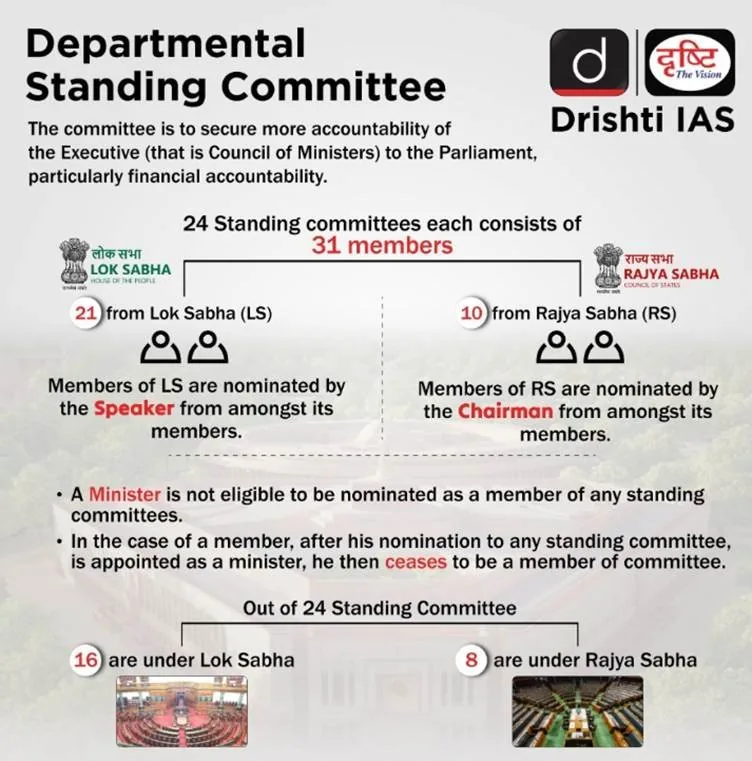
* **Composition:** Each DRSC consists of 31 Members—21 from the Lok Sabha and 10 from the Rajya Sabha. Representation of parties and groups is broadly proportional to their strength in the two Houses.
* **Ministers Excluded:** A Minister cannot be nominated as a member of a DRSC. If a member becomes a Minister after nomination, he or she ceases to be a member of the Committee.
* **Chairperson:** Chairpersons of committees listed under Part I of the Fifth Schedule are appointed by the Chairman of the Rajya Sabha, while those under Part II are appointed by the Speaker of the Lok Sabha from among Committee members.
* **Tenure:** Members of DRSCs are appointed for a term not exceeding one year, and the Committees are reconstituted annually.
* **Major Functions:** DRSCs examine Demands for Grants of concerned Ministries, Bills referred to them, Annual Reports of Ministries/Departments, and National Basic Long-Term Policy Documents referred by the Presiding Officers.
* **Limits on Jurisdiction:** They do not examine day-to-day administration of Ministries and generally avoid matters already under consideration by other Parliamentary Committees.
* **Nature of Recommendations:** Their reports are advisory in nature and have persuasive value; they are treated as considered advice of the Committee rather than binding decisions.
* **Quorum and Proceedings:** The quorum is approximately one-third of the total membership; for a 31-member DRSC, the quorum is 10. Committee sittings are held in private and are not open to the media.
* **Consensus-Based Reports:** DRSC reports are generally based on broad consensus, though members may submit a note of dissent, which is presented to the House along with the report.
* **Expert Inputs:** Committees may call for papers, records and witnesses, and may also seek expert or public opinion while examining a subject.
**Parliamentary Committees**
* **About:** A Parliamentary Committee is a body constituted by the Lok Sabha or Rajya Sabha, or nominated by the Speaker/Chairman, to perform functions delegated by Parliament.
* Parliamentary Committees:
* Work under the direction of the presiding officer.
* Submit their reports to the House or the Speaker/Chairman.
* Are serviced by the Lok Sabha/Rajya Sabha Secretariat.
* The committee system, inspired by the British Parliament, derives its constitutional basis mainly from Article 105, relating to parliamentary powers and privileges, and Article 118, relating to regulation of parliamentary business.
## Space
### Nuclear Power on the Moon
[Source](https://www.drishtiias.com/current-affairs-news-analysis-editorials/news-analysis/08-10-2026#37892)
**Why in News?**
* NASA, in collaboration with the US Department of Energy (DOE), is accelerating its Fission Surface Power (FSP) project to deploy a nuclear reactor near the Moon’s south pole by 2030. Simultaneously, China and Russia have announced plans to install an automated nuclear power plant by 2035 for their International Lunar Research Station (ILRS).
* This shift toward industrial-scale space operations raises fresh legal, environmental, and geopolitical questions over lunar territory, resource control, and international governance.
**What is the Fission Surface Power (FSP) Project?**
* **Core Objective:** In January 2026, NASA and the US DOE signed a Memorandum of Understanding (MoU) to strengthen cooperation on developing, fuelling, authorising and preparing a lunar fission surface power reactor for launch by 2030 under the Artemis programme.
* **Technical Specifications:** It is designed to be lightweight (under 6,000 kg) and utilizes High Assay Low Enriched Uranium (HALEU) as fuel.
* **Operational Role:** It will provide baseload power for lunar habitats, life-support systems, rovers, and in-situ resource utilization (ISRU) machinery, serving as a critical stepping stone for future crewed missions to Mars.
* **Earlier Space Reactor:** The US launched SNAP-10A, its first space nuclear fission reactor, in April 1965. It operated in Earth orbit for 43 days, generating approximately 500–600 watts of electricity before shutting down due to an electrical system malfunction unrelated to the reactor.
\[!NOTE] Note: Nuclear electricity was first generated on the lunar surface during NASA's Apollo 12 mission (1969), which deployed the plutonium-238-powered SNAP-27 Radioisotope Thermoelectric Generator (RTG), designed to produce at least 63 watts of electricity for scientific instruments. Unlike a nuclear fission reactor, SNAP-27 generated electricity directly from the heat released by radioactive decay, without a controlled nuclear chain reaction.
**Why is Nuclear Power Essential for Lunar Exploration?**
* **Overcoming the Lunar Night:**
* A single day-night cycle on the Moon lasts 28 Earth days, meaning bases will endure roughly 14 continuous days of frigid darkness.
* Solar arrays cannot sustain life-support systems during this extended nocturnal window without massively impractical battery reserves.
* **Accessing Permanently Shadowed Regions (PSRs):**
* Lunar exploration heavily targets the south pole, where deep craters remain in perpetual darkness.
* These craters host deposits of water ice essential for human survival and fuel production, yet they receive zero sunlight, rendering solar arrays unviable.
* **Scaling Beyond RTGs:**
* Traditional deep-space probes use Radioisotope Thermoelectric Generators (RTGs), which convert the decay heat of plutonium-238 into electricity.
* However, RTGs produce only a few hundred watts. Human bases require tens to hundreds of kilowatts, a scale only compact fission reactors can currently provide.
* **Enabling In-Situ Resource Utilisation (ISRU):**
* Converting lunar ice into breathable oxygen and liquid hydrogen propellants requires industrial power.
* Producing 10 tonnes of oxygen via ice extraction, electrolysis and hydrogen liquefaction requires an estimated 68 kW of continuous electricity, making compact fission reactors the only feasible stepping stone to sustainable, off-Earth propellant depots.
What are the Geopolitics of Nuclear Deployment on the Moon?
* **Scarcity of Prime Lunar Real Estate:** While the Moon is vast, viable base locations near the south pole that offer accessible water-ice, safe landing terrain, and Earth communication lines are extremely limited.
* **Infrastructure as Influence:**
* The 1967 Outer Space Treaty (OST) expressly forbids national appropriation or sovereign claims over celestial bodies.
* However, deploying a reactor establishes de facto control over an area.
* **The "Safety Zone" Loophole:**
* NASA design studies have examined locating reactors approximately 1 km away from users, although this is not a universal international requirement.
* The US-led Artemis Accords allow for temporary "safety zones" to prevent harmful interference.
* **Infrastructure as Influence:**
* Deploying reactors, power cables and associated infrastructure near valuable lunar resources could provide early-operating nations with strategic advantages.
* Article IX of the Outer Space Treaty mandates due regard for other states’ interests and consultations to prevent harmful interference, but does not grant reactor operators exclusive territorial rights.
**India’s Position**
* ISRO and the Department of Atomic Energy (DAE) are collaborating to develop indigenous nuclear power technologies for space exploration, strengthening India’s strategic autonomy.
* To support future long-duration missions like the Bharatiya Antariksh Station and the 2040 crewed lunar landing, ISRO is exploring 100-watt Radioisotope Thermoelectric Generators (RTGs).
* This builds on the success of Chandrayaan-3, which carried two 1-watt Radioisotope Heater Units (RHUs) exclusively on its propulsion module.
* Crucially, while the RHUs used on Chandrayaan-3 only supplied thermal heat to prevent freezing, the proposed RTGs will convert nuclear decay heat directly into electrical power.
What are the Concerns Regarding the Nuclear Deployment Over the Moon?
* Technical and Environmental Hurdles
* **Mass and Shielding Logistics:** Protecting astronauts and surface equipment from reactor radiation requires heavy shielding.
* **Power Transmission Challenges:** Locating reactors away from human habitats to minimise radiation exposure creates additional infrastructure requirements, including robotic deployment systems, long-distance power cables and reliable electrical distribution networks across difficult lunar terrain.
* **Heat Dissipation in a Vacuum:** Lunar reactors generate substantial waste heat. Because the Moon lacks an atmosphere to facilitate convection, systems must rely on massive radiator panels.
* **Autonomous Operation and Reliability:** Lunar reactors must operate autonomously for several years with minimal human intervention, adjusting electricity generation to changing demand while withstanding launch vibrations, extreme temperatures and limited opportunities for maintenance.
* **Launch Safety and Core Activation:** Space reactors must be launched with unirradiated, "cold" fuel cores to prevent radiological contamination in the event of a terrestrial launch vehicle failure.
* **Risk of Irreversible Contamination:** A mechanical failure, reactor breach, or cooling loss could release radioactive material into the few pristine, scientifically invaluable crater basins that contain usable water ice.
* Governance and Regulatory Shortfalls
* **Non-Binding U.N. Principles:** The 1992 UN Principles Relevant to the Use of Nuclear Power Sources in Outer Space (UNGA Res 47/68) is a non-binding resolution that provides guidelines for safety and notification, but lacks enforcement authority.
* **Omission of Advanced Propulsion:** The 1992 UN Principles apply strictly to power sources generating electricity (RTGs and basic fission reactors) and do not address modern Nuclear Thermal Propulsion (NTP) or Nuclear Electric Propulsion (NEP).
* **Absence of End-of-Life and Disposal Protocols:** Current space treaties provide no clear, binding standards for decommissioning spent lunar reactors, containing irradiated waste, or disposing of jettisoned orbital reactors.
* **Ambiguities in Liability and Environmental Law:** The 1972 Liability Convention governs damage caused by space objects on Earth or to aircraft, but offers ambiguous guidance regarding nuclear accidents and radioactive contamination in cis-lunar space or on celestial surfaces.
* **Tension Over "Freedom of Access":**
* International space law guarantees the right of all states to freely explore celestial bodies.
* Unilateral declarations of reactor safety perimeters create friction between legitimate operational safety and the prohibition against monopolizing strategic lunar corridors.
What Measures are Needed for Space Governance and India?
* **Modernize the 1992 UN Framework:** The UN Committee on the Peaceful Uses of Outer Space (COPUOS) must draft binding technical standards covering high-output surface fission plants, advanced propulsion systems, and end-of-life radioactive waste disposal.
* **Establish an IAEA for Space:** The international community should create a multilateral oversight body modeled after the International Atomic Energy Agency (IAEA) to certify space reactor designs, monitor space-bound fissile material, and verify compliance.
* **Multilateral Consensus on Safety Zones:** Safety perimeters must be defined through international consultation rather than unilateral declarations. This ensures zones remain strictly functional, temporary, and non-exclusionary.
* **Enhance ISRO-DAE Synergy:** India must aggressively fund the domestic development of space-grade nuclear reactors to secure a leadership role in deep-space exploration and gain a stronger negotiating position in global space governance.
**Conclusion**
* As humanity moves towards sustained lunar settlements, nuclear energy could become a key source of reliable space power. However, the use of nuclear materials in space requires stringent safety standards to prevent risks to Earth and the lunar environment. The international community should strengthen global nuclear safety norms through UN-COPUOS to ensure the responsible and sustainable use of nuclear technology in space.
### OJ 287: Rare Binary Black Hole System
[Source](https://www.drishtiias.com/current-affairs-news-analysis-editorials/news-analysis/08-10-2026#37887)
A 10-year study of OJ 287, involving scientists from the Aryabhatta Research Institute of Observational Sciences (ARIES), Nainital, Uttarakhand, has provided new information about its rare binary supermassive black hole system.
* **Key Findings:**
* The observations helped determine the relative positions of the two black holes, study changes in brightness, spectrum and polarization, and search for possible emissions from the smaller black hole.
* The central black hole was estimated to have a mass of at least 3.89 billion times that of the Sun.
* **About OJ 287:**
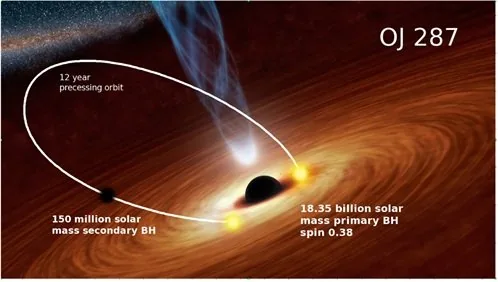
* It is a rare blazar located about 4 billion light-years from Earth, containing two Supermassive Black Holes (SMBHs) orbiting each other in a 12-year orbit.
* **Blazar:** It produces powerful plasma jets moving nearly at the speed of light towards Earth, with emissions ranging from radio waves to gamma-rays.
* **Importance:** OJ 287 can help scientists understand relativistic jets, binary black holes and multimessenger astronomy, which combines signals such as light, gravitational waves, neutrinos and cosmic rays.
This documentation is built and hosted on [Mintlify](https://mintlify.com), a developer documentation platform.