> ## Documentation Index
> Fetch the complete documentation index at: https://signals.joincomrades.com/llms.txt
> Use this file to discover all available pages before exploring further.
# 10 Oct 2026 · Dispatch
> Comrades Dispatch of 10 Oct 2026, by news group.
> **[Comrades Dispatch · 10 Oct 2026 (PDF)](https://dl.joincomrades.com/d/10-10-26)**
***
## In this edition
1. [1st-Ever WHO Guidelines on Child and Adolescent Obesity](#h-1) Health & Medicine
2. [India-EU Green Shipping Corridor](#h-2) Infrastructure & Energy
3. [Centenary of the Union Public Service Commission](#h-3) Polity & Governance
4. [World Development Report 2026: The Promise of Artificial Intelligence](#h-4) Reports & Indices
5. [National PNG Drive 3.0](#h-5) Schemes & Initiatives
6. [DRDO Successfully Tests High Altitude Platform System](#h-6) Security
7. [3rd International Bharat 6G Symposium 2026](#h-7) Visits & Conferences
## Health & Medicine
### 1st-Ever WHO Guidelines on Child and Adolescent Obesity
[Source](https://www.drishtiias.com/current-affairs-news-analysis-editorials/news-analysis/10-10-2026#37935)
The World Health Organization (WHO) has released its first-ever clinical guidelines on managing pediatric and adolescent obesity, setting an age-differentiated protocol that prohibits weight-loss pharmacotherapy and bariatric surgery for children under nine while permitting restricted, conditional medical interventions for adolescents aged 10 to 19.
* **Age-Specific Mandates:**
* **Children aged 0–9 years:** The guidelines strongly advise against anti-obesity drugs (including GLP-1 receptor agonists) and bariatric surgeries (e.g., gastric bypass), mandating family-centered behavioral modifications, structured nutrition, and physical activity as the sole standard of care.
* **Adolescents aged 10–19 years:**
* Approved anti-obesity medicines may be considered only when a supervised multimodal lifestyle programme fails to achieve the desired results.
* Bariatric surgery may be considered under strict conditions for adolescents with severe obesity.
* **Rationale for Pharmacotherapy Restrictions:** The WHO noted an absence of long-term clinical trial data regarding the pediatric safety, efficacy, treatment duration, and tapering protocols of anti-obesity drugs like semaglutide.
* **Integrated Mental Healthcare:** Obesity management should address associated psychological challenges, including anxiety, depression, low self-esteem, stigma and bullying, through family-engaged and age-appropriate care.
* **Promotion of Digital Health Interventions:** Recommends the conditional adoption of active video games (exergames - encourage bodily movement as part of gameplay), pedometers, accelerometers, and fitness applications to replace sedentary screen time with active movement.
* **Global Pediatric Obesity Burden:** As of 2024, 170 million children and adolescents (ages 5–19) live with obesity globally (comprising 70 million children (ages 5–9) and 100 million adolescents (ages 10–19)), with the fastest acceleration occurring in Low- and Middle-Income Countries (LMICs).
* **India-Specific Epidemiology:**
* According to a Lancet study, obese boys in India surged from 0.2 million in 1990 to 7.3 million in 2022, while obese girls increased from 0.2 million to 5.2 million.
* The Comprehensive National Nutrition Survey (CNNS) projects India will house over 27 million obese youth (ages 5–19), accounting for 11% of the global burden, compounding the nation's dual burden of malnutrition.
* **Indian Regulatory & Clinical Context:**
* The Central Drugs Standard Control Organisation (CDSCO) has approved semaglutide for adolescents aged 12 and above strictly for morbid obesity with associated comorbidities like non-alcoholic fatty liver disease (NAFLD) and prediabetes.
* Medical consensus cautions that pediatric bariatric surgery carries severe risks of micronutrient malabsorption and impaired physiological growth.
## Infrastructure & Energy
### India-EU Green Shipping Corridor
[Source](https://www.drishtiias.com/current-affairs-news-analysis-editorials/news-analysis/10-10-2026#37934)
**Why in News?**
* India and the European Union (EU) formally launched an industry coalition for the India–EU Green Shipping Corridor at the 3rd edition of Sagarmanthan: The Great Oceans Dialogue (2026) to accelerate the adoption of low-emission maritime fuels, mobilise investment and develop commercially viable green shipping routes.
* The Ministry of Ports, Shipping and Waterways (MoPSW) organised the dialogue in partnership with the Observer Research Foundation (ORF).
What are the Key Highlights of the India–EU Green Shipping Corridor Initiative?
* **Green Fuel Trade:** The initiative seeks to connect India's green fuel production potential with growing European demand, facilitating trade in green ammonia and methanol and accelerating maritime decarbonisation.
* **Implementation Roadmap:** Following the launch of a pre-feasibility study in 2025, an industry coalition was established in 2026 to mobilise private investment, strengthen government–industry partnerships and develop a commercially viable and scalable green shipping corridor.
* **Renewable Energy at Ports:** Under the Harit Sagar Green Port Guidelines, 2023, India aims to increase the share of renewable energy in major ports' overall energy consumption to over 60% by 2030 and over 90% by 2047.
* **Green Maritime Transition:**
* Diesel-powered harbour tugs are being progressively replaced with green-powered vessels, while Deendayal Port (Gujarat), Paradip Port (Odisha) and V.O. Chidambaranar Port (Tamil Nadu) have been identified as green hydrogen hubs for the production, storage and bunkering of cleaner maritime fuels.
* India's broader green-port strategy also promotes shore-to-ship electricity, electrification of port equipment and vehicles, and reductions in carbon emissions from port operations.
* **Maritime Resilience:** The initiative seeks to strengthen maritime supply-chain resilience against geopolitical disruptions and climate-related risks while supporting a just and inclusive green transition.
* **Port Capacity Expansion:**
* Under the Maritime Amrit Kaal Vision 2047, India aims to expand its annual port-handling capacity to 10 billion tonnes by 2047.
* Major ports handled over 915 million tonnes of cargo in FY 2025–26, compared with 581 million tonnes in FY 2014–15.
* **National Waterways:** Cargo movement on national waterways increased from 18 million tonnes in FY 2013–14 to 218 million tonnes in FY 2025–26, highlighting the growing role of inland waterways in India's multimodal transport system.
## Polity & Governance
### Centenary of the Union Public Service Commission
[Source](https://www.drishtiias.com/current-affairs-news-analysis-editorials/news-analysis/10-10-2026#37940)
**Why in News?**
* The Union Public Service Commission (UPSC) completed 100 years on 1st October 2026, marking a century of its role in merit-based public service recruitment in India.
**What are the Key Facts About UPSC?**
* **About:**
* The Union Public Service Commission (UPSC) is an independent constitutional body responsible for recruitment to the All India Services and various Central Services, ensuring merit, impartiality and equal opportunity in public appointments.
* It functions as India's principal central recruitment agency and is headquartered at Dholpur House, New Delhi.
* The UPSC consists of a Chairman and other Members, all appointed by the President of India.
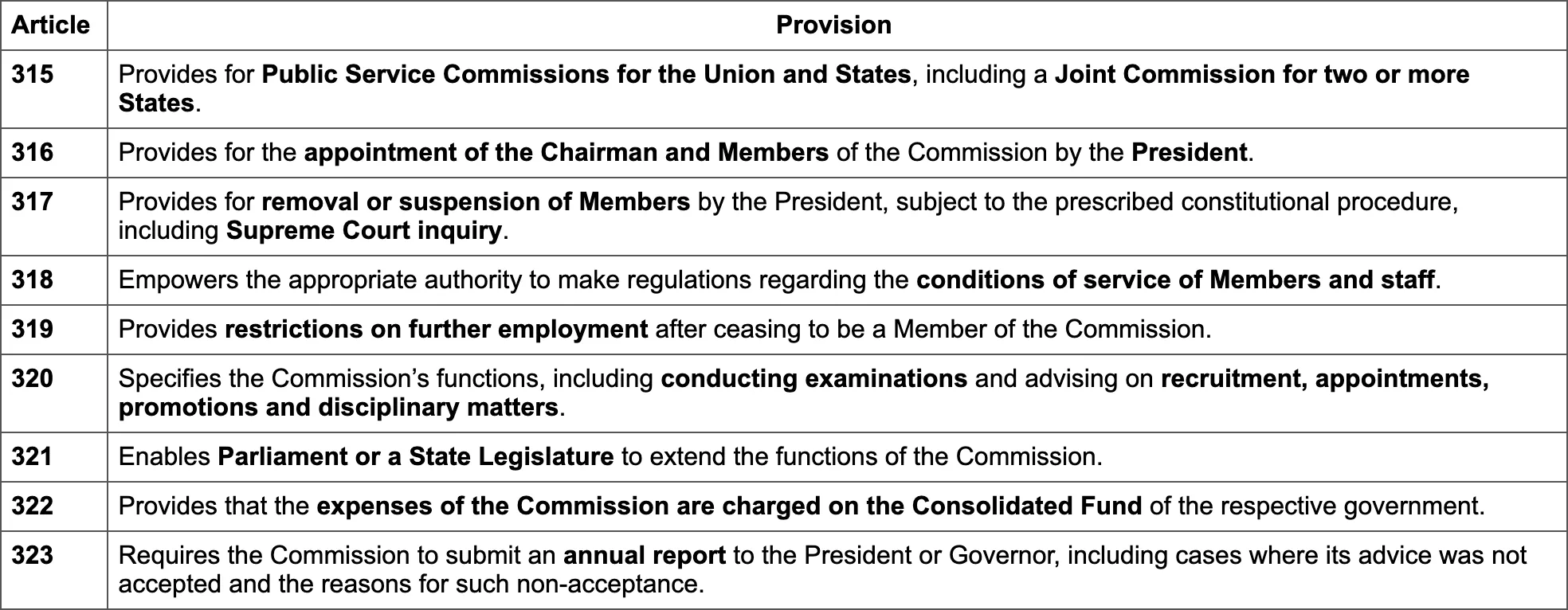
* **Constitutional Provisions:** The UPSC derives its constitutional status from Part XIV (Articles 315–323) of the Constitution.
* **Key Functions:**
* **Recruitment through Examinations:** Conducts examinations such as the Civil Services Examination (CSE), Indian Forest Service (IFoS), Engineering Services, Combined Medical Services, NDA & NA, CDS and CAPF (Assistant Commandants) examinations.
* **Direct Recruitment:** Conducts recruitment tests and interviews for specialised posts in Union Ministries and Departments.
* **Advisory Role:** Advises the government on recruitment rules, appointments, promotions, disciplinary matters and induction into All India Services.
* **Police Leadership:** Empanels senior IPS officers for appointment as Director General of Police (DGP)/Head of Police Force in States, following the Supreme Court's directions in Prakash Singh v. Union of India (2006).
* **Institutional Independence:**
* UPSC's autonomy is safeguarded through constitutional protection of tenure, regulated removal procedures, restrictions on post-tenure employment and financial provisions.
* These safeguards seek to protect the recruitment process against political interference, favouritism and nepotism.
* **Scale and Representation:**
* The Commission conducts around 14–15 major examinations and handles over 250 recruitment processes.
* Women's representation among candidates recommended through CSE increased from 3.6% in 1952 to 31.2% in 2025, reflecting greater participation in public services.
* In 2021, women appeared in the NDA & NA Examination for the first time.
**How Has UPSC Evolved Over the Last Century?**
* **Introduction of Competitive Recruitment (1855):**
* The Indian Civil Service (ICS) examination was introduced in London, replacing the East India Company's nomination-based system with open competition.
* However, the examination was conducted only in London and in English, with subjects such as Greek and Latin, restricting Indian participation.
* **Entry of Indians into the ICS:**
* Satyendranath Tagore became the first Indian ICS officer in 1864, after clearing the examination in 1863.
* By 1919, only 78 of 1,255 ICS officers were Indians, reflecting limited access under colonial rule.
* **Demand for a Public Service Commission (1919–1924):**
* The Government of India Act, 1919, based on the Montagu-Chelmsford Reforms, provided for establishing a Public Service Commission.
* In 1922, the ICS examination was conducted in India for the first time at Allahabad, alongside London.
* The Lee Commission (1924), chaired by Arthur Hamilton Lee, recommended the immediate establishment of a statutory Public Service Commission and greater Indian representation.
* **Establishment of the First Public Service Commission (1926):**
* India's first Public Service Commission was established on 1st October 1926 under the Public Service Commission (Functions) Rules, 1926, framed under Sections 96B and 96C of the Government of India Act, 1919.
* Sir Ross Barker was its first Chairman, assisted by four Members, and the Commission was initially housed at Metcalfe House, Delhi.
* Although primarily advisory with limited powers, it marked the beginning of permanent institutionalised public-service recruitment in India.
* **Transition to the Federal Public Service Commission (1937):**
* The Government of India Act, 1935 strengthened the institutional framework and provided for Federal and Provincial Public Service Commissions.
* On 1st April 1937, the Commission became the Federal Public Service Commission.
* Combined competitive examinations for multiple services began in 1938, while H.K. Kripalani became its first Indian Chairman in 1947.
* **Emergence of Constitutional UPSC (1950):**
* On 26th January 1950, the Federal Public Service Commission became the Union Public Service Commission, with R.N. Banerjee as Chairman.
* The Constitution granted UPSC independent constitutional status, with safeguards to ensure merit-based and impartial recruitment.
* **Expanding Inclusion and Accessibility:**
* **1992:** Rose Millian Bathew Kharbuli became UPSC's first woman Chairperson.
* **1994:** Scribes were introduced for visually impaired candidates, followed by wider accessibility provisions for eligible candidates with disabilities.
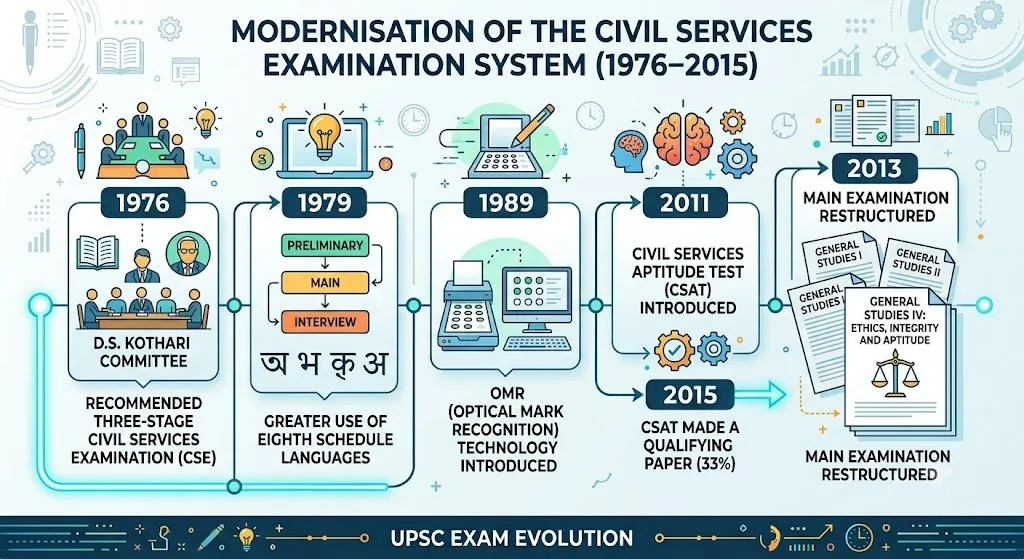
* **Digital Modernisation (2025–2026):** UPSC introduced the Universal Registration Number, randomised interview boards and Pratibha Setu in 2025. In 2026, it implemented AI-enabled facial authentication for approximately 5.50 lakh candidates during the Civil Services Preliminary Examination to strengthen examination security.
**Interesting Facts About UPSC**
* **Civil Services Day:** On 21st April 1947, Sardar Vallabhbhai Patel addressed the first batch of civil service probationers at Metcalfe House, Delhi, describing the civil services as the “steel frame of India”. The date is observed annually as Civil Services Day.
* **UPSC Headquarters:** Dholpur House, built in 1920 by Maharaja Rana Udaybhanu Singh of Dholpur, became UPSC's permanent headquarters in 1952.
* **Draft Constitution:** The provisions concerning Public Service Commissions were initially numbered Articles 284 and 285 when introduced by Dr. B.R. Ambedkar in the Constituent Assembly. They subsequently became Articles 315–323 of the Constitution.
* **UPSC Museum:** Established on 11th November 2016, the museum showcases the Commission's institutional history and offers a 360-degree virtual tour.
**Conclusion**
* UPSC's centenary reflects India's transition from colonial-era recruitment to an independent constitutional system rooted in merit, impartiality and equal opportunity. As governance challenges evolve, UPSC must balance its institutional independence and examination integrity with competency-based recruitment, technological innovation, transparency and aspirant well-being to build a capable, inclusive and future-ready civil service.
* “An institution that has endured for a hundred years does so not because it resists change, but because it knows what must never change.”
* — Dr. Ajay Kumar, Chairman, UPSC
## Reports & Indices
### World Development Report 2026: The Promise of Artificial Intelligence
[Source](https://www.drishtiias.com/current-affairs-news-analysis-editorials/news-analysis/10-10-2026#37936)
**Why in News?**
* The Union Ministry of Electronics & Information Technology launched the World Bank Group's World Development Report (WDR) 2026: The Promise of Artificial Intelligence. The event was organised under the IndiaAI Mission with the World Bank Group. The report was first released globally in August 2026.
What are the Key Highlights of the WDR 2026: The Promise of Artificial Intelligence Report?
* **Rapid Diffusion vs. The Adoption Gap:**
* AI is spreading faster than earlier General-Purpose Technologies (GPTs).
* Steam engines took 80 years, electricity 40 years, and the internet 20 years to reach lower-income economies; ChatGPT achieved 50% traffic from middle-income nations within six months.
* By April 2025, ChatGPT adoption reached 25% among internet users in high-income economies, compared to 5.8% (upper-middle), 4.7% (lower-middle), and 0.7% (low-income).
* Historic gains belong not necessarily to the inventors of GPTs, but to countries that quickly build foundational complements and deploy applications at scale.
* **The Three Cs Deciding AI’s Development Value:**
* **Capabilities:** AI automates non-routine cognitive functions (e.g., disease diagnosis, weather forecasting, farm advisory), bridging acute specialist shortages in developing regions.
* **Concentration:**
* Advanced compute, chip design, and frontier models remain concentrated in the US and China (with top US tech firms projected to spend over USD 750 billion on AI infrastructure in 2026).
* This creates structural dependency risks while offering cheaper access to pre-trained models.
* **Complements:**
* AI cannot function without reliable physical and institutional foundations.
* In Sub-Saharan Africa, 32% of rural schools lack electricity, 68% lack internet, and 89% of 10-year-olds struggle with foundational reading (2024).
* **"Small AI" in Low-Resource Settings:** Compact, low-compute models drive cost-effective public delivery in developing nations proven by Wadhwani AI’s "Cough Against TB" in India (90% screening accuracy) and the Rori learning platform in Ghana (delivering a full year of educational gains at \~\$5 per student).
* **Economic & Labor Market Impact:**
* While generative AI threatens automation for only 4.5% of jobs in developing countries (vs. 14.2% in high-income economies), productivity gains remain skewed toward advanced nations.
* Meanwhile, outsourced BPO (Business Process Outsourcing) gigs fell 39% in 2025, and domestic data centers increasingly stress local power and water grids.
* **Governance & Social Delivery:**
* AI delivers measurable public sector gains such as Kenya’s court case allocation (10,000+ disputes), India’s agricultural forecasting, and a 40% rise in daily diabetic eye screenings in Bangladesh though misaligned tools like failed automated cash transfers expose persistent data risks.
* In India, AI weather forecasts produced savings of as much as USD 560 per small farmer in the state of Telangana.
* **Geopolitics & Information Integrity:** Because full domestic AI sovereignty is cost-prohibitive, developing nations require open-source models and regional compute sharing to counter severe capital-labor wage disparities (e.g., Kenyan data labellers earning 1.32–2.00/hour) and acute disinformation risks where Africa has only 66 fact-checking bodies for 1.5 billion people.
* **The Global Preparedness Gap:** Over 80 countries had released national AI strategies by mid-2026, yet Rwanda remains the solitary low-income nation out of 25 to establish an official policy framework, leaving the most vulnerable economies structurally unready.
What are the Key Recommendations of the WDR 2026: The Promise of Artificial Intelligence Report?
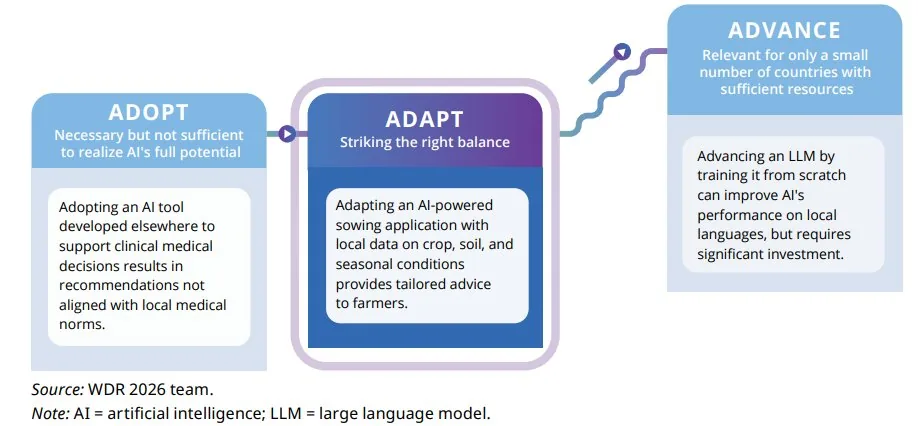
* **Follow the "Adopt, Adapt, Advance" Ladder:**
* **Adopt Off-the-Shelf Tools as a Starting Point:** Leverage existing open-source and commercial AI applications to resolve immediate bottlenecks (e.g., administrative triage, basic translation), recognizing that adoption alone is necessary but insufficient.
* **Prioritize "Adaptation" for Maximum Development Dividends:**
* Focus resources on tailoring models to local languages, agro-climatic conditions, and domestic healthcare protocols (preventing misdiagnoses caused by Western-trained data).
* Design multimodal solutions that function on low-cost technologies (such as voice-based applications over basic 2G/feature phones) to ensure digital inclusion.
* **Be Pragmatic on "Advancing" Frontier AI:** Avoid costly attempts to build frontier foundation models from scratch, which require billions in compute and massive energy grids. Instead, focus on "Small AI."
* **Governments as Enablers:**
* Governments should strengthen AI-ready foundations through reliable electricity, affordable broadband, digital literacy and foundational education, while democratizing access to compute and quality public datasets through Compute-as-a-Service and open data repositories.
* Labour and tax policies must also prevent premature job displacement due to AI automation.
* **Governments as Users:**
* Governments should move beyond fragmented AI pilot projects towards evaluated and scalable solutions. Public procurement can help test and scale domestic AI applications in agriculture, healthcare, education and social protection.
* Standardized, clean and AI-ready government data integrated with Digital Public Infrastructure (DPI) can improve public service delivery.
* **Governments as Regulators:**
* Governments should adopt agile, risk-based AI regulation, beginning with voluntary standards, algorithmic impact assessments and third-party audits.
* Existing consumer protection, competition, data protection and cyber laws should be enforced against AI-enabled fraud, deepfakes and algorithmic discrimination, while international regulatory coordination can ensure cross-border interoperability and reduce regulatory fragmentation.
* **Mitigate Structural Inequality:**
* Promote regional compute infrastructure through shared computing clusters and multilateral partnerships, while ensuring fair wages and labour protections for AI data-annotation and content-moderation workers.
* Also strengthen digital media literacy, fact-checking and synthetic-media watermarking to counter AI-driven disinformation and protect institutional trust.
**Conclusion**
* The World Development Report 2026 stresses that AI can drive development only when supported by infrastructure, skills, data and strong institutions. Developing countries should adopt, adapt and advance AI without succumbing to hype or fear. For India, key priorities include leveraging DPI while addressing job displacement, sovereign AI costs and data-centre fiscal risks.
## Schemes & Initiatives
### National PNG Drive 3.0
[Source](https://www.drishtiias.com/current-affairs-news-analysis-editorials/news-analysis/10-10-2026#37938)
The Petroleum and Natural Gas Regulatory Board (PNGRB) on its 20th Foundation Day (1st October 2026) launched the National PNG Drive 3.0 to accelerate the nationwide transition from Liquefied Petroleum Gas (LPG) to Piped Natural Gas (PNG), aligning with India's broader energy security and sustainability goals.
* **Primary Targets (FY 2027):**
* The initiative aims to add 50 lakh new domestic-PNG (D-PNG) connections, convert 40 lakh unbilled connections into active users, and register an additional 50 lakh users.
* Under PNG Drive 2.0 (January - June 2026), the government achieved 12.10 lakh new DPNG connections, 13.37 lakh billed connections and 15.31 lakh DPNG registrations.
* **Energy Security and Sustainability:** PNG supports increasing natural gas's share in India's primary energy mix from around 6%, promoting cleaner-burning fuels, diversified energy access and reliable household energy supply.
* **Environmental & Climate Goals:** The shift towards cleaner fuels directly aligns with India’s net-zero commitments and Sustainable Development Goals (SDGs) by increasing the share of natural gas in the national energy basket.
* **Geopolitical Catalyst:** The transition to PNG gained momentum during the West Asia crisis to reduce reliance on LPG, as LPG supplies are highly vulnerable to disruptions along critical maritime choke points like the Strait of Hormuz.
* **Government Policy Incentives:** To spur expansion, the Petroleum Ministry is incentivizing City-Gas Distributors (CGDs) by allocating an additional 200 standard cubic metres (SCM) of lower-priced Administered Price Mechanism (APM) natural gas for every incremental billed D-PNG connection.
* **Infrastructure Optimization:** The drive focuses on the gasification and maximum utilization of India's existing 6.9 lakh inch-kms of laid pipeline, which has the capacity to cater to 1.3 crore additional connections.
* **Key Learnings from Drive 2.0:**
* The previous drive identified a critical gap between connected and billed users, highlighting the need for localized strategies.
* Focusing on affordability and awareness in emerging geographical areas (GAs) and service-level engagement in mature markets.
## Security
### DRDO Successfully Tests High Altitude Platform System
[Source](https://www.drishtiias.com/current-affairs-news-analysis-editorials/news-analysis/10-10-2026#37937)
The Defence Research and Development Organisation (DRDO) successfully flight-tested an indigenously developed High-Altitude Platform System (HAPS), marking progress towards a long-endurance stratospheric surveillance platform.
* **About HAPS:**
* A High-Altitude Platform Station (HAPS) is a station carried by an aerial platform, such as an unmanned aircraft, airship or balloon, operating in the stratosphere.
* The International Telecommunication Union (ITU) defines HAPS as stations located on objects at altitudes of 20–50 km, positioned at specified points relative to Earth.
* **Altitude:** The experimental platform reached 21 km above mean sea level and remained at 20 km for over 30 minutes.
* **Developer:** The Aerial Delivery Research and Development Establishment (ADRDE), Agra, a DRDO laboratory, developed the lighter-than-air platform for sustained stratospheric operations.
* **Technology:** The platform carried an Inertial Measurement Unit (IMU), GPS receiver, onboard cameras and an altitude-control mechanism for navigation, monitoring and control.
* **Real-Time Monitoring:** Video footage and flight parameters were continuously transmitted to the Ground Control Station, demonstrating the intended flight performance.
* **Trial and Recovery:** The platform was commanded to descend and successfully recovered, with flight-performance data subsequently analysed for further development.
* **Institutional Coordination:** The trial involved the Indian Air Force (IAF), Centre for Military Airworthiness and Certification (CEMILAC), Directorate General of Civil Aviation (DGCA), Airports Authority of India (AAI) and other civil authorities.
* **Strategic Significance:**
* HAPS can bridge the operational gap between aircraft and satellites, enabling persistent surveillance, intelligence gathering, Earth observation, communications and disaster response.
* Its recoverability for maintenance and upgrades enhances operational flexibility while strengthening indigenous aerospace capabilities under Aatmanirbhar Bharat.
## Visits & Conferences
### 3rd International Bharat 6G Symposium 2026
[Source](https://www.drishtiias.com/current-affairs-news-analysis-editorials/news-analysis/10-10-2026#37939)
The 3rd International Bharat 6G Symposium 2026 was inaugurated by the Union Minister for Communications in New Delhi.
* **About Symposium:**
* Organised by the Bharat 6G Alliance (B6GA), it brings together governments, industry, academia and global technology alliances to advance 6G development.
* B6GA signed 5 Memoranda of Understanding (MoUs) with GSMA, one6G Association, GTI Alliance, 6G Industry Forum and VoICE.
* **Key Highlight:**
* A joint report was released to mark one year of progress since the New Delhi Declaration was adopted at the International Bharat 6G Symposium 2025.
* The report promotes secure, open, interoperable, inclusive and sustainable 6G through global cooperation.
* **Bharat 6G Vision:**
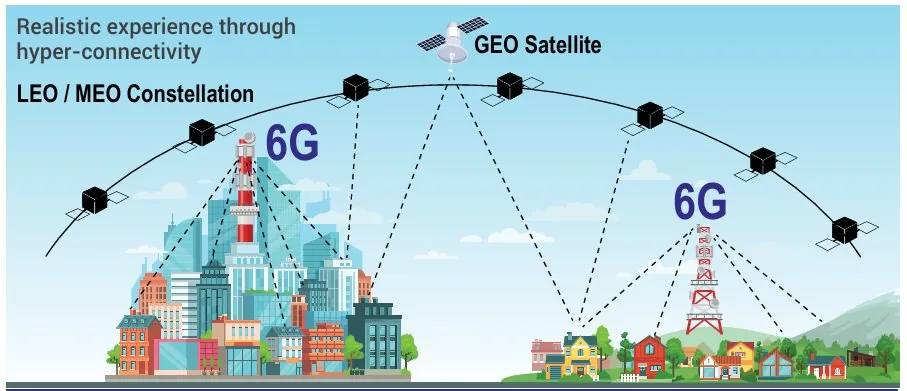
* Launched in 2023, it aims to make India a front-line contributor in the design, development and deployment of 6G technology by 2030.
* India is building a 6G-ready ecosystem under this vision through indigenous research, startup support and industry–academia collaboration, via:
* **100 Fifth-Generation (5G) Labs:** Promote telecom research, experimentation and skill development.
* **Telecom Technology Development Fund (TTDF):** Supports indigenous research and development in telecom technologies, including 5G and 6G.
* **Bharat 6G Alliance:** Brings together industry, telecom providers, academia and research institutions to promote indigenous 6G R\&D and build a globally competitive ecosystem.
* **Global Initiatives on 6G:**
* **North America:** NextG Alliance
* **Europe:** 6G IA
* **China:** IMT 2030PG initiative Future Forum
This documentation is built and hosted on [Mintlify](https://mintlify.com), a developer documentation platform.