> ## Documentation Index
> Fetch the complete documentation index at: https://signals.joincomrades.com/llms.txt
> Use this file to discover all available pages before exploring further.
# 13 Oct 2026 · Dispatch
> Comrades Dispatch of 13 Oct 2026, by news group.
> **[Comrades Dispatch · 13 Oct 2026 (PDF)](https://dl.joincomrades.com/d/13-10-26)**
***
## In this edition
1. [Nobel Prize in Economic Sciences 2026](#h-1) Awards & Recognition
2. [Super El Niño 2026–27 and the Tamil Nadu Anomaly](#h-2) Environment & Ecology
3. [India’s 1st High-Altitude Health Research Centre](#h-3) Health & Medicine
4. [US PERM Suspension & ‘Indentured Servants’ Row](#h-4) International Relations
5. [Denotification of Jantar Mantar as a Designated Protest Site](#h-5) Places in News
6. [Delhi Protests: Balancing Right to Protest with Public Order](#h-6) Polity & Governance
7. [Prime Minister Dhan-Dhaanya Krishi Yojana](#h-7) Schemes & Initiatives
8. [Indian Navy Commissions INS Mangrol](#h-8) Security
9. [Wild Buffalo Reintroduction in Kanha Tiger Reserve](#h-9) Wildlife
## Awards & Recognition
### Nobel Prize in Economic Sciences 2026
[Source](https://www.drishtiias.com/current-affairs-news-analysis-editorials/news-analysis/13-10-2026#37986)
**Why in News?**
* The Royal Swedish Academy of Sciences awarded the 2026 Sveriges Riksbank Prize in Economic Sciences in Memory of Alfred Nobel (commonly known as the Nobel Prize in Economic Sciences) to two American economists - Robert E. Hall (Stanford University) and Michael Woodford (Columbia University).
* They were honoured "for microeconomic foundations of macroeconomic stabilisation", demonstrating how individual household consumption trends and business pricing expectations shape broader macroeconomic policies (fiscal and monetary policy).
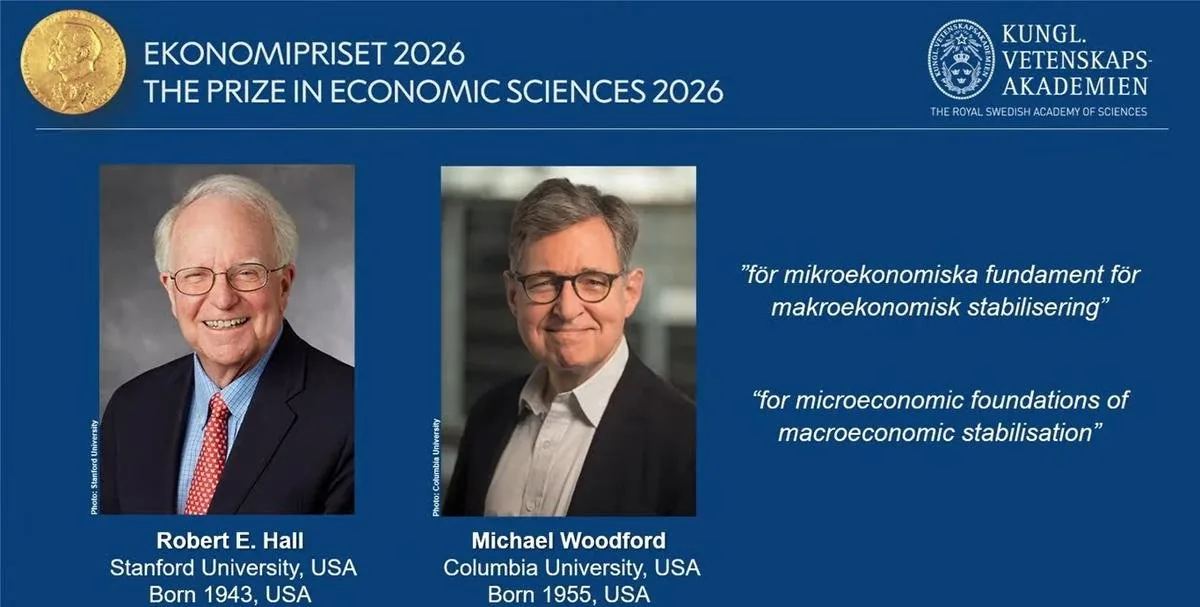
What are the Key Facts about the 2026 Nobel Prize in Economic Sciences?
* **Background:**
* Traditional Keynesian models assumed that relationships between macroeconomic variables (like inflation and unemployment) were stable. However, this failed during the 1970s oil shocks, leading to stagflation (stagnant growth, high unemployment, and persistent inflation).
* Economist Robert Lucas (in 1976) argued that human behaviour is not a fixed system. When central banks implement policies based on past data, consumers and businesses adapt their behaviour based on the new policies, thereby weakening or altering the intended economic effects.
* Robert E. Hall’s Contribution (Household Behaviour):
* **Forward-Looking Consumption:** Hall established that a household's current consumption is not just based on current income, but deeply reflects people’s expectations about their future lifetime wealth.
* **The "Random Walk" Hypothesis (1978):** He established that because people already factor in everything they know about the future, changes in consumption only happen when unexpected, new information (like a surprise financial windfall or a sudden job loss) arrives. Thus, future consumption follows a "random walk" and cannot be predicted using past economic variables.
* **Labour Market Frictions:** He also showed that labour markets suffer from search frictions (the time and effort it takes to match workers with jobs), explaining why high unemployment can linger long after an economic recovery begins.
* Michael Woodford’s Contribution (Central Banking & Firm Behaviour):
* **The New Keynesian Prototype:** Woodford combined Hall’s insights on human expectations with how businesses operate. He noted that businesses face "Sticky Prices"—they cannot change prices instantly due to operational costs (menu costs). Therefore, they set prices today based on what they expect inflation and central bank policies to be in the future.
* **Forward Guidance:** He highlighted how credible and transparent central bank communication about future monetary policy can influence present consumption, investment and inflation expectations, improving the effectiveness of stabilisation policies.
* Significance
* **Bedrock of Modern Central Banking:** Their micro-founded models (New Keynesian models) are now the standard framework used by central banks globally, including the Reserve Bank of India (RBI) and the US Federal Reserve, to quantify how policy affects business cycles.
* **Solving the 1970s Failure:** Traditional economics failed during the 1970s stagflation because it treated human behaviour as fixed. Hall and Woodford solved this by proving that policies only work if they account for how humans adapt their future expectations.
* **Navigating Modern Crises:** Their framework equips policymakers to handle global supply shocks (like pandemics or wars) by anchoring public inflation expectations, ensuring that inflationary spikes do not spiral out of control.
**What is Macroeconomic Stabilisation Policy?**
* **Definition:** Macroeconomic stabilisation policy refers to a macroeconomic strategy enacted by governments and central banks to keep economic growth stable, minimize fluctuations in unemployment, and keep inflation under control.
* **Origin:** The concept emerged prominently during the Great Depression (1929-1939) through the work of John Maynard Keynes, who argued that free markets do not automatically self-correct and require state intervention during severe downturns.
* **Two Primary Pillars:**
* **Monetary Policy:** Managed by the Central Bank (e.g., adjusting interest rates, controlling the money supply).
* **Fiscal Policy:** Managed by the Government (e.g., altering tax rates, adjusting public expenditure).
* **Role of Stabilisation Policy:**
* **Smoothing Business Cycles:** Reduces economic fluctuations, preventing overheating and deep recessions.
* **Price Stability:** Controls inflation and protects purchasing power.
* **Full Employment:** Boosts aggregate demand during downturns to support job creation.
* **Anchoring Expectations:** Transparent policies and forward guidance help households and businesses plan consumption and investment.
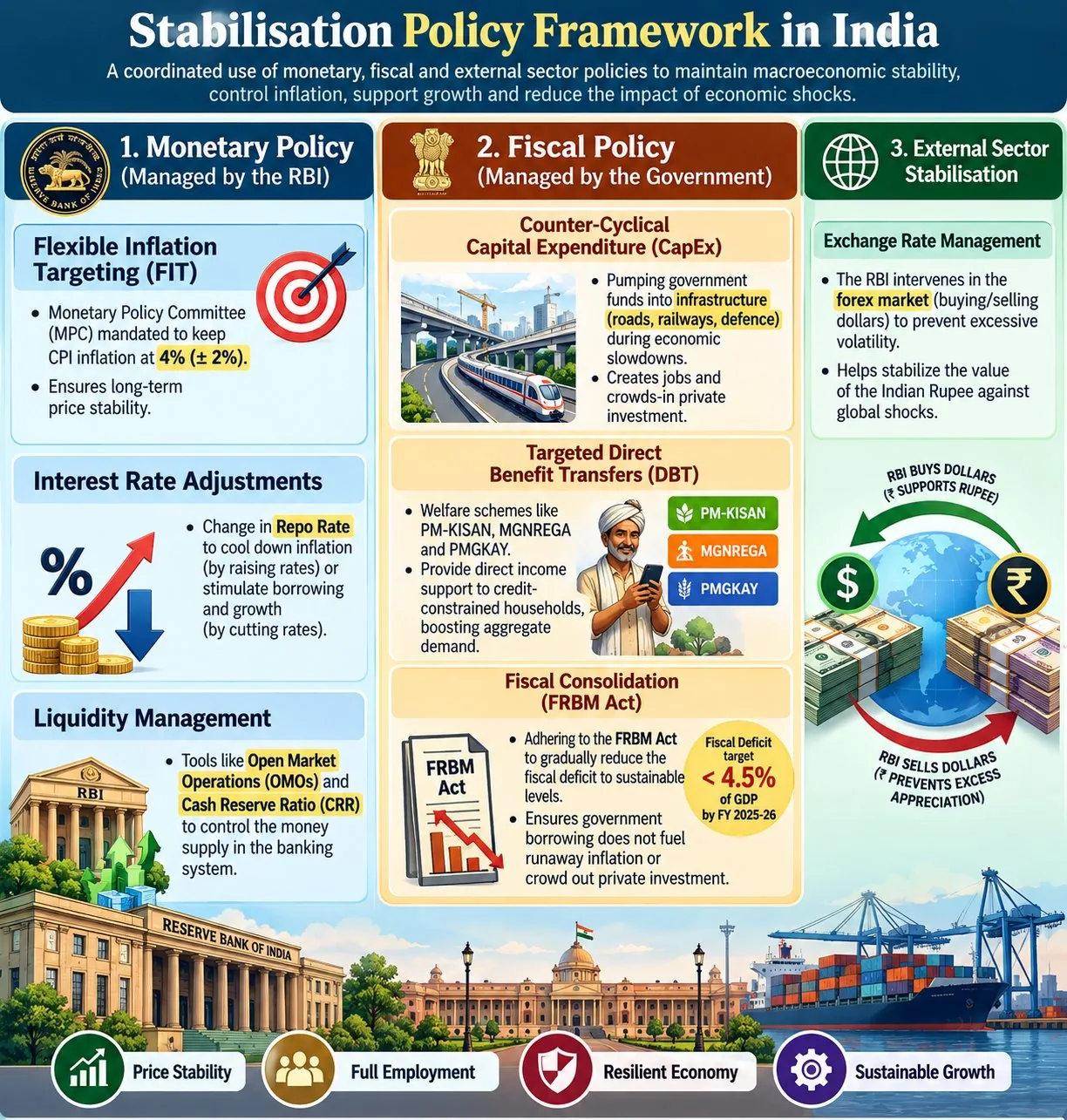
**Did you Know?**
* Unlike Physics, Chemistry, Medicine, Literature, and Peace (established by Alfred Nobel's 1895 will and first awarded in 1901), the Economics Prize was established later in 1968 by a donation from Sveriges Riksbank (Sweden’s central bank) on its 300th anniversary and first awarded in 1969 (to Ragnar Frisch and Jan Tinbergen).
* **Awarding Body:** Selected and awarded by the Royal Swedish Academy of Sciences, Stockholm.
* **Indian Laureates:**
* **Amartya Sen (1998):** Awarded the Nobel Prize in Economic Sciences for his work on welfare economics, poverty, and human development, emphasizing that economic growth alone is insufficient, and development must focus on capabilities, rights, and freedoms.
* **Abhijit Banerjee (2019):** Shared the Nobel Prize in Economic Sciences with Esther Duflo and Michael Kremer for their pioneering work on experimental approaches to alleviating global poverty, introducing randomized controlled trials (RCTs) to evaluate social and economic interventions.
## Environment & Ecology
### Super El Niño 2026–27 and the Tamil Nadu Anomaly
[Source](https://www.drishtiias.com/current-affairs-news-analysis-editorials/news-analysis/13-10-2026#37989)
**Why in News?**
* The World Meteorological Organization (WMO) has warned that the ongoing 2026–27 El Niño could become one of the strongest on record (a potential Super El Niño), with Niño 3.4 sea surface temperature (SST) anomalies projected to reach approximately +3.7°C during October–December 2026.
* While El Niño generally weakens India's Southwest Monsoon, Tamil Nadu can experience enhanced Northeast Monsoon (October–December) rainfall, increasing the risk of extreme rainfall and flooding.
**What is a "Super El Niño"?**
* **El Niño:**
* **About:** It is the warm phase of the El Niño–Southern Oscillation (ENSO), a recurring coupled ocean-atmosphere phenomenon in the central and eastern tropical Pacific Ocean that occurs every 2 to 7 years.
* **Threshold:** El Niño is identified when sea surface temperatures (SST) in the Niño 3.4 region remain at least +0.5°C above normal for five consecutive overlapping three-month periods, as measured by the Oceanic Niño Index (ONI).
* **Mechanism:** Easterly trade winds weaken or reverse into westerlies, pushing warm surface water toward the South American coast (Peru/Ecuador) and suppressing cold-water upwelling (Peruvian/Humboldt Current).
* **"Super El Niño" Status:** "Super El Niño" is an informal, popular term, it refers to an extreme El Niño event in which Niño 3.4 sea surface temperature anomalies reach +2.0°C or higher above average, with some eastern Pacific areas exceeding +3.0°C, significantly altering global atmospheric circulation and weather patterns.
* **Historical Context in India:**
* **1876–78 (Strongest Recorded Event):** Triggered the catastrophic Great Madras Famine in British India, causing extreme drought across the Deccan and millions of fatalities.
* **The 1997–98 Exception:** Despite 1997–98 being a powerful Super El Niño, India received normal Southwest Monsoon rainfall because it was counterbalanced by a strong Positive Indian Ocean Dipole (+IOD).
* **2015–16 Event:** Caused back-to-back Southwest Monsoon droughts across interior India while simultaneously triggering the devastating December 2015 Chennai floods during the Northeast Monsoon.
**Factors Influencing El Niño's Impact on India:**
* **Shift in the Walker Circulation:** During El Niño, the ascending (rain-bearing) limb of the east-west Walker Circulation shifts to the central/eastern Pacific, while its descending limb (high-pressure, dry sinking air) settles over the Indian Ocean and Indian subcontinent, suppressing Southwest Monsoon cloud formation.
* **Indian Ocean Dipole (IOD):**
* Known as the "Indian Niño," it is the SST gradient between the Western Equatorial Indian Ocean (Arabian Sea) and the Eastern Equatorial Indian Ocean (near Indonesia).
* A Positive IOD (warmer Arabian Sea) strengthens the Indian monsoon and neutralises El Niño droughts, whereas a Negative IOD compounds the drought.
* **Location of Pacific Warming:**
* **Canonical (Standard) El Niño:** Warming occurs in the Eastern Pacific (off the coast of Peru), which typically suppresses the Southwest Monsoon across India.
* **El Niño Modoki:** Warming occurs in the Central Pacific (flanked by cooler water on both the east and west). This splits the atmospheric wind loop into two cells, increasing cyclones in the Arabian Sea while reducing them in the Bay of Bengal.
* **Madden-Julian Oscillation (MJO):**
* Unlike El Niño (which stays in the Pacific), the MJO is a moving band of rain clouds and winds that travels eastward around the equator every 30 to 60 days.
* When its active (wet) phase passes over the Indian Ocean during the monsoon, it brings temporary heavy rainfall bursts, helping revive the monsoon even during an El Niño year.
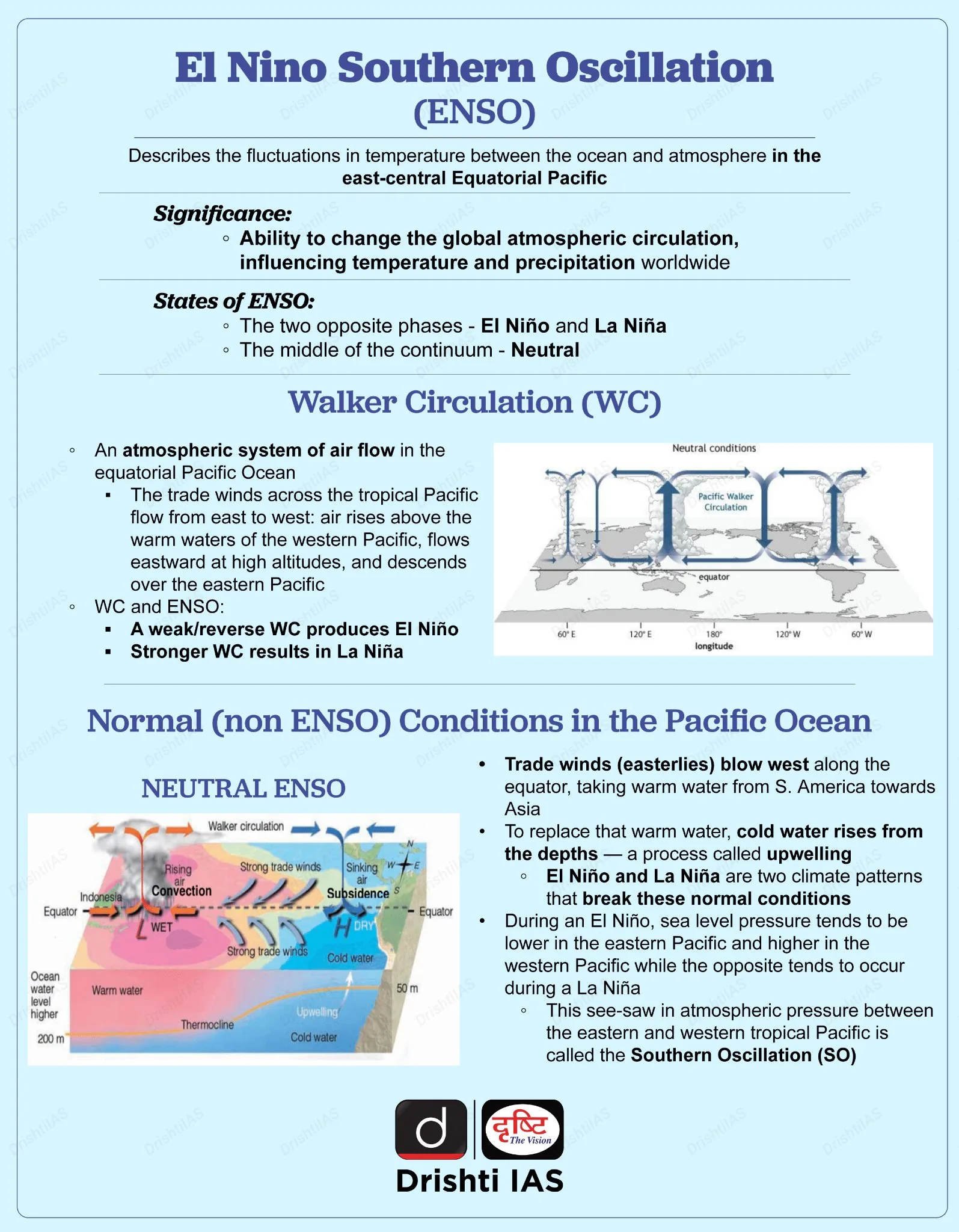
**Why Does Tamil Nadu Encounter El Niño Differently?**
* **Reliance on the Northeast Monsoon (Oct–Dec):** Unlike the rest of India (which depends on the June–September Southwest Monsoon), Tamil Nadu lies in the Western Ghats' rain-shadow and gets nearly 48–50% of its annual rain from the retreating Northeast Monsoon.
* **The "Wind Tunnel" Effect:** During strong El Niño events, pressure differences between the Bay of Bengal and the Arabian Sea can channel moisture-laden winds towards coastal Tamil Nadu, potentially intensifying Northeast Monsoon rainfall.
* **Warmer Bay of Bengal & High Evaporation:**
* Weakened winds and clear skies during El Niño allow sunlight to heat the southern Bay of Bengal (up by \~1°C).
* The Bay's shallow mixed layer and salinity stratification can retain heat near the surface, increasing the moisture available to developing rain-bearing systems.
* **Supercharged Cyclones & Depressions:** When retreating northeasterly winds and low-pressure depressions pass over these abnormally warm Bay waters in November–December, they absorb massive heat and moisture releasing it as intense, localized downpours and cyclones along the Tamil Nadu coast.
* **Role of East India Coastal Current (EICC):**
* Along the Tamil Nadu coast, the EICC undergoes a unique seasonal reversal between February and November (changing direction from northward to southward).
* This shift alters coastal sea surface temperatures and helps low-pressure rain systems form and intensify.
* Additionally, equatorial ocean currents in the western Indian Ocean which normally flow eastward have reversed to flow westward in 2026, pushing even more warm water toward the Indian coast.
## Health & Medicine
### India’s 1st High-Altitude Health Research Centre
[Source](https://www.drishtiias.com/current-affairs-news-analysis-editorials/news-analysis/13-10-2026#37988)
The foundation stone of the ICMR Centre for High Altitude Medicine and Public Health Research (ICMR-CHAMP) was laid at Keylong in Lahaul and Spiti district, Himachal Pradesh, to strengthen research on high-altitude health challenges.
* **About:** Building on an ICMR field station established at Keylong nearly a decade ago, the Centre is envisaged as a permanent, year-round research institution with advanced laboratories and specialised personnel.
* **Research Focus:** The Centre will study the health effects of low oxygen levels, extreme cold, changing climatic conditions and distinctive lifestyles of Himalayan tribal communities.
* **Institutional Collaboration:** The Centre will combine the expertise of ICMR, Armed Forces Medical Services (AFMS), AIIMS Bilaspur and other research institutions, while promoting community participation in high-altitude health research.
* **Armed Forces Relevance:** Research will support acclimatisation, early detection and treatment protocols for Armed Forces personnel deployed in challenging high-altitude environments.
* **Civilian Health:** The Centre will address altitude-related health risks, maternal and newborn health, child growth and nutrition, and disease patterns among Himalayan communities.
* **Technology in Healthcare:** It will explore drone-enabled medicine delivery, digital health and Artificial Intelligence to improve healthcare access in remote and difficult-to-reach areas.
## International Relations
### US PERM Suspension & ‘Indentured Servants’ Row
[Source](https://www.drishtiias.com/current-affairs-news-analysis-editorials/news-analysis/13-10-2026#37983)
India’s Ministry of External Affairs (MEA) sharply rebuked US characterization of foreign tech workers as "indentured servants," following the US Department of Labor’s (DoL) decision to freeze Program Electronic Review Management (PERM) applications for eight global tech majors, including five India-centric IT firms (TCS, Infosys, Wipro, HCL Technologies, and Cognizant).
* **PERM Programme:**
* Managed by the US DoL, PERM is the official electronic system for obtaining a Permanent Labor Certification - the mandatory first step for employers sponsoring foreign workers for Permanent Residency (Green Cards) under the EB-2 (Employment-Based 2nd Preference: professionals with advanced degrees or exceptional ability) and EB-3 (Employment-Based 2nd Preference: skilled workers, professionals with a bachelor's degree, and other workers) categories.
* It requires a Labour Market Test proving that no qualified U.S. workers are available for the role and that hiring foreign nationals will not depress local wages.
* **PERM vs. H-1B Visa:** While the H-1B is a non-immigrant (temporary) work visa (valid for 3–6 years, where Indians hold \~70–72% share) that remains unaffected by the current freeze, PERM is an immigrant pathway toward permanent settlement.
* **Historical Context of "Indentured Servitude" (Girmitiya System):**
* Introduced by the British after the abolition of slavery in 1833, the indentured labour system transported over 1.5 million Indians under penal 5-year contracts (Girmit) to plantations in Fiji, Mauritius, Trinidad & Tobago, Guyana, Suriname, South Africa, and Malaysia.
* The MEA rejected comparing this colonial bondage to Indian STEM professionals, who are the highest-earning ethnic demographic in the US.
* **Broader Strain in India–U.S. Bilateral Ties:**
* While strategic cooperation under Quad, US-India COMPACT (Catalyzing Opportunities for Military Partnership, Accelerated Commerce & Technology) and iCET (Initiative on Critical and Emerging Technology) remains strong. Their economic and trade relations are facing fresh strain due to three main triggers:
* **Curbs on Indian Skilled Workers:** US protectionist policies are restricting the cross-border movement of Indian professionals (known as Mode 4 under WTO's General Agreement on Trade in Services (GATS)), which is a major strength of India's service economy.
* **High Visa Costs:** The US recently imposed a steep USD 100,000 one-time fee on new H-1B visa applications, making it much more expensive to send Indian tech workers onsite.
## Places in News
### Denotification of Jantar Mantar as a Designated Protest Site
[Source](https://www.drishtiias.com/current-affairs-news-analysis-editorials/news-analysis/13-10-2026#37990)
**Why in News?**
* The Delhi Police de-notified Jantar Mantar as a designated protest site following recommendations of a Ministry of Home Affairs (MHA) committee, identifying Ramlila Ground, Burari Ground and CBD Ground (East Delhi) as alternative venues for protests and demonstrations.
**What are the Key Facts About Jantar Mantar?**
* **Historical Origins:**
* Built in 1724 by the Rajput ruler Maharaja Sawai Jai Singh II of Jaipur.
* It was the first of five such observatories built across India (the others being in Jaipur, Ujjain, Varanasi, and Mathura).
* **Meaning of the Name:** Derived from the Sanskrit words 'Yantra' (instrument) and 'Mantra' (calculation or formula).
* **Architectural Marvel:**
* Jantar Mantar in New Delhi is an observatory, designed to be used with the naked eye. It consists of 13 architectural astronomical instruments.
* **Samrat Yantra:** A giant \~70-foot-high triangle serving as an equal-hour sundial that accurately measures the time of day.
* **Misra Yantra:**
* Designed to determine the shortest and longest days of the year (solstices).
* Unlike most other structures at the observatory, Misra Yantra was not invented or commissioned by Maharaja Sawai Jai Singh II (it is believed to have been added later by his son, Madho Singh).
* **Jaya Prakash & Ram Yantras:** Hollowed-out and cylindrical structures used to map celestial coordinates and track the altitude and azimuth of stars.
* **Heritage Status:**
* The Delhi observatory is protected by the Archaeological Survey of India (ASI) as a Monument of National Importance.
* The Jaipur Jantar Mantar was inscribed on the UNESCO World Heritage List in 2010, and UNESCO recognises it as the most comprehensive and best-preserved of Jai Singh II's observatories. It features the world's largest stone sundial (the Samrat Yantra).
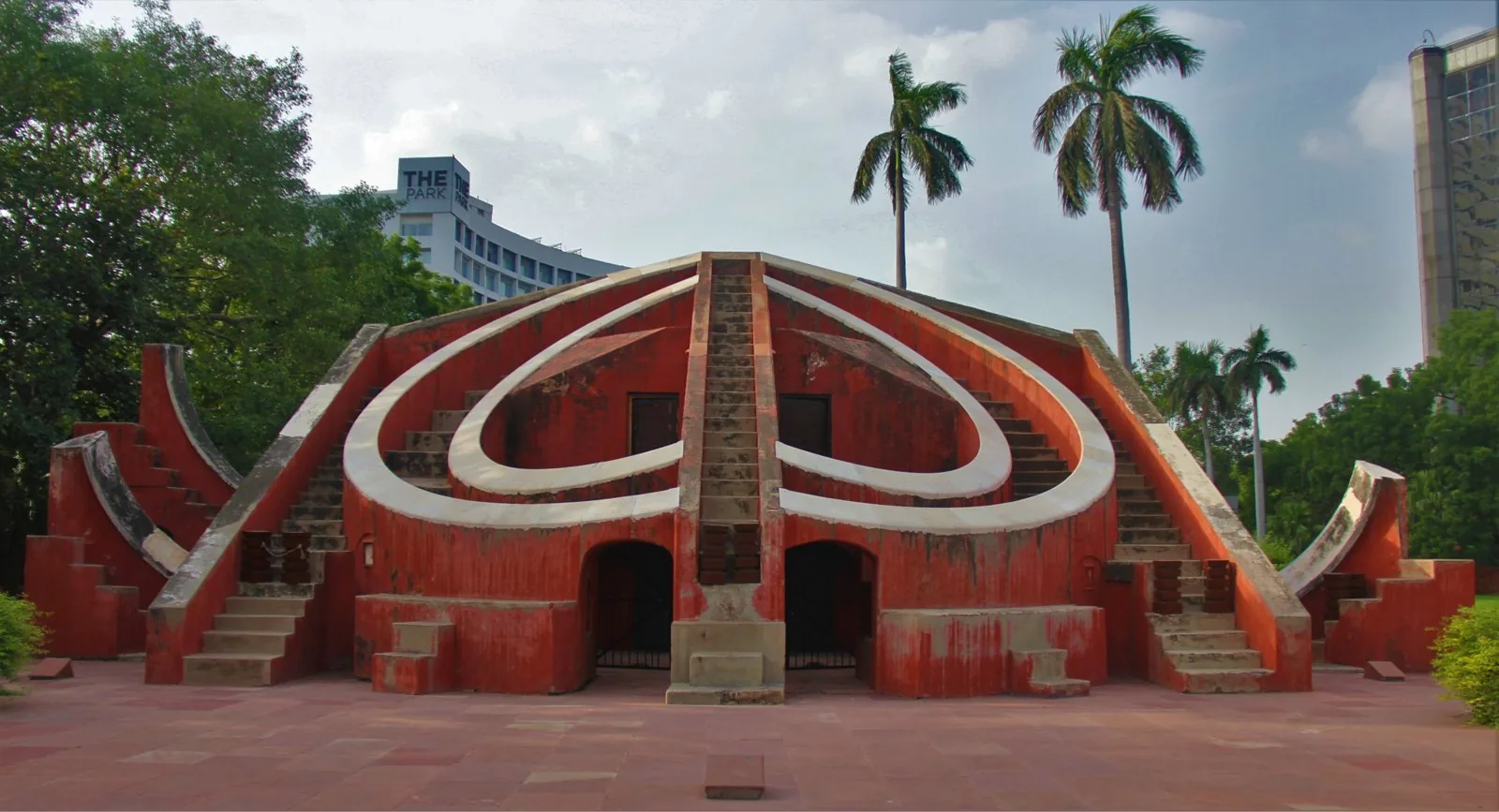
What is the Historical Context of Protests at Jantar Mantar?
* **Shift from the Boat Club (1993):**
* Until the early 1990s, the Boat Club lawns at India Gate were the epicenter of massive public rallies in India (e.g., the massive 1988 farmers' protest).
* In 1993, citing VVIP security and traffic chaos, the government banned rallies at the Boat Club, establishing Jantar Mantar as the new designated protest space.
* **Jantar Mantar as the “Speaker’s Corner”:**
* For nearly three decades, Jantar Mantar and the adjoining Jantar Mantar Road served as a prominent venue for public demonstrations, earning a reputation as India’s equivalent of London’s Hyde Park.
* Its proximity to Parliament and central ministries made it the preferred, highly visible venue for landmark democratic movements like the 2011 India Against Corruption movement (Jan Lokpal Bill), the Justice for Nirbhaya (2012) protests, Anti-CAA & Article 370 Protests (2019), Wrestlers' Protest (2023) and recent NEET-UG Protests (2026).
* **The NGT Ban (2017):** The National Green Tribunal (NGT) imposed a complete ban on protests at Jantar Mantar, arguing that the noise pollution and lack of sanitation violated the local residents' right to a healthy environment under Article 21.
* **The Supreme Court Reversal (2018):** In the Mazdoor Kisan Shakti Sangathan v. Union of India case, the Supreme Court struck down the NGT's blanket ban. The Court ruled that prohibiting protests entirely in Central Delhi violates the fundamental right to peaceful assembly (Article 19(1)(b)) and ordered the police to frame balanced regulations instead of an outright ban.
**Regulation of Protest Sites in Delhi**
* **Constitutional Guarantee:** Article 19 of the Indian Constitution guarantees the fundamental rights to freedom of speech and expression and the right to assemble peaceably without arms.
* **Reasonable Restrictions:** These rights are not absolute and are subject to reasonable restrictions under Article 19(2) and 19(3), primarily in the interest of "public order."
* **Jurisdiction in Delhi:**
* Unlike other states where the state government controls the police, Delhi has a unique constitutional status.
* Under Article 239AA(3)(a), the Delhi Legislative Assembly cannot make laws regarding Entries 1, 2, and 18 of the State List, which cover Public Order, Police, and Land.
* **Role of the MHA:**
* Consequently, the Delhi Police functions under the Union Ministry of Home Affairs (MHA).
* It is the Delhi Police that evaluates applications, grants permissions, and regulates compliance for individual demonstrations at designated sites.
What are the Key Supreme Court Judgments on Protest Sites?
* **Himat Lal K. Shah v. Commissioner of Police (1972):** The Court recognised the right to hold public meetings under Article 19(1)(a) and Article 19(1)(b). The State may regulate gatherings but cannot arbitrarily prohibit them everywhere.
* **In Re:** Ramlila Maidan Incident (2012) The Court protected peaceful assembly against arbitrary police action and emphasised that restrictions must be justified by the circumstances and applicable law.
* **Mazdoor Kisan Shakti Sangathan v. Union of India (2018):** The Court stressed balancing protesters’ rights with residents’ rights, favouring regulated protest spaces over a blanket ban on demonstrations at Jantar Mantar.
* **Amit Sahni v. Commissioner of Police (2020):** The Court held that public roads cannot be occupied indefinitely for protests, as this affects the rights of other citizens and disrupts public movement.
**How Have Protest Methods Evolved in India?**
* **The Colonial Era (Pre-1947):**
* The Foundation of Satyagraha
* **Methods:** Driven by Mahatma Gandhi’s principles of Satyagraha and Ahimsa.
* **Tools:** Mass civil disobedience, economic boycotts (Swadeshi), peaceful law-breaking (e.g., the Salt March), and non-cooperation to paralyze the colonial administration.
* **Post-Independence (1950s–1980s):**
* Mass Uprisings & The Boat Club Era
* **Methods:** Direct institutional confrontation, trade union strikes, and agrarian mobilization.
* **Tools:** Gherao (encirclement of officials) and Rasta Roko (roadblocks). The era was defined by massive, centralized rallies at India Gate’s Boat Club and the Total Revolution (Sampoorna Kranti) of the 1974 JP Movement.
* **The 1990s to 2010s:**
* Issue-Based Activism & The Jantar Mantar Era
* **Methods:** Driven by an expanding middle class, civil society, and a 24/7 media cycle.
* **Tools:** Public Interest Litigations (PILs) for judicial intervention, public hearings (Jan Sunwais) which led to the RTI Act (2005), candlelight marches, and televised indefinite fasts (e.g., the 2011 India Against Corruption movement at Jantar Mantar).
* **The Contemporary Era (2010s–Present):**
* Digital & Decentralized
* **Methods:** Organic, highly decentralized, and often "leaderless" movements addressing identity, citizenship, and economics.
* **Tools:**
* **Spatial Occupation:** Indefinite sit-ins on public arterial roads (e.g., Shaheen Bagh 2019-20) and establishing parallel townships at city borders (Farmers' Protest 2020-21).
* **Algorithmic Activism:** Rapid mobilization using hashtag campaigns, digital "toolkits," and global social media coordination.
**Conclusion**
* Dissent is the lifeblood of a vibrant democracy. The State must ensure smooth traffic movement and protect residents’ rights while facilitating peaceful protests through effective regulation and designated spaces, thereby upholding constitutional values and strengthening democratic participation.
## Polity & Governance
### Delhi Protests: Balancing Right to Protest with Public Order
[Source](https://www.drishtiias.com/current-affairs-news-analysis-editorials/news-analysis/13-10-2026#37982)
**Why in News?**
* A wave of protests in New Delhi, including demonstrations against the Chief Election Commissioner (CEC), led to large-scale detentions of youth, journalists, and activists. The situation escalated when the Delhi Police invoked Section 163 of the Bharatiya Nagarik Suraksha Sanhita (BNSS), 2023, to ban unauthorised assemblies and utilized Sections 170 and 172 of the BNSS for pre-emptive detentions.
* The crackdown drew severe criticism, with the United Nations expressing concern over "mass detentions" and legal experts questioning the procedural grounds.
* Intervening in the matter, the Supreme Court ordered a halt to arbitrary detentions and scrutinised the routine use of prohibitory orders, bringing the constitutional balance between Public Order and the Right to Protest into sharp focus.
**What is Public Order?**
* **About:**
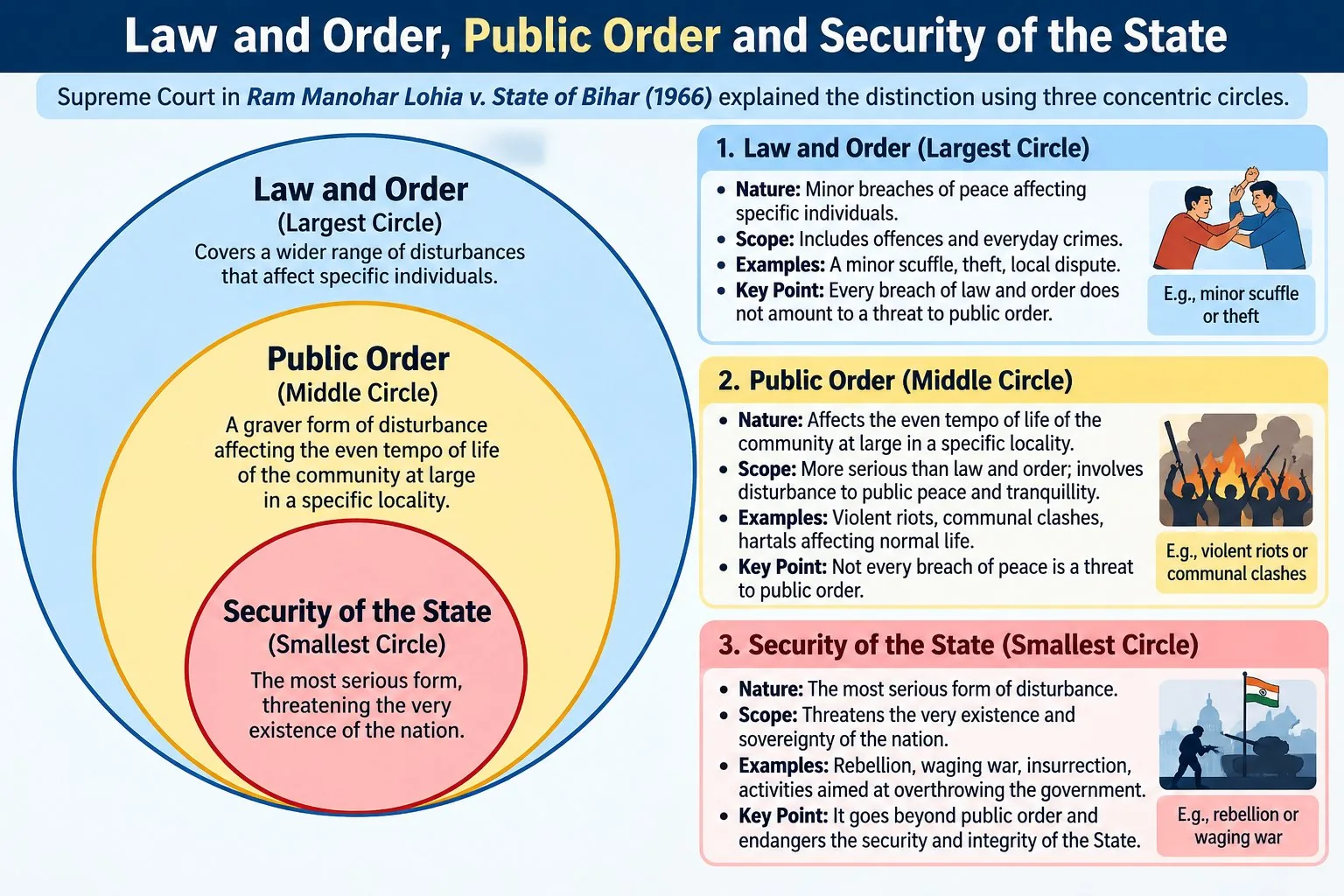
* In Ram Manohar Lohia v. State of Bihar (1966), the Supreme Court explained the difference between Law and Order, Public Order, and Security of the State using three concentric circles:
* **Law and Order (Largest Circle):** Affects specific individuals (e.g., a minor scuffle or theft).
* **Public Order (Middle Circle):** Affects the even tempo of life of the community at large in a specific locality (e.g., violent riots, communal clashes). Every breach of peace is not a threat to public order.
* **Security of the State (Smallest Circle):** Threatens the very existence of the nation (e.g., rebellion, waging war).
* **Responsibility of Public Order (Seventh Schedule of the Constitution):**
* **State List (List II):** Entry 1 (Public Order) and Entry 2 (Police) are exclusively under the jurisdiction of State Governments.
* **Exception for Delhi (NCT):** Under Article 239AA (inserted by the 69th Constitutional Amendment Act, 1991), while Delhi has an elected legislative assembly, Public Order, Police, and Land are excluded from its purview and remain directly under the Union Government (Ministry of Home Affairs).
* **Concurrent List (List III):** Entry 1 (Criminal Law) and Entry 2 (Criminal Procedure under which the BNSS, 2023 is enacted) fall under the Concurrent List.
* **Preventive Detention Jurisdiction:**
* Divided between the Centre and States. Union List (Entry 9) empowers Parliament to enact preventive detention laws for Defence, Foreign Affairs, and Security of India.
* Concurrent List empowers both Parliament and State Legislatures to enact preventive detention laws for reasons connected with the Security of a State, Maintenance of Public Order, or Maintenance of Essential Supplies and Services.
**Section 163 of the BNSS, 2023**
* **About:**
* Section 163 of the BNSS, 2023 replaces the erstwhile Section 144 of the Code of Criminal Procedure (CrPC), 1973. It empowers Executive Magistrates (such as the District Magistrate or Sub-Divisional Magistrate) to issue written orders to prevent urgent threats to public order and safety.
* Prohibitory orders under Section 163 routinely ban the gathering of five or more persons. This threshold is borrowed from Section 189(1) of the Bharatiya Nyaya Sanhita (BNS), 2023 (formerly Section 141 IPC), which defines an assembly of five or more persons with an unlawful common object as an "Unlawful Assembly."
* **Grounds for Invocation:** It is invoked to prevent riots, violent protests, danger to human life, or disturbances to public peace and tranquillity.
* **Duration:** The order ordinarily expires after two months (60 days) but can be extended by the State Government for a maximum period of six months.
* **Concerns Over Misuse:**
* Analysts have pointed out that while this is an emergency power, it is frequently used for routine administrative tasks.
* Analysis in Delhi recently showed that merely 1.5% of such orders were actually used for preventing unlawful assemblies, while others were used for micro-management.
**What is Detention?**
* **About:**
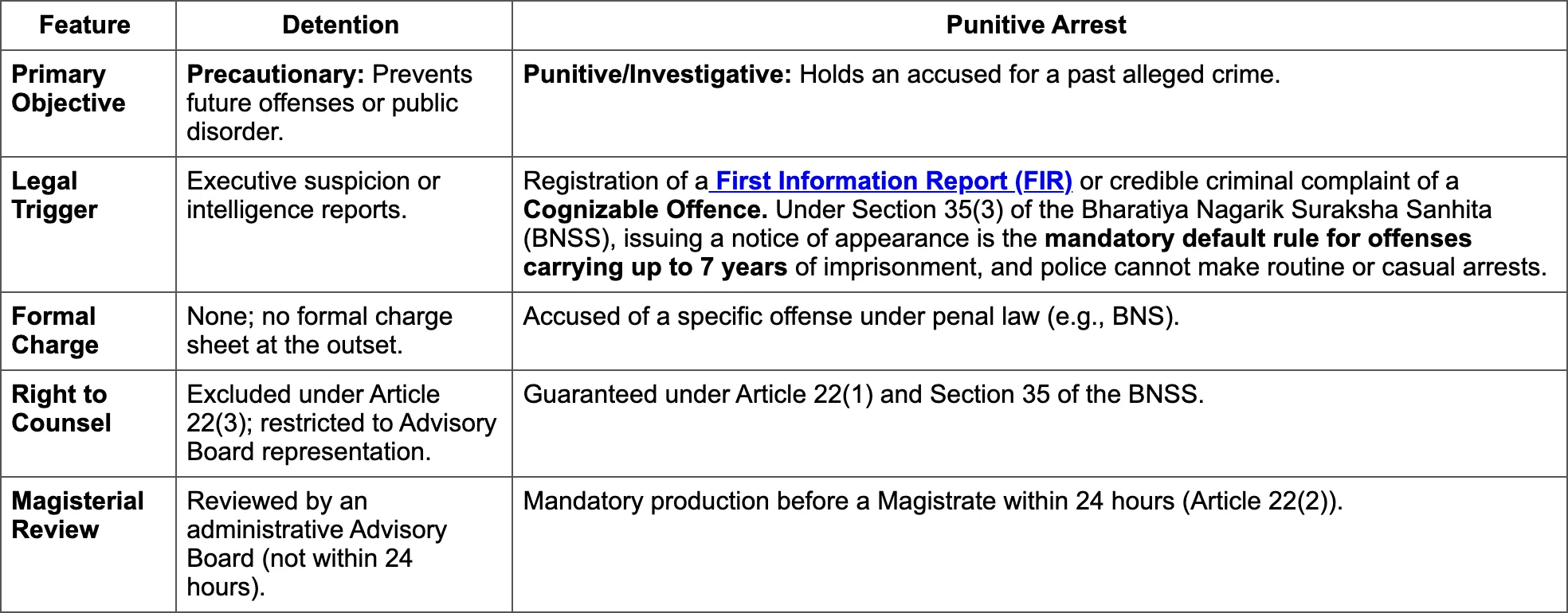
* Detention is the state-ordered deprivation of personal liberty and freedom of movement without an immediate formal criminal charge.
* Unlike an arrest (which secures an accused person after an alleged crime) detention is primarily an administrative, precautionary measure designed to maintain public order and state security.
* **Types of Detention:**
* **Punitive Detention:** Deprivation of liberty as punishment following a formal trial and judicial conviction for an offense.
* **Preventive Detention:** Precautionary custody without a trial or conviction to stop an individual from committing acts prejudicial to public order or national security.
* **Constitutional Provisions:**
* The Constitution permits preventive detention under Article 22 to balance national security and public order.
* However, the use of preventive detention remains a matter of debate as it directly impacts the Right to Personal Liberty under Article 21 of the Constitution.
* **Legal Provisions:**
* Unlike an arrest, detention is not explicitly defined under the Bharatiya Nagarik Suraksha Sanhita (BNSS), 2023 nor does it feature in the substantive Bharatiya Nyaya Sanhita (BNS), 2023.
* Instead, Chapter XII of the BNSS grants police broad preventive powers to temporarily restrain, remove, or hold individuals even before a crime occurs.
* Specifically, Section 170 of the BNSS, 2023 empowers police to pre-emptively arrest any person without a warrant or magisterial order if they know of a design to commit a cognizable offence that cannot otherwise be prevented (for up to 24 hours).
* Further, the Section 172 of the BNSS, 2023 authorises police to "detain or remove" anyone resisting, refusing, ignoring, or disregarding lawful directions issued to prevent an offence, allowing officers to either produce them before a Magistrate or, in petty cases, release them within 24 hours without registering a formal arrest.
* **Key Laws Governing Detention in India:**
* **National Security Act (NSA), 1980:** Permits administrative detention up to 12 months without formal charges for threats to defense or public order.
* **Unlawful Activities (Prevention) Act (UAPA), 1967:** India's primary anti-terror statute, authorizing extended pre-charge detention up to 180 days.
* **Public Safety Act (PSA), 1978:** State-level preventive detention statute (Jammu & Kashmir) allowing custody up to two years without trial.
* **COFEPOSA, 1974:** Targets economic offenses, authorizing preventive custody to curb smuggling and foreign exchange violations.
* Safeguards Against Arbitrary Arrest & Preventive Detention
* **A.K. Gopalan v. State of Madras (1950):** Upheld preventive detention, ruling that Article 22 provides a complete, independent procedural code.
* **Maneka Gandhi v. Union of India (1978):** Overturned the A.K. Gopalan (1950) and ruled that any law depriving personal liberty (including preventive detention) must pass the triad test of Articles 14, 19, and 21 (must be just, fair, and reasonable).
* **Rekha v. State of Tamil Nadu (2011):** Held that preventive detention is an exceptional, draconian power and cannot be used as a substitute for ordinary criminal law when regular bail and trial procedures can handle the situation.
* **Pramod Singla v. Union of India (2023):** Termed preventive detention a "colonial legacy" conferring extraordinary unchecked power on the Executive. Ruled that a mere "law and order" problem cannot be elevated into a "public order" threat to justify preventive detention, and any procedural lapse renders the detention unconstitutional.
* Detention vs. Arrest
What is the Supreme Court’s Stand on the Right to Protest and Preventive Detention?
* The Supreme Court has consistently held that the Right to Protest forms the bedrock of a democratic republic under Article 19(1)(a) (freedom of speech) and Article 19(1)(b) (peaceful assembly without arms), subject only to reasonable restrictions under Articles 19(2) and 19(3):
* **Anticipatory Action Subject to Safeguards:**
* In Babulal Parate v. State of Maharashtra, 1961, a five-judge Constitution Bench upheld the constitutional validity of anticipatory prohibitory orders as a valid "reasonable restriction" to maintain public order, while ruling that this power is not absolute.
* However, it held that the Magistrate cannot act arbitrarily, must record material facts in writing demonstrating an immediate need for prevention, and the order remains subject to judicial review.
* **Conditioned Upon Urgency:**
* In Madhu Limaye v. Sub-Divisional Magistrate, Monghyr, 1970, the Court clarified that the power to issue prohibitory orders is strictly conditioned upon urgency and the existence of an emergency.
* It cannot be deployed as an ordinary administrative tool when normal penal laws suffice.
* **Requirement of Genuine Threat:**
* In Re: Ramlila Maidan Incident, 2012, the Court held that prohibitory emergency powers cannot be exercised on mere conjecture or routine administrative convenience to forcefully evict peaceful crowds.
* The threat to public peace must be real, proximate, and imminent, and crowd dispersal must strictly adhere to the doctrine of "irreducible minimum force."
* **No Blanket Prohibitions:**
* In Mazdoor Kisan Shakti Sangathan v. Union of India, 2018, the Court invalidated perpetual, blanket bans on protests in central Delhi (such as Jantar Mantar and Boat Club).
* It established that the administration must balance public order with citizens' right to assemble via clear, regulated guidelines at designated sites.
* **The Doctrine of Proportionality:**
* In Anuradha Bhasin v. Union of India, 2020, the Court ruled that repetitive prohibitory orders are an abuse of power and cannot be used to suppress legitimate expression of opinion.
* Every preventive restriction must be published publicly to enable judicial review and must pass the four-prong test of proportionality: legitimate aim, rational connection, necessity (least restrictive measure), and balancing of interests.
* **Balancing Protest with Civic Mobility:**
* In Amit Sahni v. Commissioner of Police (Shaheen Bagh Case), 2020, the Court reaffirmed the fundamental right to peaceful protest while holding that public ways and spaces cannot be occupied indefinitely.
* Demonstrations must take place in designated areas to balance the right to protest with the rights of commuters and the general public.
* **Checks on Arbitrary Arrest and Preventive Detention:** The Court routinely reiterated that police cannot casually arrest peaceful demonstrators when no cognizable offence punishable with more than seven years is committed, and any procedural lapse renders preventive custody an unconstitutional deprivation of personal liberty under Article 21.
**Did you Know?**
* Gandhi’s 1922 Trial & Delhi Detentions
* During his 1922 sedition trial before Judge C.N. Broomfield, Mahatma Gandhi articulated the philosophical foundation of non-violent civil disobedience:
* **Right to Express Disaffection:** "Affection cannot be manufactured or regulated by law." Citizens are free to express disaffection toward an authority or system, provided it does not incite or promote violence.
* **Non-Violent Non-Cooperation:** Non-violence requires deliberate, peaceful resistance and the "voluntary submission to the penalty" (courting arrest/detention) rather than turning to violent opposition.
* **Constitutional & Judicial Evolution:** Post-Independence, the Supreme Court translated Gandhi’s doctrine of peaceful dissent into fundamental rights under Article 19(1)(a) (free speech) and Article 19(1)(b) (peaceful assembly).
What Measures Can Strengthen the Right to Protest While Maintaining Public Order?
* **End Blanket Prohibitions:** Shift from blanket BNSS Section 163 orders to designating regulated, accessible protest zones, as directed in Mazdoor Kisan Shakti Sangathan (2018).
* **Proportionality as a Strict Check:** Recommended applying the four-prong test (Anuradha Bhasin, 2020) restrictions must be the least intrusive measure to address an imminent, demonstrable threat.
* **Graduated Force Continuum:** Enforce the "irreducible minimum" force doctrine (Ramlila Maidan, 2012), banning indiscriminate dispersal and requiring documented escalation steps.
* **Mandatory Body-Worn Cameras & ID:** Equip frontline crowd-control personnel with operational body cameras and visible name tags (D.K. Basu mandate) to deter custodial abuses and unprovoked force.
* **The "Facilitation" Principle:**
* The United Nations Office on Drugs and Crime (UNODC), UN Human Rights Committee’s General Comment No. 37, and Amnesty International guidelines emphasise that police should facilitate peaceful assemblies, protect protesters’ rights, and use force only when necessary and proportionate.
* They support the Principle of Differentiation, requiring authorities to distinguish between peaceful protesters and individuals engaging in violence.
* Violent actions by a few should not justify mass dispersal, excessive force or detention of peaceful protesters.
* The overall approach prioritises human rights, proportionality, accountability and protection of peaceful assembly.
**Conclusion**
* The BNSS, 2023 must balance public order with fundamental rights. Restrictions should be proportionate, uphold Articles 14, 19 and 21, and protect peaceful assembly without undermining lawful governance.
## Schemes & Initiatives
### Prime Minister Dhan-Dhaanya Krishi Yojana
[Source](https://www.drishtiias.com/current-affairs-news-analysis-editorials/news-analysis/13-10-2026#37984)
**Why in News?**
* The Prime Minister Dhan-Dhaanya Krishi Yojana (PMDDKY), launched on 11th October 2025 as a six-year initiative, recently completed its first year of implementation.
What are the Key Facts About PM Dhan-Dhaanya Krishi Yojana?
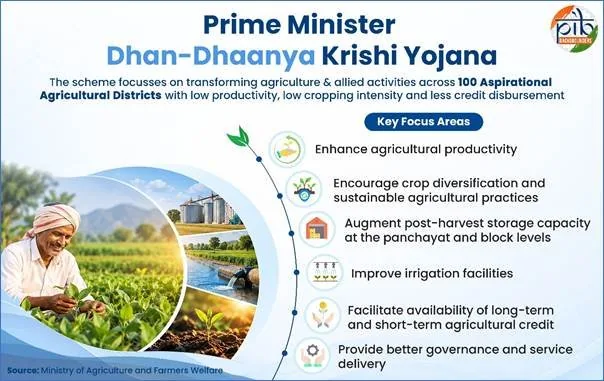
* **About:** The Prime Minister Dhan-Dhaanya Krishi Yojana (PMDDKY) aims to transform agriculture and allied activities in 100 Aspirational Agricultural Districts through focused, district-specific interventions.
* **Need for the Scheme:** It seeks to address challenges such as low agricultural productivity, inadequate irrigation, limited access to agricultural credit and insufficient post-harvest infrastructure.
* **Launch and Duration:**
* Approved by the Union Cabinet on 16th July 2025 and formally launched on 11th October 2025, the scheme will be implemented for six years, beginning from 2025–26.
* It draws inspiration from NITI Aayog's Aspirational Districts Programme, with a specific focus on agriculture and allied sectors.
* **Key Objectives:**
* Enhance agricultural productivity and promote crop diversification and sustainable agricultural practices.
* Augment post-harvest storage facilities at the panchayat and block levels.
* Improve irrigation facilities and facilitate access to short-term and long-term agricultural credit.
* **Identification of Districts:**
* The 100 districts were selected based on three key indicators: low agricultural productivity, low cropping intensity and low agricultural credit disbursement.
* The allocation of districts among States and Union Territories considered their share of net cropped area and operational holdings, with at least one district selected from each State.
* **Convergence Approach:**
* The scheme integrates 36 Central schemes across 11 Ministries and Departments, along with State schemes and private-sector partnerships.
* The Department of Agriculture and Farmers Welfare (DA\&FW) leads implementation in coordination with other Ministries/Departments, NITI Aayog, NABARD and States/UTs.
* Administrative Structure
* PMDDKY follows a three-tier implementation mechanism at the district, State and national levels.
* **District Level:** The District Dhan Dhaanya Krishi Yojana Samiti, headed by the District Collector/DM, prepares and implements the District Action Plan (DAP).
* **State Level:** The State Dhan Dhaanya Krishi Yojana Samiti, headed by the Chief Secretary, reviews and monitors the District Action Plans.
* **National Level:** The National Executive Committee, headed by the Union Minister for Agriculture and Farmers Welfare, and the National Monitoring Committee, headed by the Secretary, DA\&FW, oversee implementation at the national level.
* District Action Plans
* **Need-Based Planning:** DAPs are prepared based on baseline and diagnostic analyses to identify local agricultural needs and determine appropriate interventions.
* **Scheme Convergence:** DAPs converge relevant Central and State schemes and specify outcome-based targets, annual milestones and scheme-linked interventions.
* **Approval and Fund Flow:** DAPs are sent to concerned State departments for incorporation into annual action plans, enabling necessary approvals and fund release.
* **Performance Monitoring:** Progress is assessed through 121 indicators across 36 schemes, comprising 74 output indicators and 47 outcome indicators.
* **Dashboard-Based Ranking:** District performance on output indicators is ranked monthly through the PM-DDKY dashboard.
* Progress Under PMDDKY
* **Dashboard Operationalisation:** The PM-DDKY dashboard became operational in the last week of October 2025, with monthly rankings based on output indicators beginning in November 2025.
* **District Action Plans:** All 100 PMDDKY districts have prepared their DAPs, which are under implementation.
* **Institutional Mechanism:** Committees have been constituted at the national, State and district levels for regular review and monitoring.
* **Data Reporting:** All 100 districts submitted output-indicator data up to August 2026 and outcome-indicator data for FY 2025–26.
* **Central Monitoring:** Central Nodal Officers regularly review implementation and provide guidance to districts.
* **CSR Participation:** The Department of Public Enterprises has included the adoption of PMDDKY districts for Corporate Social Responsibility (CSR) activities by Central Public Sector Enterprises (CPSEs) during FY 2026–27 and 2027–28.
* **Overall Performance:** The average score across the 100 districts increased from 18.85 in April 2026 to 46.89 in August 2026, an improvement of 28.04 points.
**PM-DDKY FPO Sangam**
* **About:** The PM-DDKY Farmer Producer Organisation (FPO) Sangam, held in December 2025, provided a platform for farmers and FPOs to exchange experiences and explore opportunities for improved productivity, market access and income enhancement.
* **Participation:** The event brought together over 72 FPOs from 15 States and 33 PMDDKY districts.
* **Key Themes:** Discussions covered natural farming, oilseeds, beekeeping, protected cultivation, micro-irrigation, institutional finance and digital agriculture.
**Best Practices from PMDDKY Districts**
* **Local Processing and Market Access:** In Gadchiroli, Maharashtra, an FPO with 800 farmer members established a rice processing unit and a 900 MT warehouse to promote local value addition and better price realisation.
* **Smart Irrigation and Sustainable Farming:** In Jaisalmer, Rajasthan, an FPO with 1,236 farmer members adopted Integrated Pest Management (IPM)-based cumin cultivation across 2,000 acres and solar-powered sprinkler irrigation across 500 acres, promoting efficient water use and improved farm productivity.
**Conclusion**
* PMDDKY represents a district-centric, convergence-based and outcome-oriented approach to agricultural development. Its long-term success will depend on effective implementation, coordinated monitoring and translating improvements in agricultural infrastructure and productivity into higher and more sustainable farmer incomes.
## Security
### Indian Navy Commissions INS Mangrol
[Source](https://www.drishtiias.com/current-affairs-news-analysis-editorials/news-analysis/13-10-2026#37985)
The Indian Navy recently commissioned INS Mangrol (P82), the third Mahe-class Anti-Submarine Warfare Shallow Water Craft (ASW-SWC), at the Naval Dockyard, Mumbai, following the commissioning of INS Mahe (P80) in November 2025 and INS Malvan (P81) in July 2026.
* **Indigenous Construction:** Designed and built by Cochin Shipyard Limited (CSL), Kochi, INS Mangrol has over 80% indigenous content, supporting Aatmanirbhar Bharat and indigenous warship construction.
* **Primary Role:** The vessel is designed for Anti-Submarine Warfare (ASW), underwater surveillance, Low-Intensity Maritime Operations (LIMO) and mine warfare-related tasks in coastal and shallow waters.
* **Key Capabilities:** INS Mangrol is equipped with Abhay hull-mounted sonar, lightweight torpedoes, an indigenous anti-submarine rocket launcher and the Mareech Advanced Torpedo Decoy System to detect, track and counter underwater threats.
* **Propulsion:** It is powered by three diesel engine-driven waterjet propulsion units, providing high manoeuvrability and rapid response in shallow and confined waters.
* **Name and Legacy:** It is named after the coastal town and fishing harbour of Mangrol in Junagadh district, Gujarat, and carries forward the legacy of the earlier INS Mangrol (M85), a minesweeper that served until April 2004.
* **Strategic Significance:** The vessel strengthens India's coastal defence, maritime domain awareness and anti-submarine warfare capabilities, particularly in shallow waters where larger warships face operational limitations. It enhances the protection of ports, harbours and coastal approaches in the Indian Ocean Region.
## Wildlife
### Wild Buffalo Reintroduction in Kanha Tiger Reserve
[Source](https://www.drishtiias.com/current-affairs-news-analysis-editorials/news-analysis/13-10-2026#37987)
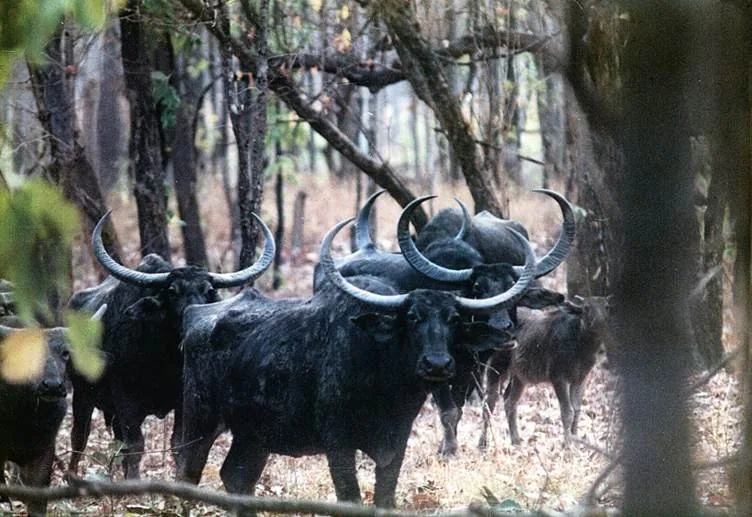
Madhya Pradesh has initiated the reintroduction of wild buffaloes in Kanha Tiger Reserve after their disappearance from the state’s forests for nearly 100 years.
* **Source Population:** The buffaloes were brought from Kaziranga National Park, Assam, covering a distance of around 2,200 km.
* **Acclimatisation:** The buffaloes were initially kept in a one-hectare quarantine enclosure in the Supkhar range before being shifted to a 17-hectare enclosure to help them adapt to the local environment ahead of their eventual release into the wild.
* **Future Target:** Madhya Pradesh aims to establish a population of 50 wild buffaloes over three years, with plans for their eventual release into the natural habitat.
* **Site Selection:** Supkhar was selected based on evidence of the historical presence of wild buffaloes in the region.
**Wild Buffalo (Bubalus arnee)**
* **About:** The wild buffalo (Bubalus arnee), also known as the wild water buffalo, is primarily associated with the grasslands of Northeast India, particularly Assam.
* **Historical Distribution:** It was historically distributed across south-eastern Madhya Pradesh, north-eastern Maharashtra, Chhattisgarh, Odisha, northern Telangana, northern Andhra Pradesh and parts of Jharkhand.
* **Habitat:** Wild buffaloes inhabit grasslands, swamps, marshes and river valleys and were historically found in the sal forests and grasslands of Central India, particularly present-day Chhattisgarh.
* **Conservation Status:**
* **IUCN Red List:** Endangered.
* **Wild Life (Protection) Act, 1972:** Schedule I
This documentation is built and hosted on [Mintlify](https://mintlify.com), a developer documentation platform.