Comrades Dispatch · 15 Oct 2026 (PDF)
In this edition
- Khadi and Village Industries Commission (KVIC) Agriculture & Rural
- Towards a TB-Free India Health & Medicine
- Black Sea Attacks Renew Focus on Seafarer Safety International Relations
- India–Czech to Expand Defence-Industrial Ties International Relations
- Bharat Audyogik Vikas Yojna (BHAVYA) Schemes & Initiatives
- Starlink and Satellite Internet Science & Technology
- India’s First Cyber Trojan Horse Unveiled in Kochi Science & Technology
- Chhattisgarh Launches Blackbuck Translocation Initiative Wildlife
Agriculture & Rural
Khadi and Village Industries Commission (KVIC)
Source Why in News?- The Ministry of Micro, Small and Medium Enterprises (MSME) highlighted the growing role of Khadi and Village Industries in transforming traditional skills and local resources into modern rural enterprises through access to finance, technology and training, with the Khadi and Village Industries Commission (KVIC) at the centre of this transformation.
- The Khadi Mahotsav, organised annually from 2nd to 31st October, complements these efforts by promoting Khadi and local products, raising awareness among youth, and encouraging public participation in the Vocal for Local and Atmanirbhar Bharat initiatives.
- About: The Khadi and Village Industries Commission (KVIC) is a statutory body under the Ministry of Micro, Small and Medium Enterprises (MSME), established under the Khadi and Village Industries Commission Act, 1956.
- Objective: To promote rural industrialisation, generate employment, strengthen village industries and support artisans through financial, technical and marketing assistance.
- Initiatives for Market Promotion
- International Market Linkages: KVIC facilitates participation in international exhibitions and trade fairs, helping rural enterprises connect with overseas buyers and expand their export opportunities.
- Digital Market Access: KVIC operates the Khadi India online store, offering products such as clothing and fabrics, groceries, beauty products, essential oils, perfumes and incense sticks.
- Retail Network: The Khadi marketing network includes 8 departmental Khadi India sales outlets, 15 KVIC branches and 8,035 sales outlets operated by Khadi Institutions across the country.
- Global Khadi: Khadi is increasingly being presented through contemporary fashion platforms, including New Zealand Fashion Week 2026 and Lakmé Fashion Week 2025, where traditional craftsmanship has been combined with modern designs.
- Major Achievements of KVIC
- Sectoral Growth: In 2025–26, sales of Khadi and Village Industries products reached a record ₹1.87 lakh crore, while production increased by 380% to ₹1,25,296 crore compared with 2013–14.
- Employment Generation: Employment in the sector increased by 56% to 2.04 crore between 2013–14 and 2025–26, highlighting the sector’s role in rural employment.
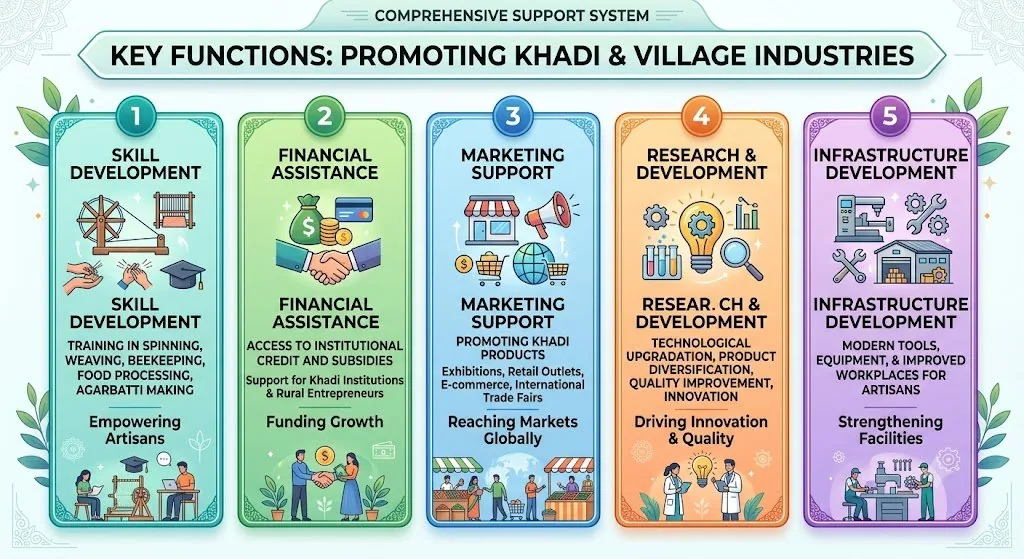
- Training and Skill Development: KVIC operates 35 departmental and non-departmental training centres offering training in activities such as food processing, bakery, beekeeping, agarbatti and candle making, and motor repairing. During FY 2025–26, 79,682 individuals received training, including 47,382 women (approximately 59%).
- Women’s Participation: Women constitute more than 80% of approximately five lakh artisans in the Khadi sector, highlighting its importance for women’s economic participation.
- PMEGP Employment: Since March 2008, the Prime Minister’s Employment Generation Programme (PMEGP) has provided employment opportunities to nearly 97.95 lakh people through KVIC.
- Gramodyog Vikas Yojana: The Gramodyog Vikas Yojana (GVY) supports artisans by providing modern machines, toolkits and equipment, with 37,769 machines, toolkits and equipment distributed during 2025–26 and more than 3.23 lakh distributed by May 2026.
- Khadi Vikas Yojana: The scheme supports Khadi institutions through product improvement, value addition and market development. Its Modified Market Development Assistance (MMDA) component provides flexibility for value addition and market-oriented pricing. In 2024–25, the scheme disbursed ₹245 crore to 1,097 Khadi institutions, benefiting 1,45,484 artisans.
- Concessional Credit: Under the Interest Subsidy Eligibility Certificate Scheme, eligible Khadi institutions can access credit at a concessional interest rate of 4% per annum.
- Workshed Support: The Workshed Scheme provides improved production spaces and better working conditions for artisans.
- The transformation of Khadi and Village Industries into market-oriented rural enterprises highlights the importance of integrating traditional skills with modern technology, financial support and market access. Strengthening this ecosystem can promote inclusive rural development, women’s economic empowerment, sustainable livelihoods and self-reliance in line with the vision of Atmanirbhar Bharat.
Health & Medicine
Towards a TB-Free India
Source Why in News?- India has made significant progress towards tuberculosis (TB) elimination, recording a 21% decline in TB incidence between 2015 and 2024, compared to a global decline of 12%, as highlighted in the World Health Organization’s (WHO) Global Tuberculosis Report 2025.
- To accelerate TB elimination, the government has intensified efforts through the TB Mukt Bharat Abhiyaan, expanded screening and preventive treatment, and launched JOSH (Joint Squad for Health) to strengthen community participation.
- About: Tuberculosis (TB) is an infectious disease caused by the bacterium Mycobacterium tuberculosis. It primarily affects the lungs (pulmonary TB) but can also affect other organs, including the brain, kidneys and spine (extrapulmonary TB).
- Latent TB Infection: People with latent or inactive TB carry the bacteria but do not experience symptoms and cannot transmit the infection to others.
- Risk of Progression: Latent TB can progress to active disease, particularly among children, people living with HIV and individuals with weakened immune systems. Malnutrition and diabetes also increase the risk of developing active TB.
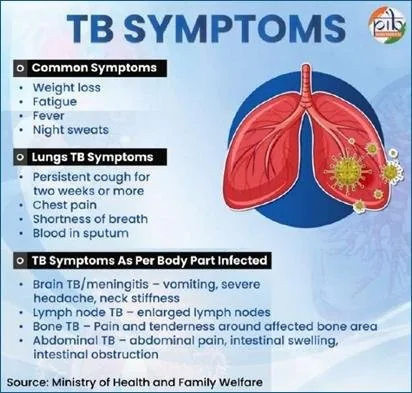
- Symptoms: Common symptoms of active TB include persistent cough (sometimes with blood), chest pain, fever, night sweats, fatigue and unexplained weight loss. Symptoms may vary depending on the organs affected.
- Transmission:
- TB spreads through the air when people with infectious pulmonary or laryngeal TB cough, sneeze, speak or sing, particularly in poorly ventilated spaces.
- TB does not spread through handshakes, sharing food or utensils, or using public toilets.
- Infectious Period: Infectiousness generally declines after effective treatment begins, often substantially within the first few weeks. However, the time required to become non-infectious varies depending on treatment response and drug resistance.
- Extrapulmonary TB: TB affecting organs other than the lungs is generally non-infectious, although certain forms, particularly laryngeal TB, can transmit infection.
- Treatment and Prevention: TB is preventable and curable with appropriate antibiotic treatment, while untreated active TB can be fatal. The Bacille Calmette-Guérin (BCG) vaccine helps protect children against severe forms of TB.
- Government Support: Under the National TB Elimination Programme (NTEP), free TB diagnosis and treatment are available at public health facilities and through participating private healthcare providers. The Ni-kshay Sampark helpline provides guidance on TB-related services.
 What are the Government Initiatives to End TB in India?
-
National Tuberculosis Elimination Programme
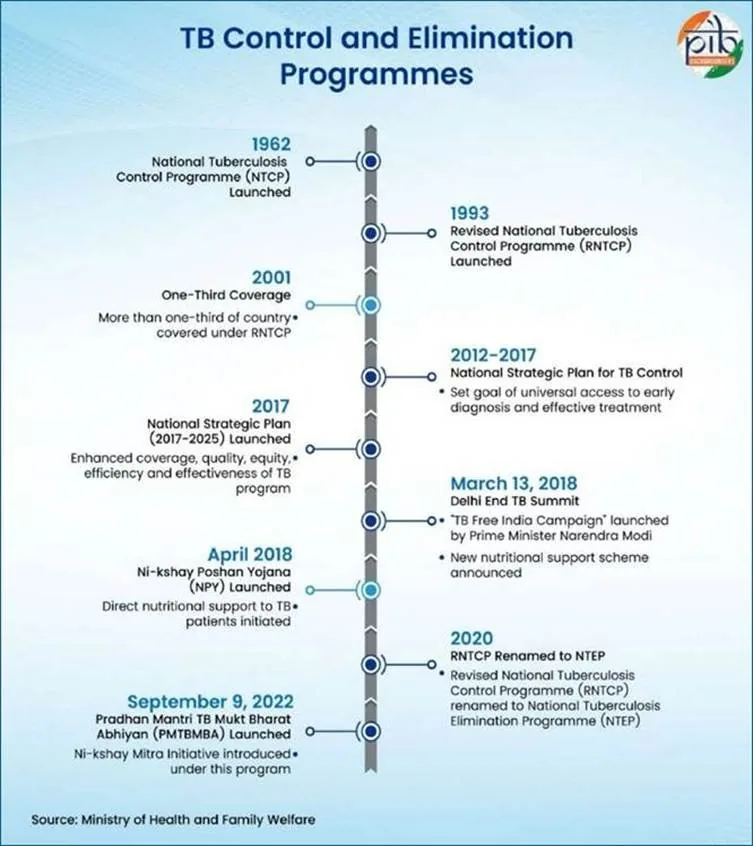
- About: In 2020, the Government of India renamed the Revised National Tuberculosis Control Programme (RNTCP) as the National Tuberculosis Elimination Programme (NTEP), reflecting India’s goal of eliminating TB by 2025, five years ahead of the global target of 2030 under Sustainable Development Goal 3 (SDG 3).
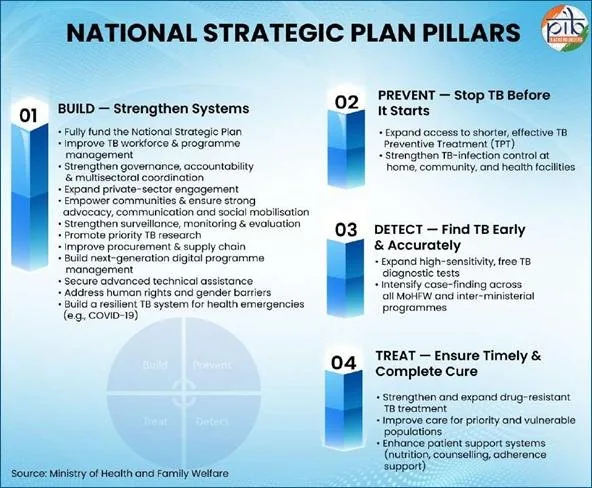
- Strategic Framework: The NTEP follows the National Strategic Plan’s four pillars—Detect, Treat, Prevent and Build—focusing on early diagnosis, appropriate treatment, prevention of transmission and strengthening healthcare systems.
- Early Diagnosis: Promotes high-quality diagnostic testing and proactive community outreach to identify undetected TB cases, particularly among vulnerable populations.
- Prompt Treatment: Ensures timely treatment with quality-assured medicines and appropriate treatment regimens, including for drug-resistant TB.
- Private Sector Engagement: Collaborates with private healthcare providers to improve TB diagnosis, case notification, treatment and continuity of care.
- Patient-Centric Support: Provides nutritional and financial assistance through Direct Benefit Transfer (DBT) and community-based support under the Ni-kshay Mitra initiative.
- Prevention and Contact Tracing: Undertakes contact tracing, TB preventive treatment for eligible high-risk groups, including household contacts, children and people living with HIV (PLHIV), and airborne infection-control measures.
- Multisectoral Approach: Promotes coordination across sectors to address the social determinants of TB, including malnutrition, poverty and inadequate living conditions.
-
Pradhan Mantri TB Mukt Bharat Abhiyaan
- Launch: The Pradhan Mantri TB Mukt Bharat Abhiyaan (TB-Free India Campaign) was launched on 9th September 2022 as an additional key component of the NTEP.
- Jan Andolan: Seeks to transform TB elimination into a people’s movement by involving individuals, community organisations, civil society and corporate entities through Corporate Social Responsibility (CSR).
- Patient Support: Promotes community-based nutritional, psychosocial and other assistance to improve treatment adherence and outcomes.
-
Nikshay Poshan Yojana and Ni-kshay Mitra Programme
- Nutritional Assistance: The Ni-kshay Poshan Yojana, launched in 2018, provides ₹1,000 per month to each notified TB patient through Direct Benefit Transfer (DBT) to support nutritional requirements during treatment.
- Financial Assistance: Since April 2018, approximately ₹4,454.68 crore has been disbursed directly into the bank accounts of 1.38 crore beneficiaries.
- Ni-kshay Mitra Initiative:
- A Ni-kshay Mitra, meaning a TB friend or supporter, is a volunteer who provides additional assistance to TB patients during treatment.
- Comprehensive Support: Individuals, NGOs, corporations and community groups voluntarily provide nutritional support through food baskets, psychosocial assistance and vocational support to patients during treatment and recovery.
- Youth Participation: More than 2 lakh MY Bharat volunteers have come forward to serve as Ni-kshay Mitras. MY Bharat connects young people aged 15–29 years with government departments, private organisations and civil society to promote community participation.
-
100-Day TB Mukt Bharat Abhiyaan
- Launch: The Ministry of Health and Family Welfare launched the 100-Day TB Mukt Bharat Abhiyaan on 7 December 2024, covering 347 high-priority districts across 33 States and Union Territories.
- Early Detection: Focused on vulnerability mapping, systematic screening and early diagnosis among high-risk populations.
- Nationwide Expansion: The campaign involved more than 30,000 elected representatives and 24 line ministries, adopting a whole-of-government and whole-of-society approach. Its strategies were subsequently expanded nationwide.
- Screening Progress: As of June 2026, more than 28.1 crore people had been screened, over 20 lakh individuals had received TB Preventive Treatment (TPT), and 5.7 lakh new Ni-kshay Mitras had joined the initiative.
- Second Phase: Beginning in March 2026, more than 1.7 lakh Ayushman Arogya Shivirs were organised across 1.2 lakh high-risk villages and wards, with participation from 32 lakh students and 1.9 lakh MY Bharat volunteers.
- Treatment Success: The campaign reported a treatment success rate of 90%, exceeding the global average of 88%.
-
Treatment and Prevention Initiatives
- BPaLM Regimen: The BPaLM regimen, comprising Bedaquiline, Pretomanid, Linezolid and Moxifloxacin, provides a shorter, six-month treatment option for eligible multidrug-resistant or rifampicin-resistant TB (MDR/RR-TB) patients. More than 15,000 patients have been initiated on this regimen.
- TB Preventive Treatment (TPT): Provides preventive medicines to eligible individuals, including household contacts of TB patients, people living with HIV and other vulnerable groups, to reduce the risk of progression from TB infection to active disease.
-
Ayushman Arogya Mandirs
- Primary Healthcare: Ayushman Arogya Mandirs are primary healthcare facilities under the Ayushman Bharat framework that provide comprehensive primary healthcare services, including TB screening and referral.
- National Network: As of 13th October 2026, India had 1,87,250 Ayushman Arogya Mandirs, including sub-health centres, primary health centres, urban primary health centres and other designated healthcare facilities.
-
Technological Infrastructure
- Rapid Molecular Testing: More than 9,800 rapid molecular testing facilities and 107 culture and drug susceptibility testing laboratories support early TB diagnosis and detection of drug resistance.
- AI-Enabled X-Ray Screening: More than 500 AI-enabled handheld chest X-ray units have been deployed for community screening, with another 1,500 units being delivered to States and Union Territories.
- Expanded Screening: The deployment of handheld X-ray units has contributed to a 34-fold increase in X-ray screening.
- Digital Monitoring: The Ni-kshay platform supports TB case management, patient monitoring and the delivery of nutritional assistance through DBT.
- TB Mukt Bharat App and Khushi Chatbot: The digital platform supports citizen engagement and programme monitoring, while the AI-powered Khushi chatbot provides information on TB symptoms and helps locate nearby diagnostic centres.
- Capacity Building: The government has expanded radiographer positions under the National Health Mission and strengthened the availability of Truenat and CBNAAT diagnostic machinery.
-
AI-Led Initiatives
- Cough Against TB (CATB): Uses acoustic AI to analyse a three-second cough recording through a smartphone application to identify potential TB-related signatures. More than 1.62 lakh people have been screened, with a reported 12–16% additional case yield over conventional methods.
- Adverse Outcome Prediction: Uses predictive analytics to identify patients at higher risk of treatment failure and enable timely intervention. The initiative has reported a 27% decline in adverse treatment outcomes following nationwide deployment.
- DeepCXR: Uses AI to analyse digital chest X-rays and identify abnormalities suggestive of TB, including nodules and cavities. It has been deployed in eight States and Union Territories and made available to the government free of cost to address specialist shortages.
-
JOSH (Joint Squad for Health) Initiative
- Launch: The Ministry of Health and Family Welfare organised a nationwide social media campaign featuring JOSH teams, with pilot implementation across 11 States and 55 districts.
- Community Participation: Each JOSH team comprises MY BHARAT volunteers, National Cadet Corps (NCC) cadets and a designated Class-I officer to promote TB awareness, early screening, timely treatment and treatment adherence.
- Objective: The initiative seeks to mobilise youth, reduce TB-related stigma and strengthen grassroots participation through a Jan Andolan approach.
- India’s progress in reducing TB incidence and mortality demonstrates the importance of sustained public health interventions, technological innovation and community participation. Strengthening early diagnosis, preventive treatment, access to quality healthcare and patient support remains essential to reducing the country’s TB burden and advancing towards the goal of a TB-free India.
International Relations
Black Sea Attacks Renew Focus on Seafarer Safety
Source The Ministry of External Affairs (MEA) condemned attacks on three commercial vessels in the Black Sea - Alfa Watan (Togo), MV Able (Palau) and Aframax Rio (Liberia). Of the 18 crew members aboard MV Able, seven were Indian nationals- With India accounting for around 12% of the global seafaring workforce, protecting Indian seafarers is a critical concern.
- About Black Sea:
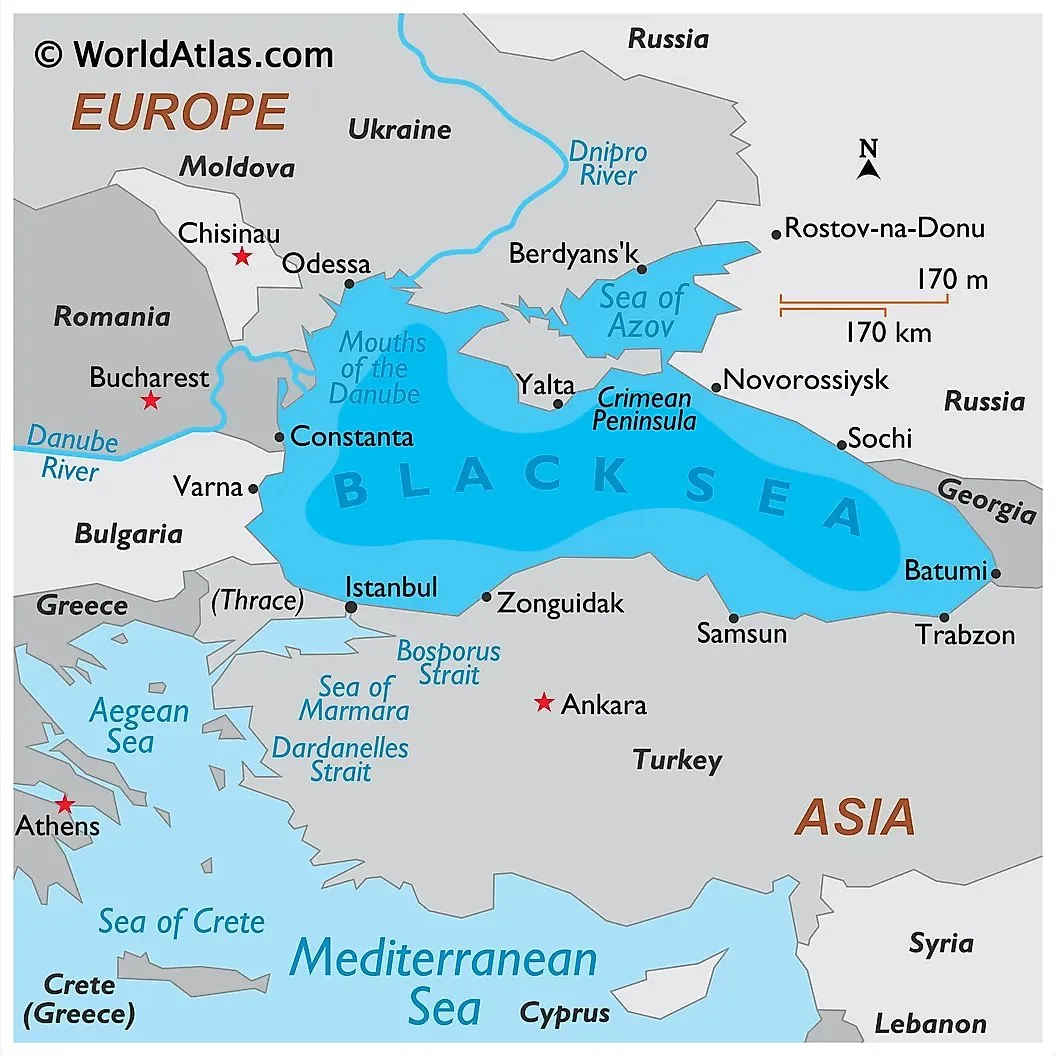
- The Black Sea is a large inland sea situated in southeastern Europe, bordered by Ukraine to the north, Russia to the northeast, Georgia to the east, Turkey to the south, and Bulgaria and Romania to the west.
- It connects to the Mediterranean Sea through the Bosporus Strait, Sea of Marmara and Dardanelles, while the Kerch Strait links it to the Sea of Azov.
- Its deep waters below approximately 70–150 metres are largely devoid of oxygen and contain hydrogen sulphide, creating a unique marine dead zone.
- The Black Sea is strategically and economically significant as a major maritime trade route, supporting petroleum transportation, fisheries and tourism.
- Its major ports include Odesa (Ukraine), Novorossiysk (Russia), Batumi (Georgia), Varna (Bulgaria) and Constanța (Romania).
- The Bucharest Convention (1992) provides a regional framework for controlling marine pollution and protecting the Black Sea ecosystem.
India–Czech to Expand Defence-Industrial Ties
Source India and the Czech Republic agreed to expand defence-industrial cooperation during Indian Defence Minister meeting with Czech First Deputy Prime Minister in New Delhi.- The bilateral MoU on Defence Cooperation was signed in October 2003, leading to the establishment of the India–Czech Joint Defence Committee (JDC).
- The 7th JDC meeting was held in Prague in October 2025, after a five-year gap.
- Building on this momentum, the October 2026 ministerial meeting agreed to further expand defence-industrial cooperation through the JDC framework.
- The partnership promotes joint ventures, co-production and technology collaboration, supporting Make in India and Aatmanirbhar Bharat.
- About Czech Republic:
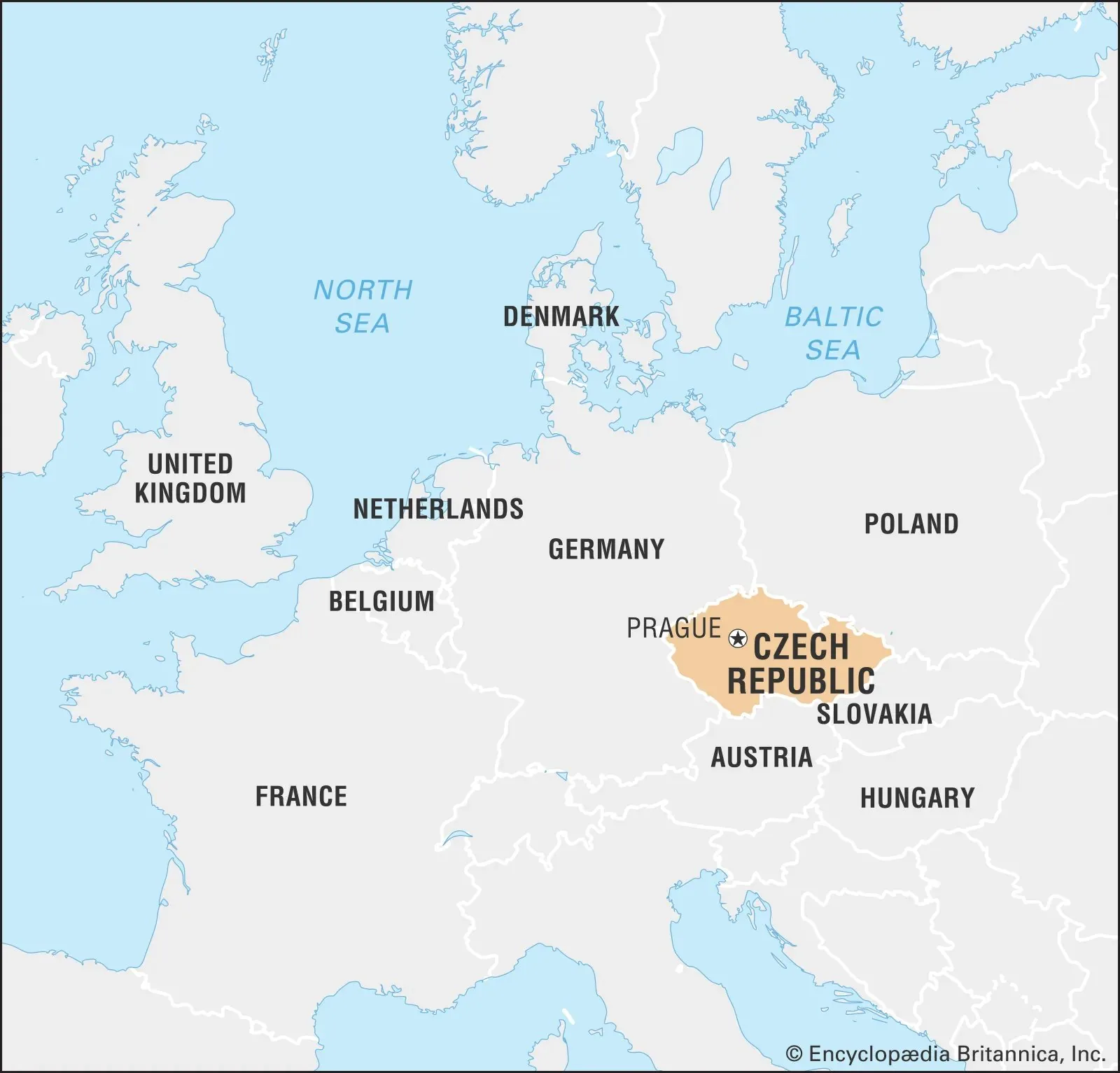
- The Czech Republic is a Central European country with Prague as its capital.
- It is a member of both the European Union (EU) and the North Atlantic Treaty Organization (NATO).
- India-Czech Republic Relations:
- Historical Ties:
- India’s links with the Czech lands date back to medieval trade with the Kingdom of Bohemia.
- Diplomatic relations with Czechoslovakia began in 1947;
- India recognised the Czech Republic after Czechoslovakia’s dissolution in 1993.
- Economic Partnership: Bilateral trade reached US$ 4.034 billion in 2025. India exports electronics, pharmaceuticals, textiles and engineering goods, while importing machinery, automobile components and industrial equipment.
- Multilateral Support: The Czech Republic supports India’s bid for permanent membership of a reformed UN Security Council and its full membership of the Nuclear Suppliers Group (NSG).
- Historical Ties:
Schemes & Initiatives
Bharat Audyogik Vikas Yojna (BHAVYA)
Source Why in News?- The Government has launched the Bharat Audyogik Vikas Yojna (BHAVYA), a ₹33,660 crore initiative to develop 100 plug-and-play industrial parks across India. The scheme seeks to strengthen manufacturing infrastructure, attract investment, support MSMEs, create employment and improve the ease of doing business.
- Manufacturing Growth: India’s manufacturing sector contributes about 16–17% of GDP and employs over 27 million workers, while the National Manufacturing Mission aims to raise its GDP share to 25% by 2035.
- Technology-Intensive Manufacturing: Medium- and high-technology industries account for 46.3% of manufacturing value addition, reflecting a shift towards higher-value and technology-intensive manufacturing.
- Need for Industrial Infrastructure: Growing manufacturing demand and diversification of global supply chains have increased the need for reliable infrastructure, efficient logistics, well-connected industrial locations and predictable regulatory approvals.
-
BHAVYA Scheme
- About: The Bharat Audyogik Vikas Yojana (BHAVYA) was approved in March 2026 and notified on 10th April 2026 with an outlay of ₹33,660 crore to develop 100 plug-and-play industrial parks across India.
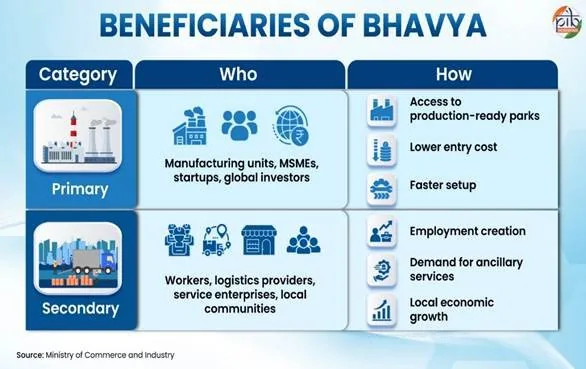
- Objective: The scheme aims to strengthen manufacturing capacity, attract investment, support MSMEs, generate employment and reduce the time and cost of establishing industrial units through investment-ready infrastructure.
- Implementation: BHAVYA is being implemented in partnership with States and private developers, with an emphasis on streamlined approvals, effective single-window systems and investor-friendly reforms to improve the ease of doing business.
- Financial Assistance: BHAVYA provides financial assistance of up to ₹1 crore per acre for eligible industrial parks, subject to scheme conditions, with differentiated funding provisions for government-led and private-sector-led projects.
- Core Infrastructure:
- The scheme supports internal roads, power supply, water networks, drainage systems, common effluent treatment facilities and ICT-enabled administration.
- Underground utility corridors will create a no-dig environment, enabling efficient maintenance and minimising disruptions to industrial operations.
- Ready-to-Use Facilities: Industrial parks will provide ready-built factory sheds, built-to-suit units, testing and certification facilities, and warehousing to enable faster commencement of manufacturing operations.
- Worker Amenities: The framework includes provisions for worker housing, healthcare facilities, skill development centres and other social amenities to improve worker welfare and productivity.
- External Connectivity: Up to 25% of approved funding can be allocated to external infrastructure, including road, rail and last-mile logistics connectivity.
- Implementation Period: The scheme will be implemented over six years, from FY 2026–27 to FY 2031–32.
- Phased Selection:
- In the first phase, up to 50 industrial parks will be selected through a challenge-based process across two rounds. The remaining parks will be selected in subsequent phases to reach the target of 100 parks.
- Selection will consider project readiness, land availability and industrial potential.
- Park Size: The minimum land requirement is generally 100 acres for non-hilly States and 25 acres for eligible hilly States, northeastern States, Union Territories and smaller States. Parks of up to 1,000 acres may also be considered under the scheme.
- Institutional Framework: The scheme is administered by the Department for Promotion of Industry and Internal Trade (DPIIT) under the Ministry of Commerce and Industry, with the National Industrial Corridor Development Corporation (NICDC) serving as the Project Management Agency.
- Special Purpose Vehicles (SPVs): Dedicated SPVs will oversee park development, operations, investor facilitation and long-term maintenance.
- BHAVYA Portal: Launched in June 2026, the portal facilitates project submission, appraisal, evaluation, implementation and monitoring, supporting a transparent and competitive selection process.
- Industrial Estates and SEZs:
- India’s initial approach focused on industrial estates and Special Economic Zones (SEZs), which provided industrial land, common infrastructure and regulatory incentives to promote manufacturing and exports.
- As of February 2026, India had 370 notified SEZs, attracting investments worth ₹7.82 lakh crore and generating employment for over 31.7 lakh people.
- Expansion of Industrial Parks: Industrial development gradually expanded towards larger manufacturing hubs. As of 14 October 2026, 4,164 industrial parks had been mapped on the India Industrial Land Bank (IILB), improving access to information on industrial land and infrastructure.
- National Industrial Corridor Development Programme (NICDP):
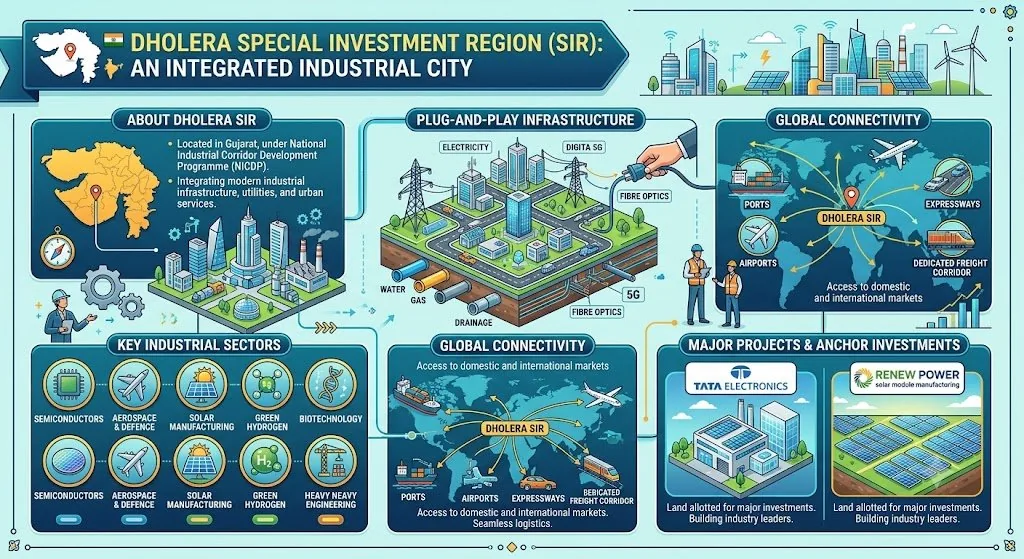
- The NICDP introduced an integrated approach by combining industrial zones with modern utilities, multimodal logistics and urban services to develop planned manufacturing hubs.
- Major examples include Dholera Special Investment Region (Gujarat), Shendra-Bidkin Industrial Area (Maharashtra), Vikram Udyogpuri (Madhya Pradesh) and Integrated Industrial Township Greater Noida (Uttar Pradesh).
- Shift Towards Plug-and-Play Ecosystems: Building on industrial estates, SEZs and integrated industrial corridors, BHAVYA represents the next stage of India’s industrial infrastructure policy, focusing on the nationwide development of investment-ready manufacturing parks.
- About: Plug-and-play industrial parks are pre-developed industrial ecosystems that provide ready-to-use land, trunk infrastructure, utilities and common facilities, enabling businesses to establish manufacturing operations with minimal delays.
- Trunk Infrastructure: Refers to shared infrastructure serving multiple industrial units, including main roads, water supply, drainage, sewerage, streetlights and electricity networks.
- Streamlined Approvals: These parks often facilitate regulatory clearances through single-window systems, reducing administrative delays and enabling faster commencement of industrial operations.
- Economic Significance: By reducing upfront infrastructure costs and ensuring predictable access to utilities, logistics and regulatory processes, plug-and-play parks help attract investment and strengthen manufacturing competitiveness amid diversifying global supply chains.
- Growing Adoption in India: The Union Budget 2025–26 allocated ₹2,500 crore for developing plug-and-play industrial parks. As of October 2026, India had approximately 260 plug-and-play industrial parks, reflecting the expansion of investment-ready manufacturing infrastructure.
- Sector-Specific Parks: In July 2026, the government approved the separate BHAVYA-Rasayan Scheme, with an outlay of ₹3,030 crore, to develop three dedicated chemical parks equipped with common infrastructure and environmental safeguards.
 Conclusion
- BHAVYA represents a shift towards integrated, investment-ready industrial ecosystems by combining modern infrastructure, logistics connectivity and regulatory facilitation. Its effective implementation can strengthen manufacturing competitiveness, promote MSME participation, generate employment and enhance India’s integration into global supply chains. However, achieving these outcomes will depend on timely execution, effective Centre–State coordination and sustainable infrastructure management.
Science & Technology
Starlink and Satellite Internet
Source Why in News?- A public dispute over Starlink’s proposed entry into India’s satellite internet market has raised concerns regarding market competition, regulatory approvals, national security and consumer affordability, highlighting the challenges surrounding the expansion of satellite-based internet services in India.
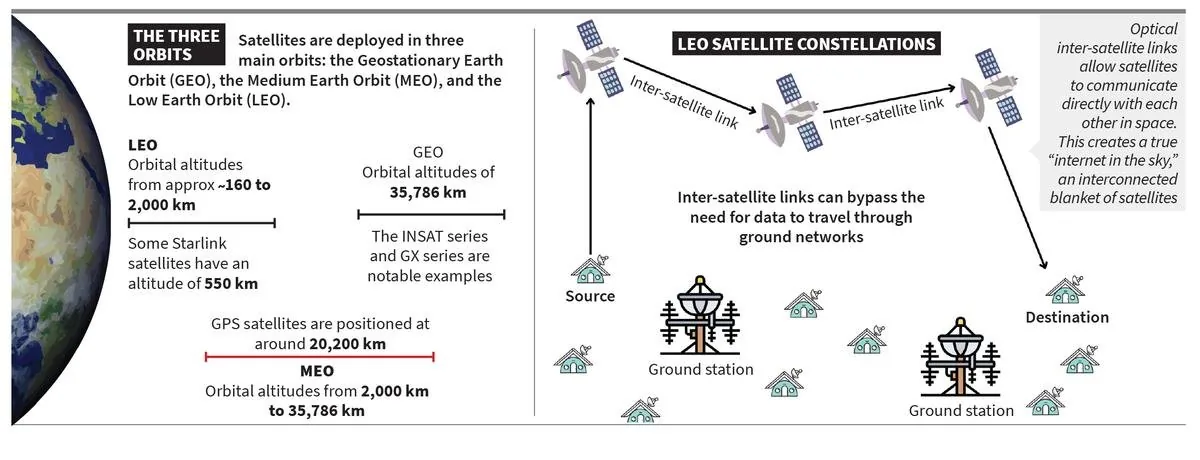
- About Starlink: Starlink is a satellite-based broadband internet service developed by SpaceX. It uses a constellation of Low Earth Orbit (LEO) satellites to provide high-speed, low-latency internet connectivity, particularly in remote and underserved regions.
- Satellite Constellation: Starlink operates the world’s largest commercial satellite constellation, with approximately 11,000 satellites in orbit as of October 2026, primarily operating at altitudes of around 550 km, compared to 35,786 km for geostationary satellites.
- Advanced Technology: Starlink satellites use optical inter-satellite links (space lasers), phased-array antennas and argon-powered ion thrusters to enable high-speed data transmission, satellite-to-satellite communication and orbital manoeuvring.
- Low-Latency Connectivity: Starlink offers latency of around 25 milliseconds under favourable conditions, compared with approximately 600 milliseconds or more for traditional geostationary satellite internet, supporting video calls, online gaming and streaming.
- SpaceX Integration: SpaceX manufactures and operates Starlink satellites and uses its Falcon 9 launch vehicles to regularly deploy and upgrade the constellation, supporting continuous network expansion.
- Strategic and Humanitarian Applications: Starlink provides connectivity in remote areas, disaster-affected regions and conflict zones where terrestrial communication networks are unavailable, damaged or disrupted.
- Military Applications: SpaceX has also developed Starshield, a separate military-focused satellite communications programme for US government and national security applications.
- GMPCS Licence: Starlink received a Unified Licence with Global Mobile Personal Communication by Satellite (GMPCS) authorisation from the Department of Telecommunications (DoT) in June 2025, permitting satellite communication services subject to regulatory conditions.
- IN-SPACe Authorisation: In July 2025, Starlink also received authorisation from the Indian National Space Promotion and Authorisation Centre (IN-SPACe) for its satellite constellation.
- Pending Clearances: Despite these approvals, Starlink has not commenced commercial services in India, as final security clearances, spectrum assignment and other regulatory requirements remain pending.
- Commercial Partnerships: In March 2025, SpaceX signed separate agreements with Jio Platforms and Bharti Airtel to explore distributing Starlink services in India, subject to the necessary regulatory approvals.
- Current Status: Starlink holds key telecommunications and space-sector authorisations but cannot launch commercial satellite internet services in India until the remaining security and spectrum-related requirements are fulfilled.
- About: Satellite internet is a communication technology that uses orbiting satellites to provide broadband connectivity, particularly in remote, sparsely populated and disaster-prone regions where terrestrial networks are economically unviable or unavailable.
- Working Mechanism:
- Satellite internet operates through two main segments:
- Space Segment: Consists of satellites equipped with communication payloads that receive, process or relay data signals between Earth-based terminals and ground stations.
- Ground Segment: Comprises user terminals (antennas and modems) and ground stations that communicate with satellites and connect users to the internet backbone.
- Satellite internet operates through two main segments:
- Orbital Deployment:
- Communication satellites are deployed in three main orbital regions:
- Geostationary Earth Orbit (GEO): Located approximately 35,786 km above the equator, GEO satellites remain stationary relative to Earth and provide extensive coverage, but their high latency limits performance in time-sensitive applications. Example: Inmarsat Global Xpress (GX).
- Medium Earth Orbit (MEO): Located between approximately 2,000 km and 35,786 km, MEO satellites offer lower latency than GEO satellites but require constellations for wider coverage. Example: O3b constellation.
- Low Earth Orbit (LEO): Located below 2,000 km, LEO satellites provide low-latency connectivity but have smaller individual coverage areas, requiring large constellations for continuous coverage. Example: Starlink.
- Communication satellites are deployed in three main orbital regions:
- Mega-Constellation Technology: Advanced LEO constellations use onboard signal processing, phased-array antennas and optical inter-satellite links (space lasers) to enable direct satellite-to-satellite communication, efficient data routing and seamless connectivity as satellites move across the sky.
- Applications: Satellite internet supports connectivity in remote regions, disaster management, telemedicine, precision agriculture, maritime and aviation communications, military operations and emergency response.
- Challenges: Despite its advantages, satellite internet faces challenges such as high equipment and subscription costs, orbital congestion, space debris, cybersecurity risks and national security concerns associated with its dual-use civilian and military applications.
India’s First Cyber Trojan Horse Unveiled in Kochi
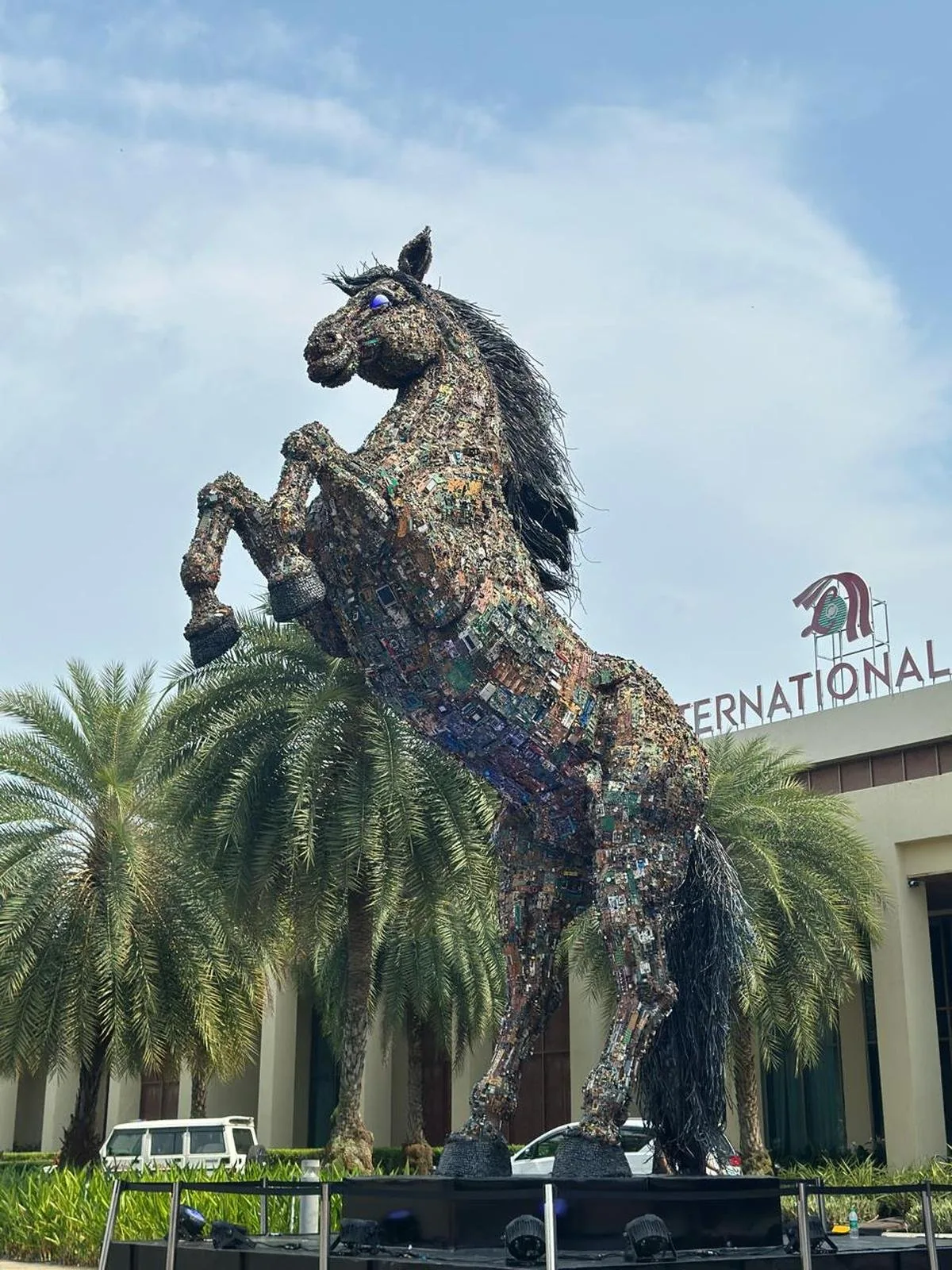
Source India’s first Cyber Trojan Horse, called The Trojan Project, was unveiled at the c0c0n 2026 cybersecurity conference in Kochi. The project aims to make cyber risks easier to understand and promote safer behaviour in the digital world.- About c0c0n 2026:
- Organised by Kerala Police Cyberdome and the Information Security Research Association (ISRA).
- ISRA is a registered scientific society under the Cochin Literary Scientific and Charitable Societies Registration Act 1955.
- It is dedicated to advancing security research and fostering an innovation ecosystem in the field of information security.
- Trojan:
- In cybersecurity, a Trojan is malicious software disguised as a legitimate file or application to enter a device and steal data.
- The term ‘Trojan horse’ first appeared in professional literature in James Anderson’s study (1972).
- It requires human interaction (user downloading/opening the file) to install and execute.
- Unlike Viruses (which attach to files and replicate) or Worms (which self-replicate autonomously across networks), Trojans do not replicate themselves.
Wildlife
Chhattisgarh Launches Blackbuck Translocation Initiative
Source Chhattisgarh will translocate 50 blackbucks from Barnawapara Wildlife Sanctuary to Gomarda Wildlife Sanctuary, where the species became locally extinct in the 1970s due to hunting, poaching, encroachment and development.- Barnawapara Sanctuary:
- Located in Chhattisgarh, it has undulating terrain, low hillocks and teak, sal and mixed forests.
- The Balamdehi forms its western boundary, while the Jonk River lies along its north-eastern side; both are tributaries of the Mahanadi.
- Barnawapara is known for gaur, chital, sambar, nilgai and wild boar. Its successful blackbuck population is now the source for the Gomarda reintroduction.
- Gomarda Sanctuary: Located near Sarangarh in Chhattisgarh, Gomarda has dry deciduous forests, rolling hills, grasslands, reservoirs and waterfalls, features favourable for blackbuck restoration.
- Blackbuck:
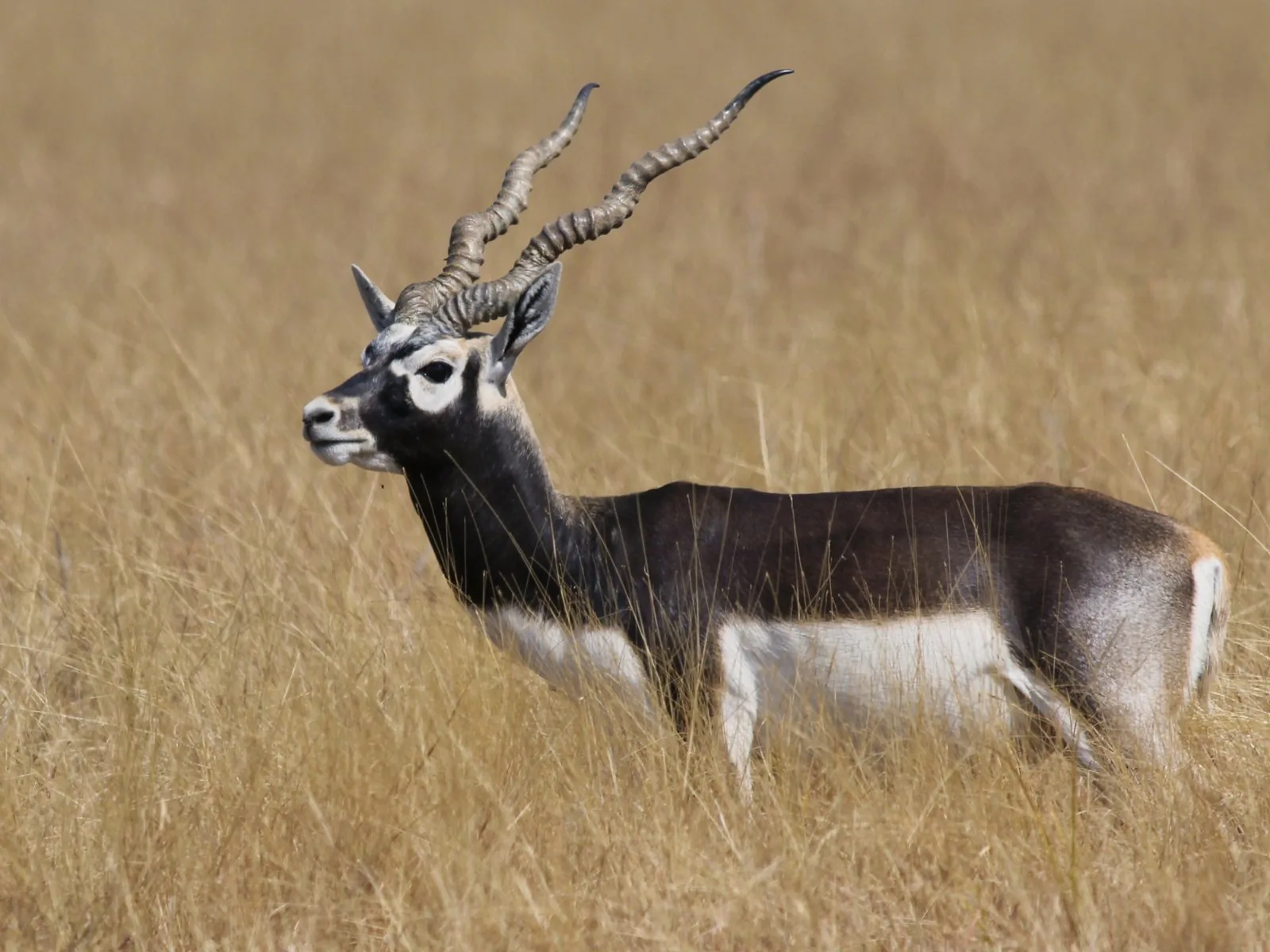
- The blackbuck (Antilope cervicapra) is a diurnal, grassland antelope; males have distinctive spiral horns and a dark upper body.
- It is native to the Indian subcontinent and prefers open grasslands and plains. It is primarily a grazer, but browses when grass is scarce.
- It has a gestation period of about six months and can breed throughout the year.
- Conservation Threats: Habitat loss, hunting and disturbance remain key threats. Fawns are particularly vulnerable to predation by free-ranging dogs and jackals.
- Legal Protection: It receives the highest level of protection under Schedule I of the Wild Life (Protection) Act, 1972.