Comrades Dispatch · 16 Oct 2026 (PDF)
In this edition
- Persistence of Stubble Burning in North India Environment & Ecology
- IMD Launches Interactive Cyclone Warning and Marine Weather Platform Geography
- India’s Development Assistance to Bhutan International Relations
- South Korea Tests First Indigenous Hypersonic Missile Security
- Indian Army Launches Bharat Rice Security
- Indian Coast Guard Inducts Indigenous ALH MK-III Helicopter Security
- Advancing Women’s Employment and Economic Empowerment in India Social Issues
- NASA’s Perseverance Rover Sets a New Driving Record on Mars Space
- Sukhna Wetland and Sauj Jheel Become Ramsar Sites Wildlife
Environment & Ecology
Persistence of Stubble Burning in North India
Source Why in News?- The recurring issue of stubble burning in North India, particularly in Punjab and Haryana, has renewed concerns over deteriorating air quality in Delhi-NCR, highlighting the need to address the economic, technological and policy factors driving the practice.
- About:
- Stubble burning refers to the practice of setting fire to leftover crop residues, particularly straw and stalks, after harvesting crops such as paddy and wheat.
- It is commonly practised to clear paddy residues before wheat sowing, typically between October and November.
- The practice is particularly prevalent in Punjab, Haryana and parts of Uttar Pradesh.
- Reasons for Stubble Burning
- MSP-Driven Rice-Wheat Cropping Cycle: Assured procurement of rice and wheat at Minimum Support Price (MSP), along with subsidised electricity, encourages intensive rice-wheat cultivation, discouraging crop diversification and generating large quantities of paddy residue.
- Narrow Sowing Window:
- The Punjab Preservation of Sub-Soil Water Act, 2009, which restricts early paddy sowing and transplantation to conserve groundwater, has shifted harvesting towards late October and early November.
- This leaves farmers a narrow 10–15-day window before wheat sowing. Long-duration paddy varieties such as PUSA-44, which take approximately 150–160 days to mature, further intensify this pressure.
- Mechanised Harvesting: Widespread use of combine harvesters leaves substantial standing stubble and loose straw, increasing residue management costs and encouraging farmers to burn residues for rapid field preparation.
- Cost-Effectiveness: Burning is cheaper and faster than alternative residue management methods, such as incorporating stubble into the soil or using machinery like balers and shredders, which involve additional costs and labour.
- Weed Management: Burning can temporarily destroy surface weeds, weed seeds and certain pests, although it is not a sustainable method of weed control.
- Limited Residue Management Options: Inadequate access to affordable machinery, infrastructure and alternatives such as composting and bioenergy production makes burning a convenient option for many farmers.
- Impacts
- Air Pollution:
- Stubble burning releases pollutants such as PM10, PM2.5, nitrogen oxides (NOx), methane (CH₄), carbon monoxide (CO) and volatile organic compounds (VOCs).
- These emissions contribute to smog and deteriorating air quality, particularly in Delhi-NCR, increasing the risk of respiratory illnesses such as asthma, bronchitis and Chronic Obstructive Pulmonary Disease (COPD).
- Greenhouse Gas Emissions: The practice releases greenhouse gases, contributing to global warming and climate change.
- Soil Fertility Loss:
- Burning causes the loss of soil organic matter and essential nutrients, particularly nitrogen and sulphur, while damaging beneficial soil microorganisms.
- The heat generated can also reduce surface soil moisture, degrading soil health and potentially increasing dependence on chemical fertilisers.
- Air Pollution:
- Technology and Infrastructure Gaps:
- Combine harvesters leave substantial standing stubble and loose straw, requiring specialised Crop Residue Management (CRM) machinery for timely field preparation.
- Custom Hiring Centres (CHCs) often face shortages and delays in machinery availability during peak harvesting periods, limiting farmers’ access to affordable residue management solutions.
- The high silica content of paddy straw complicates industrial processing, while inadequate biomass collection, storage and transportation infrastructure restricts its commercial utilisation.
- Economic and Funding Limitations:
- Despite government subsidies, high machinery costs, expensive rental services and seasonal utilisation make alternatives to burning financially unattractive, particularly for small and marginal farmers.
- The absence of assured remunerative prices for paddy straw, coupled with high collection and transportation costs, discourages its use in bioenergy and other industries.
- Crop Diversification Challenges: MSP-backed procurement of rice and wheat, along with subsidised electricity, discourages farmers from shifting towards alternative crops, perpetuating the rice-wheat cycle and associated residue management challenges.
- Policy and Enforcement Challenges:
- Inconsistent enforcement, concerns over penalties and differences in state-level incentives complicate the implementation of sustainable residue management practices.
- Greater reliance on punitive measures without adequate economic incentives may discourage farmer cooperation and the adoption of alternatives.
- Monitoring and Measurement Gaps:
- Satellite-based fire monitoring using MODIS and VIIRS has limited observation windows, potentially missing fires occurring outside satellite overpass times.
- Consequently, reductions in reported fire incidents may not accurately reflect changes in the actual area burned, complicating the assessment of policy effectiveness.
- Limited Awareness and Training: Inadequate access to practical training, technical guidance and awareness programmes on in-situ and ex-situ residue management restricts the effective adoption of sustainable alternatives, particularly among small farmers.
- Framework by the Commission for Air Quality Management (CAQM):
- In-Situ Crop Residue Management: Promotes managing crop residues within fields using Crop Residue Management (CRM) machinery, Custom Hiring Centres (CHCs) and bio-decomposers.
- Ex-Situ Crop Residue Utilisation: Encourages alternative uses of paddy straw, including biomass power generation, co-firing in thermal power plants, second-generation (2G) ethanol, compressed biogas (CBG) production and packaging materials.
- Ban and Enforcement: Enforces the prohibition of stubble burning through satellite monitoring, field inspections and environmental compensation for violations.
- Financial Support: The Crop Residue Management (CRM) Scheme, implemented since 2018–19, provides 50% financial assistance to individual farmers for purchasing eligible CRM machinery and 80% assistance for eligible Custom Hiring Centre projects, subject to prescribed limits.
- Technological Interventions:
- Happy Seeder: A tractor-mounted machine that sows wheat directly into fields containing paddy residues, reducing the need for burning while retaining straw as soil mulch.
- Pusa Decomposer: A microbial formulation that accelerates the decomposition of crop residues into organic matter, improving soil health.
- Pelletisation: Converts crop residues into biomass pellets for energy generation, reducing open-field burning and creating opportunities for additional farm income.
- Biochar Production: Converts crop residues into biochar through pyrolysis, potentially improving soil fertility, water retention and carbon sequestration.
- Crop Diversification: Promotes short-duration paddy varieties, Direct Seeding of Rice (DSR) and diversification towards less water-intensive crops to reduce residue generation and ease pressure on the rice-wheat cropping cycle.
- Local Initiatives:
- Haryana:
- Provides financial incentives for crop residue management, direct seeding of rice and diversification away from paddy.
- In 2026–27, the state increased incentives to ₹1,200 per acre for crop residue management, ₹4,500 per acre for DSR and ₹8,000 per acre for alternative crops under the Mera Pani-Meri Virasat scheme.
- Punjab: Mobile applications such as i-Khet and Cooperative Machinery Tracker help farmers access crop residue management machinery.
- Chhattisgarh: Gauthans facilitate the collection and conversion of agricultural residues and cattle dung into organic manure, promoting waste utilisation and rural livelihoods.
- Haryana:
- Improved Satellite Monitoring: Integrating polar-orbiting satellites (MODIS and VIIRS) with geostationary satellite observations can improve detection of stubble-burning incidents beyond limited satellite overpass times and enable more accurate assessment of burned areas.
- Policy and Legal Reforms:
- A Parliamentary Committee recommended establishing a minimum remunerative price for paddy straw that covers collection, transportation and other associated costs, making residue utilisation economically viable.
- Adopt a balanced approach combining incentives, awareness and proportionate enforcement, rather than relying primarily on penalties against farmers.
- Crop Diversification and Procurement Reforms:
- Reform MSP-backed procurement incentives to encourage farmers to shift from water-intensive paddy cultivation towards alternative crops such as pulses, oilseeds and millets.
- Promote short-duration paddy varieties and Direct Seeding of Rice (DSR) to ease the narrow harvesting-to-sowing window and reduce pressure to burn residues.
- Infrastructure and Logistics:
- Implement real-time crop mapping, harvest forecasting and decentralised biomass collection systems, supported by temporary storage facilities, local aggregators and reliable transportation networks.
- Strengthen Custom Hiring Centres (CHCs) to ensure timely and affordable access to Crop Residue Management (CRM) machinery during peak harvesting periods.
- Innovative Farming Technologies:
- Promote Pusa Decomposer, a microbial formulation that accelerates stubble decomposition within approximately 20–25 days, and Happy Seeders and Super Seeders for wheat sowing without burning paddy residues.
- Encourage in-situ residue management through mulching and soil incorporation, alongside ex-situ utilisation for cattle fodder (where suitable), organic manure, paper, packaging materials, biofuels and power generation.
- Economic Incentives and Market Development:
- Establish assured markets and remunerative benchmark prices for crop residues, ensuring that farmers recover collection, labour and transportation costs.
- Expand performance-based incentives for residue management and crop diversification, drawing lessons from Haryana’s incentive-based approach.
- Community-Based Post-Harvest Management:
- Promote MGNREGA-like labour-support mechanisms, farmer cooperatives and village-level collection centres for residue gathering, composting and transportation.
- Encourage Panchayati Raj Institutions (PRIs) to coordinate residue management and reward villages demonstrating sustained reductions in burning.
- Improved Monitoring and Accountability:
- Integrate polar-orbiting satellites (MODIS and VIIRS) with geostationary satellite observations to detect fires beyond fixed satellite overpass times.
- Use burned-area assessments, ground verification and transparent reporting, rather than relying solely on satellite-detected fire counts, to evaluate policy effectiveness.
- Curbing stubble burning requires a holistic approach combining crop diversification, affordable residue management technologies, assured economic incentives and effective policy enforcement. Strengthening farmer participation, biomass markets and satellite-based monitoring can transform crop residue from an environmental burden into an economic resource, ensuring sustainable agriculture, improved air quality and long-term environmental security.
Geography
IMD Launches Interactive Cyclone Warning and Marine Weather Platform
Source The India Meteorological Department (IMD) launched an interactive Cyclone Warning and Marine Weather Services Decision Support System(DSS) to strengthen cyclone preparedness and support timely decision-making.- About DSS: It is a WebGIS-based platform providing interactive maps and visualisations of cyclone-related hazards, including cyclone tracks, intensity forecasts, wind distribution, rainfall warnings, storm surge information and rainfall forecasts for river catchments.
- Background: The launch coincided with the anniversaries of the landfalls of Very Severe Cyclonic Storms Phailin (2013) and Hudhud (2014), whose successful forecasting marked important milestones in India’s cyclone early-warning capabilities.
- Objective: It provides location-specific hazard information to disaster management authorities, government agencies and the public to improve preparedness and reduce losses.
- Accessibility: The platform is accessible through IMD and Regional Specialised Meteorological Centre((RSMC) websites and IMD’s Decision Support System.
- Institutional Coordination: IMD’s biannual Pre-Cyclone Exercise Meeting, conducted since 2008, brings together disaster management authorities, defence forces, coastal states, fisheries departments and scientific organisations to review cyclone preparedness.
- Significance: The platform enables location-specific early warnings, supports evacuation planning and disaster risk reduction, and improves coordination among forecasting agencies, disaster management authorities and other stakeholders.
International Relations
India’s Development Assistance to Bhutan
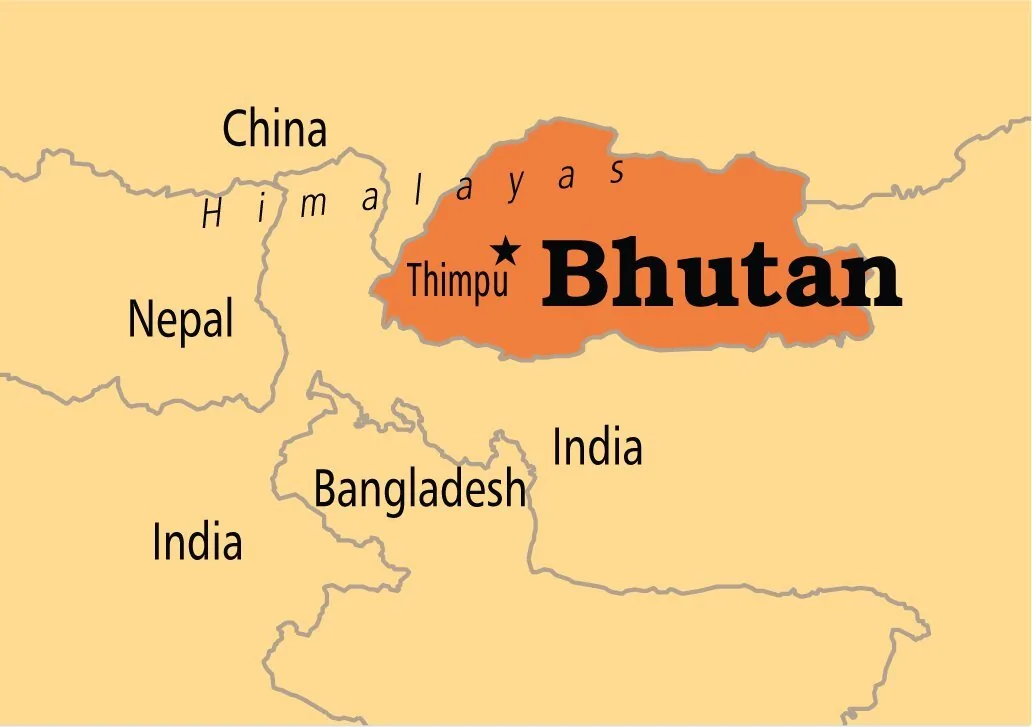
Source India handed over Rs. 290 crore for development projects under the Bhutanese government’s development plan, covering education, health, disaster preparedness and public infrastructure.- Projects under this assistance also include the Royal University of Bhutan colleges, National Weather and Flood Warning Centre, Thimphu District Court and Gelephu General Hospital.
- Rs. 8.83 crore has been allocated to the Digital Drukyul skilling programme.
- Digital Drukyul is Bhutan’s flagship program to modernize e-government and improve public service delivery.
- Rs. 8.83 crore has been allocated to the Digital Drukyul skilling programme.
- India-Bhutan Ties:
- India and Bhutan established diplomatic relations in 1968. Their relations are guided by the Treaty of Friendship and Cooperation, 1949, which was revised in 2007. Bhutan shares a border with four Indian States: Assam, Arunachal Pradesh, West Bengal and Sikkim.
- Digital Cooperation:
- Bhutan became the second country to launch the BHIM app.
- India is supporting Bhutan’s Digital Drukyul initiative by funding an optical fibre network.
- Space Cooperation: The jointly developed India-Bhutan SAT was launched by ISRO on 26th November 2022.
- Education: India is also helping Bhutan address shortages of STEM teachers in schools.
- Infrastructure: India and Bhutan are strengthening infrastructure cooperation through two proposed cross-border rail links: Kokrajhar–Gelephu and Banarhat–Samtse.
- Hydropower Projects: Punatsangchhu-II (1,020 MW), Punatsangchhu-I (1,200 MW) and the proposed Dorjilung project (1,125 MW).
- Regional Groupings Shared by India and Bhutan:
- South Asian Association for Regional Cooperation (SAARC)
- Bay of Bengal Initiative for Multi-Sectoral Technical and Economic Cooperation (BIMSTEC)
- Bangladesh-Bhutan-India-Nepal Initiative (BBIN)
Security
South Korea Tests First Indigenous Hypersonic Missile
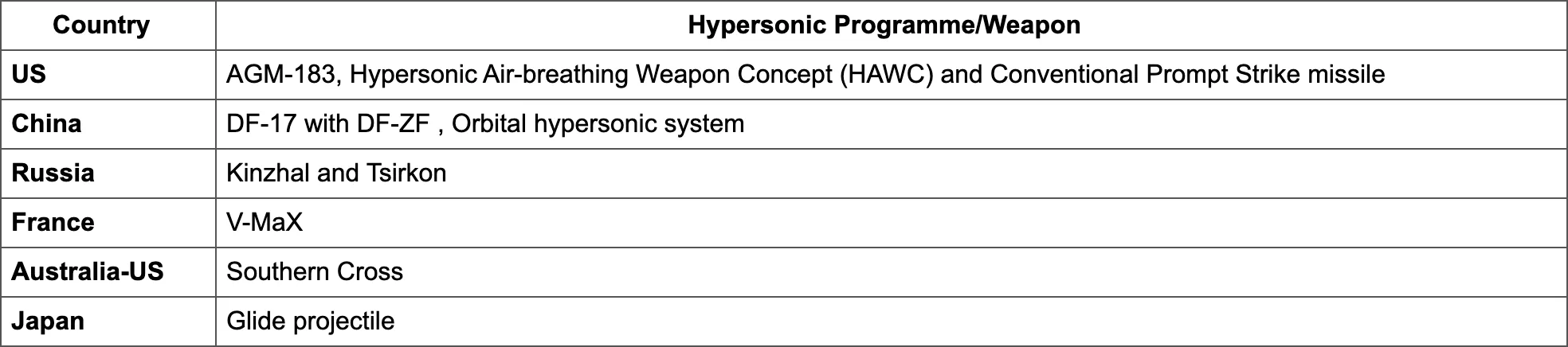
Source Why in News?- South Korea conducted its first test-firing of an indigenously developed hypersonic missile, featuring a manoeuvrable Hypersonic Glide Vehicle (HGV), amid heightened tensions on the Korean Peninsula, days after North Korea tested an intermediate-range hypersonic missile.
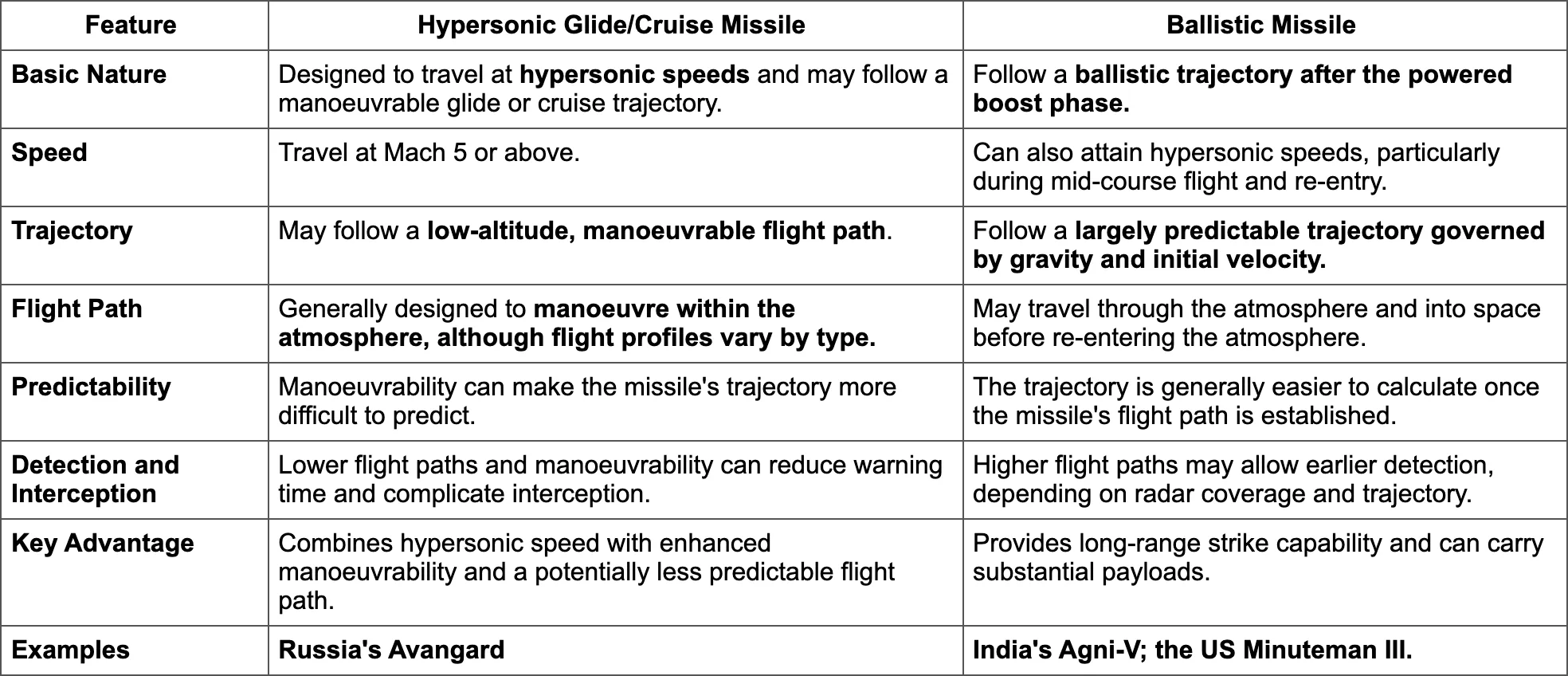
- A hypersonic missile is a weapon that travels through the atmosphere at speeds of Mach 5 or greater (5 times the speed of sound) while maintaining the ability to make significant, guided maneuvers in flight
Note: Hypersonic vehicles also differ from conventional ballistic missiles in their post-boost flight trajectories and manoeuvrability, making their flight paths less predictable and interception more challenging.
-
Its two major categories are:

-
Its two major categories are:
 What are India’s Key Hypersonic Milestones?
- Defence Research and Development Organisation (DRDO) is developing hypersonic weapons using two technologies: Hypersonic Glide Vehicles (HGVs) and scramjet-powered hypersonic cruise missiles.
- LR-AShM (Long Range Anti-Ship Missile): A shore-based maritime strike system featuring a rocket booster and hypersonic glide phase, designed to target enemy warships.
- ET-LDHCM (Extended Trajectory–Long Duration Hypersonic Cruise Missile): Developed under Project Vishnu, this scramjet-powered missile aims to achieve speeds exceeding Mach 8.
- Scramjet Propulsion Breakthrough: DRDO demonstrated a full-scale, actively cooled scramjet combustor, advancing sustained hypersonic propulsion technology.
- BrahMos-II: A planned hypersonic cruise missile intended to achieve speeds of approximately Mach 7.
Indian Army Launches Bharat Rice
Source The Indian Army launched ‘Bharat Rice’ for defence personnel and signed a five-year Memorandum of Understanding (MoU) with the Food Corporation of India (FCI), to strengthen military logistics and operational preparedness.- About Bharat Rice: It is a superior-quality rice initiative developed based on feedback from troops, with rice supplied according to prescribed defence specifications to improve ration quality and logistical efficiency.
- Objective: To improve ration quality, ensure timely replenishment and strengthen military preparedness, especially during emergencies and rapid mobilisation.
- Supply Mechanism: Rice will be delivered directly to Army supply depots, including those in remote areas of Ladakh and the Northeast, reducing the need for depots to collect supplies from local FCI facilities.
- Role of NAFED: The National Agricultural Cooperative Marketing Federation of India (NAFED) will supply the rice during the financial year 2026–27.
- Packaging and Quality Control: Rice will undergo quality checks and be supplied in 10-kg and 30-kg bags. Ergonomic packaging will facilitate handling and transportation in difficult terrain.
- MoU Highlights:
- The agreement gives the Army access to FCI’s warehousing infrastructure, modern silos, trained manpower and material-handling equipment during operational contingencies.
- It will remain valid for five years, with an option to extend it by mutual consent.
- Strategic Significance: The initiative strengthens military supply chains in forward areas, reflecting lessons from Operation Sindoor about the importance of resilient logistics during short-warning or zero-warning military contingencies.
Indian Coast Guard Inducts Indigenous ALH MK-III Helicopter
Source Recently, the Indian Coast Guard inducted the indigenous Advanced Light Helicopter (ALH) MK-III, designated CG 875, under Coast Guard Region (West).- CG 875 is the first of five allotted ALH MK-III helicopters to be positioned with 831 Squadron (CG) at Ratnagiri, Maharashtra.
- About: Advanced Light Helicopter (ALH) MK-III is an indigenous multi-role helicopter manufactured by Hindustan Aeronautics Limited (HAL).
- Advanced Equipment: It features advanced radar, electro-optical sensors, Shakti engines, a full glass cockpit, a high-intensity searchlight, advanced communication systems, an Automatic Identification System (AIS) and a search-and-rescue homing system.
- Operational Role: It supports maritime reconnaissance, surveillance and search-and-rescue operations over extended ranges, operating from ships during both day and night.
- Multi-role Capability: The helicopter can switch from an offensive platform equipped with a heavy machine gun to a medical evacuation platform fitted with a medical intensive care unit for transporting critically ill patients.
- Strategic Significance: Its induction strengthens the Indian Coast Guard’s maritime surveillance, threat detection, coastal security and emergency response capabilities, including the protection of India’s Exclusive Economic Zone (EEZ).
Social Issues
Advancing Women’s Employment and Economic Empowerment in India
Source Why in News?- The rising female labour force participation in India has shifted attention towards improving the quality of women’s employment, with greater emphasis on job security, social protection, safer workplaces, financial independence and economic empowerment.
- Rising Labour Force Participation:
- According to the Periodic Labour Force Survey (PLFS) the female LFPR for women aged 15 years and above increased from 23.3% in 2017–18 to 40% in 2025.
- The Labour Force Participation Rate(LFPR) measures the proportion of the population that is either working or seeking or available for work.
- Increasing Employment:
- The female Worker Population Ratio (WPR) rose from 22% in 2017–18 to 38.8% in 2025, indicating an increase in the proportion of women actually employed.
- The WPR measures the proportion of employed persons in the total population.
- Large Employment Base: An estimated 20 crore women aged 15 years and above were employed in India during 2025.
- Shift Towards Quality Employment: Women’s economic empowerment increasingly depends on access to adequate income, job security, social protection, formalisation, financial opportunities and greater control over economic decisions.
- Women’s Entrepreneurship:
- Women are increasingly participating in entrepreneurship, strengthening financial independence, asset creation and access to economic opportunities.
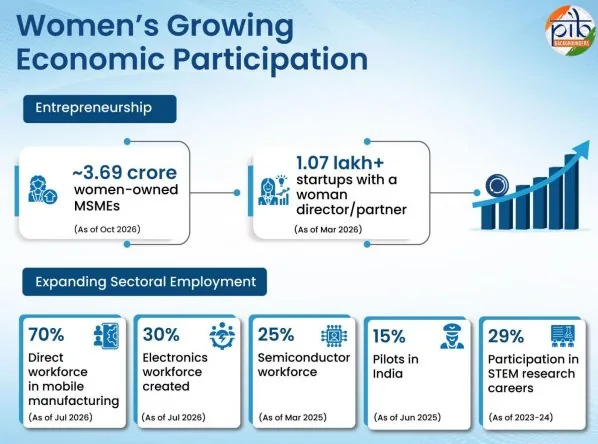
- Women-Owned MSMEs: As of October 2026, approximately 3.69 crore registered MSMEs were women-owned, accounting for 38% of total MSME registrations.
- Women in Startups: By March 2026, over 1.07 lakh recognised startups (48%) had at least one woman director or partner.
- Electronics Manufacturing: As of July 2026, women constituted nearly 70% of the direct workforce in mobile phone manufacturing and approximately 30% of the workforce created in the broader electronics manufacturing sector over the preceding decade.
- Semiconductor Industry: As of March 2025, women accounted for approximately 25% of the semiconductor workforce, including nearly one-fourth of India’s chip design and engineering workforce.
- Civil Aviation: As of June 2025, women constituted 15% of pilots, one of the highest proportions globally, alongside 15% of air traffic controllers, 11% of flight dispatchers and 33% of Flight Operations Inspectors in the Directorate General of Civil Aviation (DGCA).
- STEM Research: According to the Research & Development Statistics 2025–26, women’s participation in Science, Technology, Engineering and Mathematics (STEM) research careers increased from 13% in 2000–01 to 18.6% in 2020–21 and 29% in 2023–24, reflecting their growing presence in research and innovation.
 How is the Government Supporting Women-Led Enterprises Through Formalisation?
- Swavalambini Scheme (2025):
- Launched as a pilot in February 2025 across six higher education institutions in Assam, Meghalaya, Mizoram, Uttar Pradesh and Telangana, the scheme supports young women from business ideation to enterprise creation through entrepreneurship training, financial and market guidance, legal support and 21 weeks of mentorship.
- The pilot trained 1,276 participants under the Entrepreneurship Awareness Programme against a target of 1,200 and 602 participants under the Entrepreneurship Development Programme against a target of 600.
- Yashasvini Campaign (2024):
- Aims to promote women’s entrepreneurship and gender parity on the Udyam Registration Portal and Udyam Assist Platform by 2029.
- Provides awareness, handholding and capacity-building support while promoting the mandated 3% public procurement target for women-owned Micro and Small Enterprises (MSEs).
- By July 2026, it had facilitated over 22 lakh women-owned MSME registrations. In FY 2025–26, procurement from women-owned MSEs reached 3.8%, exceeding the 3% target.
- Financial Support for Women-Led MSMEs
- Pradhan Mantri MUDRA Yojana (PMMY), 2015:
- PMMY provides collateral-free loans of up to ₹20 lakh to eligible micro-enterprises engaged in non-corporate, non-farm income-generating activities.
- By April 2026, over 57.79 crore loans had been sanctioned since inception, with women accounting for nearly two-thirds of the total.
- Credit Guarantee Scheme for Micro and Small Enterprises (CGTMSE):
- It facilitates collateral-free institutional credit to Micro and Small Enterprises (MSEs), offering 90% guarantee coverage for women-led MSEs and a 10% concession on guarantee fees.
- As of February 2026, approximately 30.75 lakh guarantees worth ₹2.07 lakh crore had been approved for women-owned MSEs since the scheme’s inception.
- Prime Minister’s Employment Generation Programme (PMEGP):
- A credit-linked subsidy scheme promoting new non-farm micro-enterprises, with women eligible for 25% subsidy in urban areas and 35% in rural areas.
- By May 2026, women accounted for nearly 40% of micro-enterprises assisted and received approximately 45% of the total margin-money subsidy disbursed.
- Pradhan Mantri MUDRA Yojana (PMMY), 2015:
- Financial Support for Women-Led Startups
- Fund of Funds for Startups (FFS), 2016:
- Provides capital to SEBI-registered Alternative Investment Funds (AIFs), which subsequently invest in startups through equity and equity-linked instruments.
- As of January 2026, supported AIFs had invested approximately ₹2,995 crore in women-led startups from 2025 onwards.
- Startup India Seed Fund Scheme (SISFS), 2021:
- SISFS provides early-stage funding through approved incubators to support proof of concept, prototype development, product trials and market entry.
- As of January 2026, supported incubators had approved approximately ₹294 crore for women-led startups.
- Credit Guarantee Scheme for Startups (CGSS), 2023:
- CGSS facilitates collateral-free debt financing for eligible startups through credit guarantees on loans extended by banks, financial institutions, NBFCs and SEBI-registered AIFs.
- As of January 2026, loans amounting to approximately ₹39 crore had been guaranteed for women-led startups.
- Fund of Funds for Startups (FFS), 2016:
- Womaniya Initiative:
- Launched on the Government e-Marketplace (GeM), it facilitates market access for women-owned Micro and Small Enterprises (MSEs) and Self-Help Groups (SHGs) by connecting them with government buyers.
- It enables women entrepreneurs to register and sell products such as handloom, jute, coir and home décor items through a dedicated digital interface.
- By July 2026, over 2.17 lakh women-owned MSEs were registered on GeM. In FY 2025–26, their total contract value exceeded ₹28,000 crore, reflecting 27.6% annual growth.
- Women-owned MSEs received 5.6% of the total order value on GeM, exceeding the mandated 3% public procurement target.
- Procurement and Marketing Support (PMS) Scheme:
- Supports registered MSEs in accessing markets through trade fairs, exhibitions, vendor-development programmes, e-commerce and packaging support.
- Women-owned MSEs are eligible for a 100% subsidy on built-up space rent for participation in eligible trade fairs.
- MSME Trade Enablement and Marketing (TEAM) Initiative (2024–27):
- Launched under the Raising and Accelerating MSME Performance (RAMP) Programme, it helps MSEs access digital markets through the Open Network for Digital Commerce (ONDC).
- Up to FY 2025–26, approximately 1,700 women-owned MSEs had registered under the initiative.
- Significance: These initiatives strengthen women’s entrepreneurship by connecting formalisation, access to credit and market opportunities, enabling women-led enterprises to expand their customer base, increase income and achieve sustainable business growth.
- Pradhan Mantri Kaushal Vikas Yojana 4.0 (PMKVY 4.0):
- The scheme emphasises training in futuristic and new-age technologies.
- Between 2021–22 and 2025–26, 20,393 women candidates trained in artificial intelligence, 5,927 in semiconductors and 76,671 in renewable energy.
- National Apprenticeship Promotion Scheme (NAPS):
- The scheme promotes paid on-the-job apprenticeship training.
- During 2021–22 to 2025–26, the reported number of women candidates trained was 1,534 in artificial intelligence and 19,899 in renewable energy.
- Craftsman Training Scheme (CTS):
- Delivered through Industrial Training Institutes (ITIs), the scheme provides vocational and technical training.
- 512 women trained in artificial intelligence, 31 in semiconductors and 5,753 in renewable energy during 2021–22 to 2025–26.
- NAVYA Initiative: Launched in 2025, Nurturing Aspirations through Vocational Training for Young Adolescent Girls aims to skill 3,850 adolescent girls under PMKVY 4.0 for non-traditional and future-oriented jobs.
- AI Careers for Women: Launched in 2025, the programme is establishing 30 Centres of Excellence in women’s colleges across six states, supported by 150 spoke centres in Tier-II and Tier-III towns. It aims to provide 20,000 learners with practical AI training, certifications, internships and career guidance.
- WISE-KIRAN:
- The Women in Science and Engineering–Knowledge Involvement in Research Advancement through Nurturing scheme promotes women’s participation in science and technology research through fellowships and institutional programmes.
- During 2025–26, 180 women pursued PhDs, 606 women scientists received post-doctoral or translational research support, 26 senior scientists received R&D support and 29,443 schoolgirls received STEM support.
- The Government implemented four Labour Codes in November 2025, consolidating 29 existing labour laws to strengthen workers’ rights, workplace safety, social security and employment opportunities.
- The four codes include the Code on Wages, 2019; Industrial Relations Code, 2020; Code on Social Security, 2020; and Occupational Safety, Health and Working Conditions Code, 2020.
- Key Provisions for Women Workers
- Grievance Redressal: Ensures proportionate representation of women in Grievance Redressal Committees, strengthening their participation in resolving workplace disputes.
- Maternity Benefits:
- Eligible women employees receive up to 26 weeks of paid maternity leave, while eligible adoptive and commissioning mothers are entitled to 12 weeks.
- Medical Bonus: ₹3,500 where free prenatal and postnatal care is not provided by the employer.
- Nursing Breaks: Two nursing breaks during working hours until the child reaches 15 months of age.
- Crèche Facilities: Establishments with 50 or more employees must provide crèche facilities, allowing women four visits daily, including rest intervals.
- Work-from-Home Provision: Women may work from home after maternity leave where the nature of work permits, subject to mutual agreement with the employer.
- Expanded Employment Opportunities: Women can work in all establishments and sectors, including night shifts, subject to their consent and prescribed safety measures.
- Prohibition of Gender Discrimination: The Code on Wages, 2019 prohibits gender-based discrimination in recruitment, wages and employment conditions for the same or similar work, promoting equal pay for equal work.
- Representation in Policy-Making: Women must constitute at least one-third of the members of Central and State Advisory Boards, which advise on minimum wages and measures to enhance women’s employment opportunities.
- Significance: These reforms aim to strengthen workplace equality, maternity protection, employment security and women’s participation across sectors, supporting safer and more inclusive labour markets.
- India’s transition from increasing women’s workforce participation to ensuring quality employment reflects a shift towards inclusive economic empowerment. Strengthening access to skills, finance, markets, social security and safe workplaces will enhance women’s economic independence and entrepreneurship, advancing women-led development and the vision of Viksit Bharat 2047.
Space
NASA’s Perseverance Rover Sets a New Driving Record on Mars
Source NASA’s Perseverance rover has travelled 45.22 km on Mars, surpassing the previous off-Earth driving record of 45.16 km held by NASA’s Opportunity rover, demonstrating the capabilities of autonomous navigation in planetary exploration.- About Perseverance: It is a car-sized, six-wheeled robotic rover developed by NASA to investigate Mars’ geology, ancient habitability and potential evidence of past microbial life. It primarily explores Jezero Crater, a region believed to have contained an ancient lake and river delta billions of years ago.
- Objective: To investigate evidence of ancient microbial life on Mars, study its geology and evolution, collect rock and regolith samples for potential return to Earth, and identify environments that may have supported life.
- Important Technologies: Perseverance uses AutoNav for autonomous navigation, the Vision Compute Element for rapid image processing, and a plutonium-238-powered Multi-Mission Radioisotope Thermoelectric Generator (MMRTG) for electricity generation.
- Findings: NASA has reported a potential biosignature in ancient rocks associated with a former river channel feeding Jezero Crater but this is not confirmation that life existed on Mars.
- Extended Mission: NASA has extended the mission to explore the crater rim until approximately the end of 2028, although the rover may remain operational beyond this period.
- Opportunity Rover: It was launched alongside its twin Spirit, landed on Mars in 2004 to investigate the planet’s geology and past conditions suitable for microbial life. It found evidence of ancient habitable conditions on Mars and operated for nearly 15 years, exceeding its planned mission duration by about 60 times.

Wildlife
Sukhna Wetland and Sauj Jheel Become Ramsar Sites
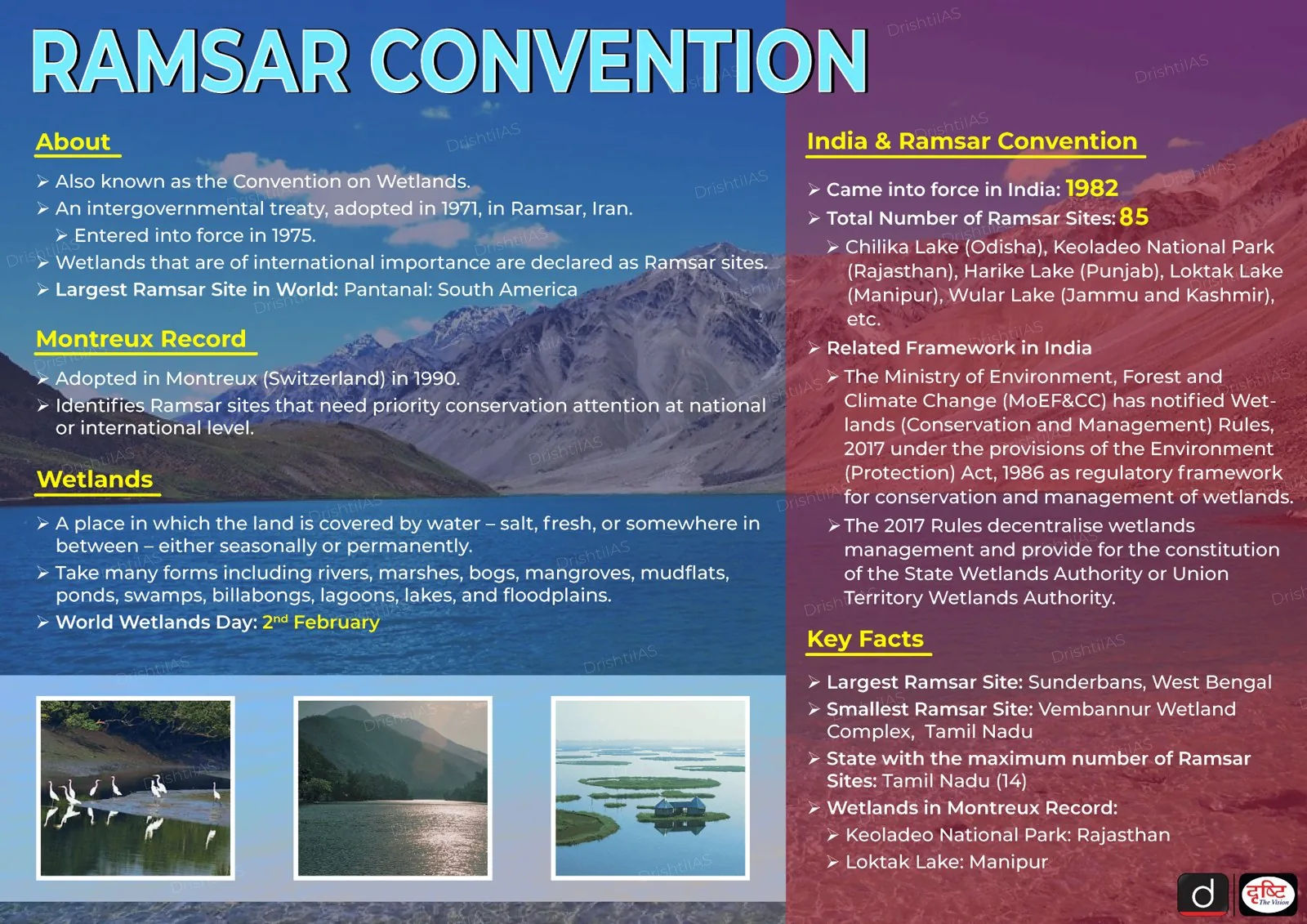
Source Why in News?- India’s total number of Ramsar sites has increased to 103, following the designation of Sukhna Wetland (Chandigarh) and Sauj Jheel (Uttar Pradesh) as Wetlands of International Importance under the Ramsar Convention.
- Sukhna Wetland (Chandigarh)
- Location: Situated at the foothills of the Outer Himalayas (Shivalik Hills) in Chandigarh, it is a peri-urban reservoir that helps regulate water and sediment flows from its surrounding catchment.
- Ecological Significance: It supports diverse habitats, including open water, littoral vegetation, scrub and forests, and serves as an important feeding, breeding, roosting and wintering ground for migratory waterbirds along the Central Asian Flyway.
- Key Species: Includes the Vulnerable Common Pochard, Endangered Pallas’s Fish Eagle and endangered black pond turtle.
- Conservation Challenges: Sedimentation, soil erosion and invasive species threaten its ecological health, requiring catchment conservation and invasive species management.
- Sauj Jheel (Uttar Pradesh)
- Location: A shallow lake surrounded by agricultural fields in the Ganga River floodplain, situated near Saman Bird Sanctuary, another Ramsar Site.
- Ecological Significance: It forms part of an interconnected wetland network and regularly supports over 30,000 waterbirds, providing important nesting, breeding and feeding habitats.
- Key Species: Includes the Vulnerable Sarus Crane and Vulnerable Greater Spotted Eagle, along with wetland vegetation such as Sacred Lotus and Wild Sugarcane.
- Conservation Status: Recognised as an Important Bird and Biodiversity Area (IBA) by BirdLife International.
- Conservation Measures: Proposed measures include seasonal fishing restrictions, limits on fine-mesh fishing nets and regulated cattle access.
- A wetland can qualify for Ramsar designation if it meets at least one of the nine criteria established under the convention.
- Unique Wetland Ecosystems: A wetland may qualify if it represents a rare or unique example of a natural or near-natural wetland type within a particular biogeographic region.
- Threatened Species: Wetlands that support vulnerable, endangered or critically endangered species may qualify for international recognition.
- Biodiversity Conservation: A wetland can qualify if it supports significant biological diversity or species important for maintaining a particular biogeographic region.
- Critical Life-Cycle Stages: Wetlands that provide essential habitats during breeding, migration or other critical stages in the life cycles of species may qualify.
- Waterbird Population: A wetland may qualify if it regularly supports at least 20,000 waterbirds.
- One Per Cent Population Criterion: A wetland can also qualify if it regularly supports at least 1% of the population of a particular waterbird species or subspecies.
- Fish Diversity: Wetlands that support significant indigenous fish diversity or provide important spawning, nursery or migration habitats can qualify.
- Other Wetland-Dependent Species: Additional criteria recognise wetlands that support important populations of other wetland-dependent animals.