Comrades Dispatch · 29 Oct 2026 (PDF)
In this edition
- Cyclone Arnab Geography
- 65th Raising Day of Indo-Tibetan Border Police Important Days
- Green Hydrogen and India’s Clean Energy Transition Infrastructure & Energy
- Amendments to Central Motor Vehicle Rules for E100 Fuel Usage Infrastructure & Energy
- Special Executive Magistrates Polity & Governance
- Defence Acquisition Council Clears Procurement Proposals Worth ₹2.12 Lakh Crore Security
- India’s Emerging Space Technologies Space
- TDB Supports Indigenous Green Propulsion Technology Space
Geography
Cyclone Arnab
Source Why in News?- Cyclonic Storm Arnab, originating in the Bay of Bengal (BoB), made landfall along the Andhra Pradesh–Yanam coast, causing fatalities, mass evacuations and extensive agricultural and infrastructure damage before subsequently weakening.
- Meteorological Classification:
- Cyclone Arnab classified by the IMD as a “Very Severe Cyclonic Storm” (VSCS).
- According to the India Meteorological Department (IMD) classification, a VSCS is defined by maximum sustained surface wind speeds ranging between 118–166 km/h (64–89 knots). Arnab struck with sustained speeds of 125–135 km/h.
- Genesis: Originated as a low-pressure area over the Bay of Bengal, capitalizing on the high Tropical Cyclone Heat Potential (TCHP), before moving west-northwestwards to make landfall near Yanam (Andhra Pradesh coast).
- Institutional Nomenclature: “Arnab” was proposed by Bangladesh, meaning “ocean” or “sea” in Bengali. Arnab was the first named cyclone of 2026 in the North Indian Ocean basin.
- Climatological Anomalies & El Niño Impact:
- The cyclone underwent Rapid Intensification (RI) due to high Sea Surface Temperatures (>28°C) and a thick freshwater “Barrier Layer” in the Bay of Bengal.
- Prevailing El Niño conditions altered standard atmospheric circulation, shifting the cyclone’s trajectory toward the lower latitudes (Andhra Pradesh) rather than the traditional northern hook toward Odisha/West Bengal, and fueling its sustained intensity post-landfall.
- Its prolonged landfall was influenced by interactions among an anticyclonic circulation over the China–Myanmar region, strong westerly winds and a low-pressure system over the southern Bay of Bengal, which slowed its movement and prolonged exposure to heavy rainfall and strong winds.
- Socio-Economic and Ecological Impact:
- Agrarian Devastation: Over 80,000 hectares of standing crops (paddy, horticulture) were destroyed.
- Saltwater Intrusion: The 1 to 1.5-meter storm surge pushed saline seawater deep into the Krishna-Godavari delta, altering soil chemistry and threatening medium-term coastal agricultural viability.
- Blue Economy Disruption: Destruction of localized aquaculture and fishing trawlers severely impacted the livelihoods of coastal artisanal fisherfolk.
- Disaster Response Framework:
- Impact-Based Forecasting (IBF): The IMD utilized Doppler Weather Radars and the INSAT satellite series to issue color-coded, impact-based early warnings, significantly reducing human casualties.
- Statutory Action: Executed under the Disaster Management Act, 2005. The National Disaster Response Force (NDRF) and State Executive Committees coordinated mass preemptive evacuations of over 1.8 lakh people to multi-purpose cyclone shelters.
- Institutional Coordination: The National Crisis Management Committee (NCMC), chaired by the Cabinet Secretary, coordinates preparedness and response measures during major disasters, working with central ministries, state governments and disaster-response agencies.
- Financial Redressal: The State requested immediate mobilization of the National Disaster Response Fund (NDRF) (managed by the Central Government) to augment the State Disaster Response Fund (SDRF) for recovery operations.
 Naming Mechanism for North Indian Ocean Cyclones
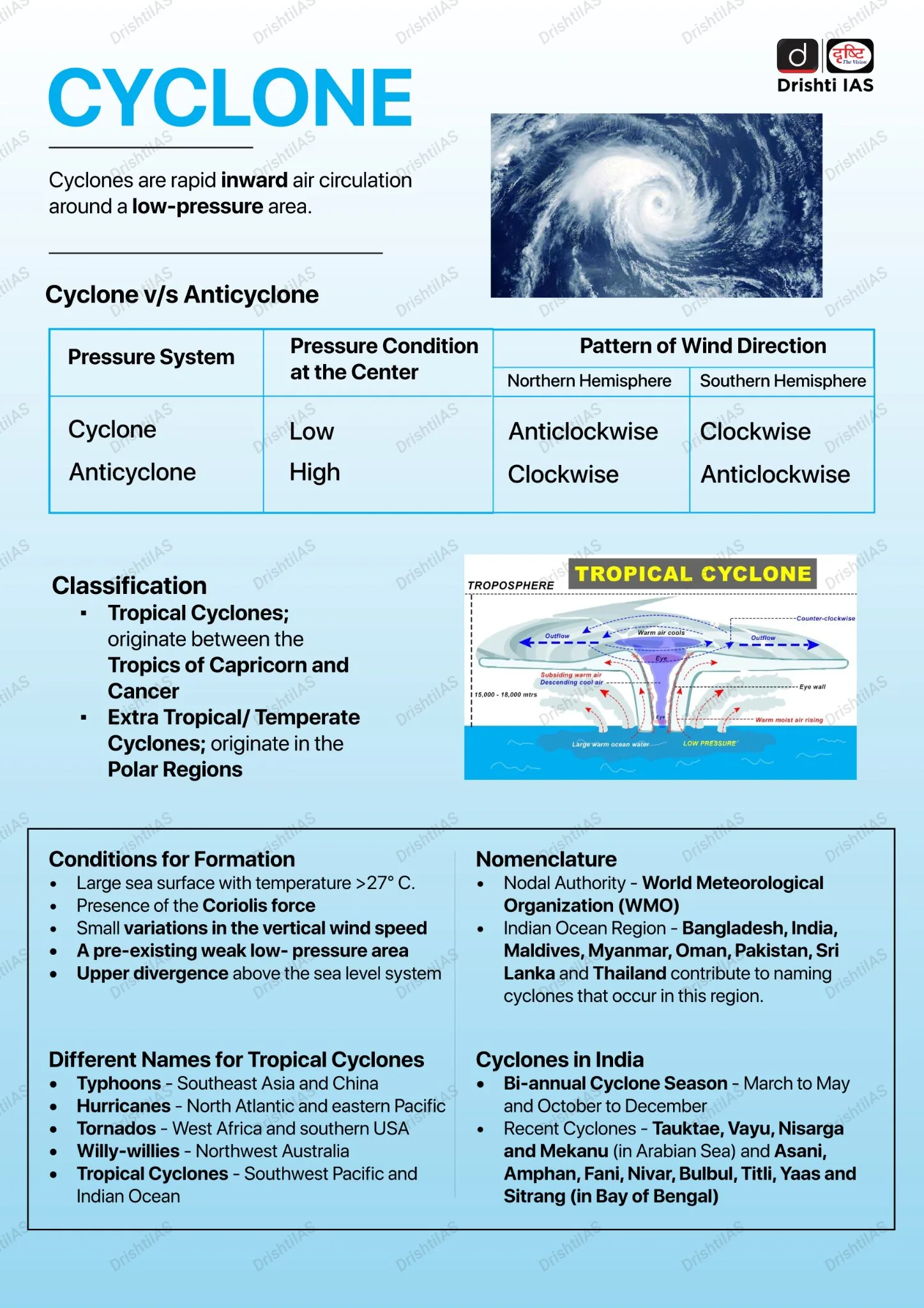
- Institutional Mandate: The naming of tropical cyclones in the North Indian Ocean (NIO) encompassing the Bay of Bengal and the Arabian Sea is managed by the World Meteorological Organization/United Nations Economic and Social Commission for Asia and the Pacific (WMO/ESCAP) Panel on Tropical Cyclones (PTC).
- Naming Framework and Member Nations:
- The formal naming protocol for the North Indian Ocean commenced in September 2004 with eight original member nations.
- As cyclonic threats evolved and regional cooperation deepened, the WMO/ESCAP PTC expanded the panel during its 45th Session in 2018.
- The panel currently comprises Bangladesh, India, Iran, Maldives, Myanmar, Oman, Pakistan, Qatar, Saudi Arabia, Sri Lanka, Thailand, United Arab Emirates (UAE), and Yemen.
- Master List: In April 2020, the panel adopted a comprehensive new list of 169 names (13 names proposed by each of the 13 countries)
- No Repetition Policy: Unlike some other global ocean basins, names of tropical cyclones over the North Indian Ocean are never repeated; once a name is used, it is permanently retired.
- Purpose of Naming: It helps the scientific community, disaster managers, and the public to easily identify individual cyclones, raise rapid awareness, remove confusion during simultaneous storms, and effectively disseminate warnings.
- Strict Naming Criteria: Proposed names must be politically, religiously, culturally, and gender-neutral. They must have a maximum length of eight letters, be easy to pronounce, and not hurt the sentiments of any global community.
- Wind Speed Threshold: A storm is officially named by RSMC New Delhi only when its diagnosed maximum sustained surface wind speed reaches 34 knots (62 kmph) or more.
- Trans-Regional Exception: If a tropical cyclone originates in the South China Sea, crosses Thailand, and emerges into the Bay of Bengal, it will not be renamed and will retain its original name.
- Higher Cyclone Frequency and Seasonality:
- Historically, the Bay of Bengal experiences approximately four times as many cyclones as the Arabian Sea, with the North Indian Ocean recording around five cyclones annually on average.
- Cyclone activity peaks during the pre-monsoon (April–June) and post-monsoon (October–December) seasons, particularly around May and November.
- Salinity Stratification and the ‘Barrier Layer’:
- Freshwater from rivers like the Ganga, Brahmaputra and Godavari creates a low-salinity surface layer in the Bay of Bengal, preventing cooler deep water from rising.
- This maintains sea surface temperatures above 26.5°C, a key condition for tropical cyclone formation.
- Typhoon Remnants (Easterly Waves): The Bay of Bengal lies downwind of the highly active Northwest Pacific basin. Remnants of Pacific typhoons can cross the Indochinese Peninsula and re-intensify over the Bay’s warm waters under favourable atmospheric and oceanic conditions, sometimes developing into new cyclonic systems.
- Absence of Dry Air Intrusions:
- The Arabian Sea is exposed to dry air from the arid Middle East and the Horn of Africa, which can suppress deep convection and cyclone formation.
- In contrast, the Bay of Bengal receives abundant moisture from its humid surroundings, favouring convection and providing the moisture needed for cyclone development and intensification.
- Favorable Wind Shear and Heat Potential For a cyclone to grow, the wind speed at the bottom and top of the storm must be similar (low vertical wind shear), otherwise, the storm gets torn apart.
- The Bay provides this calm environment, along with a deep thermal reservoir of warm water (High Tropical Cyclone Heat Potential) that allows storms to rapidly intensify.
- Funnelling Coastline and Storm Surge:
- The funnel-shaped northern Bay of Bengal and its shallow continental shelf can amplify storm surges, increasing coastal flooding and inundation risks, particularly along the Odisha–West Bengal–Bangladesh coast.
- This geographical feature primarily intensifies cyclone impacts, rather than directly increasing cyclone formation.
 Arabian Sea Anomaly
- The Arabian Sea anomaly primarily refers to the rapid warming of sea surface temperatures (SSTs) and the dramatic shift in weather and cyclone patterns in the Arabian Sea.
- Rapid Warming of the Arabian Sea:
- A study by the Indian Institute of Tropical Meteorology (IITM), Pune, reveals that the Arabian Sea is currently warming at a significantly faster rate than the Bay of Bengal.
- This accelerated rise in Sea Surface Temperature (SST) is primarily driven by anthropogenic global warming and increased oceanic heat absorption.
- Furthermore, the localized accumulation of aerosols like Black Carbon (the Asian Brown Cloud) alters regional atmospheric thermodynamics. Together, these climate anomalies have provided a massive continuous thermal reservoir, resulting in a 52% increase in the frequency of Arabian Sea cyclones in recent decades.
- Positive Indian Ocean Dipole (IOD): Increasing frequencies of strong Positive IOD events have concentrated exceptionally warm water in the western Indian Ocean/Arabian Sea, triggering severe pre-monsoon cyclogenesis (e.g., Cyclones Tauktae and Biparjoy).
- Increased Lifespan: Cyclones in the Arabian Sea are now lasting 80% longer than they did two decades ago, increasing their destructive potential along India’s West Coast.
Important Days
65th Raising Day of Indo-Tibetan Border Police
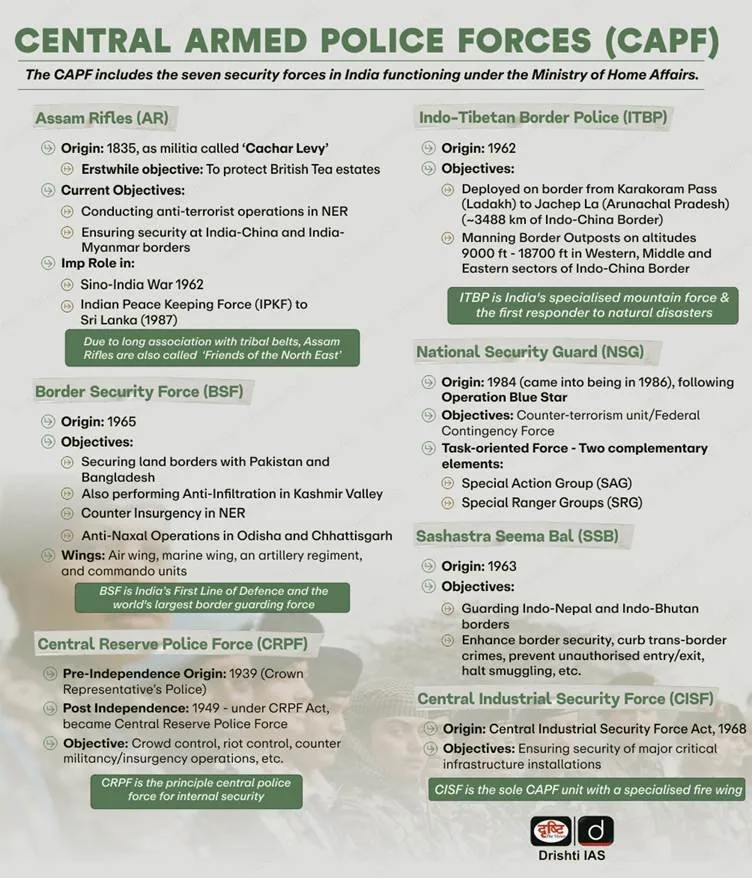
Source The Prime Minister extended greetings to personnel of the Indo-Tibetan Border Police (ITBP) on its 65th Raising Day, recognising their courage, dedication and sacrifices in safeguarding India’s borders.- Establishment: Raised on 24th October 1962 during the India-China War to strengthen border security, the ITBP functions under the Ministry of Home Affairs (MHA) as a Central Armed Police Force (CAPF).
- Legal Framework:
- It is governed by the Indo-Tibetan Border Police Force Act, 1992 and guards approximately 3,488 km of the India–China border, extending from Karakoram Pass in Ladakh to Jachep La in Arunachal Pradesh.
- In 2004, under the “One Border, One Force” principle, ITBP was assigned responsibility for guarding the entire India–China border, replacing the Assam Rifles in Sikkim and Arunachal Pradesh.
- Motto: “Shaurya-Dridhata-Karma Nishtha”, meaning Valour, Steadfastness and Dedication to Duty.
- Specialisation:
- ITBP personnel, popularly known as Himveers, are trained in high-altitude operations, mountaineering, skiing and specialised tactical operations.
- Many Border Outposts (BOPs) are situated at altitudes ranging from 9,000 to 18,800 feet, where temperatures can fall to −45°C during extreme winters.
- Other Responsibilities:
- Preventing cross-border crimes, smuggling and unauthorised entry.
- Conducting search and rescue operations, disaster response and relief activities in Himalayan regions.
- Undertaking internal security and counterinsurgency operations, including operations against Left-Wing Extremism (LWE) in Chhattisgarh.
- Providing security to sensitive installations and protected persons, when assigned.
Infrastructure & Energy
Green Hydrogen and India’s Clean Energy Transition
Source Why in News?- India is advancing its National Green Hydrogen Mission (NGHM) through domestic electrolyser manufacturing, green hydrogen production, industrial pilot projects and certification mechanisms to support its 5 million metric tonnes (MMT) annual green hydrogen production target by 2030 and Net Zero emissions goal by 2070.
- About: Green hydrogen is hydrogen produced using renewable energy, primarily through water electrolysis powered by solar or wind electricity, resulting in substantially lower carbon emissions than conventional fossil-fuel-based hydrogen production.
- Clean Energy Carrier: Hydrogen is an energy carrier that can store and deliver energy for diverse applications. In a fuel cell, it reacts with oxygen to generate electricity, producing water and heat as by-products without direct emissions of polluting compounds or greenhouse gases.
- Production Determines Environmental Impact: Hydrogen is generally obtained from compounds such as water or natural gas. While conventional fossil-fuel-based production generates significant carbon emissions, renewable-powered electrolysis substantially reduces its carbon footprint.
- Decarbonisation Potential: Green hydrogen can reduce emissions in hard-to-abate sectors, particularly fertilisers, petroleum refining, steel, heavy-duty transportation and shipping, where direct electrification is difficult or less practical.
- Energy Security and Economic Benefits: India’s abundant solar and wind resources can support domestic green hydrogen production, reducing dependence on imported fossil fuels and exposure to global energy price volatility.
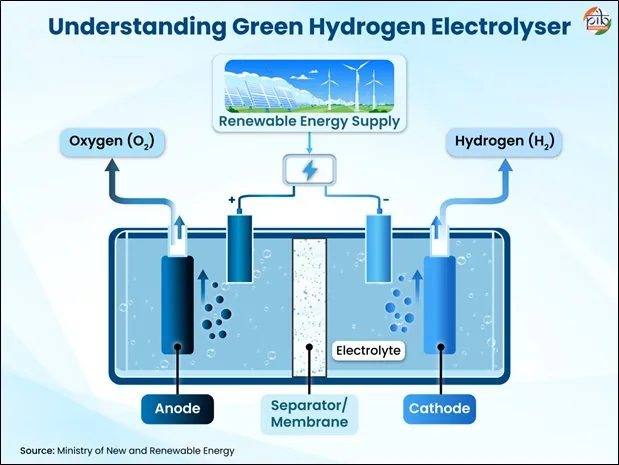
- Water Electrolysis: Green hydrogen is primarily produced through electrolysis of water (H₂O), in which electricity generated from renewable sources such as solar and wind splits water into hydrogen (H₂) and oxygen (O₂) with minimal emissions. Chemical Reaction: 2H₂O → 2H₂ + O₂
- Electrolyser:
- The key equipment used in electrolysis, consisting of two electrodes—cathode (negative) and anode (positive)—connected to an electrical power source and operating with an electrolyte that facilitates ion movement.
- A diaphragm or membrane separates the hydrogen and oxygen gases while permitting the required ion transport.
- When electric current passes through the system, hydrogen forms at the cathode and oxygen at the anode, and both gases are collected separately.
- Water Purification: Water is purified before electrolysis to prevent impurities from damaging electrolyser components. Approximately 9 litres of water are theoretically required to produce 1 kg of hydrogen, although actual water consumption may be higher due to purification and other operational requirements.
- Hydrogen Processing: The produced hydrogen is dried, purified and compressed for storage, transportation or industrial use. India’s Green Hydrogen Standard accounts for emissions associated with these production and processing stages.
 What is India’s Green Hydrogen Policy Architecture?
- India’s green hydrogen policy framework is centred on the National Green Hydrogen Mission (NGHM), supported by financial incentives, sector-specific pilot projects, renewable energy infrastructure, certification standards, research and skill development.
- Whole-of-Government Approach:
- The Mission coordinates efforts across Central and State Governments to promote green hydrogen adoption.
- Ministry of Petroleum and Natural Gas: Promotes adoption in refineries and city gas distribution.
- Ministry of Chemicals and Fertilisers: Encourages green ammonia-based fertiliser production.
- Ministry of Road Transport and Highways: Facilitates hydrogen-based transport through regulations and standards.
- Ministry of Steel: Promotes hydrogen use in low-carbon steelmaking.
- Ministry of External Affairs: Facilitates international cooperation and partnerships.
- National Green Hydrogen Mission (NGHM)
- Approved by the Union Cabinet in January 2023, with an outlay of ₹19,744 crore, and implemented by the Ministry of New and Renewable Energy (MNRE) to make India a global hub for green hydrogen production, utilisation and exports.
- 2030 Target: At least 5 million metric tonnes (MMT) of annual green hydrogen production capacity, potentially expanding to 10 MMT depending on export demand.
- Strategic Interventions for Green Hydrogen Transition (SIGHT)
- With an allocation of ₹17,490 crore up to 2029–30, the programme provides incentives for domestic electrolyser manufacturing and green hydrogen production.
- Incentives awarded to 15 companies for 3,000 MW per annum of electrolyser manufacturing capacity.
- Incentives awarded for 8.62 lakh tonnes per annum of green hydrogen production capacity, of which approximately 8,000 tonnes per annum had been commissioned by February 2026.
- Sector-Specific Pilot Projects
- The Mission supports demonstration projects in steel, heavy-duty transportation and shipping to test commercial viability and address technological and infrastructure gaps.
- Steel: ₹455 crore allocated up to 2029–30; five pilot projects sanctioned, including ₹84 crore for testing 100% hydrogen injection.
- Mobility: 12 projects covering 70 hydrogen vehicles (27 buses and 43 trucks), along with 16 hydrogen refuelling stations across 21 routes.
- Shipping: V.O. Chidambaranar Port Authority has awarded a ₹38.12 crore green methanol bunkering and refuelling project, including an MNRE grant of ₹35 crore.
- Green Hydrogen Hubs and Hydrogen Valley Innovation Clusters (HVICs)
- Promote geographically concentrated production, consumption, innovation and shared infrastructure to reduce costs and improve economies of scale.
- Deendayal Port (Gujarat), V.O. Chidambaranar Port (Tamil Nadu) and Paradip Port (Odisha) have been recognised as green hydrogen hubs.
- An indigenous 1 MW green hydrogen plant was commissioned at Kandla Port in July 2025.
- Four HVICs have been awarded in Jodhpur, Odisha, Pune and Kerala.
- Enabling Policy Framework
- Transmission Charge Waiver: Eligible green hydrogen and green ammonia plants commissioned by 31 December 2030 receive a 25-year waiver of Inter-State Transmission System (ISTS) charges, subject to applicable conditions.
- Open Access and Energy Banking: The Green Hydrogen and Green Ammonia Policy provides for Open Access within 15 days and banking of surplus renewable electricity for up to 30 days, subject to regulations.
- Infrastructure Support: The Green Energy Corridor Scheme strengthens renewable electricity transmission, while existing Solar Parks, Manufacturing Zones and Special Economic Zones (SEZs) can support hydrogen infrastructure.
- Regulatory Incentives: Eligible standalone green hydrogen and ammonia plants are exempt from prior Environmental Clearance under the EIA Notification, 2006. Certain SEZ/EOU renewable energy projects also receive specified equipment-list exemptions and duty benefits.
- Regulations and Standards
- Green Hydrogen Standard (2023): Prescribes a maximum well-to-gate emissions intensity of 2 kg CO₂ equivalent per kg of hydrogen, averaged over 12 months. Eligible biomass-based production pathways are also covered, subject to the prescribed threshold.
- Green Hydrogen Certification Scheme (2025): Provides a framework for monitoring, verification and certification, with the Bureau of Energy Efficiency (BEE) responsible for accrediting verification agencies. A dedicated digital certification portal became operational in June 2026.
- Green Ammonia and Methanol Standards: Specify emissions thresholds and eligibility conditions to facilitate production, certification and trade.
- World Hydrogen and Fuel Cell Day 2026
- On the occasion of the World Hydrogen and Fuel Cell Day (8th October 2026), the Ministry of New and Renewable Energy (MNRE) organised a stakeholder consultation in New Delhi to strengthen hydrogen safety standards, testing protocols and institutional coordination for its production, storage, transportation and utilisation.
- The report “India’s Hydrogen Standards: Gap Assessment and Preliminary Action Framework”, prepared with Boston Consulting Group (BCG), was released to identify regulatory gaps and recommend measures for the safe deployment of hydrogen technologies.
- Research and Development
- Strategic Hydrogen Innovation Partnership (SHIP): The Mission supports R&D to make green hydrogen more affordable, efficient, safe and reliable through SHIP, a public-private framework involving industry and government.
- R&D Funding: Guidelines were notified in March 2024 with an outlay of ₹400 crore. As of June 2026, an initial ₹113-crore R&D roadmap supports projects on hydrogen production, storage and safety technologies.
- Skilling and Start-ups
- Employment Potential: The Mission aims to generate over 6 lakh jobs by 2030 across the green hydrogen value chain.
- Skill Development: 8,149 candidates have been trained and 7,248 certified across 14 States and Union Territories in areas including electrolysers, electrolysis, storage, transport, safety, steel, mobility and refining.
- Start-up Support: ₹100 crore has been allocated for green hydrogen technology start-ups. The first nine start-ups have been approved for funding of ₹22 crore.
- International Cooperation
- Bilateral Partnerships: MNRE, directly or through the National Institute of Solar Energy, has signed MoUs, Letters of Intent or Joint Declarations of Intent with Australia, Finland, France, Germany, Saudi Arabia, the UAE and Uzbekistan.
- India–Netherlands Cooperation: An MoU on renewable energy has been signed with the Netherlands.
- India–US Cooperation: An India–US Hydrogen Task Force has been established under the Strategic Clean Energy Partnership.
- RETAP: Green hydrogen is a focus area of the India–US New and Emerging Renewable Energy Technology Action Platform (RETAP).
- State-Level Initiatives
- States with Dedicated Policies: Gujarat, Andhra Pradesh, Maharashtra, Uttar Pradesh, Rajasthan and West Bengal have notified dedicated green hydrogen policies.
- States Drafting Policies: Haryana, Punjab, Bihar and Keralam are finalising their dedicated green hydrogen policies.
- States with Integrated Frameworks: Himachal Pradesh, Madhya Pradesh, Odisha, Telangana and Chhattisgarh have integrated hydrogen into their existing industrial and renewable energy policy frameworks.
- Fertiliser Industry: Green hydrogen can replace fossil-fuel-derived hydrogen in ammonia production, enabling the manufacture of green ammonia for nitrogen-based fertilisers such as urea, with substantially lower emissions.
- Petroleum Refineries: Used in desulphurisation and hydrocracking processes to remove sulphur and convert heavy petroleum fractions into lighter fuels. Replacing conventional hydrogen with green hydrogen can reduce emissions from refinery operations.
- Iron and Steel Industry: Green hydrogen can replace coal-based reducing agents in Direct Reduced Iron (DRI) production, converting iron ore into iron while producing water vapour instead of CO₂ during the reduction reaction.
- City Gas Distribution: Green hydrogen can be blended with natural gas in limited proportions for domestic, commercial and industrial use, subject to pipeline compatibility, safety standards and technical requirements.
- Road and Rail Transport:
- Hydrogen Fuel Cell Electric Vehicles (FCEVs) generate electricity onboard by combining hydrogen with oxygen, producing water and heat as direct by-products. They offer potential applications in heavy-duty buses, trucks and trains requiring long-range operation and relatively quick refuelling.
- India’s first indigenous hydrogen-powered train was inaugurated on 17th July 2026 on the Jind–Sonipat section in Haryana.
- Shipping: Green hydrogen can be converted into green ammonia and green methanol as alternative marine fuels, supporting the decarbonisation of shipping, subject to vessel compatibility, safety requirements and port infrastructure.
- Energy Storage: Surplus renewable electricity can be converted into hydrogen for long-duration storage and later use, supporting renewable energy integration and grid flexibility.
- The National Green Hydrogen Mission is laying the foundation for a low-carbon, self-reliant hydrogen economy through domestic manufacturing, industrial pilots, green hydrogen hubs and certification mechanisms. Addressing production costs, infrastructure constraints and demand uncertainty will be essential for achieving India’s 2030 green hydrogen target and Net Zero 2070 commitment.
Amendments to Central Motor Vehicle Rules for E100 Fuel Usage
Source The Ministry of Road Transport and Highways (MoRTH) has amended the Central Motor Vehicles Rules (CMVR), 1989, to permit the use of E100 (up to 100% ethanol) as an automotive fuel in specially designed and certified flex-fuel vehicles (FFVs).- Statutory Amendments: The government has modified Rule 115 (dealing with emission standards) and Rule 115E (dealing with emission testing) of the CMVR, 1989, to include E100 and E85 in the official fuel specification tables.
- Target Vehicles: The newly approved E85 (85% ethanol) and E100 (100% ethanol) fuels are strictly meant to be used in vehicles designed by Original Equipment Manufacturers (OEMs) as dedicated flex-fuel vehicles.
- No Mandatory Transition: The Ministry clarified that the notification does not mandate existing vehicle owners to switch to E85 or modify their current engines, easing public concerns over the transition.
- Compatibility Distinction: A vehicle engineered to run on E10 or E20 (10% or 20% ethanol blending) is not automatically suitable for E85 or E100. Motorists must rely on the fuel compatibility sticker and manufacturer guidelines.
- Flex-Fuel Vehicles (FFVs): These vehicles can operate on petrol and varying ethanol blends, potentially up to E100, using a single fuel tank. Their engine control systems automatically adjust to the fuel composition within the range certified by the manufacturer.
- Ethanol (Ethyl Alcohol):
- It is a renewable biofuel produced naturally by the fermentation of sugars by yeasts or via petrochemical processes.
- In India, it is primarily derived from sugarcane molasses, maize, and surplus food grains.
- Ethanol Blended Petrol (EBP) Programme:
- Under the National Policy on Biofuels, 2018, the Ethanol Blended Petrol (EBP) Programme (launched in 2003) aims to curb crude oil imports, cut greenhouse gas emissions, and boost farmers’ incomes by expanding permissible raw materials to include sugarcane juice, sugar beet, corn, and damaged grains.
- The initiative reached a historic milestone by achieving its 20% ethanol blending target (E20) in 2025, five years ahead of the original 2030 deadline.
- Building on this success, as of April 2026, it is mandatory that all petrol sold across India contains 20% ethanol and meets a minimum Research Octane Number (RON) of 95.
Polity & Governance
Special Executive Magistrates
Source Why in News?- A Special Executive Magistrate (SEM) court in Delhi granted bail to two activists, rejecting the police’s request for extended custody over an alleged breach of peace bonds. The case highlights the preventive powers, jurisdiction and role of SEMs compared with Judicial Magistrates.
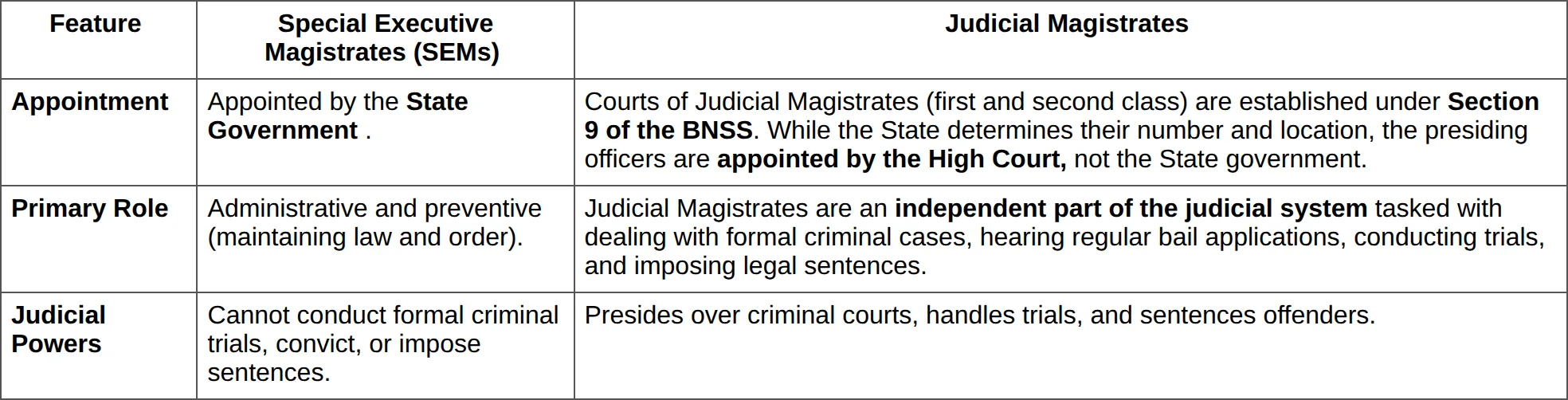
- Appointment: Under Section 15 of the Bharatiya Nagarik Suraksha Sanhita (BNSS), 2023, State Governments may appoint Executive Magistrates or police officers not below the rank of Superintendent of Police (SP) or equivalent as SEMs for specified areas, periods or functions.
- Police as Magistrates: In commissionerate systems like Delhi, the Delhi Police Act, 1978 allows the Centre to authorise police officers of the rank of Assistant Commissioner of Police (ACP) and above to exercise the powers of an executive magistrate.
- Nature of Role: SEMs belong to the Executive branch. Their primary function is strictly preventive and administrative to intervene before a disturbance happens, rather than to punish an individual for an offence that has already been committed.
- Key Powers of SEMs The powers of SEMs are largely preventive and are codified under the BNSS, 2023:
- Issuing “Peace Bonds” (Section 126, BNSS): If an SEM suspects a person is likely to breach public peace, they can ask the individual to show cause as to why they should not execute a formal bond promising good behaviour for a period of up to one year.
- Preventive Inquiry (Section 135, BNSS): The magistrate can conduct an inquiry and order security during the process, provided they record their reasons in writing.
- Detention for Breach (Section 141(1)(b), BNSS): If an individual breaks the conditions of their peace bond, the SEM can bypass a normal trial and order their immediate arrest and detention for the remaining period of the bond.
- Urgent Prohibitory Orders (Section 163, BNSS): SEMs can issue urgent preventive orders against nuisance or apprehended danger to human life, health, safety, or public tranquillity (e.g., preventing riots or obstruction).
- Bail in Preventive Crackdowns: While they do not handle ordinary criminal bail, SEMs have the authority to accept sureties and grant bail or order temporary police custody during preventive proceedings.
- Judicial Review: The actions and orders of an SEM are entirely subject to judicial review and administrative oversight to ensure they are legal and that citizens’ rights are not arbitrarily violated.
- Right to Challenge: Depending on the nature of the specific order and the legal remedies available, a citizen can challenge an SEM’s decision before an appropriate higher court or authority.
- Threat to Personal Liberty: Preventive arrests without a formal trial raise severe concerns regarding Article 21 (Right to Life and Personal Liberty) and Article 22 (Protection against arbitrary arrest and detention) of the Constitution.
- Mechanical Orders and “Cyclostyled” Proformas: Courts have repeatedly flagged the indiscriminate use of SEM powers.
- Procedural Safeguards and Accountability: In Aldanish Rein v. State of NCT of Delhi (2018), the Delhi High Court emphasised reasoned orders, periodic detention reviews, affordable sureties, access to legal aid and independent oversight to prevent arbitrary exercise of SEM powers.
- Colonial Legacy: The preventive powers of SEMs trace their origins back to England’s Justices of the Peace Act, 1361, which entered Indian law in 1861 to suppress dissent, retaining a colonial overtone.
- Conflict of Interest and Natural Justice: When police officers act as SEMs, the same executive machinery may initiate preventive proceedings and adjudicate them, raising concerns under the principle of Nemo Judex in Causa Sua (no one should be a judge in their own cause) and Article 50 (separation of judiciary from executive).
-
SEMs vs. Judicial Magistrates
Security
Defence Acquisition Council Clears Procurement Proposals Worth ₹2.12 Lakh Crore
Source Recently, the Defence Acquisition Council (DAC), chaired by Defence Minister, accorded Acceptance of Necessity (AoN) for defence procurement proposals worth approximately ₹2.12 lakh crore, with around 82% of the proposed procurements expected to be sourced from Indian industry.- Acceptance of Necessity (AoN): It is an initial approval in the defence acquisition process indicating the need for a proposed procurement; it does not mean the contracts have been awarded.
- Major acquisition proposals:
- Indian Army:
- Proposed acquisitions include High Mobility Vehicles, self-propelled tracked gun systems, Light Multi-Role Helicopters, Very Short-Range Air Defence Systems (VSHORADS), counter-drone systems and long-range drones.
- Counter-Unmanned Aerial Systems (C-UAS) and surveillance drones will improve protection against aerial threats and strengthen reconnaissance and targeting.
- Indian Navy: Active Offboard Decoy Systems (AODS) will strengthen protection against anti-ship missile threats, alongside other naval platform acquisitions.
- Indian Air Force: Proposed acquisitions include helicopters, air defence systems, weapons and Mobile X-Band Doppler Weather Radar Systems for localised weather surveillance in forward areas.
- Indian Army:
- Domestic Manufacturing:
- The proposed procurement is expected to support indigenous defence production, technology development and the domestic defence industrial ecosystem.
- India’s annual defence production reached a record ₹1.78 lakh crore in FY 2025-26, reflecting 15.6% growth over the previous financial year.
- Significance: Greater domestic sourcing can reduce import dependence, strengthen military preparedness and support India’s goal of Aatmanirbhar Bharat in defence.
Space
India’s Emerging Space Technologies
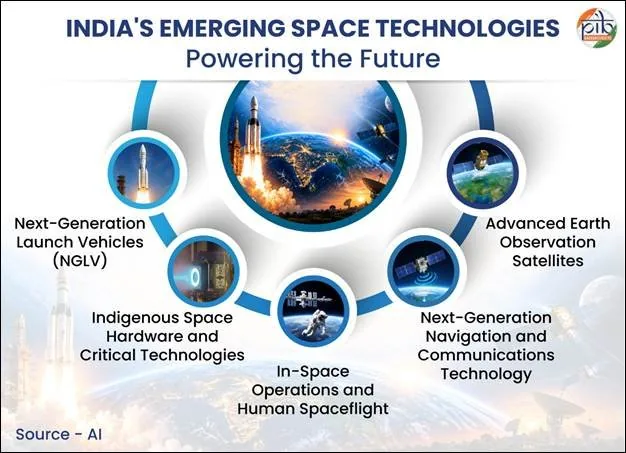
Source Why in News?- The Indian Space Research Organisation (ISRO) is advancing next-generation launch vehicles, reusable rockets, indigenous propulsion systems and in-space docking technologies to strengthen India’s space capabilities and support future missions such as Gaganyaan and Bharatiya Antariksh Station (BAS).
- Evolution of India’s Space Programme: India’s organised space activities began with the establishment of INCOSPAR in 1962, followed by the first sounding rocket launch from Thumba, Kerala, in 1963 and the establishment of ISRO in 1969.
- Technological Self-Reliance: India is developing indigenous capabilities in reusable launch vehicles, advanced propulsion, space docking, satellite navigation and Earth observation to reduce dependence on foreign technologies.
- Human Spaceflight Ambitions: The Gaganyaan Programme aims to demonstrate indigenous human spaceflight capability, while the planned Bharatiya Antariksh Station will support future long-duration human space missions.
- Private-Sector Participation: Growing involvement of space startups and private industries is strengthening indigenous manufacturing, technology development and commercial space services.
- Space Economy Expansion: The Department of Space targets a USD 44-billion space economy by 2033, supported by indigenous technologies, commercial missions and private investment.
- Industry and Startup Development:
- NewSpace India Limited (NSIL) has signed 118 Technology Transfer Agreements covering 83 ISRO-developed technologies, strengthening domestic industrial capabilities.
- Cumulative investment in Indian space startups reached approximately USD 618.5 million by March 2026.
- Space Sector Reforms: The Indian Space Policy, 2023, and IN-SPACe have enabled greater private participation in satellite manufacturing, launch services and other commercial space activities.
- Next Generation Launch Vehicle (NGLV)
- About: The Next Generation Launch Vehicle (NGLV) is an advanced launch system being developed by ISRO to enable heavy-lift, partially reusable and cost-effective access to space.
- Government Approval: In September 2024, the Union Cabinet approved its development with an allocation of ₹8,240 crore, including three developmental flights.
- Payload Capacity:
- Designed to carry up to 30 tonnes to Low Earth Orbit (LEO), compared with approximately 10 tonnes for LVM3.
- A partially reusable configuration is being developed with a 14-tonne LEO payload capacity.
- Applications: Will support Bharatiya Antariksh Station, human spaceflight, lunar exploration, interplanetary missions and satellite constellations.
- PSLV (Polar Satellite Launch Vehicle): ISRO’s workhorse launch vehicle, capable of carrying up to 1,750 kg to a 600-km Sun-Synchronous Polar Orbit (SSPO) and up to 1,425 kg to Sub-Geosynchronous Transfer Orbit (Sub-GTO), depending on mission configuration.
- GSLV (Geosynchronous Satellite Launch Vehicle): Equipped with an indigenous Cryogenic Upper Stage, GSLV can launch communication satellites of up to the 2-tonne class.
- LVM3 (Launch Vehicle Mark-3): India’s heavy-lift launch vehicle, capable of placing communication satellites of the 4-tonne class into GTO and payloads of the 10-tonne class into LEO.
- SSLV (Small Satellite Launch Vehicle): A three-stage, approximately 120-tonne launch vehicle designed for small satellites, capable of placing payloads of up to 500 kg into a 500-km planar orbit.
- Sun-Synchronous Orbit (SSO): A near-polar orbit in which a satellite passes over a given area at approximately the same local solar time, allowing observations under similar lighting conditions. The revisit period varies depending on the satellite and its orbital parameters.
- Geostationary Transfer Orbit (GTO): An elliptical intermediate orbit used to transfer a satellite into geostationary orbit (GEO). Its perigee is generally a few hundred kilometres above Earth, while its apogee is close to 35,786 km. Near apogee, the satellite uses its apogee motor to raise its perigee and circularise the orbit before entering GEO.
- Cryogenic Upper Stage:
- The final stage of a launch vehicle that uses liquid hydrogen (LH₂) as fuel and liquid oxygen (LOX) as oxidiser. These propellants provide high efficiency and enable the launch vehicle to place heavier payloads into higher orbits.
- ISRO’s indigenous cryogenic stage replaced the earlier Russian-supplied stage used in GSLV missions, strengthening India’s self-reliance in advanced launch technology.
- About: Reusable launch vehicles are designed to recover and reuse major rocket components, reducing launch costs and improving operational efficiency.
- Pushpak RLV Demonstrator:
- ISRO successfully conducted three Reusable Launch Vehicle Landing Experiments (RLV-LEX) in 2023 and 2024.
- The LEX-03 experiment in June 2024 demonstrated autonomous runway landing under challenging wind and cross-range conditions.
- Significance: Advances indigenous capabilities in autonomous navigation, controlled atmospheric re-entry and precision landing.
- Scramjet Technology: A Supersonic Combustion Ramjet (Scramjet) is an air-breathing engine that uses atmospheric oxygen for combustion, reducing the need to carry onboard oxidiser during atmospheric flight.
- Working Principle: Operates at hypersonic speeds (above Mach 5), with combustion occurring in supersonic airflow.
- ISRO Achievements:
- Successfully flight-tested a scramjet engine in August 2016, demonstrating hypersonic combustion at approximately Mach 6.
- Conducted an RH-560 sounding rocket experiment in July 2024 to evaluate air-breathing propulsion systems.
- Significance: Offers potential for reducing propulsion-system mass and improving the efficiency of future space transportation systems.
- Electric Propulsion:
- Uses electrical energy to accelerate propellant and produce thrust, enabling efficient satellite orbit raising and station-keeping with lower propellant consumption.
- In March 2025, ISRO completed a 1,000-hour life test of its indigenous 300-millinewton stationary plasma thruster.
- The technology offers a specific impulse at least six times greater than conventional chemical propulsion systems, and is planned for demonstration aboard TDS-01.
- Green Propulsion:
- Focuses on developing alternative propellants and propulsion technologies to reduce environmental and operational concerns.
- ISROSENE: An indigenous rocket-grade kerosene being developed for liquid oxygen–kerosene semicryogenic propulsion systems.
- Bellatrix Aerospace: Developed a 1-newton-class green monopropellant thruster under DRDO’s Technology Development Fund, with in-orbit functionality demonstrated in January 2024.
- Radioisotope Heater Units (RHUs): Use heat released by radioactive decay to maintain spacecraft components at suitable operating temperatures in extremely cold environments.
- Radioisotope Thermoelectric Generators (RTGs): Convert heat from radioactive decay into electrical energy, supporting long-duration missions where solar power may be inadequate.
- Indian Initiative: ISRO and the Department of Atomic Energy (DAE) are collaborating on RHU and RTG requirements for potential future Chandrayaan and Mars missions.
- SpaDeX Mission:
- ISRO’s Space Docking Experiment (SpaDeX) demonstrated the capability to rendezvous, dock and undock two spacecraft in orbit.
- First successful docking occurred on 16th January 2025, making India the fourth country to demonstrate space docking after the United States, Russia and China.
- Successfully demonstrated undocking in March 2025, followed by a second autonomous docking and bidirectional power transfer in April 2025.
- In-Orbit Servicing: Future applications could include satellite refuelling, maintenance, repair and upgrades, potentially extending spacecraft lifespans.
- Strategic Importance: Docking technology is essential for lunar sample-return missions, multi-launch operations and assembly of Bharatiya Antariksh Station.
- Navigation with Indian Constellation (NavIC):
- India’s indigenous regional navigation system provides positioning, navigation and timing services over India and approximately 1,500 km beyond the Indian mainland.
- Offers Standard Positioning Service (SPS) for civilian users and encrypted Restricted Service (RS) for authorised users.
- Advanced Communication Satellites:
- GSAT-24 (2022): Supports Direct-to-Home (DTH) television broadcasting.
- GSAT-N2/GSAT-20 (2024): A high-throughput communication satellite with approximately 48 Gbps capacity, supporting broadband and in-flight connectivity.
- CMS-03/GSAT-7R (2025): A dedicated communication satellite for the Indian Navy, strengthening maritime communications and national security.
- NASA–ISRO Synthetic Aperture Radar (NISAR):
- Launched on 30 July 2025, it is a joint Earth observation mission using NASA’s L-band and ISRO’s S-band radar frequencies.
- Supports all-weather, day-and-night observations and monitors ground deformation, glaciers, vegetation, soil moisture and natural hazards.
- Designed to observe Earth’s land and ice-covered surfaces over a 12-day repeat cycle.
- Hyperspectral Imaging Satellite (HysIS):
- Launched in November 2018, it observes Earth across numerous narrow spectral bands.
- Supports agriculture, forestry, mineral exploration, soil analysis and water-resource monitoring by identifying material-specific spectral characteristics.
 Conclusion
- India’s emerging space technologies mark a shift towards a self-reliant, innovation-driven and commercially competitive space ecosystem. Sustained investment in research, greater private-sector participation and stronger industry–academia collaboration will be crucial for translating technological advancements into economic opportunities. These efforts will strengthen India’s strategic autonomy, scientific leadership and position in the global space economy.
TDB Supports Indigenous Green Propulsion Technology
Source The Technology Development Board (TDB), under the Department of Science and Technology (DST), signed an agreement with Manastu Space Technologies Pvt. Ltd., Navi Mumbai, to provide ₹116 crore under the Research, Development and Innovation (RDI) Fund for developing indigenous green propulsion systems for satellites and launch vehicles.- Project Cost: Estimated at ₹277.63 crore, with financial assistance provided through Optionally Convertible Debt (OCD), a financing instrument that can be converted into equity under specified conditions.
- Scalable Architecture: Designed to deliver thrust ranging from 5 millinewtons (mN) to 300 newtons (N), supporting applications from small satellites to higher-thrust systems for launch vehicles.
- Key Components: Includes propulsion engines, propellant feed systems and an ultra-high-temperature ceramic catalyst for reliable performance under demanding conditions.
- Technology Readiness Level (TRL):
- The project aims to advance the technology from TRL 6 (technology demonstrated in a relevant environment) to TRL 9 (actual system proven in operational use).
- The propulsion technology has already been demonstrated in space, with further engineering, system integration, testing and validation planned to enable wider operational deployment.
- Green Propulsion Technology: Uses a hydrogen peroxide-based propellant with additives, supported by an integrated engine and catalyst system to improve operational safety, performance and cost efficiency.
- Technology Development Board (TDB):
- A statutory body constituted under the Technology Development Board Act, 1995, functioning under the Department of Science and Technology, Ministry of Science and Technology.
- It provides financial assistance for the development and commercialisation of indigenous technologies and adaptation of imported technologies for domestic applications.
- RDI Fund:
- Approved in July 2025 with an outlay of ₹1 lakh crore over six years, the scheme aims to promote private-sector research, development and innovation in strategic and emerging technologies.
- It operates through a two-tier funding mechanism under the Anusandhan National Research Foundation (ANRF), with TDB serving as a Second-Level Fund Manager to support high-risk, technology-intensive projects.