Comrades Dispatch · 03 Sep 2026 (PDF)
In this edition
- Banks Seek CRR Cut on Green Deposits Banking & Finance
- Water Hyacinth Menace in Vembanad Lake Environment & Ecology
- Interim Government of 1946 History
- Shakti Sharma Becomes 1st Non-Medical Woman Two-Star Officer Persons in News
- Namami Gange Programme Schemes & Initiatives
- Untouchability in India Social Issues
- 6th World Nomad Games Visits & Conferences
- 26th Shanghai Cooperation Organisation Summit Visits & Conferences
Banking & Finance
Banks Seek CRR Cut on Green Deposits
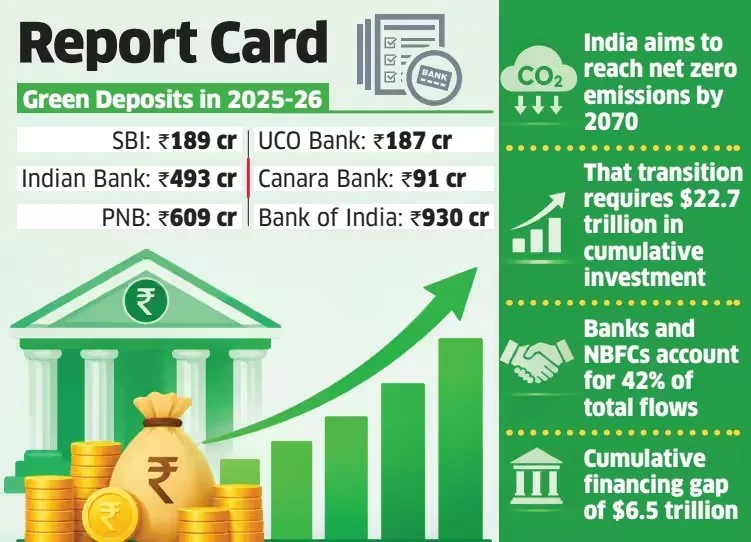
Source In a significant move to accelerate India’s transition towards a net-zero economy, public sector banks have approached the Reserve Bank of India (RBI) seeking a reduction in the Cash Reserve Ratio (CRR) applicable to green deposits.- The Proposal: Banks have advocated for an initial CRR reduction of up to 100 basis points (1%) on green deposits to make green lending cheaper and prioritize it as a preferred credit option.
- Current Scenario:
- Despite growth, green deposits raised in 2025-26 were only around Rs 4,000-5,000 crore, which is significantly below the critical mass required to fund India’s climate goals.
- According to the NITI Aayog report ‘Scenario towards Viksit Bharat & Net Zero - Financing Needs’, India requires a massive USD 22.7 trillion in cumulative investment to successfully achieve its net-zero transition.
- Rationale for Cut:
- A lower CRR would reduce funding costs and free up capital, compensating banks for the higher compliance costs incurred in continuous project evaluation to prevent greenwashing (misuse of green funds).
- To ease the burden on domestic banks and NBFCs, India must finalize its under-development climate finance taxonomy and create a coordinated regulatory environment to attract long-term global capital.
- Green Deposits:
- A green deposit is an interest-bearing deposit received by a regulated entity (such as a bank or an NBFC) for a fixed period.
- The proceeds from these deposits are earmarked strictly for allocation towards eligible green projects.
- Eligible Sectors: Under the RBI Green Deposit Framework 2023, funds must be used for sectors like renewable energy, waste management, clean transportation, climate change adaptation, and energy efficiency.
- Green Deposits differ from Green Bonds, which are debt securities issued to raise funds for eligible green projects.
- Definition: CRR is the percentage of a bank’s Net Demand and Time Liabilities (NDTL) that must be maintained as cash reserves with the RBI.
- Interest: Banks do not earn any interest on the money parked with the RBI under the CRR mandate.
- Impact on Liquidity: A high CRR drains excess liquidity from the banking system, reducing the banks’ lending capacity. Conversely, a lower CRR frees up capital, allowing banks to lend more money to borrowers.
Environment & Ecology
Water Hyacinth Menace in Vembanad Lake
Source The State Wetland Authority Kerala (SWAK) is launching a one-month pilot project at Kumarakom, Kerala, to control the spread of invasive water hyacinth (Eichhornia crassipes) in Vembanad Lake using robotic technology.- Government Framework: The project is being implemented under the National Plan for Conservation of Aquatic Ecosystems (NPCA) of the Ministry of Environment, Forest and Climate Change (MoEFCC).
- Vembanad Lake: It is a major Ramsar Wetland Site and one of the most important aquatic ecosystems of Kerala, supporting biodiversity, fisheries, tourism, and local livelihoods.
- Scientific Identity: Water hyacinth (Eichhornia crassipes) is a free-floating freshwater aquatic weed belonging to the Pontederiaceae family and is an invasive alien species.
- Origin: It is native to the Amazon Basin of South America and was introduced in many countries, including India, as an ornamental plant due to its attractive purple flowers.
- Rapid Growth and Spread: Water hyacinth reproduces rapidly and forms dense floating mats, blocking sunlight penetration and reducing dissolved oxygen levels, thereby affecting aquatic biodiversity.
- Impact on Ecosystem: Excessive growth causes eutrophication and chokes rivers, lakes, ponds and wetlands, disrupting fisheries, navigation, irrigation channels, tourism activities and recreational use.
- Management: Controlled through mechanical removal, biological control using Neochetina weevils, and reduction of nutrient pollution/sewage discharge to prevent excessive growth.
- Uses: Can be utilised for compost, bio-fertiliser, soil supplements, handicrafts, paper production, and phytoremediation (removal of pollutants from water).

History
Interim Government of 1946
Source Why in News?- 2nd September marks the anniversary of the formation of the Interim Government of India in 1946, headed by Jawaharlal Nehru. It was the first institutional framework where Indian leaders took executive charge of British India, marking a pivotal milestone in the formal transfer of power leading to independence on 15th August 1947.
- Background and Genesis: Following World War II, economic exhaustion and mutinies (such as the Royal Indian Navy Mutiny of 1946) compelled the British government under Clement Attlee to accelerate the transfer of power.
- Cabinet Mission Plan (1946):
- Dispatched in March 1946, the Cabinet Mission was headed by Lord Pethick-Lawrence (Secretary of State for India), with Sir Stafford Cripps (President of the Board of Trade) and A.V. Alexander (First Lord of the Admiralty) as its other members.
- The Cabinet Mission Plan (1946) rejected the demand for Pakistan and proposed a three-tier federal structure (Union, Section and Provincial levels), with provinces grouped into three sections: Section A (Hindu-majority provinces), Section B (Muslim-majority provinces), and Section C (Bengal and Assam).
- It provided for a 389-member Constituent Assembly, and the Plan also provided for the lapse of British paramountcy over princely states and the formation of an Interim Government during the transition to independence.
- Interim Government:
- The Interim Government was a provisional administration formed to manage executive functions and assist in the transition from British colonial rule to independence.
- Cabinet System: Intended to operate as a cabinet government, rather than merely a collection of departmental heads under the Viceroy.
- Key Objectives: Prepare India for independence, coordinate the transfer of power, and facilitate the functioning of the Constituent Assembly.
- Legal Framework: It functioned under the existing Government of India Act, 1919, through the restructured Viceroy’s Executive Council. The Viceroy remained the formal constitutional head, while Indian leaders were expected to exercise real executive authority.
- Leadership:
- The Viceroy (Lord Wavell) remained the ex-officio President of the Executive Council.
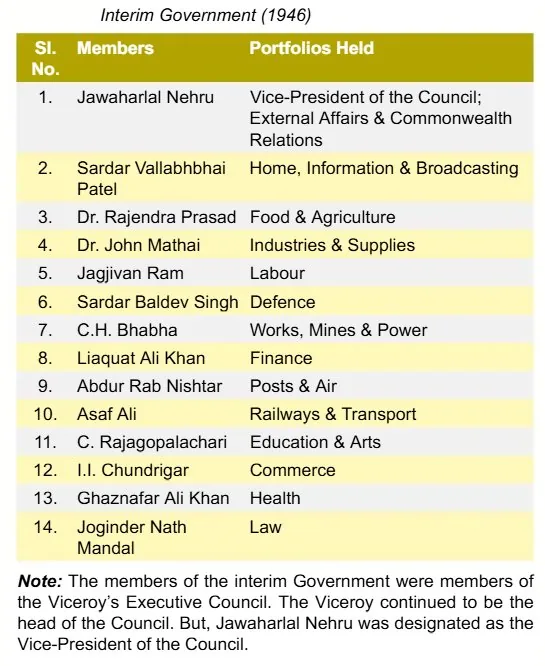
- Jawaharlal Nehru was appointed as the Vice-President of the Executive Council, effectively acting as the de facto Prime Minister and head of internal administration.
- Direct Action Day:
- While the Indian National Congress agreed to join, negotiations broke down over grouping clauses and communal representation.
- The All-India Muslim League withdrew its acceptance and launched ‘Direct Action Day’ (16th August 1946), triggering widespread communal riots, notably the Great Calcutta Killings.
- Despite the turmoil and the Muslim League’s initial boycott, Viceroy Wavell invited Jawaharlal Nehru to form the administration, which officially took office on 2nd September 1946.
- Entry of Muslim League:
- Realizing that staying out marginalized its influence, the Muslim League joined the Interim Government on 26th October 1946, without withdrawing its rejection of the Cabinet Mission Plan or renouncing Direct Action.
- Three Congress members resigned to accommodate five League nominees. Liaquat Ali Khan was appointed as the Finance Member, where he used financial powers to obstruct several Congress-led initiatives.
- Significance of the Interim Government:
- Independent Foreign Policy: Nehru laid the foundations for non-alignment and independent diplomacy.
- Princely States: Addressed relations with princely states and laid the groundwork for their future integration into the Indian Union, with a coordinated mechanism considered necessary during the transition.
- Indianisation of Administration: Began transferring control of the civil services, police and armed forces to Indian leaders.
- Governing Experience: Indian leaders gained experience in administration, food management and developmental planning.
- Realization of the Inevitability of Partition: The paralysis within the Interim Government convinced leaders like Sardar Patel and Jawaharlal Nehru that an unworkable coalition at the Centre would lead to continuous civil strife, paving the way for the acceptance of the Lord Mountbatten’s Partition Plan (3rd June 1947).
Persons in News
Shakti Sharma Becomes 1st Non-Medical Woman Two-Star Officer
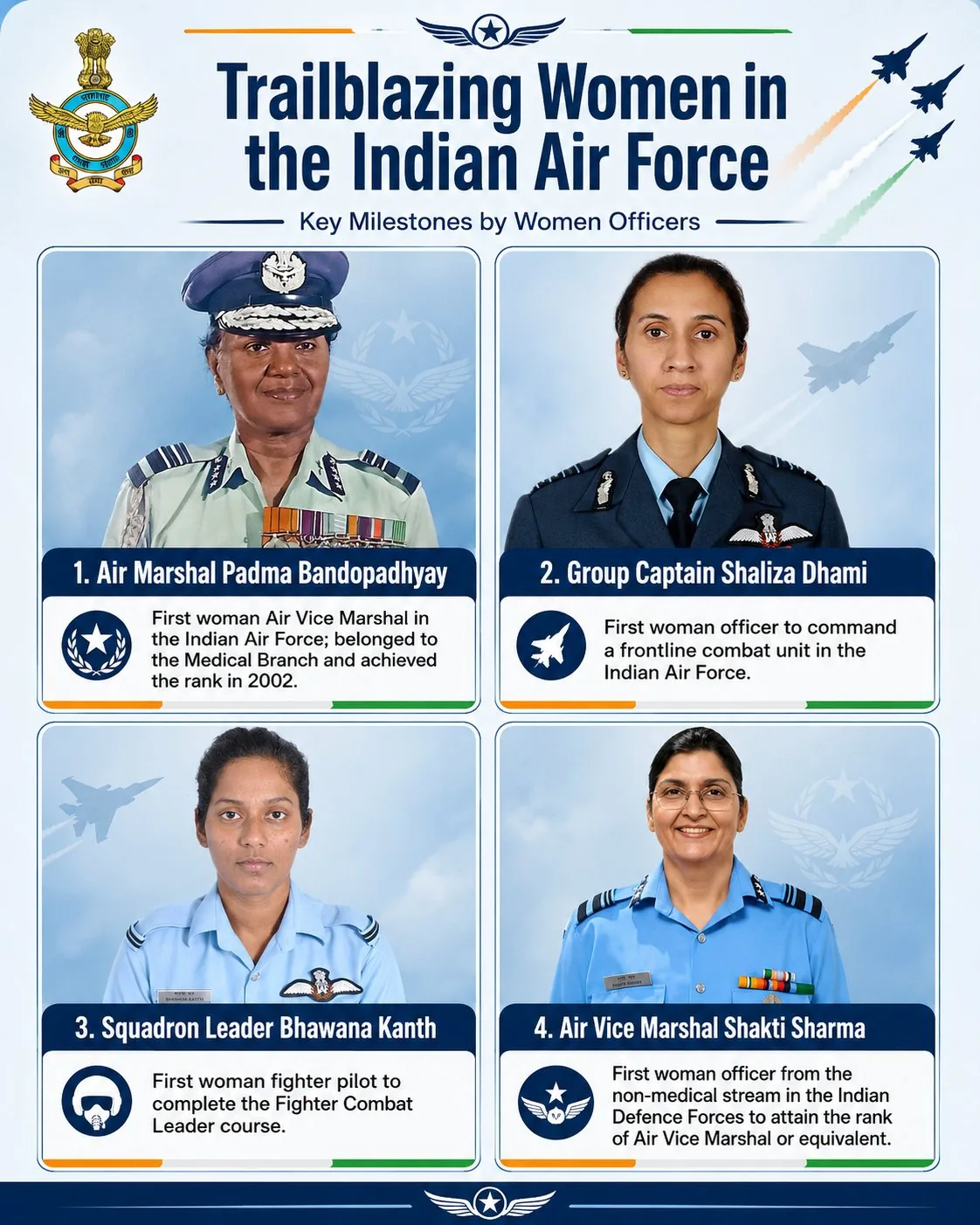
Source Shakti Sharma has achieved a historic milestone by becoming the first woman officer from the non-medical stream in the Indian Defence Forces to attain the rank of Air Vice Marshal or equivalent. Air Vice Marshal (AVM) is a two-star rank in the Indian Air Force, equivalent to Major General in the Indian Army and Rear Admiral in the Indian Navy.- About: She was commissioned into the Education Branch of the Indian Air Force (IAF) on 18th June 1994 and has completed over three decades of service.
- Career: During her career, she served in diverse roles across training establishments, field stations, Command Headquarters, and Air Headquarters, contributing to institutional development within the IAF.
- Initiatives: She played a key role in establishing IAF Chairs of Excellence at IIT Kanpur and Pune University to promote research, knowledge exchange, and strategic defence collaboration.
- Milestones: Before becoming Air Vice Marshal, she became the first woman officer from the Tri-Services to command a Sainik School, serving as the Principal of Sainik School, Kapurthala.
- Significance: The Indian Air Force expanded career opportunities for women officers after granting Permanent Commission to women officers in selected branches from 2010, enabling greater career progression and leadership opportunities.
Schemes & Initiatives
Namami Gange Programme
Source Why in News?- The Government has highlighted the role of Jan Ganga, the public participation pillar of the Namami Gange Programme, in transforming river conservation from a government-led activity into a people-driven movement.
- About: The Namami Gange Programme (NGP) was launched in 2014 as a Flagship Integrated Conservation Mission for the effective abatement of pollution, conservation, and rejuvenation of the National River Ganga and its tributaries.
- Integrated Approach: The programme focuses not only on cleaning the river but also on ecological restoration, biodiversity conservation, sustainable management, and improving the overall health of the river ecosystem.
- Implementation Framework: The programme follows a phased approach through Entry-Level Activities (immediate visible impact), Medium-Term Activities, and Long-Term Activities for comprehensive river rejuvenation.
- Community-Centric Approach: Recognising that long-term river conservation requires public participation, NGP promotes Jan Ganga, based on the principle of Jan Bhagidari, to transform river conservation from a government initiative into a people-driven movement.
- Major Focus Areas: The programme covers activities such as sewage treatment, riverfront development, afforestation, scientific monitoring, and public awareness campaigns.
- Key Achievements Under Namami Gange Programme
- Project Implementation: Under NGP, 524 projects have been sanctioned, out of which 355 projects have been completed, covering river rejuvenation, pollution control, and ecological restoration.
- Biodiversity Conservation: Scientific conservation initiatives have strengthened protection of aquatic species such as Gangetic Dolphin, Gharial, turtles, Hilsa, and otters through restoration, rescue, and rehabilitation programmes.
- Ecosystem Restoration: Forestry interventions along the Ganga basin have resulted in afforestation of around 33,024 hectares, improving riverine ecology and biodiversity.
- River Health Improvement: CPCB monitoring shows improvement in water quality, with pH and Dissolved Oxygen (DO) levels meeting bathing criteria across monitored locations of the Ganga.
- Jan Ganga Initiative: Jan Ganga is the public participation pillar of the Namami Gange Programme, based on the principle of Jan Bhagidari (people’s participation). It aims to transform river conservation from a government-led activity into a community-driven movement by promoting awareness, participation, and ownership.
- River Cleanliness Drives: Initiatives like Ganga Swachhta Pakhwada (16–31 March) encourage students, volunteers, community groups, and stakeholders across Ganga basin states to participate in cleanliness activities, making river conservation a regular civic responsibility.
- Plantation and Riverbank Restoration: Plantation campaigns such as “Ek Ped Maa Ke Naam” promote community involvement in tree plantation, helping in riverbank stabilisation, reducing soil erosion, and restoring riverine ecosystems.
- Youth Engagement: University Ganga Clubs, eco-clubs, and educational institutions involve youth through lectures, field visits, volunteering, competitions, and awareness programmes, creating long-term environmental responsibility.
- Cultural and Awareness Programmes: Ganga Utsav, along with initiatives like Swachhta Hi Seva and International Day of Yoga, strengthens the cultural connection between communities and rivers through exhibitions, performances, and public dialogues.
- Community-Based Conservation Networks: Ganga Praharis and Ganga Seva Doots work at the grassroots level to spread awareness, protect biodiversity, promote sustainable practices, and encourage local communities to become guardians of river ecosystems.
- Innovative Outreach Initiatives: Activities such as the BSF all-women Ganga river rafting expedition promote environmental awareness and create direct engagement between citizens and river conservation efforts.
- The future of river conservation lies in combining scientific interventions, sustainable practices, and active community participation. Through Jan Ganga, the Namami Gange Programme has shown that lasting rejuvenation of the Ganga cannot be achieved by government efforts alone. By transforming citizens from passive observers into responsible stakeholders, the initiative paves the way for a more inclusive and sustainable model of river conservation, where communities become long-term guardians of their natural ecosystems.
Social Issues
Untouchability in India
Source Why in News?- A “purification” (Shuddhikaran) ritual at a public venue in Haldwani, Uttarakhand, following its use by Dalit individuals, has sparked debate over the constitutional prohibition of untouchability under Article 17.
- Core Idea: The caste hierarchy was historically organised around the concepts of purity (Shuddhi) and pollution (Ashuddhi).
- Social Exclusion: Communities placed at the bottom were associated with occupations involving waste, death and animal carcasses, reinforcing notions of impurity and untouchability.
- Spatial Segregation: These beliefs contributed to social exclusion and separate settlements, often forcing Dalits to live on village outskirts.
- Ritual Practices: Contact or even association with lower-caste individuals was traditionally considered polluting, leading to purification rituals and discriminatory practices.
- Bhakti Movement: Saints like Ravidas, and Kabir rejected caste-based exclusion through spiritual equality and devotional practices.
- Arya Samaj: Swami Dayananda Saraswati viewed untouchability as a post-Vedic corruption and promoted the Shuddhi Movement to “purify” and reintegrate untouchables (and converts) back into the Hindu fold, thereby seeking to erase the stigma of untouchability through religious revivalism.
- Jyotirao Phule: Through Satyashodhak Samaj (1873), linked untouchability to social and economic exploitation and emphasised education and empowerment.
- Sri Narayana Guru: Challenged ritual hierarchy through the Aruvipuram consecration (1888) and advocated “One Caste, One Religion, One God for Humankind.”
- Periyar: The Self-Respect Movement (1925) adopted a rationalist and anti-Brahminical approach, calling for the rejection of caste-based religious authority.
- Mahatma Gandhi: Viewed untouchability as a moral sin and promoted reform through the Harijan Sevak Sangh, temple-entry movements and social integration, while initially distinguishing it from the broader Varna system.
- Constitutional Mandate: Article 17, under the Right to Equality (Articles 14–18), abolishes untouchability in all forms and makes its enforcement a punishable offence. It is also enforceable against private individuals, not just the State.
- Absence of Definition: The Constitution deliberately does not define the term “untouchability,” allowing the law to address its complex, evolving social manifestations.
- Statutory Framework:
- Parliament enacted the Untouchability (Offences) Act, 1955 (later renamed the Protection of Civil Rights Act, 1955) to give effect to Article 17.
- The act prescribes stringent punishments for preaching and practicing untouchability, including enforcing religious or social disabilities.
- The SC/ST (Prevention of Atrocities) Act, 1989:
- Section 7(1)(d) specifically punishes a person who “insults or attempts to insult, on the ground of ‘untouchability’, a member of a Scheduled Caste”.
- For an offense to fall under this section, the insult must be intrinsically connected to the social practice of untouchability, not merely a generic humiliation.
- National Commission for Scheduled Castes (NCSC): Established under Article 338 as a constitutional body to monitor, investigate, and safeguard the rights of Scheduled Castes (SCs), holding the powers of a civil court to summon authorities.
- Key Judicial Pronouncements
- Surya Narayan Choudhary v. State of Rajasthan (1989): The Rajasthan High Court held that requiring Dalits to undergo a purification ritual before temple entry violated Articles 14, 15 and 17, as it imposed a discriminatory condition not applicable to other devotees.
- Hitesh Verma v. State of Uttarakhand (2020): The Supreme Court held that an insult against an SC/ST person does not automatically constitute an offence under the SC/ST (Prevention of Atrocities) Act, 1989. The insult must be linked to the person’s caste identity and satisfy the statutory requirements.
- Sukanya Shantha v. Union of India (2024):
- The Supreme Court struck down caste-based discriminatory practices in prison manuals and held that untouchability is not limited to physical exclusion.
- It can also include discrimination based on a person’s caste, touch or presence, particularly when rooted in notions of purity and pollution.
- Gunjan @ Girija Kumari v. State (NCT of Delhi) (2026): The Supreme Court held that the relevant offences under the Scheduled Castes and Scheduled Tribes (Prevention of Atrocities) Act, 1989 require the act to occur “in any place within public view.”
- Shift to Covert Forms:
- While visible forms of untouchability (denial of access to wells or temples) have reduced, it has mutated into institutional and subtle forms.
- In urban areas, this manifests as spatial segregation (ghettoization in housing societies), algorithm-driven endogamy (caste-based matrimonial sites), and systemic bias in corporate hiring and academic spaces (e.g., discrimination in peer circles or faculty evaluations).
- Graded Inequality:
- Caste operates through an ascending scale of privilege and descending scale of social status, causing discrimination even among Scheduled Castes, which can weaken collective mobilisation against caste-based discrimination.
- In State of Punjab v. Davinder Singh (2024), the Supreme Court recognised this internal inequality. Overruling E.V. Chinnaiah (2004), the Court held that SCs are not a homogeneous group, with some sub-castes facing greater historical disadvantages.
- The Court allowed States to sub-classify SCs for equitable distribution of reservation benefits, ensuring greater support for the most disadvantaged communities.
- Criminal Justice Bottleneck:
- Despite the stringent SC/ST (Prevention of Atrocities) Act, the conviction rate remains dismally low. This is driven by:
- Burking of crimes: Police often dilute FIRs or register them under milder sections of the IPC, 1860 (now Bharatiya Nyaya Sanhita (BNS), 2023)) rather than the SC/ST (Prevention of Atrocities) Act, 1989.
- Witness Vulnerability: Due to asymmetrical power dynamics in rural areas, witnesses frequently turn hostile.
- Structural Bias: A lack of sensitisation within the investigating machinery and the lower judiciary often leads to a failure in establishing the “caste-based intent” of a crime.
- Despite the stringent SC/ST (Prevention of Atrocities) Act, the conviction rate remains dismally low. This is driven by:
- Economic Dependence: Landlessness and dependence on dominant castes for agricultural work can enable social boycotts and coercion, forcing victims into extra-judicial compromises, often mediated by Khap Panchayats.
- Paradox of Political Mobilization:
- While democratic politics has empowered marginalized communities through political representation, the reliance on vote-bank politics often requires the consolidation of caste identities.
- This ossifies caste boundaries, defeating the ultimate constitutional goal of the “annihilation of caste.”
- Invoking Section 4 of the SC/ST (PoA) Act:
- There must be a rigorous application of Section 4, which prescribes punishment for public servants (police and administrators) who neglect their duties in registering or investigating cases of untouchability.
- Holding the state machinery accountable is the first step to deterrence.
- Fostering ‘Dalit Capitalism’:
- The Public Procurement Policy for MSEs (2012) mandates that 4% of government procurement from Micro and Small Enterprises (MSEs) be sourced from SC/ST-owned MSMEs, promoting Dalit entrepreneurship and asset ownership.
- However, its implementation remains underutilised, highlighting the need to strengthen initiatives such as Stand-Up India and the Venture Capital Fund for Scheduled Castes to expand entrepreneurship and economic mobility.
- Equal Opportunity Commission: Constitute a statutory Equal Opportunity Commission (as recommended by the Madhava Menon Committee (2007)) to proactively audit and penalize discriminatory practices in the private sector, moving the burden away from individual victims having to fight protracted criminal battles.
- Promoting Constitutional Morality: Legal mechanisms alone cannot alter social psychology. The concept of Constitutional Morality must be aggressively integrated into the educational curriculum to dismantle the internalized notions of ‘purity and pollution’ from a young age.
- Incentivizing Social Integration:
- The state must aggressively promote and protect inter-caste marriages, which Dr. Ambedkar viewed as the ultimate solvent for the caste system.
- Schemes like the Dr Ambedkar Scheme for Social Integration through Inter-Caste Marriages require higher financial incentives and robust institutional protection for couples against ‘honour’ crimes.
- Establishing Exclusive Special Courts: To tackle the massive pendency of cases under the PoA Act, states must establish Exclusive Special Courts (rather than merely designating existing courts) for speedy, day-to-day trials, coupled with robust witness protection programs.
- As Dr. B.R. Ambedkar aptly noted, “Caste is not a physical object like a wall of bricks… it is a notion, it is a state of the mind.” Therefore, eradicating the evolving manifestations of untouchability requires moving beyond mere penal deterrence to proactively dismantle structural economic dependencies. Ultimately, realizing true social democracy demands replacing the entrenched psychology of ‘purity and pollution’ with the bedrock principle of constitutional morality.
Visits & Conferences
6th World Nomad Games
Source The Prime Minister of India attended the opening ceremony of the 6th World Nomad Games in Bishkek, Kyrgyzstan, highlighting India’s growing cultural and strategic engagement with Central Asia.- Origin & Evolution:
- World Nomad Games established via the 2012 Bishkek Declaration (Kyrgyzstan, Azerbaijan, Kazakhstan, Turkey) to promote the traditions, history and cultural heritage of nomadic peoples.
- First held in 2014, the World Nomad Games (WNG) has evolved into a UN-recognised biennial platform for intercultural dialogue and sustainable development, attracting participants from 90+ countries and hosted across regions including Central Asia, Türkiye and Kazakhstan.
- Core Focus: Distinct from the standard Olympics, the event emphasizes ancestral civilizational heritage over strict geopolitical ties, uniting nations to celebrate traditional nomadic survival practices like horseback riding, falconry, and indigenous wrestling.
- Three Major Components:
- Sports Programme: Features traditional athletic and tactical games such as Kok Boru, Kurash, Goresh, Mongol Bokh, archery, and Toguz Korgool.
- Cultural Programme: Showcases indigenous music, crafts, cuisine, and festivals. It is officially inscribed on the UNESCO Register of Good Safeguarding Practices under the project title “Nomad Games: Rediscovering Heritage, Celebrating Diversity”.
- Scientific Programme: Dedicated to researching nomadic history, preserving traditional knowledge, and fostering intercultural dialogue.
- Record Indian Participation (2026):
- Fielded an 87-member contingent competing in traditional disciplines such as Kurash, Goresh, Mongol Bokh (wrestling), Kok Boru (equestrian), and Toguz Korgool (strategy board games).
- Kok Boru, a traditional Kyrgyz horseback game similar to polo, recognised by UNESCO as Intangible Cultural Heritage of Humanity in 2017.
- Geopolitical Relevance for India: Acts as a cultural diplomacy tool to advance strategic interests in Central Asia, including post-Taliban security cooperation, countering Chinese influence, securing energy needs, and promoting connectivity networks like the International North-South Transport Corridor (INSTC).
26th Shanghai Cooperation Organisation Summit
Source Why in News?- The 26th Meeting of the Council of Heads of State (CHS) of the Shanghai Cooperation Organisation (SCO) and the inaugural “SCO Plus” meeting were held in Bishkek, Kyrgyzstan.
- Marking the 25th anniversary of the SCO, the summit was chaired by Kyrgyzstan under the theme, “25 Years of the SCO: Together for Sustainable Peace, Development and Prosperity.”
- Bishkek Declaration: The SCO leaders signed and issued the Bishkek Declaration, reaffirming cooperation on regional peace, security, development and the organisation’s future direction.
- SCO Charter Amendments:
- The leaders approved the Protocol on Amendments and Additions to the SCO Charter, aimed at updating the organisation’s institutional framework.
- It allows newer members, such as India, to actively participate in shaping the organization’s future structural and legal framework.
- Universal Security Centre:
- The SCO leaders approved the regulations to establish the Universal Centre for Countering Challenges and Threats to the Security of SCO Member States.
- This aims to enhance intelligence sharing against terrorism, extremism, and organized crime.
- SCO Anti-Drug Centre: The leaders approved the regulations on the Executive Committee of the SCO Anti-Drug Centre and adopted programmes on combating drug addiction and countering the spread of synthetic drugs and their precursors up to 2030.
- Economic & Green Corridors: Leaders signed an action plan for the development of ports and logistics centers across member states (2026–2030) and established the framework for the SCO “Green Technology Corridor”.
- Global Institutional Partnerships:
- The summit approved the SCO–CSTO–CIS Roadmap for trilateral cooperation among the SCO, Collective Security Treaty Organization (CSTO), and Commonwealth of Independent States (CIS).
- It also decided to sign a Memorandum of Understanding (MoU) between the SCO Secretariat and the African Union Commission, further expanding the SCO’s engagement with regional organisations.
- International Information Security: The SCO adopted a Plan of Cooperation on Ensuring International Information Security for 2026–2028.
- Biodiversity: The leaders adopted an initiative on the Conservation and Sustainable Management of Biodiversity in SCO Member States for 2026–2031, along with a joint action plan.
- Pakistan’s Chairmanship:
- The rotating SCO chairmanship for 2026–2027 was handed over to Pakistan, which announced the theme “Turning Vision into Action: Connectivity, Innovation and Shared Prosperity” for its tenure.
- Lahore was also designated as the SCO Tourism and Cultural Capital for 2026–2027.
- India at 26th SCO Summit
- Three Pillars of Engagement: India’s Prime Minister outlined three core pillars for the SCO’s future: Security, Connectivity, and Opportunity.
- Dismantling the Terror Ecosystem:
- India strongly called for a unified approach to counter-terrorism, urging member states to dismantle the financing and safe havens of terrorism without employing “double standards”.
- Addressing global geopolitical conflicts, India reiterated its steadfast position that conflicts cannot be resolved on the battlefield; dialogue and diplomacy are the only way forward.
- Sovereignty in Connectivity: India stressed that all connectivity projects must respect the sovereignty and territorial integrity of nations (a clear, a principled, indirect critique of China’s Belt and Road Initiative (BRI) and the China-Pakistan Economic Corridor (CPEC)).
- Indian-Led Initiatives:
- Youth and Innovation: The SCO endorsed India’s initiatives to strengthen scientific and technical cooperation through the SCO Young Scientists Forum and SCO Young Authors Conference.
- Civilisational Dialogue: Member states welcomed India’s initiative to host the first SCO Civilisation Dialogue Forum in 2026.
- Language Reform: During India’s 2022–23 SCO Presidency, India proposed adding English as an official and working language. The 26th SCO Summit added English alongside Russian and Chinese.
- About: The “SCO Plus” is an expanded multilateral dialogue mechanism that includes non-member states and international organisations to discuss global challenges and multipolarity.
- Theme for 2026: “The UN as a Key Element of a Just World Order: The Contribution of the SCO Plus States to the Formation of a Multipolar World.”
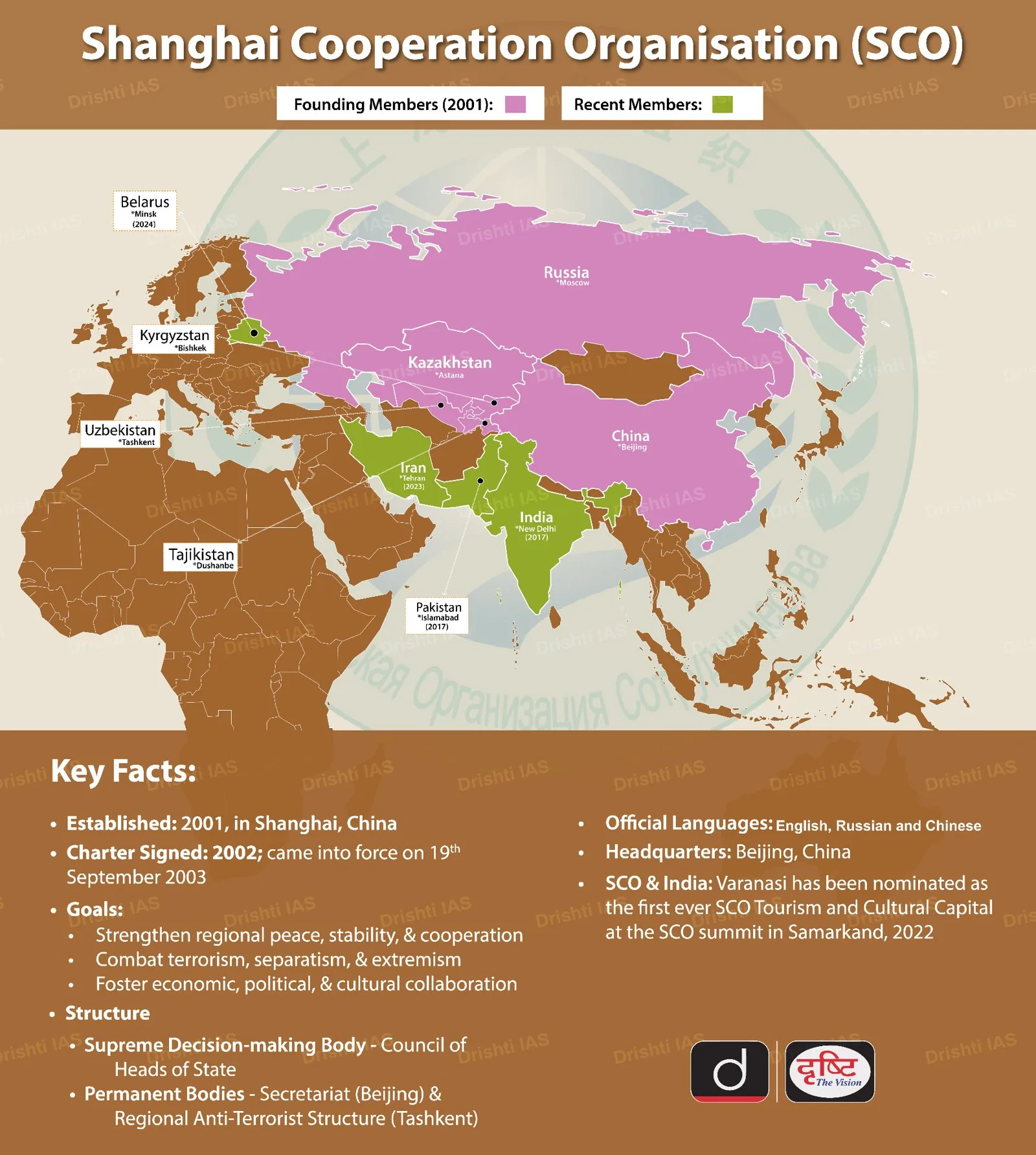
- About: The SCO is a permanent intergovernmental international organization, created in 2001 in Shanghai (China). It was preceded by the Shanghai Five (China, Russia, Kazakhstan, Kyrgyzstan, and Tajikistan) mechanism.
- Significance: With the membership of 10 countries, the SCO represents a vast geopolitical space, accounting for approximately 25% of the global GDP and over 40% of the world’s population.
- Member States: China, Russia, Kazakhstan, Kyrgyzstan, Tajikistan, Uzbekistan, India, Pakistan, Iran, and Belarus (the newest member).
- Observer States: Afghanistan and Mongolia.
- Dialogue Partners: Azerbaijan, Armenia, Bahrain, Egypt, Cambodia, Qatar, Kuwait, Laos, Maldives, Myanmar, Nepal, UAE, Saudi Arabia, Türkiye and Sri Lanka.
- Secretariat: Beijing, China.
- Core Objectives: To strengthen mutual trust, maintain regional peace, security, and stability, and jointly address new challenges—primarily the “Three Evils” of Terrorism, Separatism, and Extremism.
- Structure:
- Heads of State Council (HSC): The supreme decision-making body of the SCO.
- Regional Anti-Terrorist Structure (RATS): Headquartered in Tashkent (Uzbekistan), RATS is a permanent organ of the SCO that coordinates efforts of member states against terrorism, separatism, and extremism.
 Why is the SCO Significant for India?
- Security and Counter-Terrorism: Through the RATS mechanism, India gains access to intelligence sharing and joint counter-terrorism exercises, which is crucial for securing its borders and combatting cross-border terrorism emanating from its neighborhood.
- Connect Central Asia Policy:
- The SCO provides a direct diplomatic and economic gateway to the resource-rich Central Asian Republics (CARs), a region where India lacks direct land access.
- Central Asian nations (like Kazakhstan and Uzbekistan) are rich in hydrocarbons and uranium. Active participation in the SCO allows India to secure its long-term energy needs.
- Balancing Strategic Autonomy: Engaging in the SCO (which includes China and Russia) while simultaneously being a core member of the Quad (with the US, Japan, and Australia) allows India to successfully exercise its policy of multi-alignment and strategic autonomy in a multipolar world.
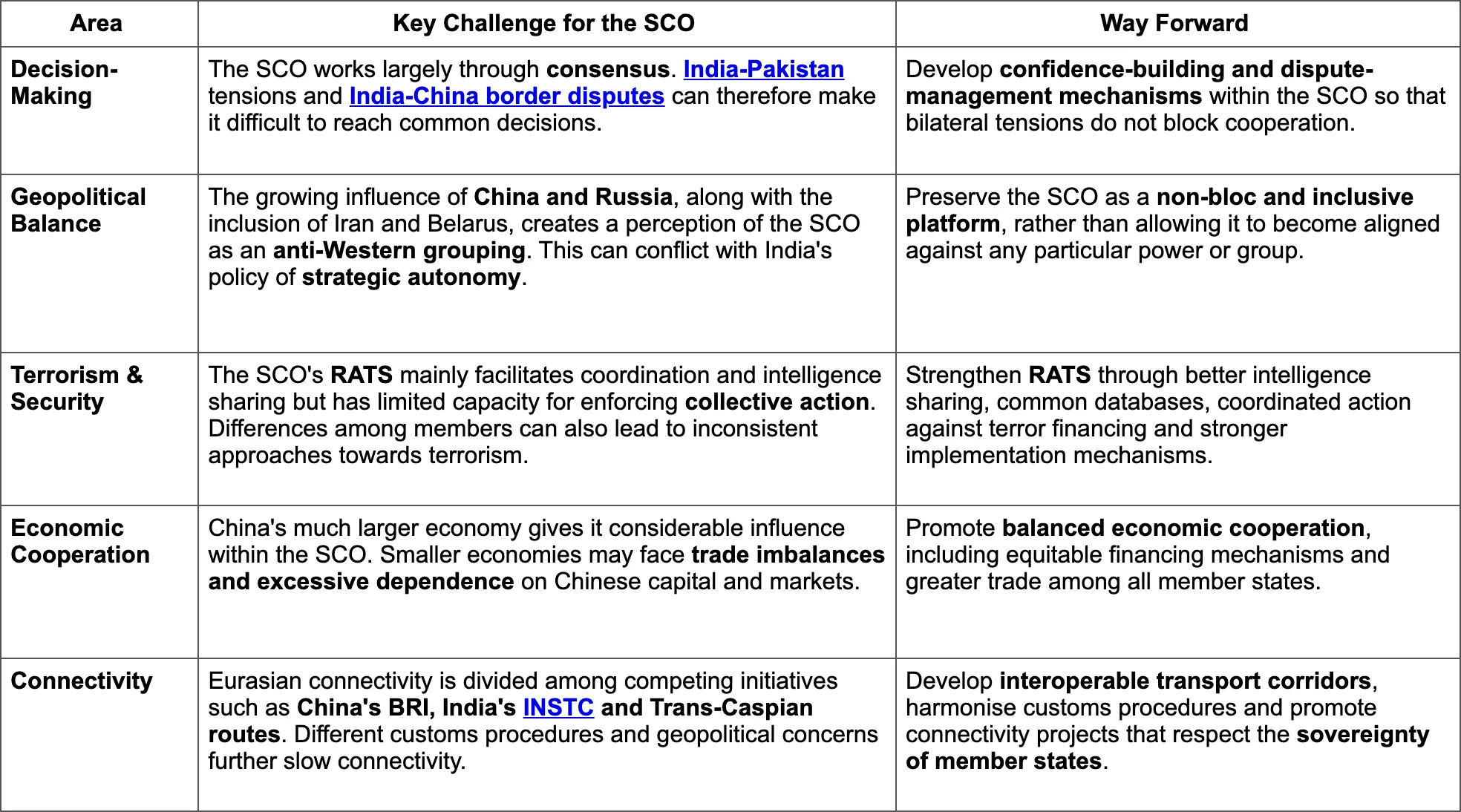 Conclusion
- The SCO can play a meaningful role in shaping a multipolar and just world order only if it moves beyond internal bilateral disputes, addresses terrorism through consistent standards, and focuses on practical cooperation. For India, the SCO remains a vital Eurasian platform to preserve strategic autonomy, strengthen connectivity with Central Asia, and advance its economic and security interests.