Comrades Dispatch · 04 Sep 2026 (PDF)
In this edition
- Saptakoteshwar Temple Art & Culture
- National Accounts Statistics 2026 Economic Scenario
- Pichavaram Mangrove Forest Environment & Ecology
- UNEP’s Limiting Overshoot Report: Managing 1.5°C Breach Environment & Ecology
- Hanging Glaciers Geography
- Distinguished Jurist as a Supreme Court Judge Polity & Governance
- Magnetar Study Reveals Space Vacuum May Not Be Empty Space
- Aditya-L1 Detects Early Warning Signs Before Solar Flares Space
Art & Culture
Saptakoteshwar Temple
Source Archaeological remains dating back to the 14th–16th centuries have been discovered during restoration work at the old site of the Saptakoteshwar Temple on Divar Island, Goa.- Restoration work along the old pathway between Koti Tirth and Madhavachi Talli revealed remains suggesting successive phases of temple construction and reconstruction.
- The discoveries include a Kirtimukh motif traditionally carved above temple doorways, a carved pillar capital indicating the architectural sophistication of the earlier structure, and parts of Dev Khostam used for placing idols within the temple.
- Shaivite Tradition: Saptakoteshwar Temple is dedicated to Lord Shiva and is considered one of the important Shaivite temples of the Konkan region.
- Kadamba Connection: The temple had strong associations with the Kadamba dynasty (10th–14th century CE), whose rulers were devotees of Lord Shiva. Coins bearing the inscription “Saptakotishvaralabdha–Varaprasada” reflect the importance of the deity among Kadamba rulers.
- Vijayanagar Reconstruction: After destruction during earlier periods, the temple was reconstructed during the Vijayanagar period, reflecting continued religious importance.
- Portuguese Period: The temple faced destruction and displacement during Portuguese rule in Goa, leading to the relocation of the Shiva Linga.
- Maratha Restoration: The temple tradition was revived under Chhatrapati Shivaji Maharaj, who reconstructed the temple in 1668.
- Legend Behind the Name: According to local tradition, seven sages worshipped Lord Shiva at the site, after which Shiva appeared as Saptakoteshwar (Sapt meaning seven and Koteshwar referring to the Lord of crores).
- Cultural Significance: The temple represents Goa’s layered cultural heritage, reflecting influences of the Kadamba, Vijayanagar, Portuguese and Maratha periods and the continuity of Shaivite traditions in the region.

Economic Scenario
National Accounts Statistics 2026
Source Why in News?- The Ministry of Statistics and Programme Implementation (MoSPI) released the National Accounts Statistics 2026, with 2022–23 as the base year. The publication provides updated estimates of Gross Domestic Product (GDP), national income and other key economic indicators, incorporating revised statistical methodologies and updated data.
- Revision of Base Year:
- A major update in the 2026 publication is the utilization of a new base year (2022-23) for key macroeconomic indicators.
- It integrates the new series of the Producer Price Index (PPI), Index of Industrial Production (IIP), and Banking Services Price Index (BkSPI).
- Adoption of Double Deflation:
- Aligning with UN System of National Accounts (SNA) standards, MoSPI has adopted the Double Deflation approach to estimate the Gross Value Added (GVA) of the Manufacturing sector.
- Previous Method: Relied on a single deflator for both output and intermediate consumption.
- New Method: Deflates gross output and intermediate inputs separately, providing a more accurate measure of the real value added by capturing price changes in both raw materials and finished goods.
- Q1 FY 2026-27 Economic Performance:
- GDP:
- Real GDP (Constant Prices) reached an estimated Rs 81.36 lakh crore in Q1 FY 2026-27, advancing 7.8% compared to 6.9% recorded in Q1 FY 2025-26.
- Nominal GDP grew by 10.3% in Q1 of FY 2026–27, compared with 8.1% in Q1 of FY 2025–26.
- Real GVA and Nominal GVA grew by 8.2% and 11.5%, respectively, in Q1 of FY 2026–27.
- Investment Demand (GFCF): Gross Fixed Capital Formation surged by 11.9% (up from 5.8% in Q1 FY 2025-26), signalling a resurgence in long-term asset creation.
- Private Consumption (PFCE): Household final consumption expenditure rose by 7.1% compared to 6.8% last year, reflecting steady domestic retail confidence.
- Trade Integration: Exports of goods and services doubled their pace of expansion, rising 12.0% against 6.0% in Q1 FY 2025-26.
- Primary Sector: Grew by 2.9%, with Agriculture and Allied Activities registering 3.6% growth in Q1 FY 2026–27.
- Industrial & Manufacturing (Secondary): Secondary sector GVA expanded by 8.6% (versus 6.1% last year), with core manufacturing growing 9.2%.
- Services Sector (Tertiary): Real GVA for services accelerated by 10.0% (up from 8.0%), led by financial, real estate, IT, and professional services growing at 12.1%.
- GDP:
- About: NAS is an annual publication by MoSPI that provides a granular, comprehensive view of the national income, production, and expenditure aggregates of the Indian economy.
- Parameters Covered: It tracks a wide array of indicators, including Gross Domestic Product (GDP), Gross Value Added (GVA), Per Capita Income, Capital Formation (investment), saving rates, and Private Final Consumption Expenditure.
- Significance: It serves as the primary statistical backbone for the Union Government, the Reserve Bank of India (RBI), and researchers to evaluate structural changes, assess policy impact, and forecast economic trends.
- Deflator Anomalies:
- The shift to a “double deflation” method for the manufacturing sector has drawn heavy scrutiny.
- Under double deflation, input costs and output prices are adjusted separately. If input prices rise faster than output prices, the calculated deflator can become negative.
- This can make real manufacturing growth appear higher than it actually is, even when production on the ground is weak.
- Misrepresentation of the Informal Sector:
- India’s vast unorganized sector accounts for a massive share of employment, yet it leaves little real-time data trail.
- Historically, the government has used the growth of the formal corporate sector as a proxy for the informal sector.
- Economists note that this creates a “large firm bias,” overstating GDP by assuming small, struggling businesses are growing at the same rapid pace as massive corporations.
- Reliance on MCA-21 Database: GDP estimates rely significantly on Ministry of Corporate Affairs (MCA)-21 corporate data, with critics citing company misclassification and “blowing-up factors” that may affect accuracy. Some economists argue that the underlying growth could be significantly below the headline 7.8%, with estimates as low as 2.6%.
- Base Year Revisions and Political Controversies:
- Updating the base year (such as shifting from 2011–12 to 2022–23) inherently requires rolling back and revising past data to fit the new methodology.
- This routinely sparks political controversy. For example, critics recently accused the government of deliberately revising down Q1 2025 data to make Q1 2026 growth look higher, though the Ministry of Statistics clarified that comparing data across two entirely different base-year series is statistically invalid.
- Concerns have been raised over the delayed release of the GDP back-series, affecting the assessment of historical growth trends and structural changes.
- WPI vs. PPI Deflator Issues:
- India has historically lacked a proper Producer Price Index (PPI) and relied heavily on the Wholesale Price Index (WPI) to deflate nominal GDP into real GDP.
- Because the WPI is heavily weighted toward global commodities like oil, a sharp drop in international oil prices can register as “price deflation” in India, thereby artificially pumping up the reported real growth rate of sectors (like services) that have little to do with oil.
- High-Tech Manufacturing & Industrial Scaling
- Semicon 2.0: Strengthens the semiconductor ecosystem through chip design, fabrication and advanced packaging, increasing domestic value addition.
- Mobile Phone Manufacturing Scheme (2026–31): Promotes component manufacturing, domestic value addition and export-oriented production.
- BHAVYA Rasayan Scheme: Develops chemical manufacturing parks and reduces import dependence in specialty chemicals.
- National Investment Policy for Urea-2026 (NIPU-2026): Supports domestic urea manufacturing, reducing exposure to global fertiliser-price shocks.
- Energy Security & Green Infrastructure
- Samudra Manthan: Expands offshore oil and gas exploration, strengthening domestic energy security.
- Surface Coal/Lignite Gasification Scheme: Aims to achieve 100 million tonnes of coal/lignite gasification capacity by 2030, reducing dependence on imports of chemicals, methanol and synthetic natural gas (SNG).
- GOBARdhan (2023–35): Promotes compressed biogas (CBG) production from agricultural and municipal waste, supporting waste-to-energy and the circular economy.
- PM Surya Sarovar Yojana (2026–31): Targets 5,000 MW of floating solar capacity integrated with Battery Energy Storage Systems (BESS), supporting renewable-energy expansion and grid stability.
- Trade & Capital Market Deepening
- India-UK CETA & Social Security Agreement (2026): Provides zero-duty access to nearly 99% of Indian export lines, benefiting labour-intensive sectors such as textiles, footwear and engineering.
- India-Israel Bilateral Investment Agreement (2026): Provides a stable and non-discriminatory framework for FDI, encouraging cross-border investment.
- Fully Accessible Route (FAR): Expands FPI investment in Government Securities, attracting foreign capital and deepening sovereign debt markets.
- Bharat Maritime Insurance Pool (BMIP, 2026): Backed by a Rs 12,980 crore sovereign guarantee, it protects maritime trade against geopolitical and shipping-related risks.
- MSME Support
- Emergency Credit Line Guarantee Scheme (ECLGS) 5.0: Provides credit guarantees to MSMEs and larger enterprises, easing liquidity constraints.
- MSME Development (Amendment) Act, 2026: Simplifies compliance and supports business expansion and formalisation.
- Agriculture & Rural Demand
- PM-KISAN Extension: Re-authorized through FY 2030-31 with Rs 3.15 lakh crore in funding, ensuring direct, predictable liquidity injections into rural households via Direct Benefit Transfer (DBT).
- Minimum Support Price (MSP) Upward Revisions: Targeted price increases across 14 Kharif crops (with sharp bumps for oilseeds and pulses) to align domestic production with national nutrition and import-substitution goals.
- Kapas Kanti (Mission for Cotton Productivity): A Rs 5,659 crore scheme targeting fiber yields, pest resilience, and modern agronomy to supply the domestic textile value chain.
- The government should ensure regular base-year revisions, timely back-series data and transparent GDP methodology. Greater use of GST, digital transactions and informal-sector surveys can improve accuracy. Publishing detailed “Sources and Methods” documents will enable independent scrutiny and strengthen confidence in official GDP estimates.
Environment & Ecology
Pichavaram Mangrove Forest
Source Why in News?- A landmark ecological study has estimated the Total Economic Value (TEV) of Tamil Nadu’s Pichavaram Mangrove Forest at Rs 2,485.38 crore, underscoring its immense but often overlooked role in ecological balance and climate regulation.
- Capturing Non-Market Value: The ecosystem’s worth translates to a remarkable Rs 1.83 crore per hectare, effectively capturing non-market ecological benefits that are frequently ignored in conventional development planning.
- Dominance of Sub-surface Carbon Sink:
- Soil organic carbon is the largest contributor to the TEV, accounting for nearly half of the total value and significantly exceeding the carbon stored in above-ground vegetation.
- Mangrove sediments store 251.14 tonnes of carbon/ha, compared with 79.45 tonnes/ha in above-ground vegetation, highlighting the need to conserve both mangrove cover and underlying sediments.
- Multi-Faceted Ecosystem Services:
- Beyond carbon sequestration, the ecosystem provides critical coastal protection (a natural bio-shield buffering cyclones and saving disaster expenditure) and oxygen regulation (replenishing atmospheric oxygen).
- It supports large-scale eco-tourism and recreation (generating sustainable revenue, visitor value, and local livelihoods through boating and nature tourism).
- Nature-Based Solutions (NbS): The ecosystem functions as a frontline natural shield for disaster risk reduction (DRR), coastal stabilization, and ensures livelihood security for local coastal communities via sustainable provisioning services like fisheries.
- Global Conservation Context: This valuation comes at a critical time, as the 2024 International Union for Conservation of Nature (IUCN) Red List of Ecosystems warns that 50% of global mangrove ecosystems are at risk of collapse.
- Way Forward for Policy Integration: The findings strongly recommend integrating these valuations into Natural Capital Accounting, Green GDP frameworks, and utilizing Payment for Ecosystem Services (PES) and blue carbon financing mechanisms to incentivize sustainable conservation.
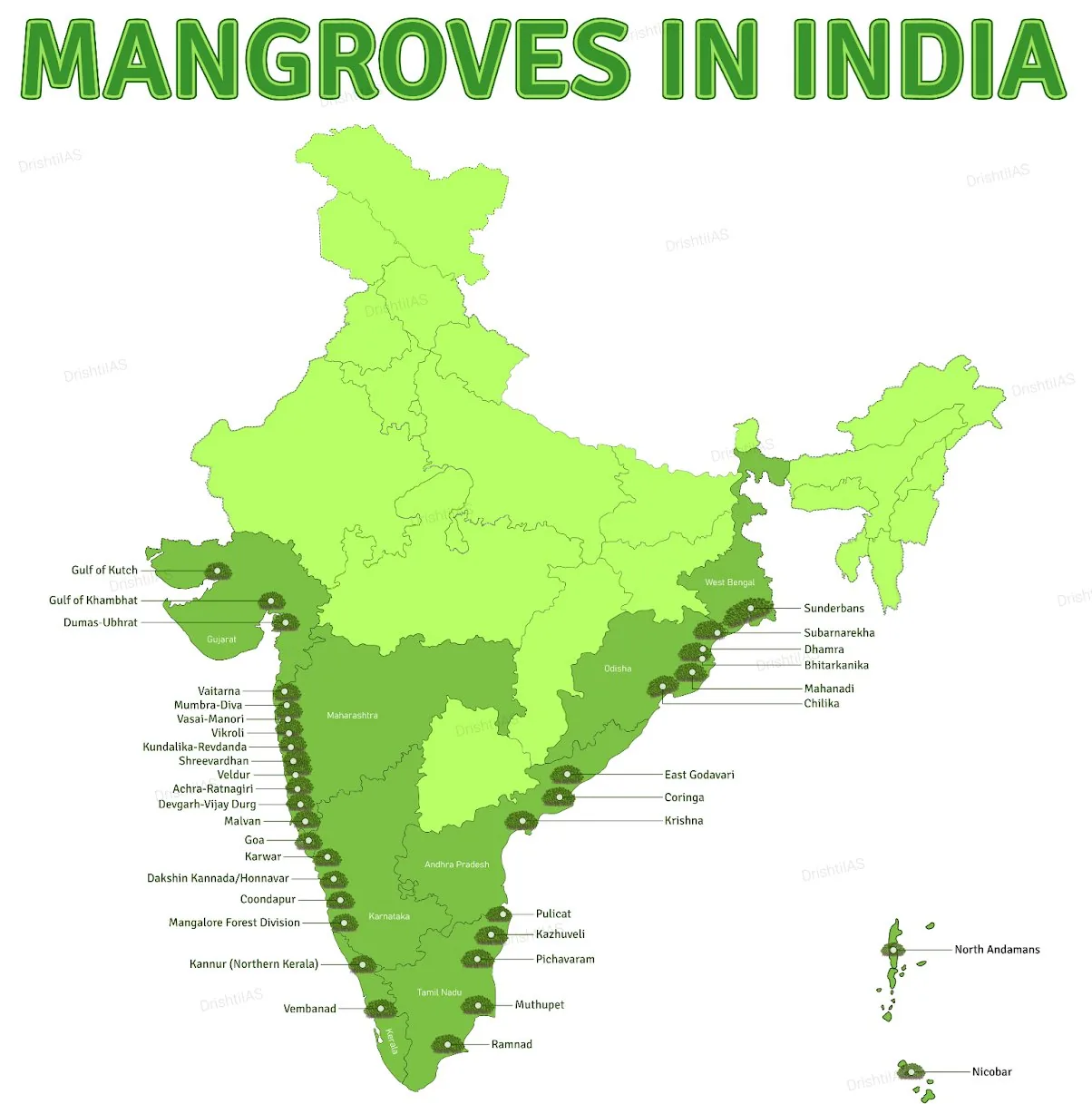
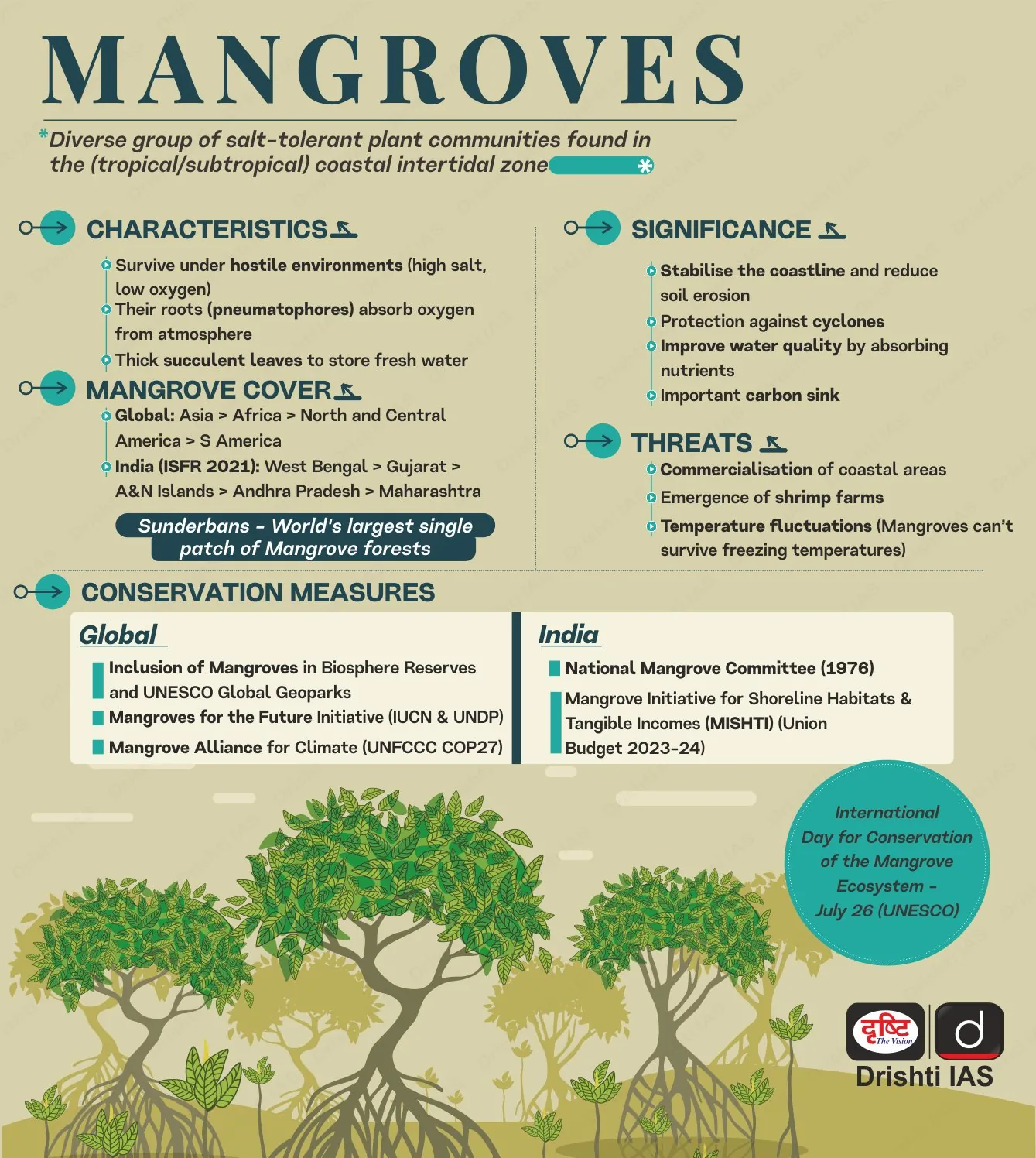 What are the Key Facts About Pichavaram Mangrove Forest?
- Geographical Location & Hydrography:
- Located in the Cuddalore district of Tamil Nadu, Pichavaram is strategically situated between two prominent estuaries, the Vellar estuary to the north and the Coleroon (Kollidam) estuary to the south.
- These river systems, along with the Uppanar river, interconnect to form the highly productive Killai backwater complex.
- Geomorphology: Classified as an intertidal forested wetland, it forms a complex labyrinth of roughly 4,400 large and small canals connecting river mouths, the Killai backwaters, and the Bay of Bengal through a narrow littoral sandbar channel.
- Diverse Vegetation: Benefiting from a diversity of habitats, the vegetation profile is incredibly varied, encompassing a transition zone of mangrove vegetation, salt marshes, and Dry Evergreen Forests.
- Permanent Submersion: Unlike many dry tidal flats, Pichavaram’s mangrove trees are permanently rooted in a few feet of shallow, brackish water.
- Flora: Characterized by a dense network of Rhizophora apiculata (featuring prominent stilt roots) and Avicennia marina (characterized by pneumatophores or breathing roots).
- Fauna:
- Acts as a vital nutrient-rich nursery for marine life, supporting commercial species like tiger prawns and mud crabs.
- Notable avian species include the Spot-billed pelican, Spoon-billed sandpiper, and White-bellied sea-eagle.
- Disaster Risk Reduction (Bio-Shield): Functioning as a critical bio-shield, the ecosystem acts as a formidable buffer zone between the land and sea. It actively holds and stabilizes shorelines, retards coastal erosion, and aids in climate change adaptation against extreme weather events.
- Global Recognition: It was designated as Ramsar Wetland in 2022. It is also recognized as an Important Bird and Biodiversity Area (IBA) by BirdLife International.
UNEP’s Limiting Overshoot Report: Managing 1.5°C Breach
Source Why in News?- The United Nations Environment Programme (UNEP) has released a report titled ‘Limiting Overshoot: Navigating Exceedance of 1.5°C and Pathways Towards Return’, which acknowledges that temporarily breaching the 1.5°C global warming threshold under Paris Agreement, is now virtually inevitable in the near term.
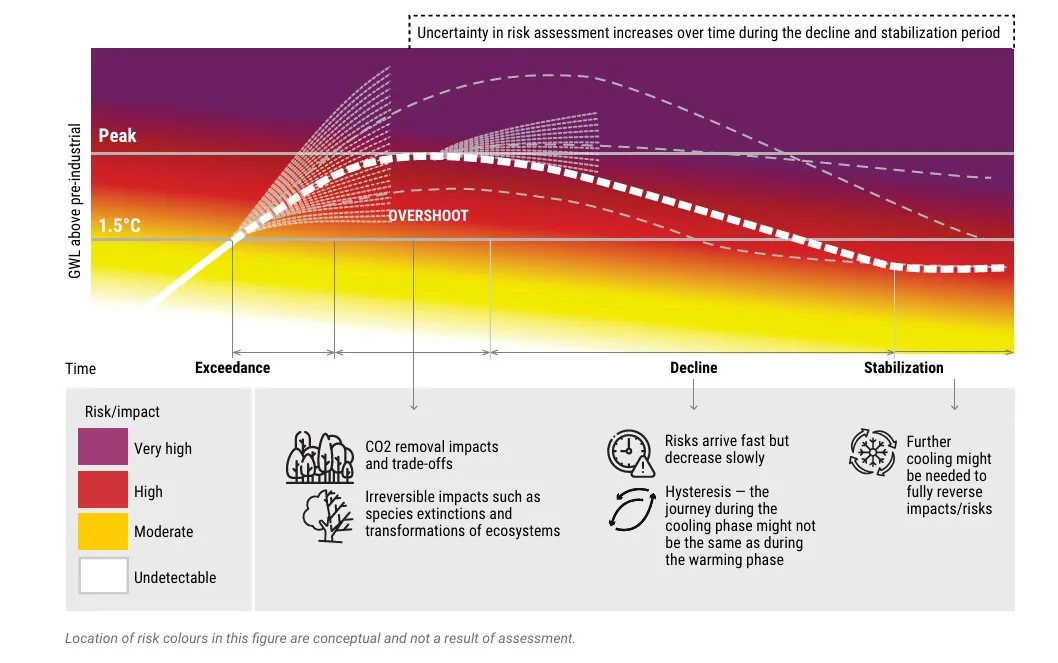
- The report proposes an ‘overshoot, peak, and decline’ framework to limit peak warming and enable a multi-decadal return towards safer planetary boundaries.
- Imminent Threshold Breach:
- Human-induced global warming has reached approximately 1.4°C above pre-industrial levels, increasing at ~0.25°C per decade.
- Operational decadal forecasts indicate a 75% probability that the five-year mean temperature will exceed 1.5°C within the 2026–2030 period.
- Carbon Budget Exhaustion:
- To maintain a 50% chance of staying within 1.5°C, the remaining carbon budget is roughly 130 billion tons of CO₂ from 2026 onwards.
- At current emission rates of roughly 40 billion tons of CO₂ per year, this budget will be completely exhausted in about three years.
- The Cost of Delay: Every additional five years of sustained high emissions adds approximately 0.1°C to peak warming. Cumulatively, emissions since 2015 have already increased the minimum achievable peak warming by 0.2°C.
- The Emissions and Implementation Gap:
- Under current policies, median projected global warming will reach 2.6°C by 2100 (range: 1.9°C–3.6°C).
- Even under an optimistic scenario where all Nationally Determined Contributions (NDCs) and long-term Net-Zero targets are fully executed, central peak warming will still reach 1.8°C.
- No Safe Overshoot: Exceeding 1.5°C is not benign; every fraction of a degree increases the likelihood of crossing irreversible biophysical tipping points.
- Crucial Role of Methane Mitigation:
- The UN report highlights methane mitigation as a critical near-term climate action, with methane currently contributing around 0.5°C to global warming.
- Reducing methane emissions can slow the rate of warming more rapidly than equivalent CO₂ reductions due to methane’s short atmospheric lifetime.
- While reducing oil and gas leaks is relatively feasible, cutting methane from agriculture and waste remains challenging. A reduction of 60–70 million tonnes of hard-to-abate methane emissions could deliver a cooling effect comparable to removing 220 gigatonnes (Gt) of CO₂.
- The Global Methane Pledge (launched at COP26 by the European Union and the US), joined by over 155 countries, aims to reduce anthropogenic methane emissions by at least 30% from 2020 levels by 2030, though major emitters including India, China, Russia and Iran have not joined it.
- Geopolitical Hurdles to Climate Action:
- US Withdrawal: The United States, the world’s largest historical emitter, formally exited the Paris Agreement and announced its withdrawal from the UNFCCC, the IPCC, and the Green Climate Fund.
- Global Energy Crisis: The 2026 conflict in West Asia has caused the largest oil supply disruption in history, cutting output by over 14 million barrels a day. Sustained high energy prices could push governments back toward coal and short-term fossil fuel reliance.
-
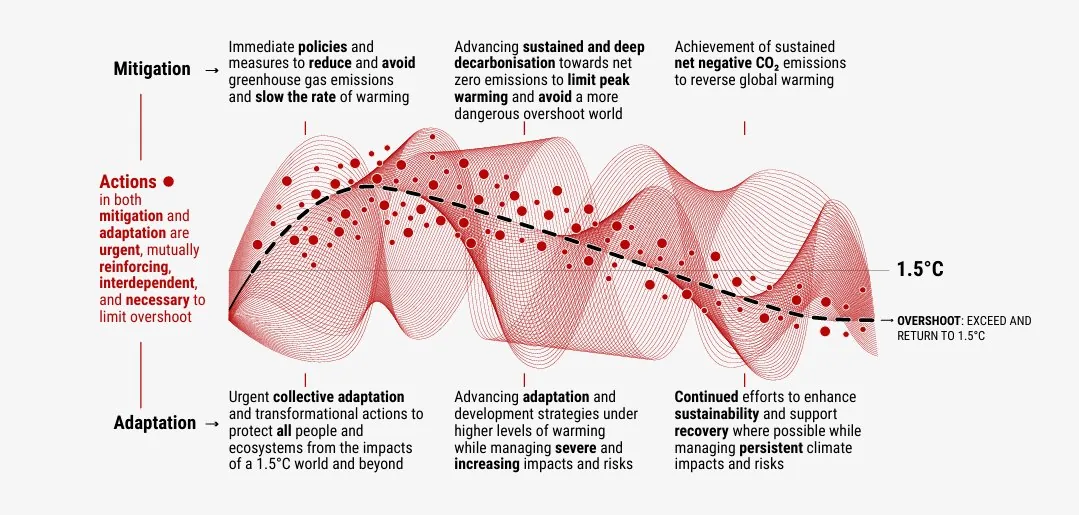
The “overshoot, peak, and decline” pathway shifts the global climate strategy from merely preventing a 1.5°C breach to actively managing it. It involves four sequential stages:
- Exceedance (Overshoot): The period in which global warming surpasses the 1.5°C threshold but has not yet reached its peak.
- Plateau / Peak: The period when global warming reaches and plateaus at its maximum level above 1.5°C before starting to fall.
- Decline: The period in which global temperatures begin to steadily decline from their peak level due to global net-negative emissions.
- Stabilization: Reached once global temperatures return to or below the 1.5°C target after the reversal, stabilizing at this safer level.
-
Compounding Costs of Breaching 1.5°C (Overshoot)
- Cryosphere Loss:
- By 2100, glaciers outside the Greenland and Antarctic ice sheets could lose 25–40% or more of their mass, contributing around 9 - 15.4 cm to sea-level rise.
- Sea-ice recovery can lag behind temperature recovery, maintaining lower planetary albedo and increased heat absorption.
- Sea-Level Rise:
- Sea levels will continue rising for centuries to millennia because of deep-ocean warming and ice-sheet inertia.
- Every 100 years above 1.5°C could commit the world to approximately 40 cm of additional median sea-level rise by 2300.
- Ocean Changes: Ocean acidification and deoxygenation can persist for centuries because deep-ocean circulation and chemical recovery are extremely slow.
- Food Security: Global food production could see declines of up to 14% by 2050 without effective adaptation.
- Earth-System Tipping Points:
- AMOC: Sustained warming increases the risk of weakening or collapse of the Atlantic Meridional Overturning Circulation (AMOC), with recovery potentially taking centuries.
- Amazon Rainforest: Warming combined with deforestation could push the Amazon from a carbon sink towards a net carbon source through large-scale forest dieback.
- Polar Ice Sheets: Some parts of the West Antarctic Ice Sheet may face irreversible retreat even at relatively low warming levels.
- Cryosphere Loss:
- Capitalising the Loss and Damage Architecture:
- Scale up the Fund for Responding to Loss and Damage (FRLD) well before peak warming, while strengthening climate-finance allocation through tools such as the Multidimensional Vulnerability Index (MVI).
- The significant gap between current pledges of around USD 800 million and the estimated USD 395 billion annual needs of developing countries must be addressed through non-debt-based financial transfers.
- Moreover, in low- and middle-income countries, every USD 1 invested in resilient infrastructure can generate around USD 4 in avoided disaster losses, highlighting the economic value of climate-resilient infrastructure.
- Accelerate Mitigation:
- Pursue immediate and deep reductions in CO₂ and methane emissions, as pathways to avoid 1.5°C overshoot are narrowing.
- Shift long-term national policy from achieving Net-Zero to legally binding Net-Negative GHG targets beyond mid-century.
- Developed economies must hit net-negative emissions first under the principle of Common But Differentiated Responsibilities and Respective Capabilities (CBDR-RC) to afford carbon space to developing nations.
- Scale Renewable Energy: Increase renewables to 60–70% of global electricity generation by 2030, supported by grid expansion, energy storage and demand flexibility.
- Responsible Scaling of Carbon Dioxide Removal (CDR):
- CDR must be deployed in addition to, not instead of, aggressive emission reductions to achieve net-negative emissions.
- Strong governance frameworks are required to manage the environmental risks, land-use constraints, and scale-up challenges of both conventional (e.g., afforestation) and novel (e.g., Direct Air Capture) CDR methods.
- Preserving SIDS Sovereignty and Entitlements: Formalize international legal mechanisms ensuring that Small Island Developing States (SIDS) retain their legal statehood, sovereignty, and maritime Exclusive Economic Zones (EEZs) under UNCLOS even if their physical landmass becomes uninhabitable or submerged.
- Ensure Just Transition: Integrate employment protection, social security, community participation and equitable distribution of transition costs and benefits.
- Protect Natural Ecosystems: Treat protected areas as climate infrastructure, strengthening ecosystem protection while preventing downgrading, downsizing and extractive encroachment.
- Strengthen Climate Knowledge:
- Invest in long-term climate observation, monitoring and data systems, particularly in vulnerable and under-resourced regions.
- Strengthen the science-policy interface by combining scientific, Indigenous and local knowledge for continuous climate decision-making.
 Conclusion
- The UNEP report stresses that breaching 1.5°C reflects past delays but is not a reason for resignation. The focus must now shift to simultaneous mitigation and adaptation, as every fraction of warming avoided, every year of overshoot reduced, and every investment in climate-resilient infrastructure can limit planetary risks and irreversible losses.
Geography
Hanging Glaciers
Source Why in News?- Rising temperatures and changing precipitation patterns are destabilising Himalayan glaciers, increasing the risk of glacier collapse, avalanches and downstream hazards. A 2026 study identified 219 hanging glaciers in the Alaknanda basin of the Garhwal Himalayas, highlighting their growing threat potential.
- About: Hanging glaciers are masses of ice located on steep mountain slopes, often detached from the main glacier system. Due to their unstable position, they can suddenly break off and trigger hazardous ice and rock avalanches.
- Formation: Rapid warming, glacier retreat and climate variability cause glaciers to lose structural stability. This leads to redistribution of ice, geometric changes and the development of unstable hanging glacier formations.
- Global Context: Hanging glaciers have been extensively studied in the Alps, but basin-scale assessments in the Himalayas remain limited due to difficult terrain and inadequate monitoring.
-
Risks Associated with Hanging Glacier Collapse
- Avalanche Hazards: Break-off of hanging glaciers can generate massive ice avalanches. Simulations indicate that avalanche flows in the Badrinath–Mana sector of Uttarakhand could exceed 50 metres in height, potentially damaging settlements and infrastructure.
- Glacial Lake Outburst Floods (GLOFs): Glacier collapse can trigger secondary hazards such as GLOFs, where sudden release of water from glacial lakes causes destructive downstream flooding.
- Cascading Hazards: Collapsing glaciers can carry rocks, snow and sediments downhill, generating compound hazards such as debris flows, river blockages and sudden floods.
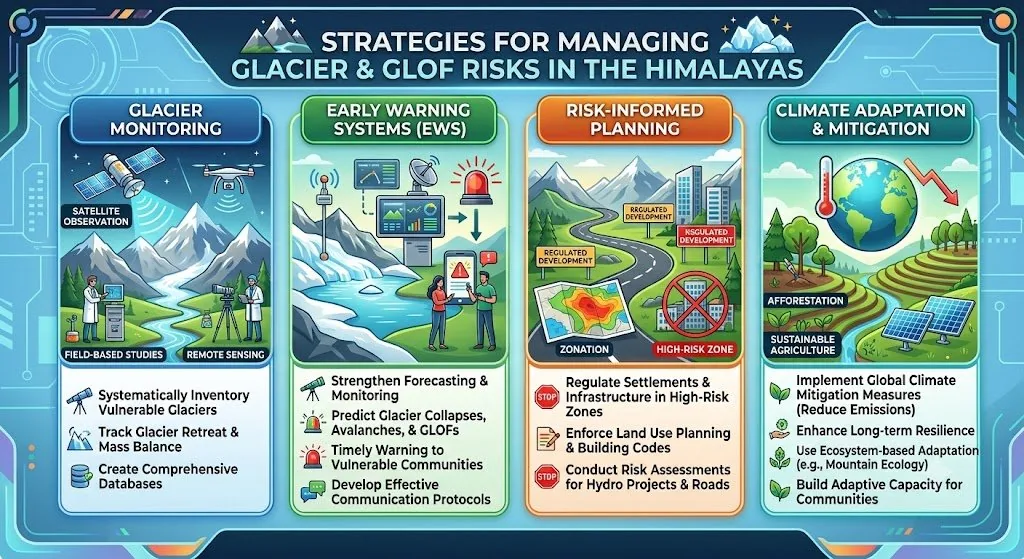
- Threat to Infrastructure: Hydropower projects, roads, bridges, settlements and pilgrimage routes located in Himalayan valleys are particularly vulnerable to glacier-related hazards.
- Number of Hanging Glaciers: An April 2026 study published in Nature identified 219 hanging glaciers in the Alaknanda basin of the Garhwal Himalayas.
- Concentration in Upper Basin: Nearly one-third of the unstable hanging ice mass is concentrated in the Upper Alaknanda basin, increasing risks for downstream settlements and infrastructure.
- Increasing Infrastructure Risk: The Alaknanda basin study projected that avalanche-risk exposure could increase significantly, with 120% more buildings and infrastructure land area at risk by 2030 compared to 2000.
- Population Vulnerability: The population living in these risk-prone areas is projected to increase by around 17% during the same period, increasing disaster vulnerability.
Polity & Governance
Distinguished Jurist as a Supreme Court Judge
Source Why in News?- Addressing a convocation at the National Law University, Delhi, a Supreme Court judge highlighted an “unused mandate” of the Constitution: the provision allowing the appointment of a “distinguished jurist” to the Supreme Court.
- Despite the Constitution being in force for over 76 years, this provision has never been used to appoint a legal academic or jurist to the apex court.
- Article 124(3) of the Indian Constitution:
- It outlines the eligibility criteria for the appointment of a Supreme Court judge. According to the Article 124(3), a person is eligible if they are a citizen of India and fulfill any one of the following three conditions:
- Has been a High Court judge for at least five years.
- Has been an advocate of a High Court for at least ten years.
- Is, in the opinion of the President, a “distinguished jurist”.
- While the first two routes are heavily utilized (elevation from High Courts or direct elevation from the Bar), the third category remains entirely unused.
- It outlines the eligibility criteria for the appointment of a Supreme Court judge. According to the Article 124(3), a person is eligible if they are a citizen of India and fulfill any one of the following three conditions:
- For High Court:
- For High Court appointments, Article 217 originally had no such provision. During the Emergency, the 42nd Constitutional Amendment Act (1976) introduced a provision allowing a “distinguished jurist” to be appointed as a High Court judge.
- However, this was subsequently repealed by the 44th Constitutional Amendment Act (1978) to reverse Emergency-era changes.
- Distinguished Jurist:
- The Constitution does not explicitly define the term. However, it is widely understood to mean a person with exceptional expertise in legal theory, constitutional law, teaching, or jurisprudence, who has engaged in serious legal scholarship.
- Crucially, this category allows for the appointment of legal scholars even if they lack prior judicial or extensive courtroom experience.
- Historical Background:
- Constituent Assembly Debates: The “Distinguished Jurist” clause was introduced during the Constituent Assembly debates in May 1949, by H.V. Kamath, who argued that the pool of Supreme Court candidates should not be rigidly confined only to practising advocates and judges.
- Global Precedents: Judges of the International Court of Justice (ICJ) and the US Supreme Court (such as Harvard professor Felix Frankfurter in 1939) were chosen from academia.
- Dr. B.R. Ambedkar’s View: Dr. Ambedkar supported the idea, though he briefly debated whether the word “eminent” would be better suited than “distinguished”.
- Need for Distinguished Jurists in the Supreme Court
- Diversifying the Bench:
- The Supreme Court is not just an adjudicatory body but the nation’s “constitutional conscience-keeper”.
- Academics can bring diverse perspectives away from standard courtroom conditioning.
- Overcoming Technicalities: Jurists often possess a broader macro-view of the law and are less likely to be bogged down by narrow procedural technicalities.
- Focus on Public Law and Policy:
- Supreme Court decisions frequently involve profound constitutional and public-law questions.
- Renowned scholars can inject deep comparative research, interdisciplinary insights, and theoretical grounding into landmark judgments.
- Diversifying the Bench:
- Limited Consideration:
- The provision has not been widely explored in practice by the government and the Collegium, and the process for identifying suitable candidates remains underdeveloped.
- Noted legal scholar Upendra Baxi once remarked that Presidents have looked through a “telescope” and found no one, effectively making the provision a “dead issue”.
- No Institutional Pathway: Article 217 does not provide a similar route for appointing distinguished jurists to High Courts, meaning legal academics generally lack a judicial pathway before being considered for the Supreme Court.
- The Collegium System Hurdle:
- Although the Constitution vests the power in the “opinion of the President”, modern Supreme Court appointments are initiated by the Collegium system (headed by the Chief Justice of India).
- An academic would first need to be recommended by the Collegium, which traditionally favors sitting judges and senior advocates.
- Bar Council Restrictions:
- Unlike in the US, Rule 49 of the Bar Council of India (BCI) prevents full-time law teachers from practising law.
- This creates a systemic barrier, separating theoretical academic brilliance from practical courtroom engagement.
- Succession Concerns: The Supreme Court relies heavily on a seniority-based succession path for appointing the Chief Justice of India. Appointing a younger academic jurist directly to the Supreme Court could disrupt this established hierarchy and affect the succession line.
- Alternative Utilization of Expertise:
- Instead of elevating distinguished jurists to the bench, the Supreme Court frequently utilizes their specialized knowledge by appointing them as amicus curiae (friends of the court) in highly complex and technical cases.
- This allows the judiciary to benefit from their academic expertise in a supportive role.
- The Remuneration Gap:
- Legal practice and private consultancies are highly lucrative. Eminent lawyers and top-tier legal scholars would face a massive pay cut if they transitioned to a judicial salary.
- This financial disincentive makes many of the most qualified candidates reluctant to accept a judicial appointment even if it were offered.
Space
Magnetar Study Reveals Space Vacuum May Not Be Empty
Source A study published in Nature in August 2026 reported evidence of vacuum birefringence, a phenomenon predicted by quantum electrodynamics (QED), using observations of a highly magnetised neutron star called a magnetar. Vacuum Birefringence- Definition: Vacuum birefringence is a quantum phenomenon in which a strong magnetic field causes the vacuum of space to behave like a crystal, altering the properties and polarisation of light passing through it.
- Origin of Prediction: The phenomenon was predicted in the 1930s by physicists Werner Heisenberg and Hans Heinrich Euler based on principles of quantum electrodynamics.
- Quantum Explanation: According to QED, the vacuum contains virtual particles, such as electron–positron pairs, that briefly emerge and disappear due to quantum fluctuations. Under extremely strong magnetic fields, these particles influence the propagation of light, causing changes in its polarisation.
- Strength Requirement: Vacuum birefringence becomes noticeable only under magnetic fields approximately 88 trillion times stronger than Earth’s magnetic field, far beyond the capability of artificial magnets.
- Magnetars: Magnetars are a special type of neutron star formed when the core of a massive star collapses, producing an extremely dense object with a powerful magnetic field. They possess the strongest known magnetic fields in the universe and act as natural laboratories for studying vacuum birefringence.
- Study Object and Evidence: Researchers focused on the magnetar 1E 1547.0-5408, located around 14,700 light-years from Earth. The NASA Imaging X-ray Polarimetry Explorer (IXPE) detected highly polarised X-rays from the magnetar, reaching levels of up to 80% in some observations.
- Significance: The observation provides evidence for vacuum birefringence, supports quantum electrodynamics (QED) under extreme conditions, and helps improve understanding of magnetars, cosmic environments, and magnetic fields across the universe.
Aditya-L1 Detects Early Warning Signs Before Solar Flares
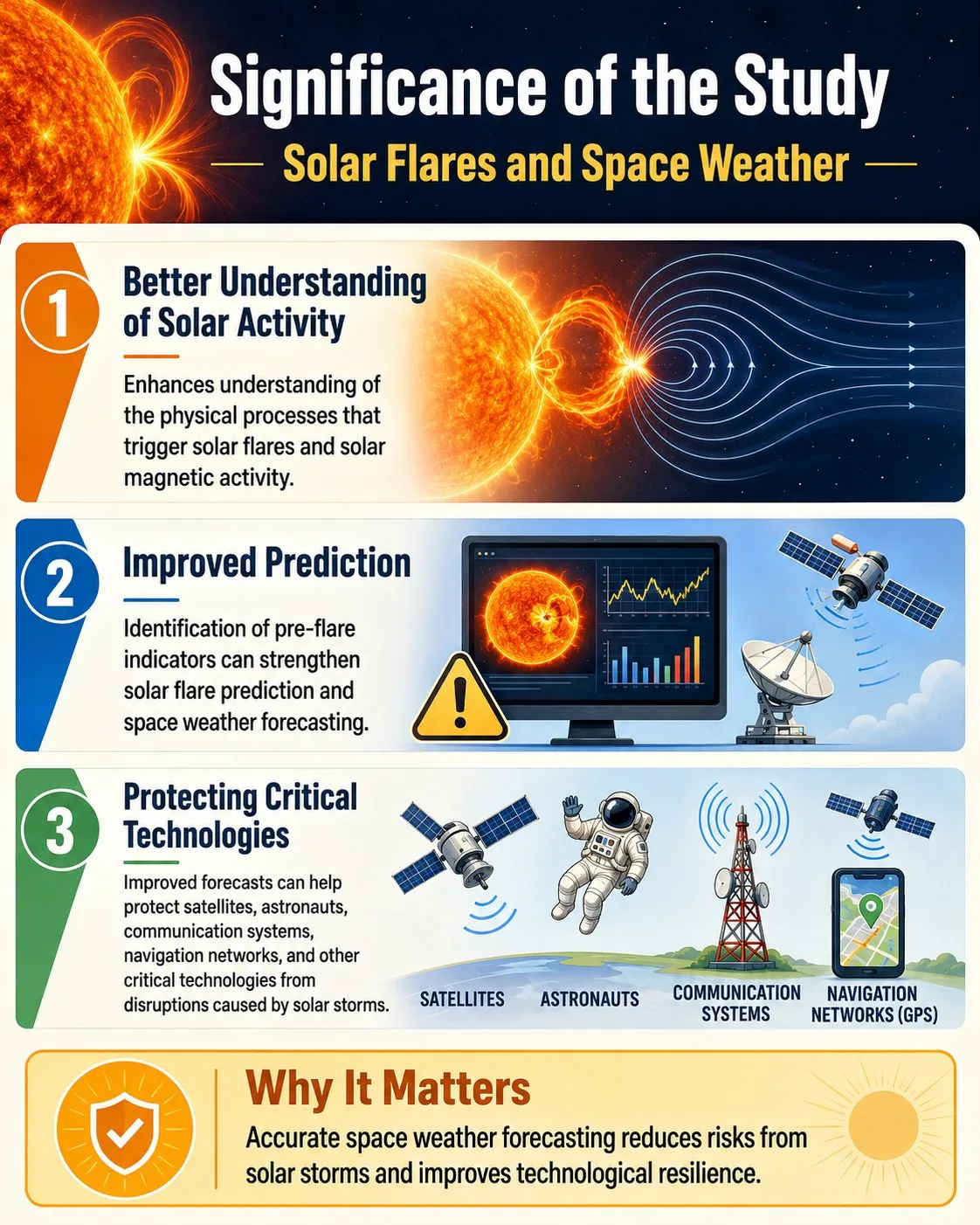
Source Scientists using India’s first dedicated solar observatory, Aditya-L1, have identified small, short-lived brightenings in the Sun’s atmosphere that appear during the hours before major solar flares and are concentrated near the region where the flare later occurs.- About: Solar flares are sudden and intense bursts of electromagnetic radiation from the Sun caused by the release of stored magnetic energy. Major solar flares can disrupt radio communication, navigation systems, satellites and space missions, and increase radiation risks for astronauts.
- Detection of Pre-Flare Events: Scientists identified pre-flare transient events, which are small, short-lived brightenings observed in active regions of the Sun before major flares.
- Magnetic Energy Release: Some of these transient brightenings showed corresponding X-ray signatures, indicating that they involve small-scale releases of magnetic energy in the solar atmosphere.
- Flare Trigger Mechanism: The study suggests that repeated small-scale energy release events may contribute to the destabilisation of magnetic fields in active regions, eventually leading to the eruption of major solar flares.
- Sun–Earth L1 Advantage: Aditya-L1 operates from the Sun–Earth Lagrange Point 1 (L1), allowing continuous monitoring of solar activity across multiple wavelengths without interruptions caused by Earth’s rotation.
- Solar Ultraviolet Imaging Telescope (SUIT): The SUIT payload observed the Sun in 11 near-ultraviolet (NUV) filters, enabling scientists to study different layers of the solar atmosphere, including the upper photosphere and chromosphere.
- Importance of UV Observation: Near-ultraviolet observations are important because these wavelengths are largely inaccessible from Earth as the atmosphere absorbs most ultraviolet radiation.
- Solar Low Energy X-ray Spectrometer (SoLEXS): SoLEXS measures low-energy X-ray emissions from energetic solar processes and helps study thermal plasma conditions in the solar corona.
- High Energy L1 Orbiting X-ray Spectrometer (HEL1OS): HEL1OS studies high-energy X-ray emissions associated with energetic solar activity and provides information about high-energy processes during solar flares.
- Combined Data Analysis: Data from SUIT, SoLEXS and HEL1OS allow scientists to study how activity in the lower solar atmosphere is connected with energy release in the solar corona during the build-up to a flare.