Comrades Dispatch · 05 Sep 2026 (PDF)
In this edition
- Gollala Gudi Temple Art & Culture
- WMO El Niño Outlook Geography
- Birth Anniversary of Dr. Sarvepalli Radhakrishnan Important Days
- Birth Anniversary of V. O. Chidambaram Pillai Important Days
- India–Belgium Relations International Relations
- CVC Annual Report 2025 Polity & Governance
- RAKSHA Document on Defence Diplomacy Security
- Parliamentary Standing Committee on Healthcare Coverage Gap Social Issues
Art & Culture
Gollala Gudi Temple
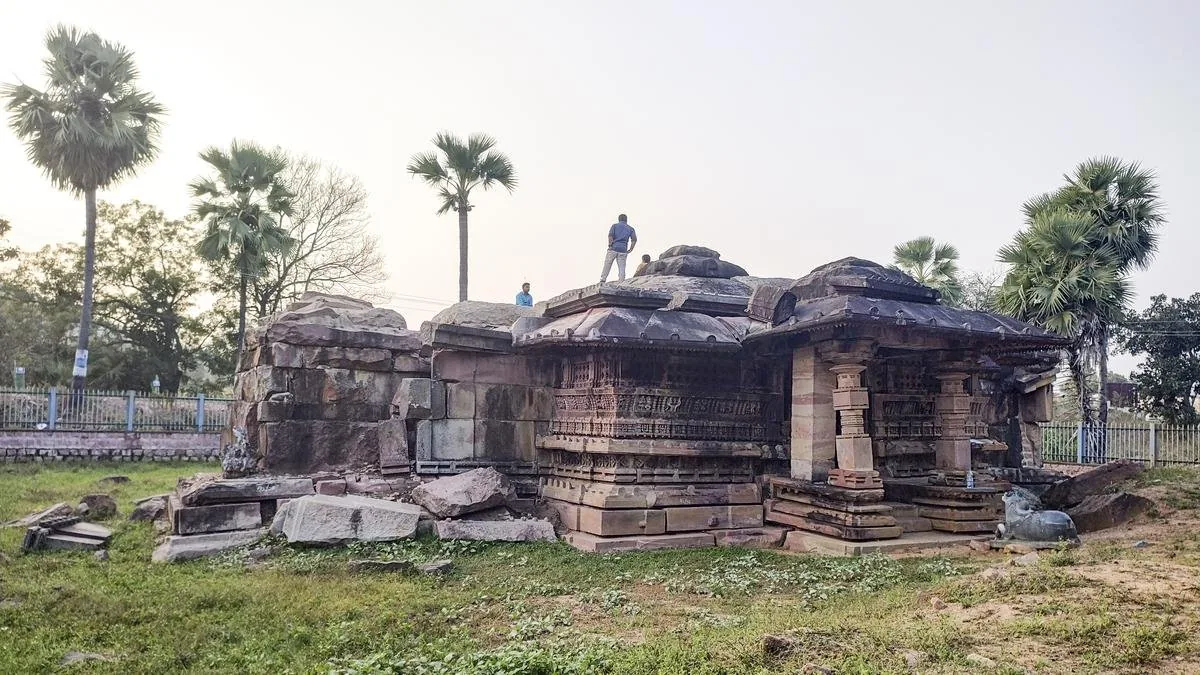
Source The Archaeological Survey of India (ASI) officially declared the historic Gollala Gudi Temple in Telangana as a Monument of National Importance.- Location: The temple is located in Palampet village, Mulugu district, Telangana. It sits just southwest of the famous Kakatiya Rudreshwara (Ramappa) Temple, which is a UNESCO World Heritage Site.
- Historical Context:
- The temple dates back to the 12th - 13th centuries CE and was built during the reign of the Kakatiya Dynasty.
- The Kakatiya dynasty, a prominent Telugu dynasty, ruled much of the eastern Deccan from the 12th to 14th centuries, with its core territory covering present-day Telangana and Andhra Pradesh and extending into parts of Karnataka, Tamil Nadu and Odisha.
- Architectural Features:
- Trikutalaya Plan: The temple follows a rare ‘Trikutalaya’ design, meaning it consists of three separate shrines (garbhagrihas) connected to a central, pillared hall (mandapa).
- Deities: The central sanctum houses a Shiva Lingam. The external walls have intricate sculptural niches featuring images of Hindu deities.
- Exquisite Carvings: The doorways and entablatures are adorned with finely carved hamsas (swans) and intricate jali (latticework).
- Plinth and Guardians: It stands on an elevated, high plinth decorated with floral and animal motifs. Two detached shrines stand in front of the main temple, guarded by finely carved dvarapalas (door guardians).
- Monument of National Importance:
- Monuments of National Importance are designated under the Ancient Monuments and Archaeological Sites and Remains (AMASR) Act, 1958.
- These monuments fall under the direct jurisdiction of the ASI, which functions under the Ministry of Culture. A monument or site must be at least 100 years old to be considered for this status.
- Once notified, the National Monuments Authority (NMA) regulates activities around the structure typically enforcing a 100-meter “prohibited area” (no construction allowed) and a further 200-meter “regulated area.”
Geography
WMO El Niño Outlook
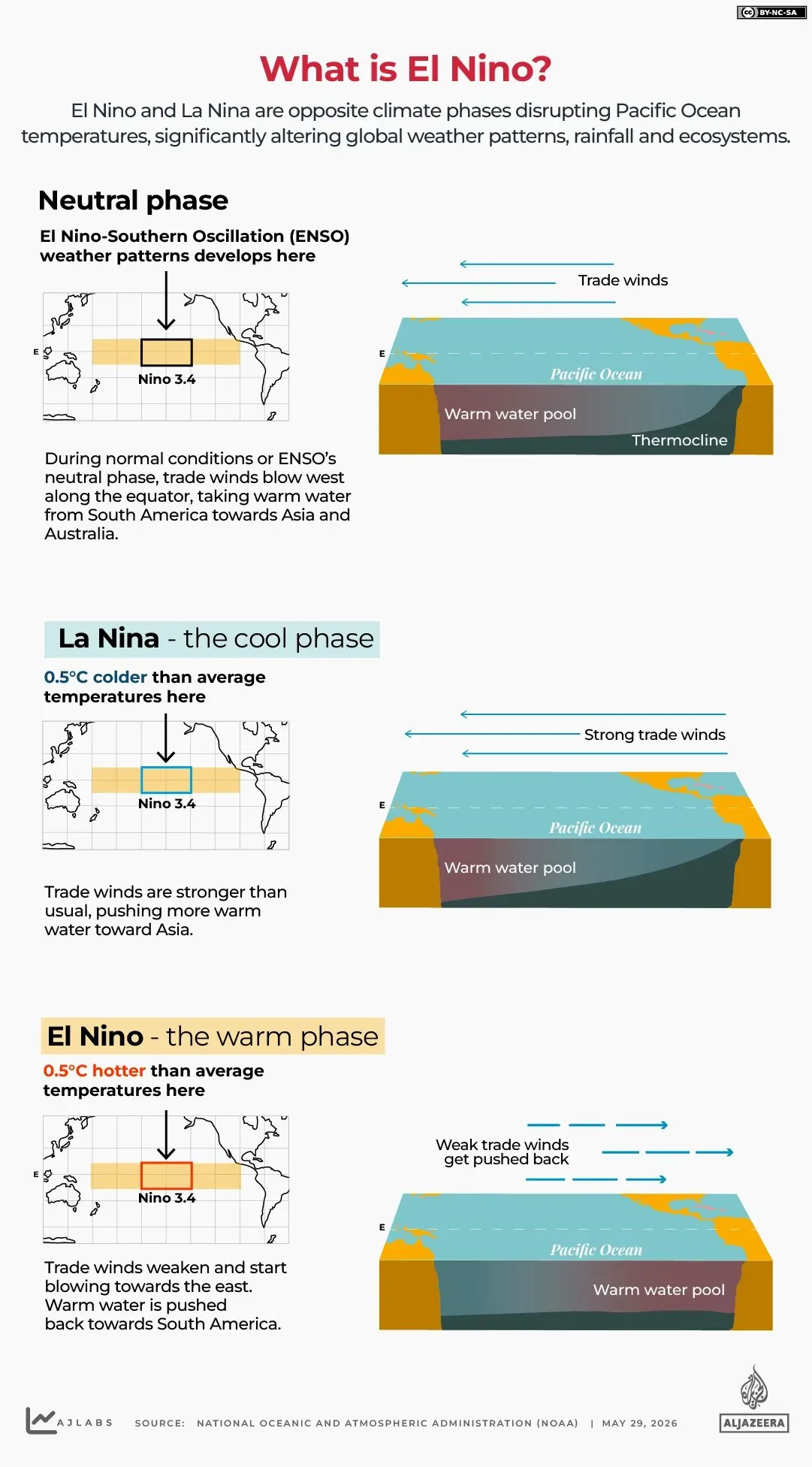
Source The World Meteorological Organization (WMO) has warned that the ongoing El Niño phenomenon, driven by exceptionally warm Pacific Ocean temperatures, is expected to intensify into a very strong event in the coming months and may persist until early 2027.- About El Niño: El Niño is a naturally occurring climate phenomenon involving the abnormal warming of sea surface temperatures in the central and eastern equatorial Pacific Ocean. It occurs due to changes in ocean-atmosphere interactions, including weakening trade winds, and typically occurs every 2–7 years. It influences global wind patterns, atmospheric pressure and rainfall distribution.
- Current El Niño Event: The ongoing El Niño is projected to attain the “very strong” category, the highest level in WMO’s classification, with Pacific Ocean temperatures exceeding 2°C above normal.
- Global Impacts: A strong El Niño can disrupt global climate patterns by increasing the risk of droughts, floods, storms and typhoons. It can also affect agriculture, food security, water availability and energy systems due to rainfall variability.
- Impact on Global Temperatures: Ocean heat is released gradually into the atmosphere, which can contribute to higher global temperatures in the year following an El Niño event. The strong 2023–24 El Niño contributed to 2024 becoming the warmest year on record, and the WMO has warned that future temperature records may be challenged.
- Implications for India: El Niño can influence the Indian summer monsoon, with strong events often associated with increased probability of below-normal rainfall, though the relationship is not uniform every year. It can affect agricultural output, irrigation availability, rural livelihoods and food prices, highlighting the need for climate-resilient farming and efficient water management.
- Preparedness Measures: The WMO has emphasised strengthening early warning systems, climate forecasting and disaster preparedness. Measures such as promoting drought-resistant crops, improving water management and providing climate information to agriculture, health and energy sectors can reduce associated risks.
Important Days
Birth Anniversary of Dr. Sarvepalli Radhakrishnan
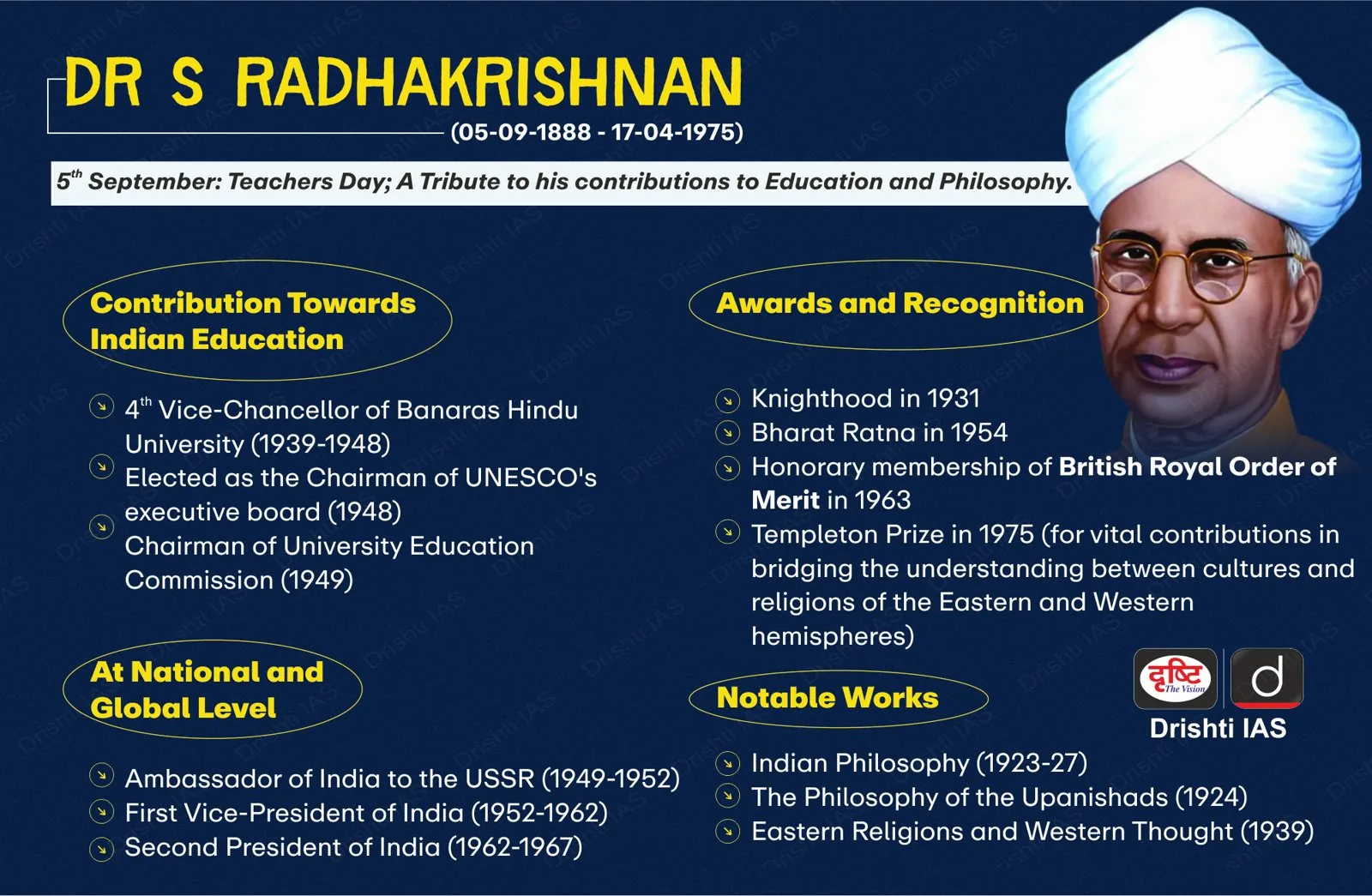
Source Dr. Sarvepalli Radhakrishnan’s birth anniversary on 5th September has been observed as Teachers’ Day in India since 1962 to recognise the contribution of teachers and their role in shaping society. Dr. Sarvepalli Radhakrishnan- About: Dr. Sarvepalli Radhakrishnan was born on 5th September 1888 in Tiruttani, present-day Tamil Nadu. He completed his education at Christian College, Madras, and developed a deep interest in philosophy and comparative religion.
- Academic Career: He served as a professor at prestigious institutions, including the University of Mysore and the University of Calcutta. He later became the first Indian to hold the Spalding Professorship of Eastern Religions and Ethics at the University of Oxford, reflecting his global recognition as a scholar of philosophy and religion.
- Contribution to Philosophy: Through his writings on Indian philosophy, comparative religion and Hindu thought, Radhakrishnan played an important role in introducing Indian philosophical traditions to the Western world. His notable works include Indian Philosophy and The Hindu View of Life.
- Role in Education: He believed that education was a powerful tool for social transformation and emphasised the role of teachers in shaping the intellectual and moral foundation of society. He also chaired the University Education Commission (1948–49), which recommended reforms for improving higher education in independent India.
- Political Career:
- He served as India’s Ambassador to the Soviet Union (1949–1952) and became the first Vice President of India (1952–1962). He later served as the second President of India from 13th May 1962 to 13th May 1967.
- As President, he was known for his wisdom, scholarship, dignity of office and commitment to parliamentary democracy and constitutional values.
- Legacy: For his contribution to the country, he was awarded the Bharat Ratna, India’s highest civilian honour, in 1954. He passed away on 17th April 1975, leaving behind a lasting legacy in education, philosophy and public life.
Birth Anniversary of V. O. Chidambaram Pillai
Source Recently, the birth anniversary of Vallinayagam Olaganathan Chidambaram Pillai (V.O.C.) was observed on 5th September. He was a renowned lawyer, Tamil scholar, entrepreneur and one of the prominent leaders of the Swadeshi Movement in Tamil Nadu. O. Chidambaram Pillai- Early Life and Education: Vallinayagam Olaganathan Chidambaram Pillai (VOC) was born on 5 September 1872 in Ottapidaram, Tirunelveli district (Tamil Nadu). He later became a lawyer and developed an interest in social issues and public affairs.
- Entry into National Movement: VOC entered active politics after the Partition of Bengal in 1905 and became closely associated with the Swadeshi Movement inspired by leaders like Bal Gangadhar Tilak and Lala Lajpat Rai.
- Swadeshi Steam Navigation Company: In 1906, VOC established the Swadeshi Steam Navigation Company (SSNCo.) at Tuticorin to challenge the monopoly of the British India Steam Navigation Company in maritime trade. The company operated indigenous steamship services between Tuticorin and Colombo, becoming a symbol of economic nationalism and self-reliance. This earned him the title “Kappalottiya Tamizhan” (The Tamil Helmsman).
- Promotion of Swadeshi Activities: Beyond shipping, VOC promoted indigenous industries and nationalist consciousness through initiatives such as Swadeshi Prachar Sabha, National Godown, Desabimana Sangam and Dharmasanga Nesavu Salai. His efforts reflected the economic dimension of the freedom struggle by encouraging Indian enterprise and reducing dependence on colonial businesses.
- Role in Labour Movement: VOC played an important role in the Tuticorin Coral Mills Strike (1908), supporting workers’ rights and becoming one of the early leaders to connect the nationalist movement with labour issues.
- Association with National Leaders: VOC worked closely with Tamil nationalist leaders such as Subramania Bharati and Subramania Siva, strengthening the Swadeshi movement in the Tirunelveli and Tuticorin regions.
- Imprisonment and Hardships: Due to his nationalist activities and support for labour movements, VOC was arrested by the British government in 1908 and charged with sedition. He was sentenced to two life imprisonments (later reduced) and subjected to harsh treatment in prison, including forced labour at the oil press, earning him the title “Sekkizuththa Semmal.”
- Literary Contributions: Apart from his political activities, VOC was a noted Tamil scholar and writer. His major works include Meyyaram (1914), Meyyarivu (1915) and his autobiography. He also contributed commentaries on classical Tamil works such as Thirukkural and Tholkappiam.
- Legacy: The V.O. Chidambaranar Port Authority at Thoothukudi (Tuticorin) has been named in his honour. V. O. Chidambaram Pillai passed away on 18th November 1936 at Tuticorin, Tamil Nadu.
International Relations
India–Belgium Relations
Source Why in News?- The Belgian Prime Minister’s September 2026 visit to India strengthened bilateral ties through the India-Belgium Joint Statement, the Investment Fast-Track Mechanism, and defence cooperation agreements.
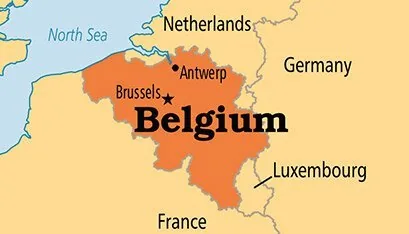 What are the Key Outcomes of the Belgian Prime Minister’s Visit to India?
- Defence and Security Cooperation:
- Belgium, a Western European country, and India are strengthening defence and security ties through regular military exchanges, staff talks and defence-industrial cooperation. Belgium has also assured India that it will not supply defence equipment or military technology to Pakistan.
- Maritime cooperation is expanding with the planned deployment of the Belgian frigate LEOPOLD I to India in November 2026. Both nations also appointed resident Defence Attachés.
- India and Belgium signed a Defence Framework Agreement, along with an MoU between the Belgian Security and Defence Industry (BDSI) and the Society of Indian Defence Manufacturers (SIDM), supported by private-sector agreements.
- Cooperation will cover weapon systems, ammunition, radar, electro-optical sensors, command-and-control and counter-drone systems, leveraging Belgium’s defence expertise.
- Cooperation in counter-terrorism, transnational organised crime and cybercrime is also being enhanced through a Central Bureau of Investigation (CBI) and the Federal Police of Belgium MoU and discussions on a Joint Working Group on Counter-Terrorism.
- Economic, Investment and Technology Cooperation:
- India and Belgium launched an Investment Fast-Track Mechanism to address investment bottlenecks and facilitate two-way investments.
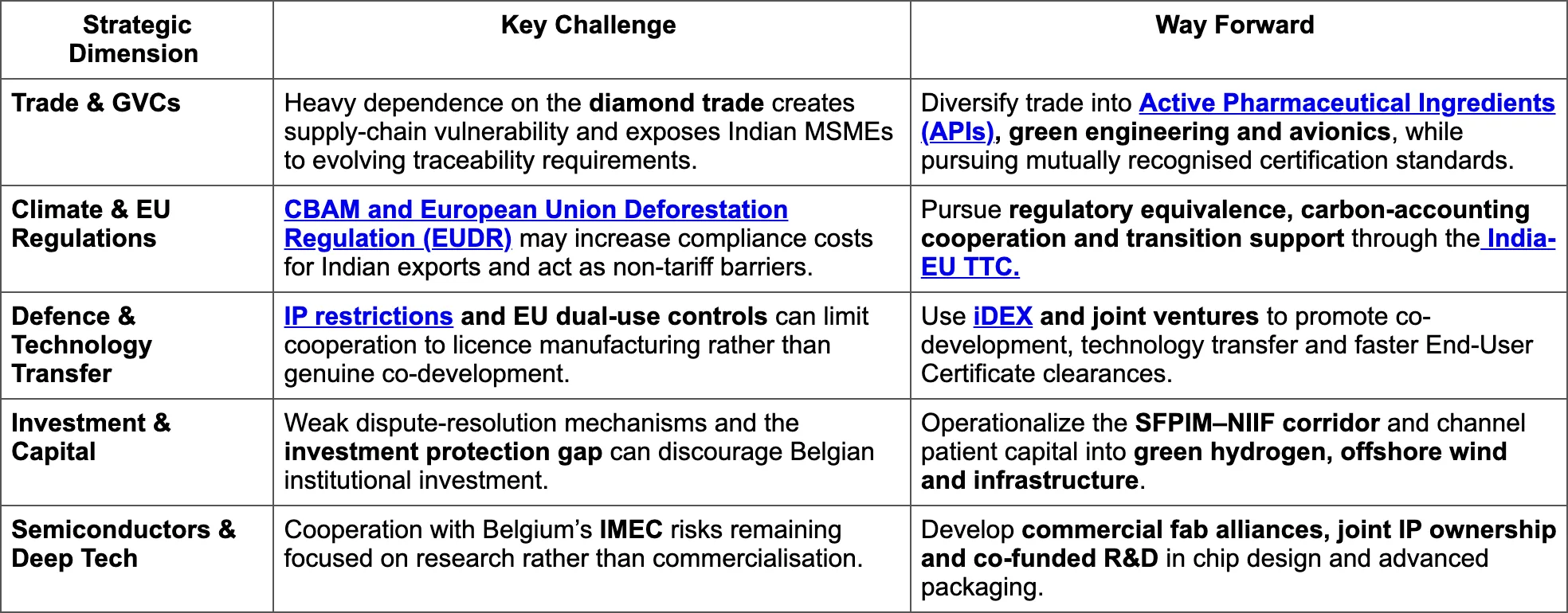
- Both countries are looking to formalise collaboration between Belgium’s Federal Holding and Investment Company (SFPIM) and India’s National Investment and Infrastructure Fund (NIIF) to help establish an Indo-Belgian Economic and Investment Corridor.
- India-Belgium bilateral trade reached USD 13.01 billion in 2025-26, with both countries targeting a doubling of trade over the next five years and diversification beyond the traditional diamond trade (Antwerp-Surat/Mumbai) into critical minerals, life sciences and nuclear energy.
- Belgium seeks to position the Port of Antwerp-Bruges as a critical logistics gateway for Indian exports to Europe, while expanding cooperation in green hydrogen, maritime services and infrastructure.
- Multilateral and Global Governance:
- Both nations agreed to support each other’s bids for non-permanent membership of the UN Security Council (India for 2028-29; Belgium for 2037-38). Belgium reaffirmed support for India’s permanent membership.
- Both leaders welcomed the conclusion of negotiations for the India-EU Free Trade Agreement ( 2026) and endorsed the Joint India–EU Comprehensive Strategic Agenda for 2030.
- Science, Space, and Green Transition:
- Acknowledged the contributions of the Belgo-Indian Network for Astronomy and Astrophysics (BINA) and Belgian components in India’s landmark facilities (Devasthal Optical Telescope, Multi-Application Solar Telescope).
- They also renewed cooperation on green hydrogen, offshore wind and energy storage, while supporting the BBNJ Agreement for conservation of marine biodiversity beyond national jurisdiction.
- Gateway to Europe: Belgium hosts the headquarters of the European Union (EU) and NATO, making deeper ties with Brussels strategically important for India’s engagement with European institutions and security frameworks.
- Semiconductor and Deep Tech Ecosystems:
- Belgium houses Interuniversity Microelectronics Centre (IMEC), a world-leading independent research hub in nanoelectronics and digital technologies.
- Integrating imec with India’s semiconductor mission (e.g., ChipIn Centre, C-DAC) is pivotal for reducing India’s import dependencies and building an indigenous, shock-proof microelectronics supply chain.
- Green Transition Capacity Building:
- Belgium’s advanced capabilities in clean technology directly complement India’s climate commitments.
- Collaborations spanning green hydrogen (between GH2 India and the Belgian Hydrogen Council), energy storage, and offshore wind infrastructure are essential for meeting India’s decarbonization targets.
- Strategic Counterweight to China: Belgium sees India as a stabilising power and a strategic counterweight to China in South Asia and the Indian Ocean, while its defence-industrial expertise can support India’s military modernisation, enhancing India’s strategic capacity and resilience in countering China.
- Boost to Aatmanirbhar Bharat: The shift from a buyer-seller dynamic to co-development and technology transfer aligns with India’s “Make in India” initiative. Belgium seeks to embed its industries deeply within India’s military-industrial ecosystem.
- Diplomatic Relations: Belgium was among the first European countries to establish diplomatic relations with independent India in 1947, with ties rooted in rule of law, federalism and pluralism.
- Economic Relations: The India-BLEU Joint Economic Commission (JCM), established in 1997, is the main institutional mechanism for bilateral economic cooperation. Diamonds, precious stones, chemicals and machinery have traditionally dominated trade.
- Science & Technology: Cooperation covers space technology, astronomy, nuclear research, ICT and renewable energy, including collaboration on the Devasthal Optical Telescope in Uttarakhand, developed with Belgian optics.
- Education & Culture: Academic partnerships exist between Indian and Belgian universities, while the 1973 Cultural Agreement provides the foundation for cultural exchanges.
- Historical Linkages: Over 9,000 Indian soldiers sacrificed their lives in Flanders Fields during World War I. An Indian Memorial Pillar was installed near the Menin Gate in Ypres in 2011 to honour their sacrifice.
- Diaspora and Mobility: Belgium hosts over 24,000 Indians, primarily IT professionals and students. Recognizing the need for skilled workforce movement, the two sides are prioritizing the conclusion of a Migration and Mobility Agreement to facilitate seamless talent exchange.
 Conclusion
- India-Belgium ties are expanding toward deep-tech, defence co-production and green-transition cooperation. Belgium’s role as an EU institutional hub gives India strategic leverage in shaping broader India-EU engagement. Strengthening patient capital and joint technology development can build long-term geoeconomic resilience.
Polity & Governance
CVC Annual Report 2025
Source Why in News?- The Central Vigilance Commission (CVC) Annual Report 2025 highlights a severe judicial and investigative backlog, revealing that over 7,200 corruption cases probed by the Central Bureau of Investigation (CBI) under the Prevention of Corruption (PC) Act, 1988 remain pending trial, with hundreds languishing for over two decades.
- Bottlenecks in the Higher Judiciary:
- The crisis of pendency is not restricted to lower trial courts but extends deep into the appellate system.
- A staggering volume of appeals, writ petitions, and revisions remain unresolved in High Courts and the Supreme Court, severely compounding the delay in final judicial outcomes.
- Pending government sanctions under Section 17A of the Prevention of Corruption (PC) Act, 1988 often delay investigations and prosecutions against public servants.
- Section 17A requires police officers to get prior government approval before conducting any inquiry or investigation into official decisions or recommendations made by public servants.
- CBI Capacity Constraints:
- Despite the massive pendency, the CBI’s conviction rate marginally improved to 71.71% in 2025, compared to 69.14% in 2024.
- The CBI is operating with a severe manpower shortage, holding 1,088 vacant positions against a sanctioned strength of 7,300, with the highest deficit (672 posts) in the executive ranks.
- Disproportionate asset cases require complex financial verification, while delays in Letters Rogatory (LRs) slow international evidence collection, despite a marginal improvement in CBI convictions.
- CVC’s Administrative Oversight: The CVC continues complaint disposal and first-stage advice, with many cases leading to major penalty proceedings, strengthening accountability through administrative action.
- Origin & Evolution: The CVC is the apex statutory institution mandated to promote integrity, transparency and probity in the Union Government. It was established in 1964 on the recommendations of the Santhanam Committee on Prevention of Corruption (1962–64) and, initially an executive body, was granted statutory status under the Central Vigilance Commission Act, 2003.
- Composition & Appointment:
- It is a multi-member body comprising a Central Vigilance Commissioner and a maximum of two Vigilance Commissioners.
- They are appointed by the President on the recommendation of a three-member committee: the Prime Minister (Chairperson), the Union Home Minister, and the Leader of the Opposition in Lok Sabha.
- Strict Tenure: Members serve a fixed term of 4 years or until they attain 65 years of age, whichever is earlier.
- Financial Independence:
- Their salaries and service conditions are equated to the UPSC Chairman and Members, and cannot be altered to their disadvantage.
- To ensure total autonomy, all CVC expenses are charged to the Consolidated Fund of India, meaning they are not subject to a Parliamentary vote.
- Stringent Removal Process:
- The President can remove members for specific grounds like insolvency or moral turpitude.
- However, removal on grounds of proved misbehaviour or incapacity requires a mandatory reference to the Supreme Court.
- The President can only order removal if the Supreme Court upholds the charges after a formal inquiry.
- Superintendence & Powers: Functioning with the powers of a civil court, the CVC exercises direct superintendence over the CBI for cases falling under the Prevention of Corruption Act, 1988.
- Whistleblower Protection: It serves as the designated agency for handling whistleblower complaints under the Public Interest Disclosure and Protection of Informers’ (PIDPI) Resolution.
- Synergy with Lokpal: Following the Lokpal and Lokayuktas Act, 2013, the CVC is empowered to conduct preliminary inquiries into complaints referred by the Lokpal against Groups A, B, C, and D employees.
- Appointments in the ED and CBI: A committee chaired by the Central Vigilance Commissioner (CVC), with the Vigilance Commissioner and other Government of India officers as members, recommends appointments to Deputy Director and above (including the Director) in the Enforcement Directorate (ED) and SP and above in the CBI, except the CBI Director.
- Jurisdiction & Operational Network: Its jurisdiction spans All India Services officers (on Central deputation), Group A officers, and senior officials in PSUs, RBI, and public banks. It links with individual government departments through a designated Chief Vigilance Officer (CVO) in every ministry.
- India must strengthen its anti-corruption framework by filling CBI vacancies, establishing adequately staffed special courts, ensuring time-bound Section 17A approvals, and improving financial investigations through technology. Strengthening institutional autonomy and whistleblower protection is essential to restore the deterrent power of the rule of law.
Security
RAKSHA Document on Defence Diplomacy
Source Why in News?- The Defence Minister officially released the ‘RAKSHA’ document on defence diplomacy. This comprehensive policy blueprint outlines India’s strategic roadmap and vision for forging global defence partnerships over the next decade.
- Defence diplomacy refers to the use of defence resources and military cooperation as instruments of foreign policy to build trust, strengthen partnerships, enhance interoperability and promote regional stability without resorting to force.
- About: It is a 10-year policy framework that formally codifies defence diplomacy as a central pillar of India’s foreign policy. The RAKSHA document transitions India from a historically cautious and non-aligned defence posture to an assertive and proactive global strategic role, positioning India as an anchor of regional stability while maintaining strategic autonomy through diversified partnerships based on converging interests.
- Synergy of Diplomatic and Security Goals: It serves as a coordinated, actionable vision integrating the objectives of the Ministry of Defence (MoD), the Ministry of External Affairs (MEA), and the National Security Council Secretariat (NSCS).
- Key Pillars of the Blueprint:
- Strategic Partnerships: Deepening bilateral and multilateral security cooperation with friendly, like-minded nations to counter shared geopolitical threats and ensure collective regional security.
- Capacity Building: Enhancing joint military exercises, targeted training programmes, and sharing operational best practices with allied nations, particularly focusing on the Global South.
- Indigenous Exports:
- Actively promotes ‘Make in India’ and Atmanirbharata in defence by shifting from a traditional buyer-seller model towards co-development, co-production and technology partnerships.
- The RAKSHA document aims to transform India from a net arms importer into an exporter of advanced strategic technologies.
- Maritime Security:
- Solidifying India’s established role as a Net Security Provider and the First Responder in the Indian Ocean Region (IOR). It focuses on protecting critical sea lanes of communication (SLOCs) and ensuring freedom of navigation.
- Aligns with India’s Indo-Pacific vision of a free, open, inclusive and rules-based maritime order, consistent with the SAGAR (Security and Growth for All in the Region) vision.
- Significance:
- Counterbalancing Regional Hegemony: In an increasingly contested Indo-Pacific, defence diplomacy enables India to build a network of strategic partnerships and alliances to counter aggressive expansionism and maintain regional stability.
- Economic Force Multiplier:
- India’s defence exports reached a record Rs 38,424 crore in FY 2025–26. Promoting indigenous platforms such as BrahMos, LCA Tejas and artillery systems generates export revenue, strengthens the domestic defence-industrial base and creates long-term strategic and technological linkages with partner countries.
- Defence diplomacy also helps open new markets through Government-to-Government (G2G) engagements, while defence attachés can facilitate indigenous defence exports and technology cooperation.
- Securing the Global Commons: By acting as a first responder in Humanitarian Assistance and Disaster Relief (HADR) and participating in anti-piracy operations, India builds diplomatic goodwill, strengthens trust and enhances operational interoperability with littoral states in the Indian Ocean Region (IOR).
- Complementing Defence Forces Vision 2047: The RAKSHA framework complements the Defence Forces Vision 2047, which seeks to transform India’s armed forces into a modern, integrated and technologically advanced military capable of supporting the vision of Viksit Bharat by 2047.
Social Issues
Parliamentary Standing Committee on Healthcare Coverage Gap
Source Why in News?- The Parliamentary Standing Committee on Health and Family Welfare presented its report titled ‘Affordability and Accessibility of Healthcare Facilities in Public and Private Sector’ to Parliament.
- The report flagged that over 40 crore Indians are trapped in a healthcare gap. This demographic, often termed the ‘missing middle’, is covered neither by government health subsidies nor by private health insurance.
- The 40-Crore ‘Missing Middle’ Coverage Gap:
- Over a quarter of India’s population (more than 40 crore individuals) is excluded from financial risk protection.
- They sit just above the poverty line, rendering them ineligible for government-subsidized schemes like Ayushman Bharat PM-JAY, yet lack the income required to afford commercial health insurance.
- Over-Reliance on the Private Sector:
- The private sector accounts for more than 60% of inpatient care and 70% of outpatient care, leaving households without health safety nets fully exposed to commercial pricing.
- The primary financial risk this group faces is not necessarily a single catastrophic hospital admission, but rather the slow, steady erosion of household income through recurring outpatient costs (medicines, consultations, and diagnostic tests).
- Escalating Non-Communicable Disease (NCD) Burden: The rising prevalence of chronic conditions like diabetes, hypertension, and cardiovascular diseases has converted outpatient care and medication into an unavoidable, lifelong recurring expense.
- Stark Public-Private Cost Disparities: Out-of-pocket expenditure (OOPE) differs sharply across sectors; for instance, the average cost of childbirth in private hospitals ( Rs 37,630) is more than 16 times higher than in public facilities (Rs 2,299).
- High Outlay on Pharmaceuticals: Medicines constitute nearly 30% of India’s current health expenditure. This is exacerbated by retail pharmacy distortions, such as unregulated trade margins and over-the-counter antibiotic sales without prescriptions.
- Underfunding in Public Health:
- Government health spending stands at 1.43% of GDP, significantly below the National Health Policy 2017 commitment to progressively raise public health expenditure to 2.5% of GDP by 2025.
- Furthermore, health expenditure as a share of total government spending dropped from 6.12% in 2021-22 to 4.89% in 2022-23 (below the pre-pandemic level of 5.02% in 2019-20).
- Limitations of Insurance-Centric Models: Insurance instruments alone fail to address this gap because private policies enforce high premiums, extensive waiting periods, co-payments, and disease exclusions, while disproportionately prioritizing secondary and tertiary hospitalization over primary and outpatient care.
- Universal Health Coverage (UHC) ensures that everyone has access to quality essential healthcare services without financial hardship, covering promotion, prevention, treatment, rehabilitation and palliative care.
- Status of the Health Coverage & Insurance in India:
- The Ayushman Bharat Pradhan Mantri Jan Arogya Yojana (AB PM-JAY) anchors coverage for the bottom 40% of the population.
- Following a 2024 expansion, coverage now extends to all citizens aged 70 and above (Ayushman Bharat Vay Vandana) regardless of income, driving the issuance of over 45.5 crore Ayushman Cards by August 2026.
- India’s Foundational Health Insurance and Coverage Initiatives:
- Ayushman Vaya Vandana
- Employees’ State Insurance Scheme (ESIS)
- Central Government Health Scheme (CGHS).
- National Health Mission
- PM-Bharatiya Janaushadhi Pariyojana
- Prioritize Public Capacity Over Insurance:
- The committee strongly argued for building public healthcare capacity directly, rather than relying excessively on insurance models to purchase care from private providers.
- It noted that there is an urgent need to regulate the prices of procedures and treatments in private hospitals to prevent the exploitation of the uninsured ‘missing middle’.
- Promoting Generic Medicines:
- The panel recommended mandating drug prescriptions by their generic names.
- Furthermore, the public system should stock the full essential drug list at every facility so that it becomes the primary, affordable outlet for patients.
- The report flagged excessive trade margins on medicines and the non-prescription sale of antibiotics, recommending stronger audits and enforcement.
- Establishing a Public Health Management Cadre: To optimize public hospital operations, the committee suggested creating a dedicated management cadre so that clinical specialists are not consumed by administrative duties.
- Nationwide Enforcement of the Clinical Establishments Act: Universal implementation of the Clinical Establishments (Registration and Regulation) Act, 2010 must be pursued to mandate standard treatment protocols, quality standards, and enforceable price transparency across private hospitals.
- Outpatient-Centric Protection Frameworks: National health financing models must evolve beyond secondary and tertiary hospitalizations to incorporate outpatient care, diagnostic subsidies, and chronic disease management, preventing households from falling into poverty through the everyday costs of staying healthy.
- India’s Universal Health Coverage requires more than hospitalisation insurance. Standardising healthcare costs through the Clinical Establishments Act and expanding primary healthcare and outpatient services are key to protecting the missing middle from medical impoverishment.