> ## Documentation Index
> Fetch the complete documentation index at: https://signals.joincomrades.com/llms.txt
> Use this file to discover all available pages before exploring further.
# 09 Sep 2026 · Dispatch
> Comrades Dispatch of 09 Sep 2026, by news group.
> **[Comrades Dispatch · 09 Sep 2026 (PDF)](https://dl.joincomrades.com/d/09-09-26)**
***
## In this edition
1. [FATF Report on Underground Banking and Digital Hawala](#h-1) Banking & Finance
2. [Coal Gasification Scheme](#h-2) Economic Scenario
3. [BRICS Proposed ‘POWER’ Framework and Alternative Payment Systems](#h-3) International Relations
4. [India’s Stance on the UN Cartographic Resolution and Territorial Sovereignty](#h-4) Polity & Governance
5. [Vibrant Villages Programme (VVP)](#h-5) Schemes & Initiatives
6. [Jal Sanchay Jan Bhagidari](#h-6) Schemes & Initiatives
7. [Data Centre Cooling Technologies](#h-7) Science & Technology
8. [Exercise Veer Guardian-2026](#h-8) Security
## Banking & Finance
### FATF Report on Underground Banking and Digital Hawala
[Source](https://www.drishtiias.com/current-affairs-news-analysis-editorials/news-analysis/09-09-2026#37316)
**Why in News?**
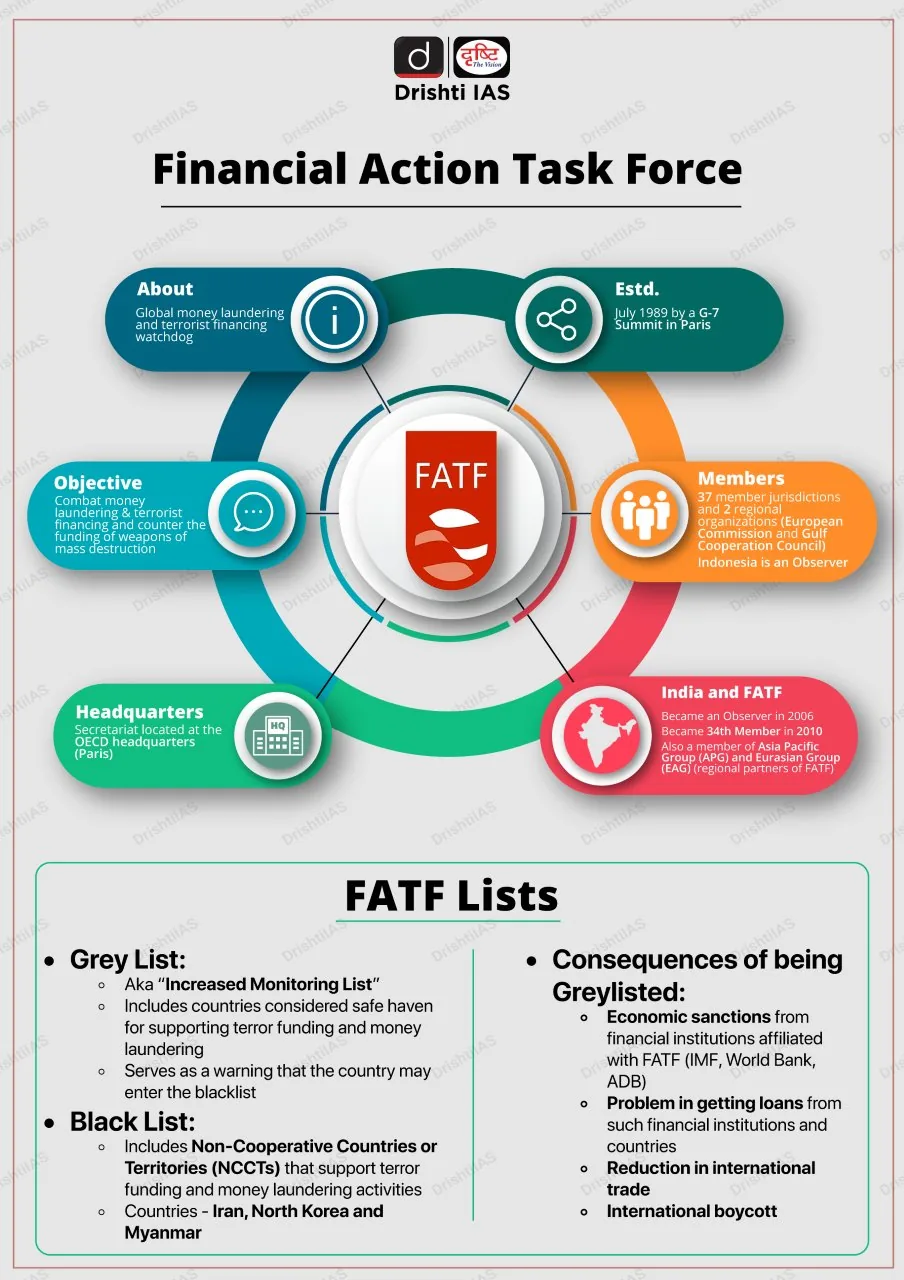
* The Financial Action Task Force (FATF) released a report titled "Investigating Professional Money Laundering, Underground Banking, and the Use of Hawala and Other Similar Service Providers". The global watchdog highlighted how the centuries-old traditional underground banking system is transforming into a tech-enabled network.
* The fusion of virtual assets with the traditional "hawala" system has given rise to ‘digital hawala’, which is increasingly being exploited for money laundering and financing terrorist organisations.
What are the Key Findings of the FATF Report?
* **Widespread Scale and High-Risk Status:**
* Nearly 90% of jurisdictions reported the presence of underground banking and Hawala and Other Similar Service Providers (HOSSPs).
* Over 80% identified these networks as major channels for professional money laundering (PML).
* Over 60% of respondents flagged these systems as high-risk in their National Risk Assessments (NRAs).
* Misuse is most frequently reported in Asia, Western Europe, and West Africa, particularly along corridors with strong remittance flows and diaspora networks.
* **Professionalisation of Money Laundering:**
* PML is increasingly operating as a specialized service, with networks offering illicit financial intermediation for a fee.
* These networks are evolving into structured, business-like infrastructures featuring hierarchical models, digitized ledgers, and specialized roles.
* They increasingly involve professional facilitators such as lawyers, accountants, notaries, real-estate agents, and casino operators.
* **The Rise of 'Digital Hawala':**
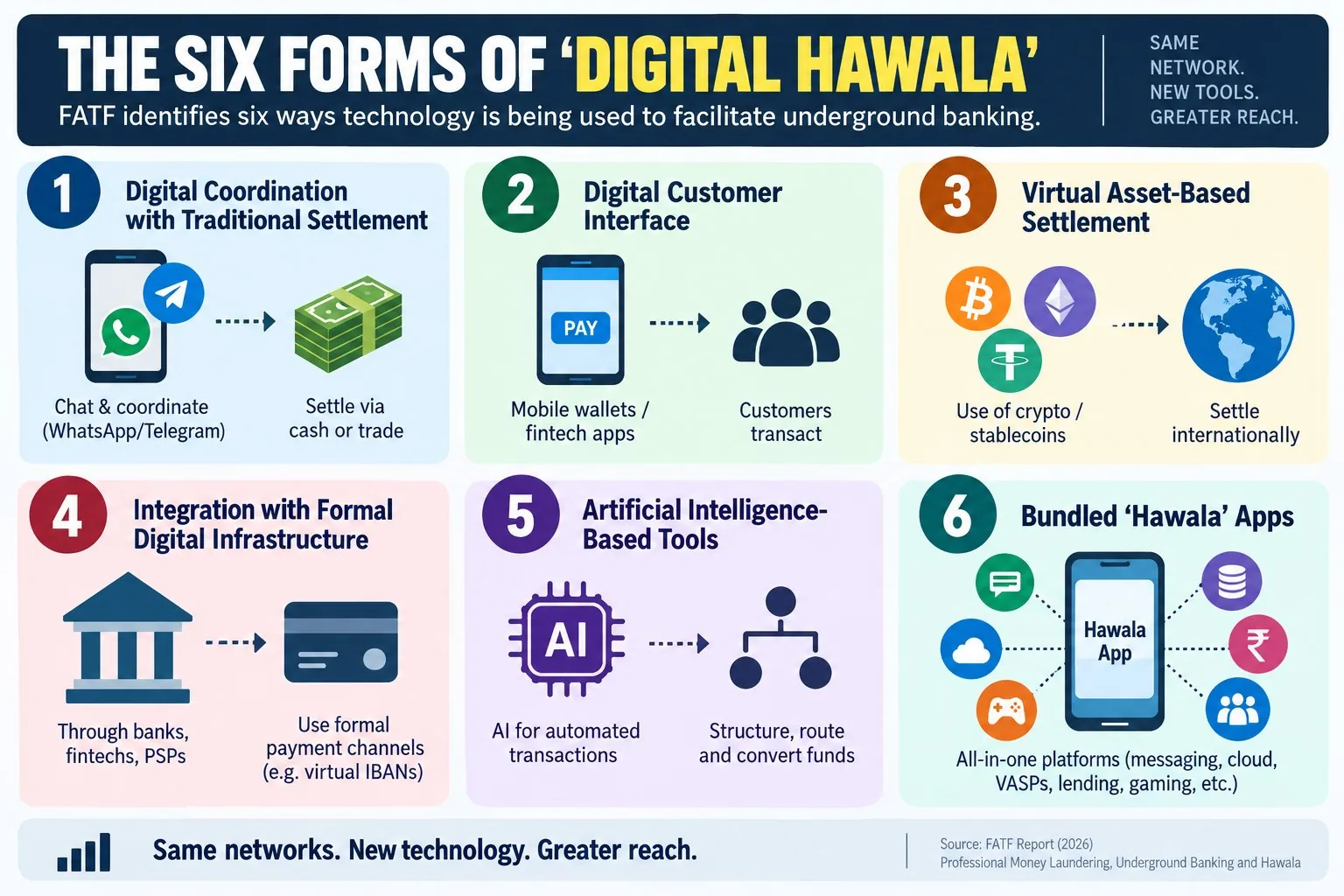
* Nearly 70% of jurisdictions report the growing use of technology to coordinate and settle transactions, transforming traditional systems into "digital hawala".
* Criminals leverage encrypted apps (WhatsApp, Telegram), virtual assets, stablecoins, and AI-based tools for automated transaction structuring and mule-account sweeping.
* This digital shift enables faster cross-border transfers and greater anonymity, making it significantly harder to trace financial flows and secure evidence.
* **Integration with the Formal Sector and Diversification:**
* PML actors combine informal transfers with formal financial systems, using bank accounts, fintech platforms, virtual International Bank Account Numbers (IBANs), and prepaid cards as entry and exit points to exploit regulatory blind spots.
* Underground banking acts as a "hidden settlement layer" behind seemingly legitimate financial trails.
* Underground banking is increasingly used to launder proceeds from cybercrime, fraud, corruption, tax evasion, illegal gambling and human trafficking, beyond traditional crimes such as drug trafficking and smuggling.
* HOSSPs remain a core method for terrorist financing, particularly in conflict zones and cash-heavy economies, often co-mingled with genuine diaspora remittances.
* **Regional Patterns and Transnational Hubs:**
* **Africa & Asia:** There is deep integration with mobile-money ecosystems where customers use mobile wallets for deposits and withdrawals, while underlying settlements occur off-platform.
* **Middle East:** Criminals are adopting hybrid models that combine virtual assets with gold and precious metals.
* **Latin America:** There is a continued reliance on the traditional Black Market Peso Exchange (BMPE) for laundering narcotics proceeds through trade and currency arbitrage.
* **Global Hubs:** A functional division of labor exists across the global architecture, distinguishing "outgoing hubs" (cash-generation zones in Europe and West Africa) from "incoming hubs" (settlement and absorption zones in Asia and the Middle East)
**India-Specific Case Studies**
* **Trade-Based Money Laundering via Shell Companies (2022):** Indian authorities uncovered a scheme involving shell companies created using forged/stolen KYC documents, which used under-invoicing and circular trade through a third country to justify outward remittances and settle illicit funds.
* **Online Gambling–Hawala Nexus:** An illegal online gambling network used Unified Payments Interface (UPI), digital wallets and mule accounts to collect and move proceeds. The funds were then converted into cash, transferred abroad through hawala, and round-tripped into India as purported foreign investment from the UAE.
**Key Terminology**
* **Underground Banking:**
* Informal arrangements operating outside, alongside or through the regulated financial system to transfer, settle or store value through intermediary networks.
* It is not inherently criminal, but unlicensed operations are criminalised in most countries.
* **Hawala and Other Similar Service Providers (HOSSPs):**
* A subset of Money or Value Transfer Services (MVTS) that transfer or receive funds and generally settle balances on a net basis, without physically moving money across borders.
* Licensed HOSSPs operate within the formal sector under FATF Recommendation 14, while unlicensed HOSSPs form part of underground banking.
* **Digital Hawala:** Represents the technological evolution of unlicensed underground banking and HOSSPs, using digital tools to coordinate, execute and conceal informal value transfers, thereby making existing settlement methods faster and more difficult to trace.
What are the Challenges in Curbing Hawala and Underground Banking?
* **Partial Currency Convertibility:**
* Under the Foreign Exchange Management Act (FEMA) 1999, the Indian Rupee has partial convertibility. It is freely convertible for current-account transactions such as trade and remittances, while capital-account transactions remain subject to regulatory restrictions and limits.
* This can incentivise some individuals and businesses seeking to bypass authorised channels or move undisclosed funds abroad to use hawala networks.
* **Digital Hawala and Crypto Layering:**
* Illicit finance in India is rapidly shifting from physical cash couriers to peer-to-peer (P2P) crypto networks and offshore over-the-counter (OTC) desks.
* While the government has brought Virtual Digital Asset Service Providers (VDASPs) under the Prevention of Money Laundering Act (PMLA) 2002, criminals continuously exploit decentralized finance platforms, privacy coins, and unhosted wallets to evade the Financial Intelligence Unit (FIU-IND).
* **Illegal Online Gambling–Hawala Nexus:**
* Illegal betting platforms use UPI, digital wallets and mule accounts to collect funds, which are then moved abroad via hawala and round-tripped as foreign investment.
* The Promotion and Regulation of Online Gaming Act, 2025 bans online money games, their advertising and related financial transactions.
* **High Remittance Flows:** India's large inward remittance inflows, particularly from the Gulf and Western countries, can provide cover for illicit funds. This makes it challenging for enforcement agencies to distinguish hawala-linked transactions from genuine remittances without affecting legitimate users.
* **Impact on Common People:** Innocent bank accounts may be frozen when linked to suspected hawala transactions, causing temporary loss of access to funds and financial hardship. This highlights the need for targeted action and safeguards for genuine account holders.
What Measures are Needed to Curb Hawala and Underground Banking?
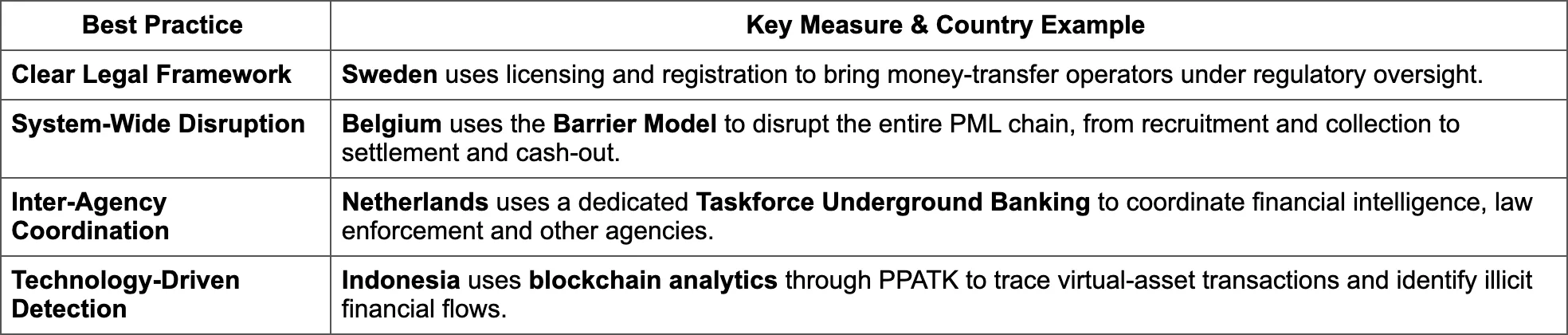
* **Clear Legal Framework:** Governments should register HOSSPs, clearly criminalise unauthorised underground banking, extend AML/CFT obligations to vulnerable sectors such as real estate and precious-metal businesses, and publicise enforcement actions to strengthen deterrence.
* **Disrupt the Entire Money-Laundering Chain:** Enforcement agencies should target the entire PML chain, from client recruitment and cash collection to settlement and cash-out. Early measures such as rapid account freezing and asset recovery can prevent criminals from moving or dissipating illicit funds.
* **Strengthen Inter-Agency Coordination:**
* Countries should establish multi-agency task forces involving FIUs, police, ED, customs, tax authorities and central banks.
* Sharing and matching financial, tax, GST and customs data can help identify suspicious transactions and trade-based money laundering.
* **Centralise Data and Risk Assessment:**
* Authorities should maintain centralised databases covering suspicious transactions, investigations, prosecutions and asset seizures.
* Underground banking and HOSSPs should also be treated as a distinct and regularly updated risk category in National Risk Assessments.
* **Leverage Technology and Digital Forensics:**
* Law-enforcement agencies should use blockchain analytics, AI and machine learning to trace crypto-based settlements, detect mule-account networks and identify suspicious transaction patterns.
* Greater scrutiny is also needed at virtual IBANs, payment gateways and digital banking platforms.
* **Deepen International Cooperation:**
* Countries should harmonise legal definitions and strengthen real-time intelligence sharing through networks such as Egmont and INTERPOL.
* Joint cross-border investigations can help dismantle transnational PML networks and their settlement hubs.
* **Protect Financial Inclusion:**
* Governments should expand low-cost formal remittance services and adopt proportionate KYC requirements for low-value transfers.
* Banks should also avoid indiscriminate de-risking, as cutting off legitimate customers can push them towards informal hawala channels.
**Global Best Practices to Curb Underground Banking**
## Economic Scenario
### Coal Gasification Scheme
[Source](https://www.drishtiias.com/current-affairs-news-analysis-editorials/news-analysis/09-09-2026#37313)
The Coal Gasification Scheme for promoting surface coal/lignite gasification projects has faced challenges in attracting sufficient private and public sector participation, raising concerns about the commercial viability of large-scale coal gasification projects.
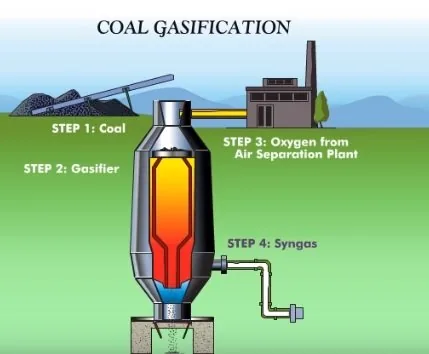
* **About:** Coal gasification is a process of converting coal or lignite into synthetic gas (syngas) containing mainly carbon monoxide and hydrogen. The syngas can be used for producing methanol, hydrogen, ammonia, fertilisers and other chemicals.
* **Objective:**
* A total of Rs. 37,500 crore has been allocated to incentivize the production of syngas and downstream products, targeting the gasification of 75 million tonnes (MT) of coal/lignite by 2030. This would contribute to the 100 MT target set for 2030.
* It builds on the National Coal Gasification Mission (2021) and a Rs. 8,500 crore scheme approved in January 2024 (under which 8 coal gasification projects worth Rs 6,233 crore are under implementation).
* **Incentive Structure:**
* The government will provide financial support up to 20% of the cost of Plant and Machinery, disbursed in 4 instalments, linked to project milestones.
* Financial incentive for any single project capped at Rs 5,000 crore; for any single product (except Synthetic Natural Gas and Urea) capped at Rs 9,000 crore; and any single entity group capped at Rs 12,000 crore across all projects.
* **Technology Neutrality:** The scheme is technology-agnostic but strongly encourages the adoption of indigenous technologies to minimize reliance on foreign EPC (Engineering, Procurement, and Construction) contractors.
* **Strategic Importance:** Coal gasification can help India utilise its large domestic coal reserves, reduce dependence on imports of LNG, urea, ammonia and methanol, and improve energy security amid global supply disruptions.
* **Resource Advantage:** India has significant coal resources, with approximately 401 billion tonnes of coal reserves and 47 billion tonnes of lignite reserves, providing a strong resource base for developing gasification-based industries.
* **Concerns:** Although coal gasification is cleaner than direct coal combustion, it still involves carbon emissions and resource consumption. Adoption of technologies such as Carbon Capture, Utilisation and Storage (CCUS) is important to reduce environmental impacts.
## International Relations
### BRICS Proposed ‘POWER’ Framework and Alternative Payment Systems
[Source](https://www.drishtiias.com/current-affairs-news-analysis-editorials/news-analysis/09-09-2026#37319)
**Why in News?**
* Ahead of the 18th BRICS Summit in New Delhi, under India’s chairmanship, BRICS finance ministries and central banks met in Jaipur to discuss financial cooperation, local-currency trade settlements and alternative cross-border payment systems.
* Chinese diplomatic proposals, including the five-point ‘POWER’ framework, have brought the bloc’s role in empowering the Global South into sharp focus.
What is the BRICS ‘POWER’ Framework Proposed for Global Cooperation?
* **P for Principle:** Upholds the purposes and principles of the United Nations Charter, emphasizing sovereign equality, non-interference in internal affairs, peaceful settlement of disputes, and rejecting hegemonism to prevent a return to power politics.
* **O for Openness:** Advocates for an open world economy centered around the multilateral trading system of the World Trade Organization (WTO), safeguards most-favoured-nation treatment, opposes tariff barriers and supply chain decoupling, and strengthens cooperation in minerals, energy, and infrastructure.
* **W for Win-Win:** Aligns the BRICS agenda with the UN Sustainable Development Goals (SDGs) and post-2030 development planning, while advancing macroeconomic policy coordination, trade facilitation, cross-border payment mechanisms, and food and energy security networks.
* **E for Engine:** Leverages the bloc's demographic and economic scale (representing nearly half the world’s population, approximately 30% of global GDP, and 20% of global trade) with growth projected to outpace the G-7 threefold by 2028, while accelerating cooperation in the digital economy and Artificial Intelligence (AI).
* **R for Responsibility:** Urges BRICS members to act as a stabilizing anchor for global peace and multipolarity, supported by the consecutive presidencies of India (2026) and China (2027) and progress in India-China bilateral engagement, including the resumption of direct flight routes and reopening of border trade.
**Why is BRICS Exploring Alternative Cross-Border Payments?**
* Concerns Regarding Conventional Cross-Border Payments
* **Correspondent Banking Dependence:** Payments between developing countries often pass through intermediary banks in major financial hubs, increasing costs and processing time.
* **Dollar Dependence:** Limited direct currency links often require double conversion through the US dollar, increasing forex costs and exposing economies to US monetary policy.
* **High Transaction Costs:** Multiple intermediaries and currency conversions can raise costs to 8–20% in some developing-country corridors.
* **SWIFT Dependence:**
* Heavy reliance on the SWIFT messaging network creates vulnerability to financial restrictions and geopolitical pressures.
* Dependence on dominant currencies and financial networks exposes countries to sanctions, monetary shocks and disruptions, as demonstrated by the exclusion of several Russian banks from SWIFT in 2022.
* **Shrinking Correspondent Banking Network:** Global correspondent banking relationships fell by around 20% between 2011 and 2018, concentrating cross-border payments into fewer channels and increasing structural vulnerabilities.
* BRICS Consideration for Alternative Payment Systems
* **Lower Transaction Costs:** Local-currency settlements and multi-Central Bank Digital Currency (CDBC) systems, such as mBridge developed by the central banks of China, Thailand, Hong Kong and the UAE, can reduce intermediary fees and currency-conversion costs, benefiting exporters and MSMEs.
* **Faster and Safer Settlement:**
* Wholesale CBDCs can enable simultaneous Payment-versus-Payment (PvP) settlement, reducing settlement risk and transaction time.
* The Reserve Bank of India has proposed connecting CBDCs across BRICS member nations to simplify cross-border trade and tourism payments.
* **Greater Financial Autonomy:** An independent clearing and settlement system such as BRICS Clear (referenced in the 2024 Kazan Summit) could reduce dependence on existing financial networks and strengthen resilience against sanctions and financial disruptions.
* **Real-Time Cross-Border Payments:** Linking fast-payment systems such as UPI with partner platforms can enable faster, cheaper remittances and tourism payments without multiple intermediaries.
What are the Challenges in Adopting Alternative Cross-Border Payments?
* **Geopolitical Divergence:**
* Russia aggressively pushes for de-dollarisation to bypass sanctions, whereas India prioritizes cost-efficiency and technical integration over confronting the US dollar.
* Furthermore, any move away from the US dollar faces potential geopolitical and economic pushback, including the threat of higher tariffs on BRICS countries if they establish a common currency or promote alternatives that challenge dollar dominance.
* **Secondary Sanctions Risk:** Joining a SWIFT alternative (like BRICS Clear) alongside heavily sanctioned nations exposes financial institutions to severe Western trade retaliation.
* **Chinese Yuan Dominance:** Attempting to bypass the dollar risks heavy reliance on the renminbi. Currently, over 95% of settlement volume on the mBridge CBDC platform is executed in China's digital yuan.
* **Scalability Constraints:** While bilateral fast-payment linkages (like India's UPI integration) are successful, replicating them multilaterally across a diverse bloc is operationally complex.
* **Infrastructure and Cost Constraints:** Scaling fast-payment systems globally requires large investments in infrastructure, resilience and cybersecurity. Maintaining a zero-fee model at scale is difficult, making financial sustainability and commercial viability key challenges for international expansion.
* **Regulatory Fragmentation:** Harmonizing disparate capital controls, data localization laws, and AML/CFT standards into a unified cross-border payment system is a massive institutional hurdle.
* **Cyber & Stability Risks:** Shared CBDC networks are prime targets for cyberattacks. Additionally, frictionless transfers could trigger rapid capital flight and currency volatility in smaller emerging markets.
**What Measures Can Strengthen BRICS Alternative Cross-Border Payments?**
* **Adopt Shared Hub Architectures:** Replace fragmented bilateral ties with centralized multilateral routing hubs (e.g., BIS-designed Project Nexus) to link domestic instant payment systems through a single standardized gateway.
* **Strengthen Domestic Digital Infrastructure:** Accelerate the rollout and stability of sovereign retail and wholesale CBDCs such as India’s e-Rupee to provide the base architecture for secure cross-border settlement.
* **Follow an Opt-In, Pilot-Based Rollout:** Implement a gradualist, corridor-specific approach focused initially on high-utility segments like bilateral trade invoicing and tourism, proving commercial viability while minimizing geopolitical friction.
* **Harmonize Compliance & Regulatory Standards:** Establish unified technical protocols that satisfy global AML/CFT mandates and Financial Action Task Force (FATF) standards without infringing on national data localization or regulatory sovereignty.
* **Maintain Multilateral Interoperability:** Ensure emerging payment platforms remain compatible with established bodies (IMF, BIS Innovation Hub) and existing messaging networks (SWIFT) to prevent the fragmentation and bifurcation of global finance.
**Conclusion**
* BRICS payment alternatives are driven not only by lower transaction costs, but also by the need to protect the Global South from Western financial weaponisation. However, avoiding dollar dependence should not create fragmented or China-dominated systems. True strategic autonomy requires neutral, interoperable and secure digital payment infrastructure.
## Polity & Governance
### India’s Stance on the UN Cartographic Resolution and Territorial Sovereignty
[Source](https://www.drishtiias.com/current-affairs-news-analysis-editorials/news-analysis/09-09-2026#37312)
The Ministry of External Affairs (MEA) has firmly stated that while India supports the United Nations' initiative to correct global map proportions, the country's sovereign territory specifically the Union Territories of Jammu & Kashmir and Ladakh must strictly align with India's official map without any misleading depictions.
* **UNGA Cartographic Resolution:** In September 2026, the United Nations General Assembly (UNGA) adopted a resolution titled "Correct the Map: Rebalancing Global Cartographic Representation and Promoting Equitable Representation of the World's Regions, Particularly Africa".
* **Objective of the Resolution:**
* It encourages the use of equal-area map projections that accurately preserve the relative sizes of continental landmasses.
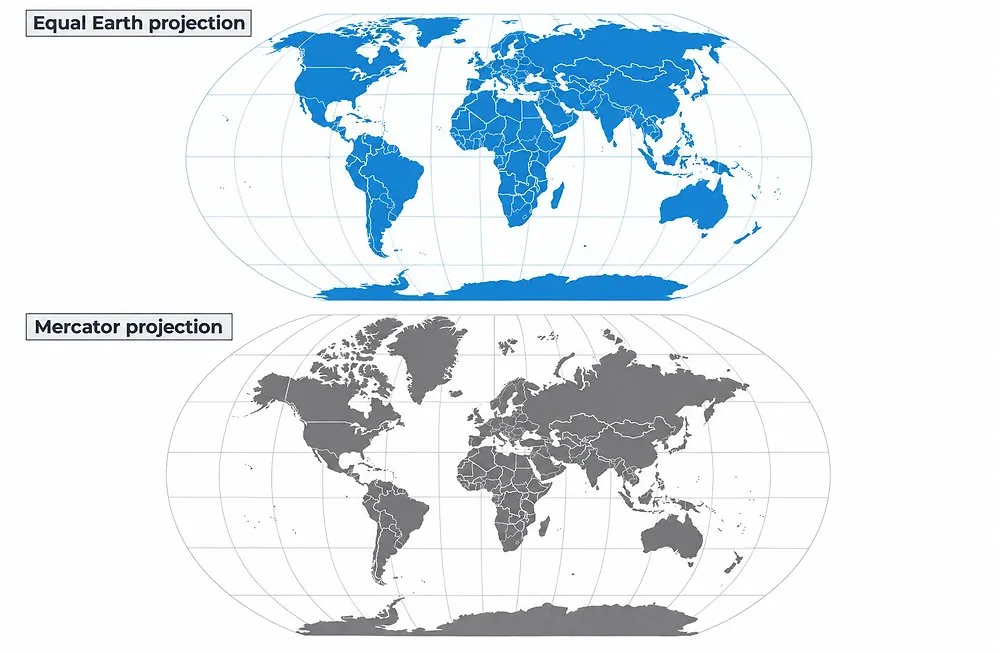
* The mandate is advisory and non-binding. To achieve "cognitive justice," the resolution urges a transition away from the Mercator projection, which was created by Gerardus Mercator in the 16th century for maritime navigation.
* This projection severely distorts landmass sizes by artificially inflating polar regions (making Greenland appear comparable to Africa) while shrinking equatorial continents like South America and Africa.
* **The Equal Earth Alternative:** The UN encourages adopting the Equal Earth projection (introduced in 2018). This equal-area projection accounts for the Earth's curvature, accurately depicting relative proportions (showing Africa is nearly 14 times larger than Greenland, and Brazil is five times larger than Alaska).
* **Global Voting Pattern:** The resolution, strategically sponsored by Togo, received 164 votes in favor, with a sole opposing vote from the US and abstentions from six nations (Estonia, Georgia, Lithuania, Moldova, Serbia, and Ukraine).
* **India’s Diplomatic Nuance:**
* India voted in favour of the resolution but utilised an Explanation of Vote (EoV) to clarify that supporting physical cartographic corrections does not equate to the endorsement of any specific political map, projection, or boundary depiction.
* India emphasised that the resolution is limited strictly to physical geographic representation; it neither adopts nor authenticates political cartography, international boundaries, place names, or the status of disputed territories.
* The Ministry of External Affairs (MEA) asserted that India’s sovereignty is non-negotiable. Any UN-backed world map must depict the Union Territories of Jammu & Kashmir and Ladakh strictly in accordance with India's official map.
* While the UN map includes a dotted line and an explanatory note for the Line of Control (LoC) in Jammu & Kashmir, it fails to provide similar cartographic clarifications for the unspecified claim lines in Arunachal Pradesh and Aksai Chin.
## Schemes & Initiatives
### Vibrant Villages Programme (VVP)
[Source](https://www.drishtiias.com/current-affairs-news-analysis-editorials/news-analysis/09-09-2026#37318)
**Why in News?**
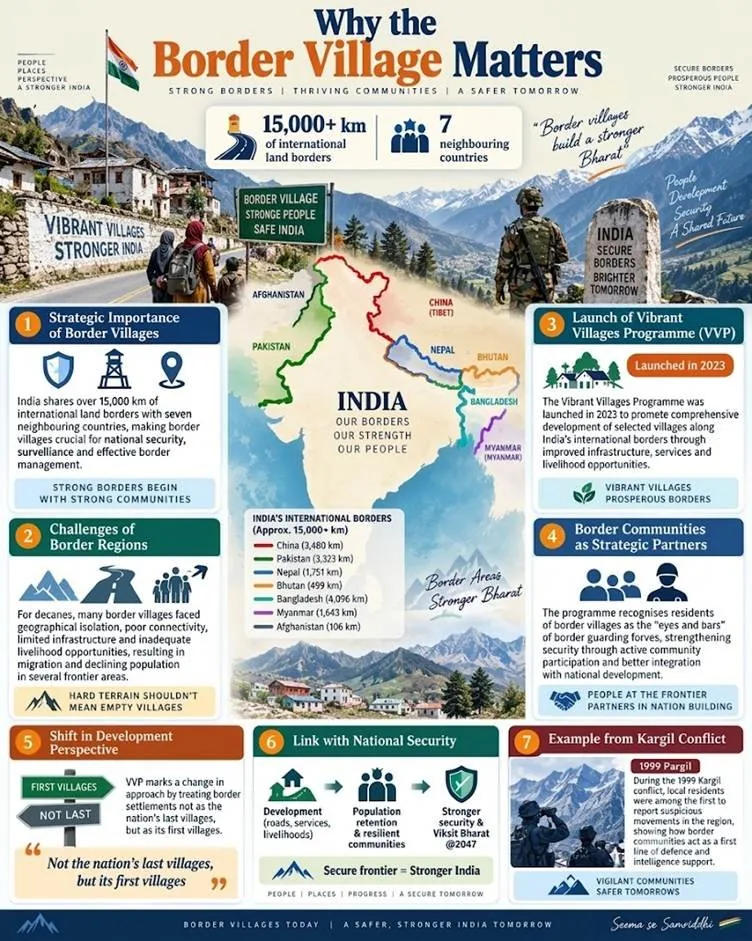
* The Vibrant Villages Programme (VVP) is a strategic border development initiative aimed at transforming India’s frontier villages into vibrant hubs of development, resilience and security. By improving connectivity, infrastructure, essential services and livelihood opportunities, the programme seeks to enhance the socio-economic well-being of border communities while reinforcing border security and national integration.
What are the Key Facts About Vibrant Villages Programme (VVP)?
* **Need for Border Village Development:** For decades, many border villages faced challenges such as difficult terrain, poor connectivity, limited infrastructure and inadequate livelihood opportunities, resulting in out-migration and declining population in several frontier areas.
* **About:** The Vibrant Villages Programme (VVP) was launched in 2023 to ensure the comprehensive development of selected border villages through improved infrastructure, essential services and livelihood opportunities.
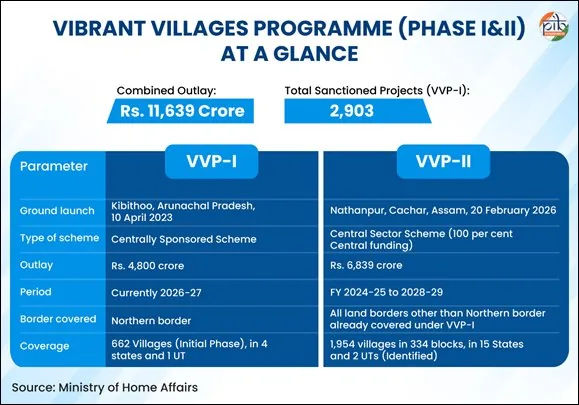
* **Phases:** The Vibrant Villages Programme (VVP) is being implemented in two phases — VVP-I and VVP-II — to cover India’s entire international land border. Together, the two phases aim to develop more than 2,616 villages with a combined financial outlay of ₹11,639 crore, focusing on infrastructure, livelihoods and community empowerment.
**VVP-I: Strengthening Northern Border Communities**
* **Launch and Coverage:**
* VVP-I was announced in the Union Budget 2022–23 and launched on 10th April 2023 at Kibithoo village, Anjaw district, Arunachal Pradesh.
* VVP-I is a Centrally Sponsored Scheme implemented with the States.
* It focuses on villages along the northern border, covering 46 blocks in 19 districts across Arunachal Pradesh, Himachal Pradesh, Sikkim, Uttarakhand and Ladakh.
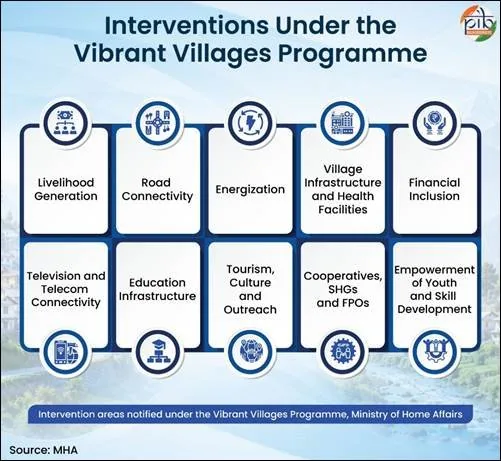
* **Financial Outlay:** The scheme has an outlay of ₹4,800 crore for 2022–23 to 2026–27, with ₹2,500 crore specifically allocated for road connectivity to improve access and mobility in remote border regions.
* **Priority Villages:** Under VVP-I, 662 strategic villages have been identified for comprehensive development, benefiting around 1.42 lakh people living in frontier areas.
* **Key Objectives:** The programme aims to bridge development gaps in remote border villages by providing quality infrastructure, essential services, livelihood opportunities and better living conditions comparable to other parts of the country.
* **Livelihood Development Model:** The programme promotes a hub-and-spoke model for livelihoods by encouraging social entrepreneurship, youth and women empowerment, tourism, local culture promotion and One Block One Product (OBOP) initiatives.
**VVP-II: Extending the Model to All Land Borders**
* **Approval and Launch:** VVP-II was approved by the Union Cabinet on 2nd April 2025 and formally launched on 20 February 2026 at Nathanpur village, Cachar district, Assam.
* **Security Dimension:** By improving economic opportunities and living conditions, VVP-II aims to encourage people to remain in border villages, strengthen community participation and support efforts to prevent trans-border crime.
* **Funding Pattern:** VVP-II is a Central Sector Scheme funded entirely by the Government of India and implemented by the Ministry of Home Affairs (MHA).
* **Financial Outlay and Coverage:** VVP-II has been approved with an allocation of ₹6,839 crore up to 2028–29 and aims to develop 1,954 villages across 334 blocks located along India’s international borders, covering 15 States and 2 Union Territories.
* **Areas Covered:** The programme extends coverage to border regions in states and UTs including Assam, Bihar, Gujarat, Manipur, Meghalaya, Mizoram, Nagaland, Punjab, Rajasthan, Tripura, Uttar Pradesh, West Bengal, Jammu & Kashmir and others, while excluding areas already covered under VVP-I.
**Border Area Development Programme (BADP)**
* **Earlier Border Development Initiative:** The Border Area Development Programme (BADP) was launched in 1986–87 along the western border to address development deficits in border regions.
* **Coverage and Achievements:** BADP was expanded to cover villages near international borders and included 111 districts across 16 States and 2 Union Territories, with more than 39,000 development works sanctioned since 2004–05.
* **Transition to VVP:** While BADP focused mainly on development support in border areas, VVP adopts a more integrated approach by creating vibrant, self-sustaining and strategically important border communities.
**Delivering Development Through Scheme Convergence**
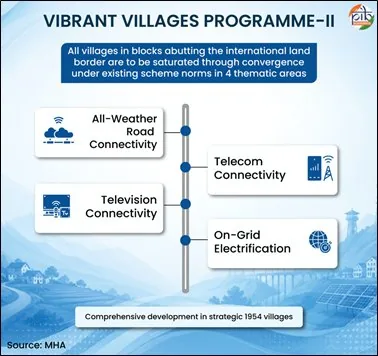
* **Village Action Plan-Based Approach:** The implementation of the Vibrant Villages Programme (VVP) is guided by Village Action Plans, which are prepared according to border-specific, State-specific and village-specific needs.
* **Convergence of Government Schemes:** VVP follows a convergence-based approach to ensure saturation of existing government schemes. Road connectivity is being strengthened through Pradhan Mantri Gram Sadak Yojana (PMGSY)-IV of the Ministry of Rural Development.
* **Flexible Implementation Framework:** Considering the unique challenges of border villages, a High-Powered Committee chaired by the Cabinet Secretary may recommend suitable relaxations in scheme guidelines for effective implementation.
* **Institutional Coordination:** The Ministry of Home Affairs (MHA) acts as the nodal ministry and coordinates with State Governments, district administrations and border guarding forces for planning and execution.
* **Project Implementation:** As of July 2026, under VVP-I, the MHA sanctioned 1,248 projects worth ₹3,020.32 crore. Additionally, 1,655 projects were approved by Central Ministries and Departments through convergence.
* **State-wise Participation:** Major contributions included Arunachal Pradesh (2,990 activities), Ladakh (2,221), Uttarakhand (2,038), Himachal Pradesh (1,037) and Sikkim (530).
What are the Key Impacts of Vibrant Villages Programme (VVP)?
* **Strengthening Border Security:** The programme recognises that vibrant and populated border villages act as strategic assets by supporting the functioning of border-guarding forces and strengthening India’s frontier security.
* **Preventing Out-Migration and Encouraging Reverse Migration:** Improved connectivity and livelihood opportunities are encouraging people to remain in border villages. In Arunachal Pradesh, residents of border villages in Kurung Kumey, Dibang Valley and Shi-Yomi districts have started returning to their native villages.
* **Creating Local Economic Opportunities:** Border tourism, cooperatives, Self-Help Groups (SHGs) and Farmer Producer Organisations (FPOs) are generating income opportunities in remote areas. Local procurement by border forces also provides a stable market for local farmers.
* **Improving Governance and Service Delivery:** The saturation-based approach ensures that eligible households benefit from existing Central and State government schemes. Village Action Plans enable coordinated implementation across multiple departments.
* **Integrated Development-Security Approach:**
* VVP demonstrates that development and national security are mutually reinforcing, as empowered communities contribute to stronger and more resilient border regions.
* In Arunachal Pradesh, the Indo-Tibetan Border Police (ITBP) procures milk, vegetables, eggs and grains directly from border villages, creating a reliable local market for farmers.
**Conclusion**
* The Vibrant Villages Programme represents a strategic shift in India’s border management approach by integrating security with development. By improving infrastructure, creating livelihoods and empowering communities, the programme transforms border villages into vibrant centres of growth. A secure frontier requires not only strong defence infrastructure but also prosperous and confident communities. Through VVP, India is advancing towards a resilient, inclusive and secure Viksit Bharat\@2047.
### Jal Sanchay Jan Bhagidari
[Source](https://www.drishtiias.com/current-affairs-news-analysis-editorials/news-analysis/09-09-2026#37317)
**Why in News?**
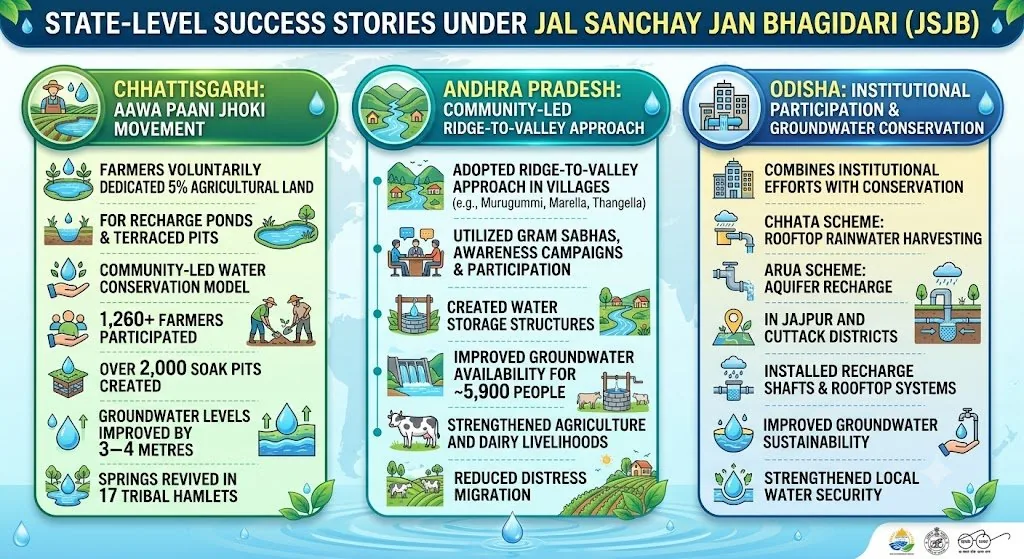
* The Jal Sanchay Jan Bhagidari (JSJB) initiative has emerged as an important pillar of India’s water conservation strategy, building upon the country’s long-standing tradition of community-led water management through traditional systems such as stepwells, tanks, ponds, johads and irrigation structures.
What are the Key Facts About Jal Sanchay Jan Bhagidari (JSJB)?
* **About:** The Jal Sanchay Jan Bhagidari (JSJB) initiative was launched on 6th September 2024 to promote community participation and ownership in water conservation efforts.
* **Objectives of JSJB:** The initiative focuses on creating low-cost groundwater recharge and water storage structures, reviving defunct borewells and promoting scientifically designed, locally suitable water conservation solutions.
* **Guiding Framework:** JSJB follows a Whole-of-Government and Whole-of-Society approach and is based on the 3Cs framework — Community, Corporate Social Responsibility (CSR) and Cost.
* **Achievements:**
* Under JSJB 1.0, more than 27 lakh water conservation structures were constructed across India by May 2025 to enhance rainwater harvesting and groundwater recharge.
* JSJB 2.0 was launched in June 2025 and expanded the scale of groundwater recharge efforts, with more than 1.5 crore groundwater recharge structures constructed by May 2026. As of 3rd September 2026, more than 1.58 crore artificial groundwater recharge structures have been constructed under the initiative.
* **Integration with Catch the Rain Campaign:** In June 2026, JSJB was integrated with the Jal Shakti Abhiyan: Catch the Rain (JSA: CTR) campaign and renamed Jal Sanchay Jan Bhagidari: Catch the Rain (JSJB: CTR).
**Jal Shakti’s Departmental Summit**
* **Centre–State Coordination:** The Ministry of Jal Shakti’s Departmental Summit (1–2 September 2026) emphasised cooperative federalism and stronger Centre–State coordination for effective water governance.
* **Key Focus Areas:** The summit highlighted JSJB: Catch the Rain, along with water infrastructure, source sustainability of drinking water systems and rural water supply under Jal Jeevan Mission 2.0.
* **Jan Bhagidari & Capacity Building:** It stressed Jal Utsav, water awareness, capacity building, inter-State learning, educational engagement and improved water data governance.
**Conclusion**
* Jal Sanchay Jan Bhagidari represents a transformation in India’s water governance approach — from government-led infrastructure creation to community-driven water stewardship. By connecting local knowledge, scientific planning and public participation, the initiative strengthens groundwater security and builds climate-resilient communities. Sustainable water security will ultimately depend not only on creating structures but also on developing a culture of responsible water use.
## Science & Technology
### Data Centre Cooling Technologies
[Source](https://www.drishtiias.com/current-affairs-news-analysis-editorials/news-analysis/09-09-2026#37314)
**Why in News?**
* The rapid expansion of Artificial Intelligence (AI)-driven data centres in India has brought the issue of energy and water-efficient cooling into focus. Google’s planned 1-Gigawatt (GW) hyperscale data centre in Visakhapatnam will rely on air-cooling technology instead of water-intensive methods amid concerns over local water availability.
* Tata Consultancy Services (TCS)’s HyperVault is also planning a 1-GW AI data-centre campus in Hyderabad, designed for high-density computing using Direct-to-Chip (DTC) liquid cooling technology.
What is the Scale of Data Centre Heat Generation in India?
* **Rapid Capacity Expansion:** India’s operational data-centre capacity has increased from around 520 megawatts(MW) in 2020 to 1.5–1.57 GW in 2026.
* **Rising Electricity Demand:** The Ministry of Power projects that AI and data centres could add 26.3 GW of electricity demand to India’s grid by 2031–32.
* \*\*1:\*\*1 Power-to-Heat Conversion: Almost all electricity consumed by IT equipment is ultimately converted into heat. Therefore, a 1-GW data centre can generate nearly 1 GW of thermal load, which must be continuously removed.
* **High-Density AI Racks:**
* Traditional cloud servers typically generate 5–10 kW of heat per rack, whereas modern AI racks can generate around 120–150 kW per rack.
* At the extreme power densities of modern AI servers, traditional air cooling reaches a physical limit known as the Thermal Wall, making specialised liquid-cooling technologies necessary.
* **Cooling Energy Penalty:** Cooling systems such as fans, chillers and pumps can account for a significant share of data-centre electricity consumption, increasing both operating costs and carbon emissions.
* **Geographical Concentration:**
* More than half of India’s data-centre capacity is concentrated in Mumbai and Navi Mumbai, with other major hubs including Chennai, Hyderabad, Bengaluru, Delhi-NCR and Jamnagar, intensifying local heat and resource pressures.
* The mechanical equipment required to air-cool a 1-GW facility can generate up to 100 decibels of noise. This low-frequency hum can travel several kilometres, disrupting nearby communities.
* **Carbon Lock-in Risk:**
* If renewable energy capacity does not expand fast enough to meet AI-driven electricity demand, increased reliance on coal-based power could raise emissions and complicate India’s Net Zero 2070 commitment.
* Concentrated data-centre facilities release large amounts of waste heat into urban surroundings, potentially intensifying the Urban Heat Island (UHI) effect, increasing local temperatures, air-conditioning demand and thermal discomfort.
**What are the Major Data Centre Cooling Technologies?**
* **Air-Cooling:**
* Uses fans, Computer Room Air Conditioning (CRAC) units and Computer Room Air Handling (CRAH) units to circulate cool air around servers and remove the heat generated by computing equipment.
* Air-cooling becomes physically impractical at higher densities, hitting a limit at around 40 kW of heat removal per rack. Modern AI chips, like the Nvidia Blackwell, can push rack emissions to 120–150 kW.
* Trying to air-cool modern AI server racks would require installing them inside literal wind tunnels. The power consumption required to run fans and chillers at that scale skyrockets, leading to long-term economic and efficiency penalties.
* **Free Cooling:** Uses naturally cool outside air or favourable ambient temperatures to reduce the use of mechanical refrigeration, thereby lowering electricity consumption and cooling costs.
* **Direct-to-Chip (DTC) Liquid Cooling:**
* A specialized liquid is brought into direct contact with heat-generating components (Central Processing Units (CPUs) and Graphics Processing Units (GPUs)) via cold plates.
* A liquid coolant absorbs heat directly from these components, making DTC suitable for high-density AI and High-Performance Computing (HPC) workloads.
* **Rear-Door Heat Exchanger (RDHx):** Replaces or attaches to the rear door of a server rack with a liquid-cooled heat exchanger. It captures the hot air exhausted by servers and transfers the heat to the liquid cooling loop.
* **Immersion Cooling:**
* Entire servers are submerged in a non-conductive dielectric fluid, which absorbs heat directly from electronic components.
* **Single-Phase:** The liquid absorbs heat without changing its state and is circulated through a heat exchanger for cooling.
* **Two-Phase:** The liquid boils when it absorbs heat and turns into vapour. The vapour then condenses on a cooling surface and returns to the liquid state.
* Immersion Cooling can handle extremely high power densities, making it suitable for AI and High-Performance Computing (HPC), but requires specialised cooling infrastructure.
* **Evaporative Cooling:** Uses water to absorb heat from the data centre. The heated water then evaporates, carrying the heat away. It is energy-efficient but water-intensive.
* **Dry Cooling:** Uses air-cooled heat exchangers to transfer heat from the cooling system to the surrounding air. It does not require water for evaporation, making it suitable for water-scarce regions, but requires a larger cooling infrastructure.
* **Alternative Systems:**
* Other methods include geothermal heat rejection (pumping heat underground), and natural water cooling (using a nearby lake).
* Waste-Heat Recovery captures excess heat generated by servers and reuses it for district heating, industrial processes or other applications, improving overall energy utilisation.
## Security
### Exercise Veer Guardian-2026
[Source](https://www.drishtiias.com/current-affairs-news-analysis-editorials/news-analysis/09-09-2026#37315)
The Indian Air Force (IAF) and Japan Air Self Defence Force (JASDF) are conducting the bilateral air exercise ‘Veer Guardian-2026’ at Air Force Station Jodhpur, Rajasthan, from 9th September to 22nd September 2026. The first edition of Exercise Veer Guardian was held in Japan in 2023.
* **Participating Forces:** The IAF is participating with frontline combat aircraft, including the indigenous Light Combat Aircraft (LCA) Tejas, Su-30 MKI and Rafale, while the JASDF is participating with F-2A fighter aircraft.
* **Focus:** The 14-day exercise focuses on advanced operational missions, air combat manoeuvring (ACM), mission planning, tactical coordination and exchange of professional expertise between the two air forces.
* **Enhancing Interoperability:** The exercise aims to improve interoperability and combat readiness by enabling both forces to practise joint operations, understand each other’s tactics and enhance coordination in air defence missions.
* **Significance:** The exercise highlights the growing convergence between India and Japan in promoting a free, open and rules-based Indo-Pacific through enhanced defence cooperation and military preparedness.
* **Other key Exercises:**

This documentation is built and hosted on [Mintlify](https://mintlify.com), a developer documentation platform.