> ## Documentation Index
> Fetch the complete documentation index at: https://signals.joincomrades.com/llms.txt
> Use this file to discover all available pages before exploring further.
# 12 Sep 2026 · Dispatch
> Comrades Dispatch of 12 Sep 2026, by news group.
> **[Comrades Dispatch · 12 Sep 2026 (PDF)](https://dl.joincomrades.com/d/12-09-26)**
***
## In this edition
1. [India’s Growth Challenge: The Middle-Income Trap](#h-1) Economic Scenario
2. [Exercise Yudh Abhyas 2026](#h-2) Military Exercises
3. [Houthi Rebels Capture Strategic Port City Mokha in Yemen](#h-3) Places in News
4. [Upper Bhadra Project: Bhadra Water Reaches Chitradurga After 50 Years](#h-4) Places in News
5. [PM SHRI Scheme](#h-5) Schemes & Initiatives
6. [OpenAI Claims Solution to the Navier-Stokes Problem](#h-6) Science & Technology
## Economic Scenario
### India’s Growth Challenge: The Middle-Income Trap
[Source](https://www.drishtiias.com/current-affairs-news-analysis-editorials/news-analysis/12-09-2026#37381)
**Why in News?**
* Despite being the world’s fastest-growing major economy and the fourth-largest globally, India faces concerns over youth protests, weak private investment, stagnant wages and subdued consumption, raising the risk of a middle-income, low-productivity trap.
**What is the Middle-Income Trap?**
* **Definition:** Coined by World Bank economists in 2007, the middle-income trap refers to a situation where a developing nation reaches middle-income status (historically defined by the World Bank as having a per capita gross national income between USD 1,136 and USD 13,845) by leveraging cheap labor, basic manufacturing, and capital accumulation, but gets stuck there, failing to transition into a high-income, innovation-driven economy.
* **The Dual Squeeze:**
* On one side, rising wages make the country lose its competitive edge against lower-wage developing economies.
* On the other side, the country lacks the technological depth, institutional quality, and high productivity needed to compete with advanced, knowledge-driven economies.
* **Global Reality:** Over the past six decades, very few countries (e.g., South Korea, Taiwan, Singapore) have successfully escaped this trap, while many Latin American and Southeast Asian nations remain trapped for decades.
**Global Historical Experiences with Middle-Income Trap**
* **Argentina (The Danger of Stagnation):**
* Until the 1930s, Argentina experienced rapid growth driven by large-scale agriculture.
* However, as Nobel laureate Philippe Aghion notes, it failed to transition from an agricultural base to an innovation-driven industrial economy.
* Over-reliance on primary exports made it vulnerable to global shocks, leading to a long-term decline in its per capita GDP relative to the US.
* **China (Human Capital and Manufacturing):**
* China heavily prioritized mass education alongside state-led manufacturing.
* Between 1990 and 2019, 78.6% of the Chinese population over age 25 had completed secondary education (compared to just 51.6% in India), creating a highly capable industrial workforce.
* **South Korea (Strategic Protectionism):**
* South Korea avoided the trap by deliberately creating and protecting large national industrial conglomerates (chaebols) before liberalizing its economy.
* Economists emphasize that developed nations often used strategic tariffs and subsidies during their "catching up" phase, rather than relying strictly on free-market orthodoxy.
What are the Factors Driving India Towards the Middle-Income Trap?
* **Premature De-industrialisation:**
* Unlike East Asian economies, India is bypassing the mass-manufacturing phase. Manufacturing’s share of Gross Value Added (GVA) has stagnated between 14% and 17% for over two decades.
* Consequently, the sector fails to act as an employment sponge, leaving agriculture to persistently absorb over 45% of the workforce, trapping millions in low-productivity disguised unemployment.
* **Service-Led Jobless Growth & Skills Mismatch:**
* India’s service-driven expansion fails to absorb the broader workforce. High-end sectors like IT are intensely capital-biased, generating extremely limited mass-employment.
* Although universities produce abundant graduates, the employment rate remains stagnant at roughly 63%. This paradox is driven by a structural underproduction of formal, "good jobs" rather than an oversupply of youth.
* Around 67% of unemployed youth in 2023 (1.1 crore) were graduates, up from 32% in 2004 (30 lakh), highlighting the widening gap between academic education and market-relevant skills.
* **Stagnant Real Wages & Weak Aggregate Demand:**
* The ILO India Employment Report 2024 highlights a severe "wage depression."
* It notes that real wages for regular and casual workers have either stagnated or declined between 2012 and 2022. This falling purchasing power severely suppresses household Private Final Consumption Expenditure (PFCE), thereby weakening domestic aggregate demand and discouraging private capital expenditure.
* **Underinvestment in Vocational Education:**
* Less than 3% of India’s workforce has formal vocational training. Out of approximately 25 lakh seats offered across 14,000 Industrial Training Institutes (ITIs), the actual intake hovers around just 48%.
* Outdated curricula and equipment, along with a preference for white-collar degrees over technical trades, create a persistent skills–employment mismatch and shortage of skilled technicians.
* **The Crisis of "Firm Dwarfism":**
* The World Development Report 2024 highlights that an Indian or Mexican firm operating for 40 years typically only doubles in size, whereas a similar US firm grows sevenfold.
* Indian firms remain largely informal micro-enterprises (fewer than five employees). This is attributed to a "thin managerial market" resulting from low educational levels, family-bound management, and credit market imperfections.
* The Economic Survey 2018–19 also highlighted this phenomenon, where small firms remain small despite ageing, limiting productivity and economies of scale.
* **Macroeconomic and Capital Biases:**
* Policies that make capital relatively cheaper than labour encourage firms to adopt capital-intensive production and automation, reducing employment elasticity in a labour-surplus economy.
* India’s GERD remains low at around 0.64% of GDP, limiting the transition from technology imitation to indigenous innovation. However, a significant shift occurred in FY 2023–24, when private industry contributed 51.8% of total R\&D expenditure, surpassing government spending for the first time.
* Despite this progress, India remains behind innovation-driven economies such as the US, South Korea and Israel, where GERD exceeds 2–3% of GDP, and the private sector typically contributes 70–80%, highlighting the need for greater R\&D investment to build globally competitive technologies.
* **K-Shaped Post-Pandemic Recovery:**
* Economic gains have disproportionately accrued to large corporations and the digital economy.
* Meanwhile, the vast informal sector (which employs roughly 90% of the workforce) and traditional micro-enterprises have lagged, widening income inequality and stalling broad-based upgrading.
* **Caste and Occupational Hierarchies:**
* Deeply entrenched social biases devalue manual, artisanal, and vocational work.
* This unequal social valuation of labor hinders broad-based human capital formation and prevents the dignified formalization of blue-collar employment.
* **Threat of Technological Disruption:**
* An IIM Ahmedabad study found that 68% of white-collar workers fear their jobs could be automated within five years.
* Alongside declining labour intensity and rapid AI adoption, this raises concerns about displacement of routine cognitive and coding jobs.
What Measures are Needed to Avoid the Middle-Income Trap?
* **Shift to "Productivism":**
* To achieve sustainable growth, India must embrace "Productivism," a framework that prioritizes the real economy (manufacturing and tangible services) over financial speculation.
* Moving beyond the state-market binary, this model requires proactive government intervention to drive mass job creation rather than relying on ex-post wealth redistribution.
* By expanding broad-based opportunities, it champions the dignity of labor, granting social recognition to skilled workers and actively dismantling deep-rooted occupational stratification.
* **Employment-Linked Industrial Policy:** Align industrial schemes (such as the Production Linked Incentive scheme) directly with verified net job creation, rather than basing incentives solely on capital investment.
* **Overhaul of Vocational Training:**
* Modernize ITIs through Public-Private Partnerships (PPP) and adopt dual-apprenticeship models (similar to Germany and Switzerland), where classroom learning is directly integrated with shop-floor training.
* Measure the success of skilling programs by post-training wages and placement rates, rather than mere enrollment numbers.
* **Restore Dignity to Technical Trades:**
* Launch targeted social and policy campaigns to elevate technical craftsmanship.
* Standardize skill certification under the National Skills Qualifications Framework (NSQF) to create clear wage premiums and career pathways for vocational professionals.
* **Ramp Up R\&D and Technology Diffusion:** Increase public and private R\&D spending toward 1.5%–2% of GDP, with an emphasis on universities and industrial research labs diffusing "useful knowledge" to MSMEs.
* **Strengthen Foundational Human Capital:** Prioritize investments in early childhood education, foundational literacy and numeracy (FLN), and primary healthcare to raise the baseline productivity of the future workforce.
**Conclusion**
* To avert the middle-income trap, India must adopt the World Bank’s "3i Strategy" (Investment + Infusion + Innovation). Policy interventions must shift from subsidizing capital to actively rewarding job creation. Furthermore, India must aggressively scale up R\&D expenditure and execute a massive overhaul of its vocational training ecosystem (ITIs) to align the workforce with the realities of modern manufacturing and Artificial Intelligence.
## Military Exercises
### Exercise Yudh Abhyas 2026
[Source](https://www.drishtiias.com/current-affairs-news-analysis-editorials/news-analysis/12-09-2026#37380)
The 22nd edition of Exercise Yudh Abhyas 2026 has commenced between the Indian Army and the United States Army to enhance operational interoperability, combat readiness and strategic cooperation.
* **About Exercise Yudh Abhyas:** It is an annual bilateral military exercise between India and the U.S. Armies, which began in 2004 and has evolved from peacekeeping and counter-insurgency training to include high-altitude warfare, hybrid threats, humanitarian assistance and disaster relief (HADR), and multi-domain operations.
* **Focus Areas:** The 2026 edition focuses on high-altitude warfare, long-range precision fires, counter-drone capabilities and integrated multi-domain operations.
* **Participation:** The exercise involves Arctic-trained soldiers from the U.S. Army’s 11th Airborne Division (Fort Wainwright, Alaska) and the 3rd Multi-Domain Task Force (3MDTF), which brings expertise in precision fires and integrated command-and-control systems.
* **Training Components:** The drills include a Command Post Exercise (CPX) and a Field Training Exercise (FTX), culminating in a combined live-fire demonstration involving rocket systems and long-range precision fires.
* **Counter-Drone Capability:** For the first time under the exercise framework, the U.S. Army’s Mobile Low, Slow, Small Unmanned Aircraft Integrated Defeat System (MLIDS) is being deployed in India to train forces against emerging unmanned aerial threats.
* **Strategic Framework:** The exercise is conducted under the broader Operation Pathways framework, aimed at strengthening information sharing, interoperability and joint operational preparedness.
* **Other Exercises Between India and US:** Exercise Vajra Prahar (Special Forces’ Exercise), SALVEX (Navy), Cope India (Air Force), and Malabar Exercise (Quad naval exercise involving India, the U.S., Japan and Australia).
## Places in News
### Houthi Rebels Capture Strategic Port City Mokha in Yemen
[Source](https://www.drishtiias.com/current-affairs-news-analysis-editorials/news-analysis/12-09-2026#37391)
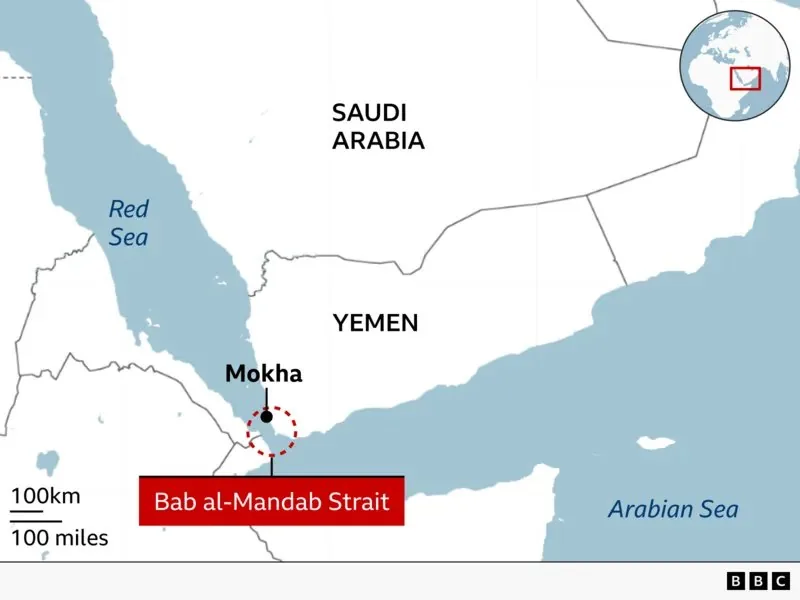
The Iran-backed Houthi movement has seized control of Mokha (Mocha), a strategic Red Sea port city in Yemen, marking its largest territorial gain since the 2022 truce period.
**Mokha (Mocha)**
* **Strategic Location:** Mokha is a port city on Yemen’s western coast along the Red Sea, located approximately 80 km from the Bab el-Mandeb Strait, a key maritime chokepoint connecting the Red Sea and the Gulf of Aden.
* **Historical Significance:** Mokha was historically a major centre of the global coffee trade, giving rise to the term “Mocha coffee.”
* **Economic Role:** The port traditionally supported regional trade, fishing activities and coastal economic activities, though its operations have been affected by Yemen’s prolonged conflict.
**About Houthis**
* The Houthis are a Zaidi Shia political and armed movement that emerged in Yemen in the 1990s. They gained prominence after capturing Sana’a in 2014 during Yemen’s political crisis.
* The group controls large parts of northern and western Yemen, including areas along the Red Sea coast, and is backed politically and militarily by Iran (which denies direct control).
* Since 2023, the Houthis have targeted commercial shipping in the Red Sea and Gulf of Aden, citing opposition to Israel’s actions in Gaza, raising concerns over maritime security and global trade routes.
### Upper Bhadra Project: Bhadra Water Reaches Chitradurga After 50 Years
[Source](https://www.drishtiias.com/current-affairs-news-analysis-editorials/news-analysis/12-09-2026#37389)
A successful trial run delivered water from the Bhadra reservoir through the Chitradurga Branch Canal to Gonur Lake, ending a 50-year wait for the residents of central Karnataka. This milestone marks the operational initiation of the Upper Bhadra Project, addressing severe water scarcity in the region's semi-arid zones.
**Upper Bhadra Project**
* **Classification:** It is the first irrigation scheme in Karnataka to be accorded "National Project" status by the central government, qualifying it for substantial central financial assistance.
* **Project Scope:** It is a Rs 21,500-crore lift irrigation scheme designed to draw water from the Tunga and Bhadra rivers to mitigate acute water distress.
* **Operational Mechanism:**
* The project employs a two-stage lift irrigation system:
* **Stage 1:** Lifting water from the Tunga River and transferring it to the Bhadra Reservoir.
* **Stage 2:** Lifting water from the Bhadra Reservoir and routing it through a 6.9 km tunnel to feed the Chitradurga and Tumakuru branch canals.
* **Core Objectives:** To irrigate over 2.25 lakh hectares of drought-prone land and fill 367 minor irrigation tanks across Chitradurga, Davanagere, Tumakuru, and Chikkamagaluru districts.
* **Bhadra River:**
* The Bhadra River originates in the Western Ghats (Gangamoola peak) and flows east across the Deccan Plateau.
* It meets the Tunga River at Koodli (near Shivamogga) to form the Tungabhadra River.
* The Tungabhadra is a major tributary of the Krishna River, eventually emptying into the Bay of Bengal.
## Schemes & Initiatives
### PM SHRI Scheme
[Source](https://www.drishtiias.com/current-affairs-news-analysis-editorials/news-analysis/12-09-2026#37390)
**Why in News?**
* Recently, the Pradhan Mantri Schools for Rising India (PM SHRI) Scheme has gained attention for its progress in transforming existing schools into exemplar institutions aligned with the vision of the National Education Policy (NEP) 2020.
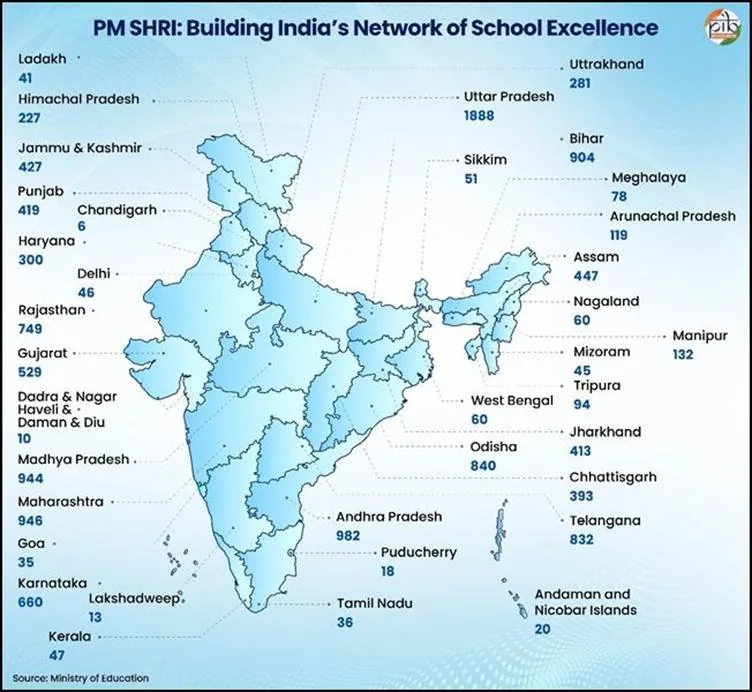
* As of July 2026, 13,092 schools have been selected across 36 States/UTs, including schools under Kendriya Vidyalaya Sangathan (KVS), Navodaya Vidyalaya Samiti (NVS) and NCERT, covering around 90% of the target of over 14,500 schools under the scheme.
**What are the Key Facts About PM SHRI?**
* **Background:** India’s school education transformation focuses on quality, equity, inclusion and future-ready learning. The National Education Policy (NEP) 2020 provides the guiding framework, while PM SHRI translates its vision into practice at the school level.
* **Launch and Objective:** The Pradhan Mantri Schools for Rising India (PM SHRI) Scheme, launched on 7th September 2022, is a Centrally Sponsored Scheme implemented by the Department of School Education and Literacy, Ministry of Education. It aims to strengthen existing schools and develop them as exemplar institutions showcasing the effective implementation of the National Education Policy (NEP) 2020.
* **Scale and Funding:** The scheme aims to strengthen more than 14,500 existing schools managed by the Central Government, State/UT Governments and local bodies, including schools under Kendriya Vidyalaya Sangathan (KVS) and Navodaya Vidyalaya Samiti (NVS).
* **Implementation:** PM SHRI is being implemented for five years (2022–23 to 2026–27) with a Central share of ₹18,128 crore. The approved Project Approval Board (PAB) outlay increased from ₹2,520 crore in 2023–24 to ₹5,224 crore in 2026–27, reflecting a rise of around 107% in investment.
* **Vision and Approach:** PM SHRI schools are envisioned as safe, inclusive and stimulating learning environments supported by quality infrastructure, appropriate learning resources and diverse learning experiences. These schools will also act as mentor institutions for neighbouring schools by sharing best practices.
* Strategic Focus of PM SHRI
* **Model Schools for Regional Transformation:** PM SHRI schools are envisioned as exemplar institutions demonstrating NEP 2020 principles and supporting neighbouring schools through collaboration, knowledge sharing and capacity building, creating a multiplier effect in school education.
* **Holistic Learning Approach:** The scheme promotes lifelong learning and aims to develop students into engaged, productive and responsible citizens through learner-centred and holistic education.
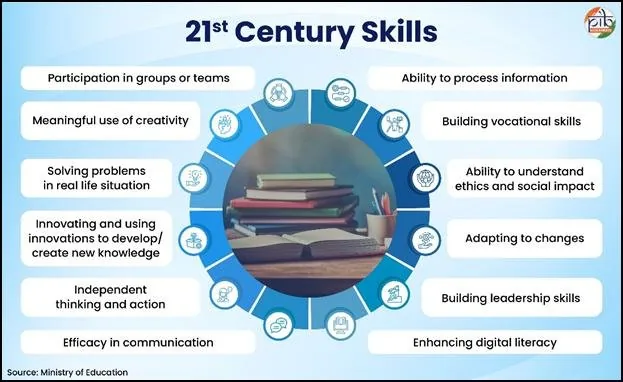
* **NEP 2020 Implementation:** PM SHRI schools showcase the key principles of National Education Policy (NEP) 2020, focusing on equitable, inclusive and joyful learning environments while developing 21st-century skills.
**How PM SHRI Schools Transform School Education?**
* Learning Designed Around the Child
* **NEP 2020-Based Curriculum:** PM SHRI Schools follow the CBSE or respective State/UT curriculum aligned with the National Curriculum Framework (NCF) or State Curriculum Framework under the 5+3+3+4 curricular structure of NEP 2020.
* **Contextualised Learning:** States and UTs have the flexibility to adapt curricula according to local needs while adhering to NEP 2020 principles and constitutional values.
* **Experiential Learning:** The scheme promotes learning by doing bagless days, internships with local artisans, study of local arts, crafts and traditions, celebration of cultural events, and preservation of indigenous knowledge.
* Equity, Inclusion and Multilingual Learning
* **Inclusive Education:** PM SHRI Schools aim to provide equitable and quality education by addressing diverse backgrounds, multilingual needs and varied learning abilities.
* **Promotion of Local Languages:** The scheme encourages the use of mother tongue, local or regional languages as mediums of teaching and learning, particularly in early grades, to strengthen comprehension and foundational learning.
* **Language Support System:** As per UDISE+ 2025–26 data, PM SHRI Schools have 6,102 Sanskrit teachers, 1,994 Urdu teachers and 9,152 regional language teachers, supporting multilingual education.
* **Foundational Literacy and Numeracy:** Community participation and local language-based learning approaches support the development of foundational literacy and numeracy skills among students.
* Technology-Enabled Learning
* **Digital Infrastructure:** PM SHRI Schools promote the use of ICT facilities, smart classrooms, internet connectivity and digital learning platforms to create interactive and learner-centric environments.
* **Skill Development:** Technology integration enhances digital literacy, critical thinking, problem-solving abilities and technological competencies among students.
* **Digital Learning Resources:** Platforms such as DIKSHA provide digital educational resources and facilitate sharing of learning materials among teachers and students.
* Holistic Student Development
* **Beyond Academic Learning:** PM SHRI Schools integrate academics with sports, arts, extracurricular activities and life-skills education to promote overall personality development.
* **Future-Ready Competencies:** The scheme focuses on developing creativity, leadership abilities, socio-emotional skills, resilience and adaptability among students.
* **Life Skills and Adaptability:** By providing diverse learning opportunities, PM SHRI Schools aim to prepare students for future educational, professional and social challenges.
* Empowering Teachers and School Leaders
* **Teacher Capacity Building:** PM SHRI Schools strengthen teacher competencies through professional development programmes supported by District Institutes of Education and Training (DIETs).
* **Financial Support for Training:** The scheme provides up to ₹3 lakh per DIET for capacity-building programmes and up to ₹2,500 per teacher for training of subject teachers, principals, special educators, ICT teachers and master trainers.
* **Leadership Development:** Principals receive training in educational leadership, school management and competency-based pedagogical planning to improve institutional planning and governance.
* **Continuous Professional Development:** Teachers are trained in areas including Holistic Progress Card, school safety, mental health and well-being, counselling and ICT integration to enhance teaching effectiveness.
* A Growing National Network
* **Wide Institutional Coverage:** PM SHRI has established a national network of 13,092 selected schools across States and Union Territories, including institutions under Kendriya Vidyalaya Sangathan (KVS), Navodaya Vidyalaya Samiti (NVS) and National Council of Educational Research and Training (NCERT).
* **Extensive Geographical Reach:** The initiative covers 725 districts and 8,340 blocks/ULBs, creating a broad institutional network for implementing the vision of NEP 2020.
**Conclusion**
* The PM SHRI Scheme represents a shift from infrastructure-centric school development towards holistic, inclusive and future-ready education. By creating exemplar institutions aligned with NEP 2020, the initiative seeks to improve learning outcomes, promote innovation and create a scalable model for transforming India’s school education system.
## Science & Technology
### OpenAI Claims Solution to the Navier-Stokes Problem
[Source](https://www.drishtiias.com/current-affairs-news-analysis-editorials/news-analysis/12-09-2026#37379)
OpenAI has announced that its internal advanced Artificial Intelligence (AI) model successfully generated a proof for the Navier-Stokes existence and smoothness problem, one of the most challenging and historically unresolved questions in mathematics.
* **Navier-Stokes Equations:**
* These are fundamental mathematical rules that describe the motion of fluids (such as water, air, and honey) based on physics principles like fluid mass and Newton's second law (force equals mass times acceleration).
* They are critically applied in weather forecasting, aircraft and automobile design, and predicting ocean currents.
* Navier–Stokes smoothness Problem asks whether 3D fluid motion remains smooth over time despite chaotic turbulence, or whether the equations can develop a singularity, where fluid velocity becomes infinitely large in finite time, and the equations break down.
* Identified in 2000 by the Clay Mathematics Institute, this is one of the seven Millennium Prize Problems, each carrying a USD 1 million reward.
* **Breakthrough Claimed by OpenAI:**
* OpenAI has produced an analytical proof showing that a fluid can indeed develop a mathematical singularity in finite time.
* The solution describes a vortex (a spinning swirl of fluid) that shrinks and accelerates infinitely, even while the fluid retains finite energy.
* The AI's mathematical proof was formally verified using Lean, a specialized computer system designed to check complex mathematical arguments step-by-step.
* **Way Forward & Concerns:** The proof still requires independent peer review by mathematicians. Furthermore, researchers Tristan Buckmaster and Levent Alpöge raised concerns that OpenAI may have utilized their unpublished research on the topic. OpenAI denied this and stated it will not claim the USD 1 million prize.
This documentation is built and hosted on [Mintlify](https://mintlify.com), a developer documentation platform.