Comrades Dispatch · 15 Sep 2026 (PDF)
In this edition
- U.K. Recognises India’s Carbon Credit Trading Scheme Economic Scenario
- India’s Path to Blue Skies Environment & Ecology
- India’s Proposed BRICS Reform Roadmap International Relations
- BRICS Open-Source AI Community International Relations
- Deferment of the Manipur Census Nation & States
- 1st-Ever District-Level Estimates for the Unincorporated Non-Agricultural Sector Reports & Indices
- 9th Rashtriya Poshan Maah 2026 Schemes & Initiatives
- Dhiraj Bommadevara: 1st Indian Man to Win Archery World Cup Final Sports
Economic Scenario
U.K. Recognises India’s Carbon Credit Trading Scheme
Source Why in News?- The United Kingdom has recognised India’s Carbon Credit Trading Scheme (CCTS) as a qualifying carbon pricing mechanism under its Carbon Border Adjustment Mechanism (CBAM), allowing Indian exporters to receive carbon price relief.
- The move follows technical engagement between India and the U.K. and will continue through frameworks such as the U.K.–India Energy Memorandum of Understanding and the Partnership for Market Implementation.
- Impact on Indian Exporters: U.K. importers of eligible Indian goods covered under CBAM can claim relief corresponding to the effective carbon price already paid under India’s CCTS, reducing the additional CBAM liability on Indian exports.
- Avoiding Double Carbon Pricing: The recognition aligns with the principle of preventing double taxation of emissions, as products that have already borne an eligible carbon price in the country of origin receive corresponding adjustment under CBAM.
- Significance: The recognition strengthens India’s participation in global carbon markets, supports export competitiveness, and provides greater certainty to carbon-intensive industries.
- Limitation: The actual CBAM relief will depend on the effective carbon price paid by the exporter and compliance with the evidence and verification requirements prescribed under U.K. CBAM rules.
- About: The Carbon Credit Trading Scheme (CCTS) is a market-based mechanism under the Indian Carbon Market (ICM) that aims to reduce, remove, or avoid greenhouse gas (GHG) emissions by pricing emissions through the trading of Carbon Credit Certificates (CCCs).
- Transition from PAT to CCTS: The earlier Perform, Achieve and Trade (PAT) scheme focused on improving energy efficiency through Energy Saving Certificates (ESCerts). CCTS shifts the focus towards reducing Greenhouse Gas Emission Intensity (GEI) by setting sector-specific emission intensity targets.
- Mechanisms:
- Compliance Mechanism: Requires obligated energy-intensive industries to meet notified GEI targets. Entities exceeding targets receive CCCs, while others can purchase credits to meet obligations.
- Offset Mechanism: Allows non-obligated entities to voluntarily register approved emission reduction activities for issuance of CCCs.
- Sectors Covered:
- CCTS initially covers major emission-intensive sectors such as aluminium, cement, chlor-alkali, pulp and paper, iron and steel, fertilizer, petroleum refineries, petrochemicals, and textiles.
- Although the thermal power sector contributes a significant share of India’s emissions, thermal power plants have not yet been transitioned into the CCTS compliance mechanism.
- Regulatory Oversight: The scheme is administered through the Bureau of Energy Efficiency (Administrator), National Steering Committee for Indian Carbon Market, Grid Controller of India Limited (Registry), and regulatory support from CERC.
- Significance: CCTS supports India’s climate objectives by encouraging clean technologies, energy efficiency, low-carbon technologies, renewable energy adoption, and emission reduction measures.
Environment & Ecology
India’s Path to Blue Skies
Source Why in News?- Recently, the International Day of Clean Air for Blue Skies (7 September) was observed globally to raise awareness and promote action against air pollution. Designated by the United Nations General Assembly in 2019, the day highlights global efforts to improve air quality.
- India observes it as Swachh Vayu Diwas, aligning international commitments with national clean-air initiatives.
- About: Air pollution refers to the accumulation of harmful substances in the atmosphere at levels that adversely affect human health and the environment. These pollutants may exist as gases, liquid droplets or solid particles and originate from both natural processes and human activities such as transport, industries, construction and burning.
- Significance: Clean air is fundamental to human health, environmental sustainability and economic well-being, making air pollution control a key global priority.
- Particulate Matter (PM):
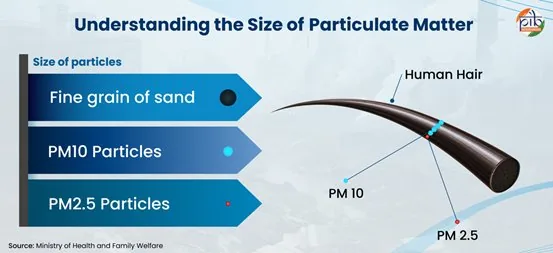
- Particulate Matter (PM) is a major air pollutant consisting of tiny solid or liquid particles suspended in the atmosphere. It is classified mainly into:
- PM10: Particles with a diameter of 10 micrometres or less.
- PM2.5: Fine particles with a diameter of 2.5 micrometres or less, capable of penetrating deep into the respiratory system and, in some cases, entering the bloodstream.
- Particulate Matter (PM) is a major air pollutant consisting of tiny solid or liquid particles suspended in the atmosphere. It is classified mainly into:
- Health Significance: Due to their extremely small size, PM2.5 particles pose greater health risks by reaching deeper lung tissues and increasing the risk of respiratory and cardiovascular diseases, making particulate pollution control essential for clean air and healthier communities.
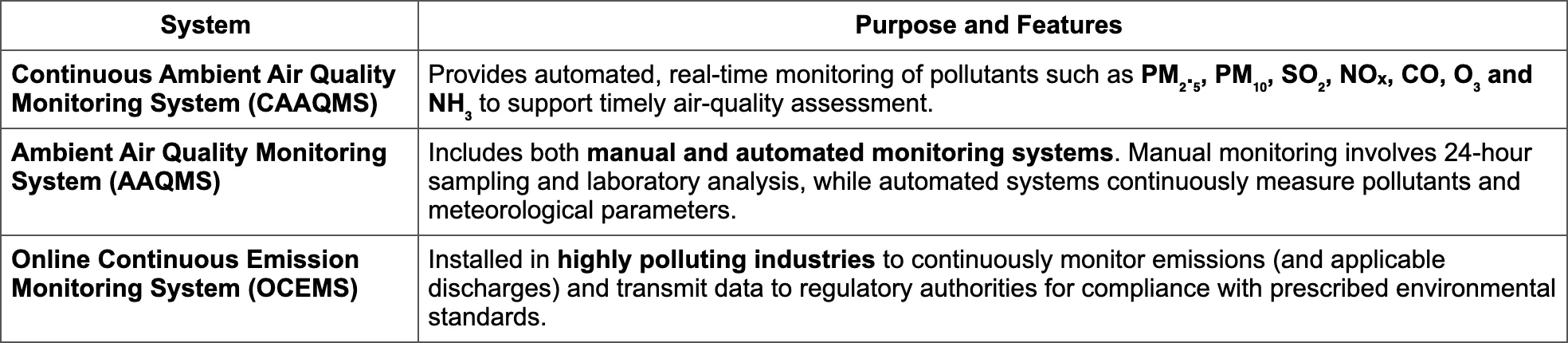
 Air Pollution Monitoring Systems
 What are India’s Initiatives to Mitigate Air Pollution?
-
National Air Quality Monitoring Programme (NAMP)
- About: The National Ambient Air Quality Monitoring Programme (NAAQM), later renamed NAMP, was initiated by the Central Pollution Control Board (CPCB) to assess ambient air quality, monitor pollution trends, identify violations of air quality standards and evaluate associated health risks.
- Monitoring Network:
- As of March 2026, India’s air-quality monitoring network consists of 1,646 stations across 603 cities in 28 States and 7 Union Territories, including:
- Manual monitoring stations: Collect air samples periodically for laboratory analysis.
- Continuous Ambient Air Quality Monitoring Stations (CAAQMS): Provide real-time air quality data.
- As of March 2026, India’s air-quality monitoring network consists of 1,646 stations across 603 cities in 28 States and 7 Union Territories, including:
- Citizen Access and Transparency: The SAMEER mobile application and web portal provide near real-time Air Quality Index (AQI) information for more than 292 cities, while grievance portals in NCAP cities promote public participation in pollution control.
-
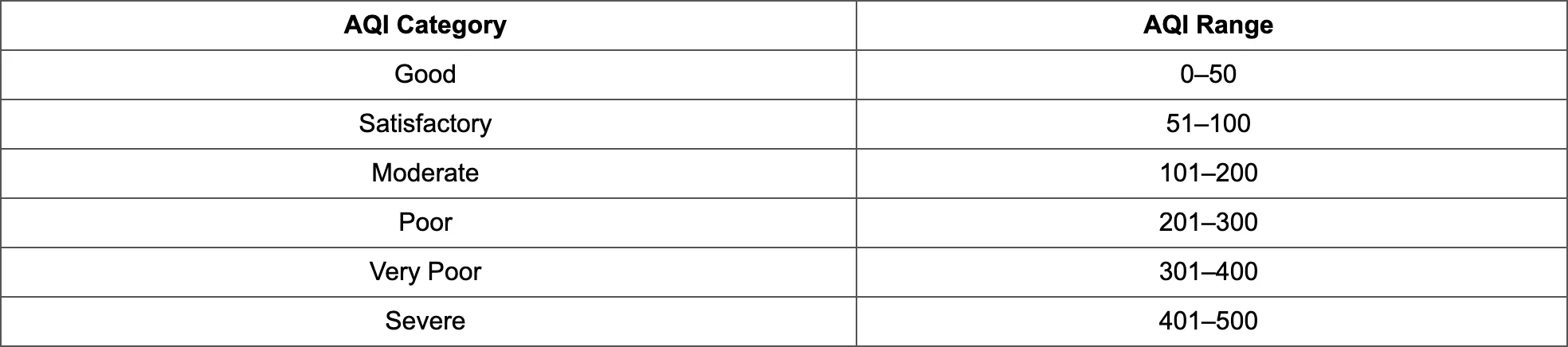
Air Quality Index (AQI)
- About: AQI is a public communication tool that simplifies air quality information by categorising pollution levels based on pollutant concentration and health impacts.
- Pollutants Covered: AQI is calculated using eight pollutants: PM₂.₅, PM₁₀, Nitrogen Dioxide (NO₂), Sulphur Dioxide (SO₂), Carbon Monoxide (CO), Ozone (O₃), Ammonia (NH₃) and Lead (Pb).
- Launch: The National Clean Air Programme (NCAP) was launched in 2019 to address urban air pollution through a mission-mode approach covering 130 cities.
- Approach: NCAP promotes source-specific pollution control measures through city, state and national-level clean air action plans involving Central and State Governments, Urban Local Bodies (ULBs) and Other stakeholders.
- Key Achievements of NCAP:
- 24 States/UTs and 130 cities have prepared city-specific and state-specific action plans targeting major pollution sources.
- During FY 2019-20 to FY 2025-26, ₹16,423.55 crore was provided to 130 cities through air-quality performance-linked grants, of which ₹11,575.54 crore (70.5%) has been utilised.
- In FY 2025-26, 108 cities recorded a reduction in annual PM10 concentration compared with 2017-18 levels
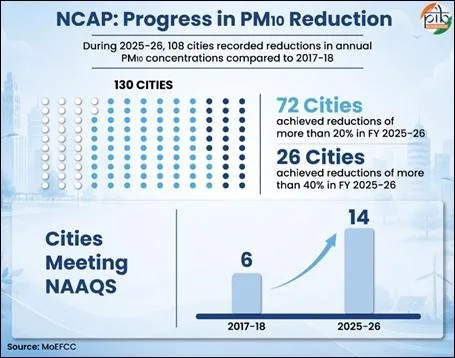 Digital Tracking of Air Quality Improvement
- PRANA Portal (Portal for Regulation of Air-Pollution in Non-Attainment Cities): Tracks the physical and financial progress of NCAP implementation. It provides information on city air action plans and pollution-control activities and supports evidence-based policymaking.
- About: Launched in 2022-23 by the Ministry of Environment, Forest and Climate Change (MoEFCC), Swachh Vayu Survekshan is an annual assessment of 130 NCAP cities based on air pollution mitigation efforts.
- Objective: It promotes Healthy competition among cities, Innovation in pollution-control measures and Effective implementation of City-specific Clean Air Action Plans.
- Swachh Vayu Survekshan 2026:
- Ward-level Swachh Vayu Survekshan strengthens the bottom-up approach by recognising local actions for improving air quality. It was conducted across more than 7,400 wards nationwide.
- The Swachh Vayu Survekshan 2026 recognised top-performing cities across three categories, with Lucknow securing first place in Category 1, Rourkela in Category 2, and Kalinganagar in Category 3.
- Vehicular Emissions
- Promotion of Cleaner Vehicles:
- India introduced BS-VI compliant vehicles across the country from April 2020 to significantly reduce vehicular emissions.
- The government is promoting electric mobility through initiatives such as the PM E-DRIVE scheme of the Ministry of Heavy Industries and PM E-Bus Sewa of the Ministry of Housing and Urban Affairs.
- Expansion of electric vehicle charging infrastructure is being undertaken as per guidelines issued by the Ministry of Power.
- Vehicle Fleet Modernisation:
- The Ministry of Road Transport and Highways (MoRTH) has established an enabling framework for the Vehicle Scrapping Policy through Registered Vehicle Scrapping Facilities (RVSFs) and Automated Testing Stations (ATS).
- The Pollution Under Control (PUC) certification system is being strengthened to improve compliance and monitoring of vehicle emissions.
- Reducing Urban Transport Pollution:
- City-level clean air action plans include measures such as traffic decongestion, junction improvement and improved public transport management to reduce emissions from vehicular movement.
- The Ministry of Housing and Urban Affairs launched PARIVARTAN (Program for Accelerated Renewal and Incentivization of Vehicle Assets for Reducing Transport Air-Pollution and Network Emission) to modernise transport fleets in NCR replacing BS-IV and older trucks and buses with BS-VI, CNG or EVs.
- Delhi-NCR Specific Measures:
- The Commission for Air Quality Management (CAQM) has directed Delhi, Haryana, Rajasthan and Uttar Pradesh to shift public transport, particularly buses, towards cleaner fuels. Only BS-VI, CNG and electric buses will be permitted to enter Delhi, including tourist buses, from 1 November 2026.
- CAQM has also directed faster adoption of cleaner mobility solutions by motor vehicle aggregators, delivery service providers and e-commerce entities.
- Delhi and NCR districts are gradually introducing only electric L5-category three-wheelers for passenger and goods transport.
- Promotion of Cleaner Vehicles:
- Industrial Emissions
- Emission Standards and Industrial Classification:
- The Ministry of Environment, Forest and Climate Change (MoEFCC) has notified sector-specific environmental standards for industries under the Environment Protection Rules, 1986.
- The Central Pollution Control Board (CPCB) has classified 419 industrial sectors and sub-sectors according to their pollution potential.
- Continuous Emission Monitoring:
- The CPCB has mandated 17 highly polluting industrial sectors to install Online Continuous Emission Monitoring Systems (OCEMS) connected with CPCB servers for real-time compliance monitoring.
- In Delhi-NCR, industries are required to use approved fuels and install appropriate pollution-control equipment.
- Strengthening Industrial Compliance:
- CAQM has revised particulate matter emission standards for large and polluting industries, setting a limit of 50 mg/Nm³ from 1 October 2026.
- State Pollution Control Boards have been directed to ensure strict monitoring and enforcement in industrial areas violating prescribed norms.
- The CEPI (Comprehensive Environmental Pollution Index) framework identifies Critically Polluted Areas (CPAs) and Severely Polluted Areas (SPAs), where targeted pollution reduction plans are implemented.
- Power Sector Emission Control: In 2022, MoEFCC notified stricter CPCB IV+ emission standards for power generators up to 800 kW operating on diesel, gasoline or dual fuel modes.
- Emission Standards and Industrial Classification:
- Road Dust and Construction Pollution
- Dust Management at Construction Sites:
- CPCB has issued guidelines for environmentally sustainable management of Construction and Demolition (C&D) waste and for controlling dust generated from construction activities.
- State Pollution Control Boards and Pollution Control Committees are required to deploy anti-smog guns and dust-control measures at construction sites exceeding 20,000 sq. metres.
- Institutional Monitoring Mechanism:
- Road-owning and construction agencies in NCR have been directed to establish Dust Control and Management Cells (DCMCs) for monitoring dust-control measures.
- Around 70 DCMCs have been established across NCR and are regularly reviewed by CAQM.
- An online monitoring mechanism has been introduced for construction sites above 500 sq. metres in Delhi-NCR.
- Dust Management at Construction Sites:
- Open Waste Burning
- Strengthening Waste Management:
- The government is implementing various waste management regulations, including:
- Solid Waste Management Rules, 2016 (revised 2026).
- Plastic Waste Management Rules, 2016.
- Hazardous Waste Management Rules, 2016.
- E-Waste Management Rules, 2022.
- Battery Waste Management Rules, 2022.
- Biomedical Waste Management Rules, 2016.
- The government is implementing various waste management regulations, including:
- Extended Producer Responsibility (EPR):
- Market-based EPR mechanisms require producers to manage post-consumer waste such as plastic packaging, e-waste, batteries, tyres and used oil.
- This promotes recycling, reduces landfill burden and prevents emissions from informal waste burning.
- Plastic Waste Reduction: India banned 12 single-use plastic items with low utility and high littering potential, including plastic cutlery, straws and thermocol decorations, from 1st July 2022.
- Strengthening Waste Management:
- Crop Residue and Biomass Burning
- Promoting Alternative Uses of Crop Residue:
- Central Pollution Control Board (CPCB) provides financial assistance for establishing paddy straw pelletisation and torrefaction plants to promote productive utilisation of agricultural waste.
- Under this initiative, ₹37.16 crore has been sanctioned for 34 plants, including 27 in Punjab and 7 in Haryana.
- Biomass Utilisation in Energy Sector: CAQM has directed 5–10% biomass co-firing in thermal power plants within 300 km of Delhi, as well as captive power plants and brick kilns in NCR, to reduce open burning of crop residue.
- Support to Farmers:
- The Ministry of Agriculture and Farmers Welfare provided ₹4,233.84 crore (2018-19 to 2025-26) for crop residue management.
- More than 3.53 lakh crop residue management machines have been distributed, and 43,535 Custom Hiring Centres (CHCs) have been established in Punjab, Haryana, Madhya Pradesh, Rajasthan, Uttar Pradesh and Delhi.
- Impact: Due to coordinated efforts, paddy stubble-burning incidents declined by 93% in Punjab and 91% in Haryana in 2025 compared with 2021.
- Promoting Alternative Uses of Crop Residue:
- Afforestation and Expansion of Green Cover
- Green India Mission: The mission focuses on improving forest quality, enhancing ecological resilience and increasing carbon sequestration. ₹1,019.26 crore has been released to States under the mission till March 2026.
- Compensatory Afforestation:
- The Compensatory Afforestation Fund Management and Planning Authority (CAMPA) supports forest restoration and ecological conservation.
- More than 3.20 lakh hectares of compensatory afforestation were undertaken during FY 2020-21 to FY 2024-25.
- Urban Green Spaces: The Nagar Van Yojana (launched in 2020) aims to develop 1,000 Nagar Vans and Vatikas by 2026-27. As of 31st March 2026, ₹557.62 crore has been released for developing 626 Nagar Vans/Vatikas.
- Landscape Restoration Initiatives: The Aravalli Green Wall Initiative targets restoration of 6.31 million hectares across Rajasthan, Gujarat, Haryana and Delhi. It has established 435 nurseries with a capacity of 393.24 lakh seedlings and restored around 36,025 hectares during 2025.
- Community Participation: The Ek Ped Maa Ke Naam campaign has emerged as a mass plantation movement, with 262.4 crore saplings planted by December 2025.
- Central Pollution Control Board (CPCB)
- The Central Pollution Control Board (CPCB) is a statutory organisation established under the Water (Prevention and Control of Pollution) Act, 1974 and performs functions related to air pollution control under the Air (Prevention and Control of Pollution) Act, 1981.
- CPCB is responsible for improving air quality by undertaking ambient air quality monitoring, formulation of pollution control standards, technical assessment and coordination with State Pollution Control Boards.
- Commission for Air Quality Management (CAQM)
- The Commission for Air Quality Management (CAQM) was established under the Commission for Air Quality Management in National Capital Region and Adjoining Areas Act, 2021 as a dedicated statutory institution for managing air pollution in the Delhi-NCR airshed.
- CAQM ensures coordinated action among Delhi, Haryana, Rajasthan and Uttar Pradesh to address regional sources of pollution that cannot be managed through isolated State-level measures.
- Graded Response Action Plan (GRAP)
- The Graded Response Action Plan (GRAP) is an emergency response framework designed to address worsening air quality conditions in Delhi-NCR through time-bound and progressively stricter measures.
- GRAP is activated based on the Air Quality Index (AQI), weather conditions and scientific assessments to ensure timely action during periods of severe pollution.
- The plan consists of four stages:
- Stage I – Poor Air Quality (AQI 201–300)
- Stage II – Very Poor Air Quality (AQI 301–400)
- Stage III – Severe Air Quality (AQI 401–450)
- Stage IV – Severe+ Air Quality (AQI above 450)
- State Pollution Control Boards (SPCBs)
- State Pollution Control Boards (SPCBs) are the primary regulatory institutions responsible for implementing environmental laws at the State level.
- SPCBs regulate pollution from industries by:
- Monitoring industrial emissions.
- Granting environmental consents.
- Ensuring compliance with prescribed emission standards.
- Taking enforcement action against violating industries.
- Their responsibilities have expanded beyond the Water Act, Air Act and Environment Protection Act to include monitoring of noise pollution, hazardous waste, plastic waste and other environmental concerns.
- Strengthening Environmental Regulation through Digital Reforms
- To improve transparency, consistency and efficiency in environmental regulation, the Government amended the Air (Prevention and Control of Pollution) Act, 1981 and the Water (Prevention and Control of Pollution) Act, 1974.
- The Government notified:
- Control of Air Pollution (Grant, Refusal or Cancellation of Consent) Guidelines, 2025 on 29th January 2025.
- Water Pollution (Grant, Refusal or Cancellation of Consent) Guidelines, 2025 on 30th January 2025.
- The Unified Consent and Authorization Management System (UCAMS) developed by CPCB provides an online platform for processing consent applications by SPCBs and Pollution Control Committees.
- UCAMS enables end-to-end digital processing of consent approval, refusal and cancellation, ensuring greater uniformity in procedures, transparency in decision-making and better compliance monitoring.
- India’s journey towards blue skies requires sustained, science-based and collaborative action. Through programmes such as NCAP, strengthened monitoring systems, cleaner technologies and ecosystem restoration, India is moving towards healthier air and sustainable development. Continued cooperation among governments, industries and citizens will be crucial to achieving long-term air-quality improvement and building environmentally resilient communities.
International Relations
India’s Proposed BRICS Reform Roadmap
Source Why in News?- During the 18th BRICS Summit held in New Delhi (September 2026), the Indian Prime Minister urged BRICS leaders to formulate 10 global governance reform proposals. These proposals are intended to be developed into a comprehensive BRICS Reform Roadmap by the next summit in 2027.
- Concurrently, the United Nations Secretary-General highlighted that “distorted power relations in the world make the Security Council non-operational,” reaffirming the urgent need to address the democratic deficit in global multilateral institutions.
- From “Rule-Takers to Rule-Shapers”:
- India emphasized the need to dismantle the current global governance structure (described as a “pyramid of privilege”) and transform it into a “platform of partnership.”
- This is crucial as the Global South is at the forefront of global crises but remains excluded from key decision-making.
- Consensus-Based Approach: India highlighted that BRICS seeks to advance global reforms through dialogue, consensus and cooperation, not as a counter-bloc against any country.
- The Three Pillars (The 3Rs):
- The 10 proposed reform measures will focus on three broad areas — Representation, Responsiveness and Rule-making.
- Representation:
- The reform of the UN Security Council (UNSC) can no longer be delayed. Text-based negotiations for expanding the UNSC must be linked to a definite timeline and clear outcomes.
- Furthermore, the voting power and leadership roles in Bretton Woods institutions (IMF, World Bank) must reflect contemporary economic realities, granting proportional influence to emerging engines of global growth.
- Responsiveness:
- Global institutions must improve the speed, scale, and last-mile impact of their crisis responses.
- As a practical example, India proposed establishing a Seafarers’ Emergency Support Network to connect maritime authorities and missions, ensuring rapid distress alerts, medical aid, and evacuation for maritime workers.
- Rule-Making in Emerging Technologies:
- Equal participation is vital in framing global regulations for future domains such as Artificial Intelligence (AI), cyberspace, outer space, biotechnology, and critical minerals.
- To achieve this, BRICS aims to provide young diplomats from the Global South with legal, practical, and negotiation expertise to actively shape these future rules.
- BRICS Continuity and Implementation Mechanism: To prevent institutional momentum from stalling due to annual Presidency rotations, India proposed creating a formal mechanism utilizing the BRICS Troika (current, previous, and incoming chairs) and a secure digital repository to systematically track initiatives, deadlines, and implementation statuses.
- Significance
- Empowering the Global South:
- By proposing a concrete, 10-point roadmap, India leverages the expanded 11-member BRICS grouping (representing ~40% of global GDP and nearly half the world’s population) as a collective counterweight to Western-dominated forums like the G7.
- It ensures the Global South’s demographic and economic weight translates into actual global policy impact.
- Future-Proofing Governance: By expanding the scope of reform beyond traditional bodies (like the UN) to frontier technologies (AI, cyberspace), the roadmap ensures that developing nations are not locked out of the regulatory frameworks that will define the 21st-century global economy.
- Transitioning from Critique to Constructive Action:
- As BRICS celebrates its 20th anniversary, this roadmap signifies the bloc’s “coming of age”.
- It shifts the grouping’s focus from merely critiquing the outdated Western institutional architecture to actively providing constructive, structured, and alternative frameworks for equitable global governance.
- Empowering the Global South:
- Outdated Representation in the UNSC:
- The UNSC largely reflects the geopolitical realities of the post-World War II era. The absolute exclusion of entire continents impacts the body’s global legitimacy.
- For instance, Africa and Latin America have zero permanent representation. This has prompted coalitions like the G4 nations (India, Brazil, Germany, Japan) to strongly advocate for permanent seats, while the Sirte Declaration and Ezulwini Consensus outline the unified African demand for two permanent seats to reflect contemporary demographics.
- Conventions in Global Finance: The Bretton Woods Institutions operate on an unwritten agreement reserving the World Bank Presidency for an American and the IMF leadership for a European. Existing quota formulas fail to reflect the economic weight of emerging economies like India, skewing global financial decision-making.
- Constraints of the Veto Power: The frequent use of veto power by the Permanent Five (P5) to shield strategic allies has paralyzed the UNSC. Repeated vetoes by Russia regarding Ukraine and the US regarding Gaza highlight its inability to maintain international peace.
- Inconsistencies in the Application of Norms: Multilateralism suffers from a trust deficit due to the selective application of international law, visible in the unequal enforcement of frameworks like the Nuclear Non-Proliferation Treaty (NPT) based on geopolitical alliances rather than universal rules.
- Over-reliance on Earmarked Funding: A shift toward conditional, voluntary contributions from wealthy donor nations and philanthropies forces UN bodies to prioritize donor interests over universal mandates. Currently, over 80% of the WHO’s budget relies on such earmarked funding.
- Challenges in the WTO Dispute Mechanism: The World Trade Organization’s dispute settlement mechanism remains crippled because the US has systematically blocked appointments to the Appellate Body since 2019, allowing nations to violate trade rules without facing enforcement.
- Unilateral Trade and Environmental Measures: Developed nations increasingly bypass multilateral consensus through unilateral measures like the EU’s Carbon Border Adjustment Mechanism (CBAM) or trade-distorting domestic subsidies like the US Inflation Reduction Act (IRA), which disproportionately burden developing economies.
- Instrumentalization of Financial Systems: The geopolitical weaponization of global financial infrastructure such as expulsions from the SWIFT messaging system and the freezing of sovereign central bank reserves erodes trust in its neutrality and accelerates de-dollarization efforts among BRICS nations.
- Rise of “Minilateralism” and Fragmented Tech Governance: Rule-making for emerging domains is increasingly monopolized by exclusive Western coalitions like the G7 Hiroshima AI Process, locking the Global South out of global technological governance.
- Differing Regional Perspectives: Reform efforts are often stalled by internal fragmentation among developing nations. Coalitions like the “Uniting for Consensus” (Coffee Club) actively oppose the creation of new permanent UNSC seats to block regional rivals (e.g., Pakistan opposing India’s bid).
- Policy Volatility & Multilateral Disengagement: US withdrawal from the Paris Agreement weakens global climate leadership, disrupts climate finance through mechanisms like the Green Climate Fund and Loss and Damage Fund (LDF), and discourages countries from adhering to their Nationally Determined Contributions.
- Funding Boycotts: Geopolitical disputes, including US and Israeli withdrawals from UNESCO, have reduced funding, weakened its operations, and undermined its work in education, science, and cultural preservation.
- Transitioning to Text-Based Negotiations: The UN General Assembly must move beyond open-ended debates within the Intergovernmental Negotiations (IGN) framework and commit to time-bound, text-based negotiations to formalize the expansion of the UNSC in both permanent and non-permanent categories.
- Democratizing the Financial Architecture:
- There is an urgent need to expedite quota realignments at the IMF and World Bank to accurately reflect the current GDP and purchasing power of emerging economies.
- Additionally, leadership appointments must transition to a transparent, merit-based system, discarding outdated geographical monopolies.
- Restoring the Multilateral Trade Order: The international community must prioritize the revival of the WTO’s two-tier dispute settlement mechanism by breaking the deadlock on Appellate Body appointments, while actively safeguarding Special and Differential Treatment (S&DT) provisions for developing nations.
- Forging a Unified Global South Consensus: To overcome internal fragmentation platforms like BRICS, the African Union, and the G20 must build diplomatic bridges to present a cohesive, unified front on institutional reforms, climate justice, and equitable trade.
- Proactive Norm-Setting in Frontier Technologies: The Global South must operationalize the BRICS tech-diplomacy initiatives to co-create universal, UN-backed regulatory frameworks for AI, outer space, and critical minerals. This will ensure developing nations transition from passive consumers to active architects of future global norms.
- The BRICS Reform Roadmap seeks to make global governance more representative, inclusive and equitable by enabling the Global South to move from “rule-takers” to “rule-shapers” and transform the existing “pyramid of privilege” into a “platform of partnership.”
BRICS Open-Source AI Community
Source Why in News?- At the BRICS Summit in New Delhi (September 2026), China proposed establishing a BRICS open-source AI community, presenting a strategic dilemma for India’s digital autonomy.
- BRICS Open-Source AI Community: China has offered to pioneer a BRICS AI open-source community designed to support member states and developing nations. The initiative focuses on fostering cooperation in developing and applying large language models (LLMs), conducting specialized AI seminars and training courses, and building an open ecosystem for AI supported by a unified digital cloud platform.
- Bypassing Hardware Constraints: Due to stringent Western export controls on cutting-edge AI chips (GPUs), China faces hardware bottlenecks. By promoting a software-centric BRICS alliance, Beijing aims to lead the software and architecture layers across the Global South.
- The ‘Android’ Playbook:
- Replicating Google’s playbook with Android, China seeks to distribute open-weight models (such as Alibaba’s Qwen and DeepSeek) freely across emerging markets.
- Developers worldwide can download, modify, and build applications upon these Chinese architectures.
- This positions Chinese architectures as the standard digital infrastructure for developing nations unable to afford costly proprietary Western APIs.
- Global South Outreach: The BRICS Open-Source AI Community is projected as an egalitarian alternative to Western corporate monopolies (like OpenAI and Google), offering developing economies accessible foundation models to build localized applications.
- Strategic Autonomy Dilemma:
- India advocates a “third way” in global AI governance based on strategic autonomy, democratic values and privacy-preserving infrastructure.
- However, joining a China-led AI ecosystem could shift India’s dependence from US proprietary models to Chinese AI ecosystems, whose data and training practices may lack transparency.
- The ‘Principles Gap’:
- India’s digital architecture emphasizes democratic values and human rights.
- In contrast, China’s AI regime mandates that models align with state objectives. A Beijing-led platform may struggle to host the transparent and secure standards that India’s digital economy requires.
- Impact on Domestic Innovation: While open-source AI reduces access costs, an influx of free, highly capable foreign open-weight models could severely undermine the commercial viability of India’s domestic model builders (like Sarvam or BharatGen), as enterprise buyers might opt for free Chinese releases.
- Capacity Surge vs. Cost: India’s data center capacity stands at 1.6 GW (mid-2026) and is projected to nearly quadruple to 6 GW by 2029. Scaling this AI infrastructure requires a massive USD 110 billion investment.
- Resource Deficit: Advanced AI GPUs require hyper-intensive cooling and power. Indian data centers currently consume roughly 150 billion liters of water and 0.5% of national electricity annually (CEEW, 2025) figures projected to more than double by 2030, heavily straining local grids and water tables.
- Spatial Concentration (Latency):
- Development is deeply skewed. Mumbai alone accounts for up to 50% of India’s data center stock.
- This extreme concentration creates severe latency bottlenecks for AI deployment in Tier-2 and Tier-3 cities.
- Import Dependency: Despite local manufacturing pushes, India still imports 90–95% of its semiconductors, leaving its AI ambitions highly vulnerable to geopolitical shocks, particularly any conflict or blockade in the Taiwan Strait, a critical hub of global advanced semiconductor production.
- The Missing Cutting-Edge:
- India Semiconductor Mission (ISM) has successfully attracted over USD 20 billion in investments. However, these facilities focus on mature nodes (28nm to 110nm) and packaging.
- India remains 100% reliant on foreign foundries (like TSMC) for the advanced sub-5nm chips necessary to train foundational AI models.
- Cross-Border Data Flows:
- The Digital Personal Data Protection (DPDP) Act, 2023 uses a “blacklist” (negative list) approach for international data transfers.
- Unlike the EU’s GDPR which offers clear adequacy assessments, this grants the government wide discretion, creating unpredictability that delays massive foreign cloud infrastructure investments.
- Intellectual Property (IP) Ambiguity: India’s Copyright Act, 1957 is ill-equipped for generative AI. Unresolved legal questions regarding the “fair use” of copyrighted material to train LLMs and the ownership of AI-generated outputs deter domestic startups from scaling indigenous models.
- Accelerating the ‘IndiaAI Mission’: Under IndiaAI Mission, India must fasttrack building Sovereign AI ecosystems (foundational models trained on diverse Indian datasets, reflecting Indian cultural and linguistic nuances (e.g., the Bhashini initiative).
- Investing in Compute Infrastructure: AI supremacy requires immense computational power. India must aggressively pursue public-private partnerships to build domestic GPU clusters and AI supercomputers, reducing reliance on foreign cloud infrastructure.
- Digital Public Infrastructure (DPI) Approach to AI:
- India should extend its successful DPI model (like UPI) to AI.
- By offering secure, transparent, and indigenous open-source AI tools as a public good, India can present a democratic alternative to China’s AI diplomacy for the developing world.
- Integrating into Global Tech Supply Chains: India must leverage global partnerships to secure its hardware supply chains. This includes deepening the US-India initiative on Critical and Emerging Technology (iCET) and the Quad Semiconductor Supply Chain Initiative.
- Global AI Governance: India should leverage platforms like the G20 and the Global Partnership on Artificial Intelligence (GPAI) to advocate for a multi-stakeholder governance framework. This framework must address technical risks like “agentic misalignment” while ensuring that AI regulation does not stifle the economic growth of the Global South.
- Grassroots Capacity Building:
- True sovereignty requires a skilled demographic dividend. The National Education Policy (NEP) 2020 must be realigned to focus strictly on computational thinking and AI ethics at the primary level.
- The vast network of Atal Tinkering Labs (ATLs) should be upgraded into AI-tinkering hubs to shape young minds, ensuring the workforce is ready to build not just consume future AI technologies.
- AI is emerging as a key determinant of national sovereignty and global security, amid rising agentic risks and geopolitical competition. India must balance AI adoption with technological self-reliance, by building sovereign compute capacity and promoting transparent, democratic digital infrastructure to ensure a safe and inclusive global AI ecosystem.
Nation & States
Deferment of the Manipur Census
Source The Centre has indefinitely deferred the decennial Census operations in poll-bound Manipur to prevent the escalation of ongoing ethnic tensions, amidst mounting demands from civil society organizations to first implement a State-specific National Register of Citizens (NRC).- The Core Dispute:
- The scheduled decennial Census, which will serve as the basis for the upcoming delimitation of constituencies, faces strong opposition from Meitei, Naga, and Meitei Pangal groups.
- They demand that an NRC with 1951 as the base year be prepared first to identify and deport “illegal migrants”.
- Kuki-Zo Community:
- The Kuki-Zo Council opposed the demand for postponement and the push for an NRC, calling a 1951-based NRC premature and unjustified. It instead called for an impartial Census to provide accurate demographic data and counter the illegal migrant narrative.
- They view a 1951-based NRC as biased and premature.
- Demographic and Political Anxieties:
- Pro-NRC groups argue that illegal migration from Myanmar, Bangladesh, and Mizoram has caused a massive population spike in the hill districts (allegedly a 2,165% growth since 1881).
- There are fears that conducting a Census now could permanently skew Legislative Assembly representation in favor of migrants.
- Link to the Myanmar Crisis:
- The demand for an NRC gained immediate urgency following the February 2021 military coup in Myanmar.
- The subsequent influx of Kuki-Chin refugees across porous borders severely exacerbated ethnic insecurities, leading the State Assembly to pass resolutions for a State Population Commission.
- Complexities of the NRC Process:
- Executing an error-free NRC is highly challenging.
- For example, the Supreme Court-monitored Assam NRC (2019) excluded 19.06 lakh applicants but remains legally stalled and incomplete, as the Registrar General of India is yet to officially notify it as final.
- Historical Precedents of Deferment: A regional Census has been deferred twice in Indian history: in Assam (1981) due to the mass movement against undocumented immigration (which concluded with the Assam Accord of 1985), and in Jammu and Kashmir (1991) due to the rise of violent extremism and the mass exodus of Kashmiri Pandits.
- Legal Basis for Census Deferment:
- Section 3, Census Act, 1948 gives the Central Government discretion to conduct a Census whenever it considers it necessary or desirable.
- The Census Act, 1948 and Census Rules, 1990 do not mandate a strict 10-year periodicity.
Reports & Indices
1st-Ever District-Level Estimates for the Unincorporated Non-Agricultural Sector
Source The National Statistical Office (NSO) under the Ministry of Statistics and Programme Implementation (MoSPI) released the 1st-ever district-level estimates for India’s unincorporated non-agricultural sector, based on data from the Annual Survey of Unincorporated Sector Enterprises (ASUSE) 2025.- Significance for Governance: High-frequency, district-level data is essential for addressing regional economic imbalances and crafting targeted interventions for MSME formalization, micro-credit access, and women’s economic empowerment under India’s federal planning architecture.
- Unprecedented Granularity: The first District-Level Estimates are available for 757 of 770 districts, providing granular data to strengthen sub-state statistics and support evidence-based, localised policymaking.
- Geographical Concentration:
- The top 10 districts (located across Gujarat, Telangana, Uttar Pradesh, and West Bengal) generate about 10% of the country’s unincorporated establishments, workers, and Gross Value Added (GVA).
- The top 50 districts account for nearly one-third of the sector’s total establishments and workforce.
- Only 16 districts have over 5 lakh establishments, with half of them (8) located in West Bengal.
- Productivity Disparities (GVA per Worker):
- Gross Value Added (GVA) per worker acts as a proxy for economic productivity.
- The all-India average GVA per worker stands at Rs 1,56,539. In 280 districts, productivity exceeds the national average, while 331 districts fall slightly below it (between Rs 1 lakh and Rs 1.5 lakh).
- Women’s Participation & Entrepreneurship:
- In 237 districts, women constitute at least one-third of the total unincorporated workforce. In 25 districts, they make up more than 50% of the workforce.
- The states with the highest share of female-led unincorporated establishments are Telangana, Manipur, Meghalaya, and Mizoram.
- In Mizoram, female-owned proprietary establishments account for at least 50% in every single district.
Schemes & Initiatives
9th Rashtriya Poshan Maah 2026
Source Why in News?- The 9th Rashtriya Poshan Maah (National Nutrition Month) 2026 was launched, highlighting the importance of Anganwadi Centres and promoting balanced, protein-rich nutrition among pregnant and lactating women.
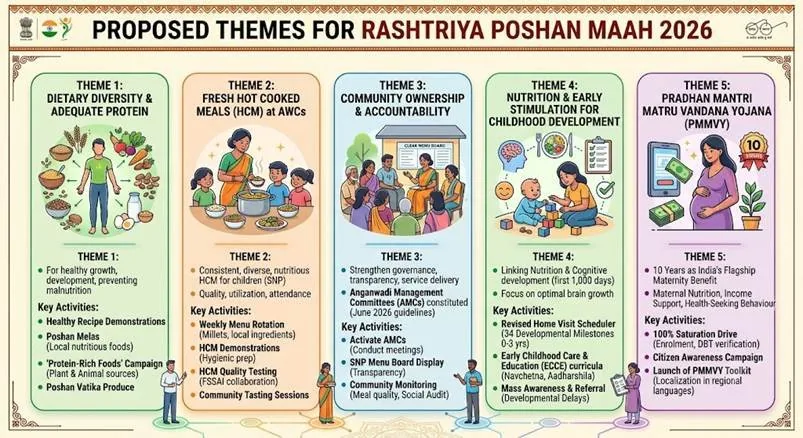
- About: Launched on 9th September 2026 at Rudraksh International Cooperation and Convention Centre, Varanasi (Uttar Pradesh), it highlights the role of Anganwadi Centres as the world’s largest childcare network providing nutrition, care and early childhood development services.
- Theme: “Hamari Anganwadi, Hamari Jimmedari”, highlighting collective ownership and community responsibility for strengthening Anganwadi Centres.
- Promoting Dietary Diversity and Better Nutrition: The campaign emphasises improving dietary diversity by encouraging adequate protein intake, consumption of diverse food groups and greater use of locally available nutritious foods to address nutritional deficiencies.
- Improving Quality of Supplementary Nutrition Programme (SNP): It focuses on providing fresh and diverse Hot Cooked Meals (HCM) through better menu rotation, improved hygiene practices and quality assurance mechanisms at Anganwadi Centres.
- Strengthening Community Ownership of Anganwadi Centres: The initiative aims to enhance accountability and participation through Anganwadi Monitoring Committees (AMCs), along with the display of Supplementary Nutrition Programme Menu Boards for greater transparency.
- Linking Nutrition with Early Childhood Care and Education (ECCE): The campaign highlights that nutrition and cognitive development are interconnected, with adequate nutrition serving as a foundation for early learning, brain development and overall childhood growth.
- Focusing on Maternal Nutrition and the First 1,000 Days:
- Rashtriya Poshan Maah 2026 will commemorate 10 years of Pradhan Mantri Matru Vandana Yojana (PMMVY), India’s flagship maternity benefit programme.
- It highlights the role of maternal nutrition, healthcare-seeking behaviour and income support during pregnancy in ensuring healthy growth and lifelong well-being of children.
 What are the Key Facts About Rashtriya Poshan Maah?
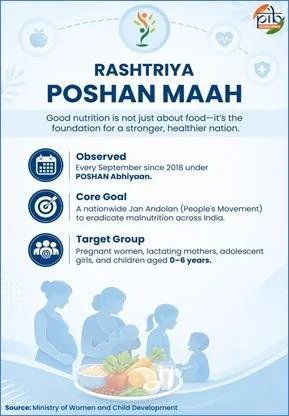
- Launch of POSHAN Abhiyaan (2018): The Government of India launched POSHAN Abhiyaan in March 2018 as a multi-ministerial convergence mission to place nutrition at the centre of the development agenda.
- Mission Poshan 2.0 (2021–22): Nutrition-related interventions were integrated under Mission Poshan 2.0, India’s unified National Nutrition Mission implemented by the Ministry of Women and Child Development.
- Components of Mission Poshan 2.0:
- POSHAN Abhiyaan: Focuses on technology-driven monitoring, Jan Andolan (mass mobilisation) and behavioural change for improving nutrition outcomes.
- Anganwadi Services/ICDS: Provides supplementary nutrition, hot cooked meals and early childhood care services.
- Scheme for Adolescent Girls: Provides nutritional support to out-of-school adolescent girls.
- Rashtriya Poshan Maah: Observed every September, it serves as a platform to create awareness about Mission Poshan 2.0 and encourage community participation in improving nutrition outcomes.
- Malnutrition Challenge: Malnutrition remains a major public health challenge in India, affecting the health, growth, learning outcomes and productivity of women and children across the life cycle.
 POSHAN Abhiyaan as a People’s Movement
- POSHAN Abhiyaan adopts a Jan Andolan (people’s movement) approach by positioning nutrition improvement as a shared societal responsibility rather than merely a government programme.
- It recognises that sustainable behavioural changes related to infant feeding practices, dietary diversity, antenatal care, hand hygiene and institutional healthcare seeking can only be achieved through active community participation and ownership.
- About: Poshan Pakhwada has been observed annually since 2018 as a two-week intensive outreach campaign conducted in April. It aims to strengthen community mobilisation and reinforce key nutrition-related behaviours under POSHAN Abhiyaan.
- 8th Poshan Pakhwada (2026): The 8th Poshan Pakhwada was conducted from 9th April to 23rd April 2026 with the central theme “Maximizing Brain Development in the First Six Years of Life.”
- Focus on Early Childhood Development: The campaign highlighted that more than 85% of brain development occurs by the age of six years, with the most rapid development taking place during the first 1,000 days of life.
- Promoting a Holistic Nutrition Approach: Poshan Pakhwada 2026 aimed to expand the understanding of nutrition beyond disease prevention by promoting the idea of “nutrition and early childhood stimulation for optimal brain development.”
- Significance: Poshan Maah and Poshan Pakhwada nutrition-focused community mobilisation campaigns promote awareness and behavioural change regarding health, wellness, immunity and improved nutrition outcomes among communities.
- Launch and Objective: The Poshan Tracker was launched on 1st March 2021 as a digital governance platform for monitoring the implementation of Anganwadi Services and improving transparency in nutrition service delivery.
- Real-Time Monitoring of Nutrition Services:
- The platform enables near real-time monitoring of key indicators, including:
- Functioning and opening of Anganwadi Centres
- Daily attendance of children
- Early Childhood Care and Education (ECCE) activities
- Growth monitoring of beneficiaries
- The platform enables near real-time monitoring of key indicators, including:
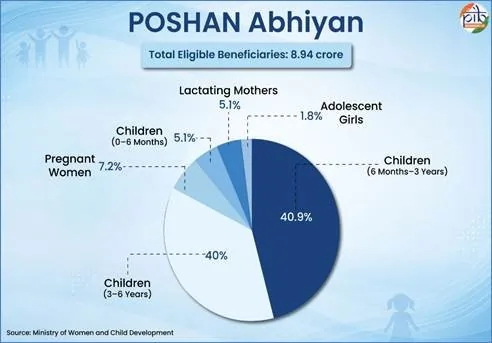
- Beneficiary Coverage: The Poshan Tracker monitors nutrition services for Pregnant women, Lactating mothers, Children up to six years of age and Adolescent girls.
 Conclusion
- The Rashtriya Poshan Maah represents India’s shift from a welfare-based approach to a community-driven nutrition mission. Through Mission Poshan 2.0, Anganwadi strengthening, digital monitoring and behavioural change initiatives, India aims to build healthier families and a nutritionally secure nation.
Sports
Dhiraj Bommadevara: 1st Indian Man to Win Archery World Cup Final
Source Recently, Indian recurve archer Dhiraj Bommadevara became the first Indian male recurve archer to win the men’s individual recurve title at the Archery World Cup Final 2026 held in Saltillo, Mexico, defeating Japan’s Junya Nakanishi in the final.- He is the second Indian archer overall to win an individual Archery World Cup Final title, after Dola Banerjee, who won the women’s recurve title in 2007 at Dubai.
- According to World Archery, Bommadevara is ranked World No. 4 in Recurve Men (RM), with his highest ranking also being No. 4 achieved in September 2026.
- World Archery:
- The Archery World Cup Final is organised by World Archery, the international governing body for the sport, and serves as the season-ending event featuring the top-performing archers from the World Cup circuit.
- The Hyundai Archery World Cup was introduced in 2006 as an annual international circuit, with archers competing across multiple stages to qualify for the final event.