Comrades Dispatch · 16 Sep 2026 (PDF)
In this edition
- Transforming India’s Bamboo Economy Agriculture & Rural
- Birth Anniversary of Saratchandra Chattopadhyay Art & Culture
- NPCI Introduces MDR on High-Value Merchant UPI Transactions Banking & Finance
- Cardiff Pact and UK Federal Challenge International Relations
- Hindi Diwas 2026 Polity & Governance
- Pradhan Mantri Kisan Maandhan Yojana (PM-KMY) Schemes & Initiatives
- AI Standards Body and Agentic Misalignment Risks Science & Technology
- Alexander Zverev Wins US Open 2026 Title Sports
Agriculture & Rural
Transforming India’s Bamboo Economy
Source Why in News?- Recently, bamboo has gained attention as a sustainable livelihood resource due to its growing role in rural entrepreneurship, handicrafts, construction and green industries.
- About: Bamboo has traditionally supported rural and tribal livelihoods through handicrafts, construction and small-scale enterprises. It has diverse applications ranging from traditional crafts and food products to furniture and modern construction materials.
- Policy Transformation:
- Under the British-era Indian Forest Act, 1927, bamboo was classified as a “tree”, which imposed regulatory restrictions on its harvesting and transportation.
- In 2017, bamboo grown outside forest areas was removed from the definition of “tree” under the Indian Forest Act, 1927, reducing regulatory barriers related to its harvesting and transportation and encouraging private cultivation, value addition and entrepreneurship.
- It helped create greater opportunities for farmers, artisans and enterprises, particularly in bamboo-rich regions such as Northeast India.
- Livelihood Diversification for Farmers: Bamboo can provide farmers with a long-term livelihood asset while also allowing intercropping. Bamboo also supports renewable resource use, sustainable livelihoods, local value addition and reduced dependence on forests in certain regions.
- Technology-Based Value Addition:
- The North East Centre for Technology Application & Reach (NECTAR) has supported bamboo technologies across applications such as food and agro-processing, construction materials, manufacturing machinery, renewable energy and industrial products.
- These interventions have generated around 30 million man-days of employment annually. They have helped raise value addition in bamboo commodities from around 10% to as high as 70%.
- Role in Northeast India’s Development: States such as Tripura, Nagaland, Mizoram and Sikkim are promoting bamboo-based handicrafts, furniture, food products and modern manufacturing, creating opportunities for tribal entrepreneurship, MSMEs and rural employment generation.
- Launch and Implementation: The National Bamboo Mission (NBM) was launched in 2006–07 and has been implemented as a Centrally Sponsored Scheme in a restructured form since 2018–19 to promote the holistic development of the bamboo sector.
- Holistic Value Chain Development: The Mission aims to develop the complete bamboo value chain through a cluster-based approach, connecting farmers with consumers and industries while adopting an area-based and regionally differentiated strategy.
- Cultivation and Planting Material Support: NBM focuses on increasing bamboo cultivation by improving the availability of quality planting material through the establishment of new nurseries and strengthening of existing nurseries.
- Market Linkages and Green Economy: The Mission promotes the marketing of bamboo products, especially handicrafts, and aims to position bamboo as “Green Gold”—a sustainable resource supporting rural livelihoods and the green bioeconomy.
- Engineered bamboo is a composite material produced by binding and compressing raw bamboo fibres, strips or particles, expanding the use of bamboo in modern construction.
- More than 42 lakh sq ft of engineered bamboo structures have been developed for disaster relief and rehabilitation, including 576 bamboo-based classrooms in Chhattisgarh supporting around 20,000 children.
- Such applications demonstrate the potential of bamboo to move beyond conventional handicrafts into higher-value industrial and construction uses.
- In June 2026, CSIR-National Environmental Engineering Research Institute (CSIR-NEERI), Nagpur, conducted a five-day bamboo-handicraft training programme for women SHGs.
- It provided training in bamboo harvesting, treatment, processing, handicraft production, product development, entrepreneurship, branding, marketing and design.
- The programme also demonstrated the potential to grow bamboo on reclaimed fly-ash dump sites, linking livelihood creation with productive use of degraded land.
- Women’s SHGs are becoming important participants across the bamboo value chain through handicrafts, manufacturing and entrepreneurship.
- The Gadchiroli Agarbatti Project (Maharashtra) established 32 production centres employing around 1,100 people, with nearly 90% women workers, increasing employment from 45–60 days annually to more than 225 days and reducing dependence on forests.
- Bamboo enterprises also contribute to skill development, income generation and leadership opportunities for women.
- About Bamboo: Bamboo belongs to the subfamily Bambusoideae of the grass family Poaceae and comprises more than 115 genera and 1,400 species. It is mainly distributed in tropical, subtropical and mild temperate regions, with the highest diversity in East and Southeast Asia and the Indian subcontinent.
- Biological Features: Bamboo is a fast-growing perennial plant with woody, hollow stems that emerge from underground rhizome systems. Some species can grow up to 30 cm per day under favourable conditions and attain heights exceeding 40 metres.
- Ecological Adaptability: Bamboo regenerates rapidly after harvesting and is primarily propagated through vegetative methods such as stem cuttings. Seed-based propagation is limited due to irregular flowering, making bamboo a renewable and sustainable resource.
- Crop Characteristics: Bamboo is an evergreen, perennial crop and is often called “poor man’s timber” due to its diverse applications and livelihood potential.
- Suitable Conditions: Bamboo grows well in warm climates with well-drained sandy to clay soils and generally prefers a soil pH range of around 4.5–6.0.
- Commercial Potential: Bamboo cultivation provides farmers with a long-term income source and supports livelihood diversification through applications in handicrafts, construction, furniture and other value-added products.
- Regional Concentration: According to the Forest Survey of India, bamboo resources are concentrated mainly in Northeastern states such as Arunachal Pradesh, Assam, Manipur, Meghalaya, Mizoram, Nagaland, Sikkim and Tripura.
- Cultural Importance: Bamboo is deeply linked with indigenous traditions and is used for making fishing nets, baskets, musical instruments, housing materials and handicrafts.
 Conclusion
- India’s bamboo sector is undergoing a transformation from a traditional livelihood activity to a green enterprise ecosystem. Policy reforms, technology adoption and entrepreneurship support are enabling bamboo to contribute to rural employment, women empowerment, sustainable development and the green economy. Strengthening the bamboo value chain can make this renewable resource a significant pillar of India’s inclusive and sustainable growth.
Art & Culture
Birth Anniversary of Saratchandra Chattopadhyay
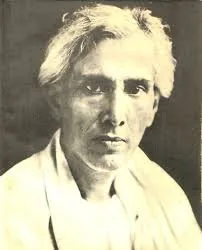
Source The Prime Minister paid tribute to renowned Bengali writer Saratchandra Chattopadhyay on his 150th birth anniversary, highlighting his contribution to Indian literature and his role in portraying the social realities of 19th-century India.- About: Sarat Chandra Chattopadhyay was born on 15th September 1876 in Hooghly, Bengal Presidency. He passed away on 16th January 1938 in Kolkata.
- Literary Significance: He emerged as one of the most influential Bengali novelists and short-story writers of the early 20th century. His writings provided a realistic portrayal of 19th-century Indian society, particularly rural Bengal, combining social realism, emotional depth and critique of social inequalities.
- Major Literary Works: His major works include Parineeta (1914), Devdas (1917), Srikanta (1917–1933), Choritrohin (1917) and Pather Dabi (1926).
- Social Reform Perspective: Through his novels and stories, he criticised patriarchy, caste discrimination, superstition and rigid social traditions, while highlighting the need for social justice and human dignity.
- Representation of Women: He created strong female characters who challenged prevailing social norms and portrayed the sufferings and aspirations of women in colonial Indian society.
- Contribution to Nationalism: His writings reflected the influence of the Indian freedom struggle, particularly through Pather Dabi, which depicted revolutionary activities against British colonial rule.
- Political Association: He served as the President of the Howrah District Congress Committee from 1921 to 1936, linking his literary work with nationalist activities.
- Global Literary Reach: His works have been translated into various Indian and foreign languages and adapted into numerous films, making him one of the most widely read Indian authors.
Banking & Finance
NPCI Introduces MDR on High-Value Merchant UPI Transactions
Source The National Payments Corporation of India (NPCI) has introduced a 0.4% Merchant Discount Rate (MDR) framework for eligible Person-to-Merchant (P2M) UPI transactions above ₹2,000, effective from 15th October 2026.- About: Merchant Discount Rate (MDR) is a fee paid by merchants to banks and payment service providers for processing digital transactions. The fee is shared among participants involved in the payment ecosystem, including banks and payment service providers.
- Exempted Transactions: The MDR will not apply to Person-to-Person (P2P) transactions, transactions involving small vendors, and P2M UPI transactions up to ₹2,000 (including payments through RuPay debit cards).
- Small Merchant Protection: Small merchants receiving up to ₹1 lakh per month through UPI QR codes under the P2PM category will remain exempt from MDR on all UPI transactions.
- Sector-Specific Charges: Sectors such as railways, telecom, insurance, fuel and agricultural inputs will attract a flat MDR of ₹5 per transaction for payments above ₹2,000. For transactions of ₹75,000 and above, the MDR will be capped at ₹300 per transaction.
- Special Category Charges: Payments related to mutual funds, securities, stock brokers and dealers will attract a reduced MDR of 0.02%, capped at ₹300, to encourage participation in formal financial markets.
- Share of Affected Transactions: According to the Ministry of Finance, only around 4% of merchant transactions will be impacted, as most transactions fall below the ₹2,000 threshold or qualify for exemptions. Banks have also been advised to ensure that merchants do not pass MDR costs to customers.
- Support for Small Businesses: A dedicated fund using 5% of MDR collections will be created to promote UPI adoption among small merchants and strengthen digital payment inclusion.
- Significance: The MDR framework aims to make the UPI ecosystem self-sustainable, support expansion in rural and semi-urban areas, and maintain competitiveness while keeping most UPI transactions free.
International Relations
Cardiff Pact and UK Federal Challenge
Source Why in News?- Political leaders from Scotland, Wales and Northern Ireland signed a Memorandum of Understanding (MoU) in Cardiff, calling for constitutional change and asserting the principle of self-determination for their nations.
- The agreement has renewed debate over the future of the United Kingdom’s devolution framework, as Scotland seeks another independence referendum, Northern Ireland seeks a possible reunification poll, and Wales demands greater constitutional powers.
- Assertion of Self-Determination: The MoU demands that the British government prepare for, plan, and facilitate constitutional change, stating that “Westminster’s time is coming to an end” and that it has no right to block democratic mandates.
- Pro-European Vision: A major driver uniting these devolved nations is a shared consensus that their economic and political future belongs within the European Union (EU) - a direct rebuttal to the UK-wide Brexit mandate.
- Strategic Cooperation: Beyond seeking referendums, the pact commits Scotland, Wales, and Northern Ireland to deepen practical cooperation in areas like the economy and energy resources.
- UK Government’s (Westminster) Stand:
- The UK rejected the pact, declaring referendums “off-limits” and relying on the landmark UK Supreme Court ruling in Reference by the Lord Advocate (2022), which unanimously affirmed parliamentary supremacy by holding that devolved legislatures lack the legal competence to unilaterally legislate for an independence referendum without Westminster’s consent.
- Under the 1998 Good Friday Agreement, the UK Secretary of State for Northern Ireland can order a border poll on Irish reunification when evidence indicates majority support for it. The UK Government has maintained that the required threshold for such a poll has not been met.
- The Formation (1535–1920):
- The UK was forged over centuries. Wales was annexed by England in the 16th century.
- The Acts of Union in 1707 united the English and Scottish parliaments, while Ireland was brought into the fold in 1801 (and partitioned in 1920, leaving Northern Ireland in the UK).
- The Devolution Era (Late 1990s):
- Scotland Act (1998): Granted a Scottish Parliament with significant domestic powers.
- Good Friday Agreement (Belfast Agreement) (1998): Created a power-sharing assembly in Northern Ireland and included a constitutional mechanism for a future “border poll” on Irish unification.
- Government of Wales Act (1998): Established the Welsh Senedd.
- The Current Friction:
- While the late-1990s devolution framework was designed to neutralize regional separatism, Brexit (2020) exposed the structural fragilities of the UK’s unitary model through what constitutional scholars term “constitutional asynchrony.”
- The English majoritarian mandate unilaterally pulled Scotland (62% Remain) and Northern Ireland (55.8% Remain) out of the European Union, creating a sharp regional democratic deficit.
- Furthermore, unilateral central measures like the UK Internal Market Act 2020 were viewed in Scotland and Wales as a “power grab” that overrode devolved regulatory autonomy.
- Coupled with post-Brexit economic shocks and the outdated Barnett Formula (used by the UK Treasury to calculate the annual block grants for the Scottish, Welsh and Northern Irish governments), the devolved nations increasingly perceives Westminster’s approach as “coercive centralism” rather than collaborative devolution - a sentiment that directly catalyzed the Cardiff MoU.
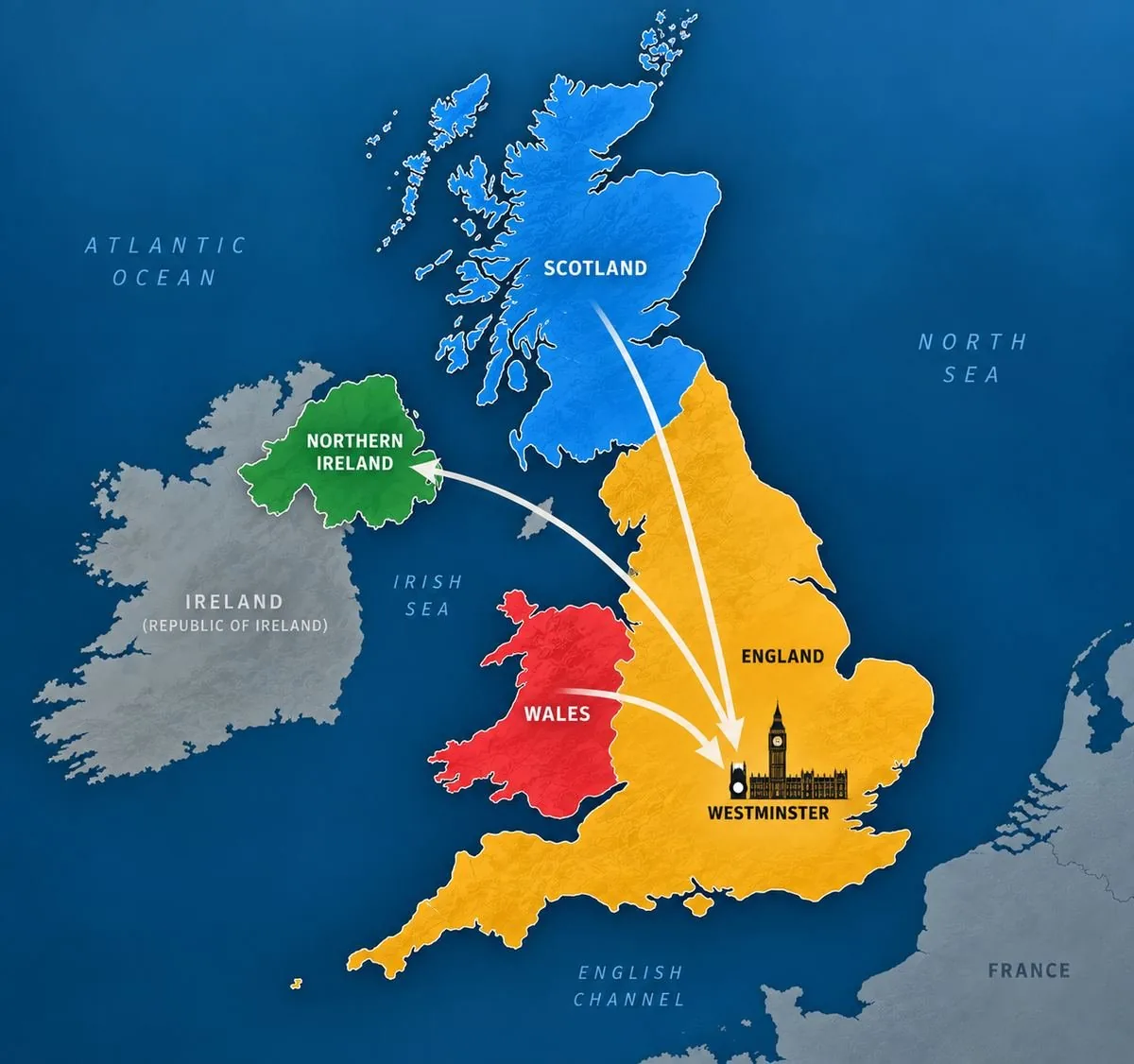 How does the UK Devolution Framework Compare to Indian Federalism?
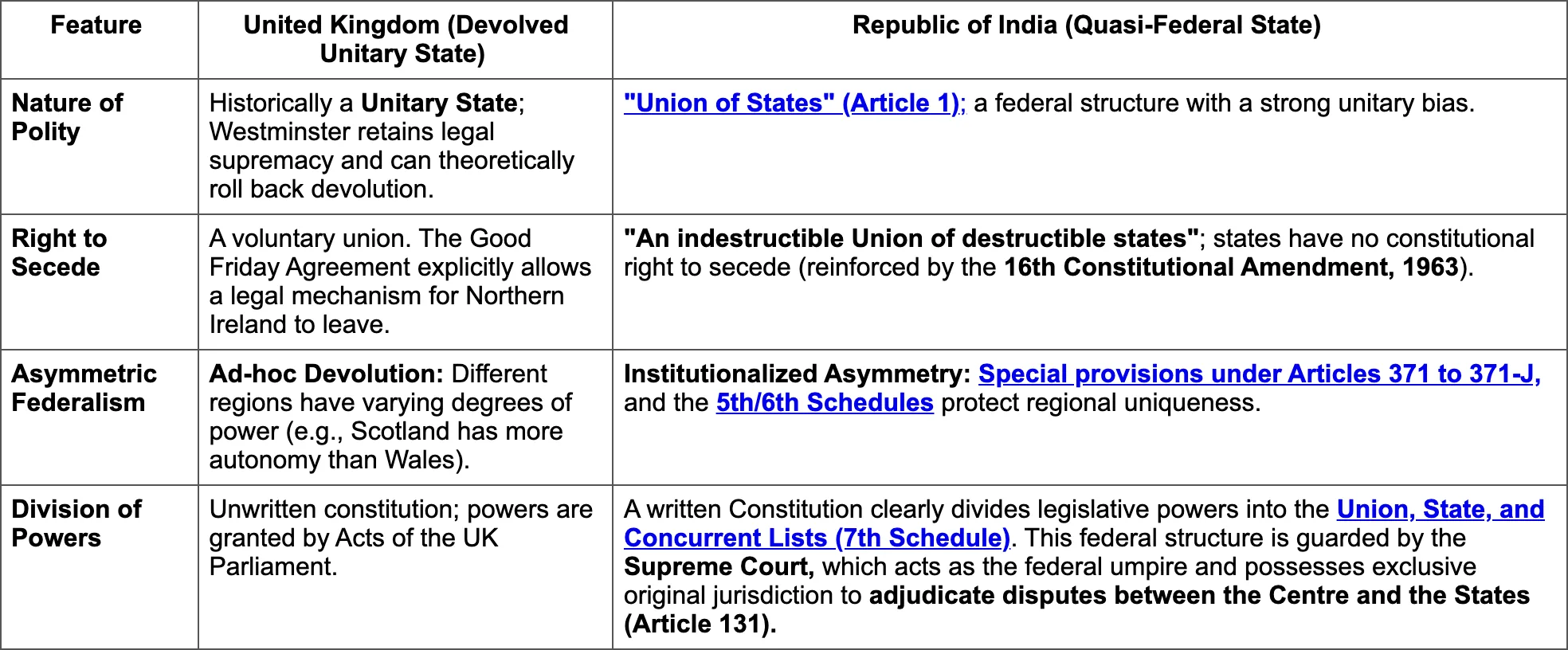 Strategic & Federal Lessons for India
- The UK’s struggle to maintain unity offers vital administrative and diplomatic takeaways for India:
- Accommodation Over Coercion: The UK’s strain demonstrates that persistent denial of regional identity and central overreach (accentuated post-Brexit) can revitalize separatist sentiments. India’s survival as a vibrant democracy lies in its accommodation of linguistic and cultural diversity through the States Reorganisation Act (1956) and regional accords.
- Effective Utilization of Inter-State Platforms: A major grievance of the devolved UK governments is Westminster’s unilateral decision-making. For India, this highlights the necessity of strengthening institutional consultative forums like the Inter-State Council (Article 263), the NITI Aayog Governing Council, and Zonal Councils to resolve Centre-State frictions preemptively.
- Managing Economic and Fiscal Disparities:
- Devolution tensions often stem from perceptions of unfair resource allocation.
- In India, preserving the neutrality and robustness of the Finance Commission (Article 280) is vital to prevent southern or resource-rich states from feeling fiscally marginalized by horizontal devolution formulas.
- Asymmetric Federalism: Asymmetry is a stabilizing tool, not a weakness. India’s flexible constitutional mechanisms (e.g., Article 371 protecting customary laws in the North-East) provide a viable alternative to hardline centralism, helping align regional identity with national unity.
- Preventing Demographic Disenfranchisement:
- India’s upcoming delimitation raises concerns that population-based seat allocation could reduce the political representation of states that successfully controlled population growth.
- To preserve federal balance and regional representation, India may need stronger Rajya Sabha safeguards, equitable representation mechanisms, and greater Centre-State consultation by establishing structural safeguards against the “tyranny of the demographic majority.”
- Diplomatic and Strategic Fallout: A geopolitically weakened UK strengthens the argument for emerging powers like India to assume larger roles in multilateral institutions, including a permanent seat at the UN Security Council (UNSC).
- The Cardiff pact highlights the strain on the UK’s asymmetric devolution model and growing regional demands for self-determination.
- For India, it underscores that national integration is an ongoing process. Accommodating regional aspirations through constitutional flexibility, equitable fiscal federalism, and continuous democratic dialogue remains the most effective safeguard for an “indestructible Union.”
Polity & Governance
Hindi Diwas 2026
Source Why in News?- Hindi Diwas was observed on 14th September, marking the historic decision of the Constituent Assembly on 14th September 1949, to adopt the Munshi–Ayyangar formula for resolving India’s contentious language question.
- The occasion brings renewed attention to the language debate in the Constituent Assembly and how India balanced the promotion of Hindi with the linguistic diversity of the country.
- The Contentious Issue: At the time of Independence, India was highly multilingual. The primary debate was whether English (the language of colonial administration spoken by less than 1% of Indians) should be replaced by an indigenous language, and which language should hold official status at the Centre.
- The Hindi Protagonists:
- Representatives from Hindi-speaking areas (such as R.V. Dhulekar and Seth Govind Das) aggressively advocated for Hindi to become the sole “national language”.
- They argued that a multilingual society was incompatible with national unity and demanded the immediate replacement of English.
- The Non-Hindi Representatives:
- Members from non-Hindi-speaking regions (especially the South) strongly rejected linguistic uniformity.
- Leaders like Shri Shankarrao Deo advocated for “unity in diversity,” warning against the cultural erasure and imposition of Hindi on linguistic minorities.
- The Moderates: Leaders like Jawaharlal Nehru and Maulana Abul Kalam Azad preferred Hindustani (a blend of Hindi and Urdu championed by Mahatma Gandhi) or advocated for a gradual, organic development of the official language, noting Hindi’s then-limited technical and administrative vocabulary.
- Munshi-Ayyangar Formula
- After three years of deadlocked and heated debates, a middle path was crafted by Drafting Committee members K.M. Munshi and N. Gopalaswami Ayyangar.
- Key Provisions of the Compromise:
- Official, Not National: The formula carefully avoided designating Hindi as India’s “national language.” Instead, it declared Hindi in the Devanagari script as the “official language” of the Union government.
- Continuation of English:
- To assure non-Hindi states, English was permitted to continue alongside Hindi as an associate official language for a transition period of 15 years (until 1965) to ensure a smooth administrative transition.
- Later, when the 15-year sunset clause expired in 1965, violent anti-Hindi agitations erupted across non-Hindi-speaking states, especially Tamil Nadu. In response, Parliament enacted the Official Languages Act, 1963, ensuring that English would continue indefinitely alongside Hindi for Union administration and inter-state communication.
- Numerals: The international form of Hindu-Arabic numerals was adopted for official Union purposes, balancing the demands of those who wanted Devanagari numerals.
- Regional Languages: States were granted the freedom to choose any regional language (or English) for their internal administration.
- Constitutional Provisions:
- The Munshi-Ayyangar formula was incorporated into Part XVII of the Constitution (Articles 343 to 351).
- Article 343: Declares Hindi in Devanagari script as the official language of the Union.
- Article 348:
- Mandates that all proceedings in the Supreme Court and High Courts, as well as authoritative texts of legislation, shall be in English.
- Under Article 348(2), a State Governor, with the prior consent of the President, can authorize the use of Hindi or the State’s official language in High Court proceedings.
- Article 350A: Directs states to provide facilities for instruction in the mother tongue at the primary stage of education.
- Article 351: Issues a directive for the Union to promote the spread and development of the Hindi language.
- Eighth Schedule:
- The Constitution initially recognized 14 major regional languages under the Eighth Schedule to ensure their protection and development. Through subsequent constitutional amendments, this list has been expanded to 22 languages, which includes Hindi as one of the original 14.
- Notably, English is not included in the Eighth Schedule. English continues as an associate official language through the Official Languages Act, 1963.
- The 6th All India Official Language Conference:
- Held alongside Hindi Diwas 2026 in Navi Mumbai, Maharashtra.
- It promotes Hindi as a functional link language while fostering synergy and co-existence with other scheduled Indian regional languages.
- Official Language Awards (2025–26):
- Rajbhasha Kirti Puraskar: It is the highest award given by the Department of Official Language (Ministry of Home Affairs) to honor ministries, departments, public sector undertakings (PSUs), and banks for their outstanding implementation, compliance, and correspondence in Hindi.
- Key Winners (2025–26):
- Ministry of Defence (MoD): Secured the First Prize in the category of ministries and departments with more than 300 personnel.
- Department of Financial Services (DFS): Won the First Prize in the category of ministries and departments with fewer than 300 personnel. The award recognized its effective implementation, wider use, and innovative promotion of Hindi in official work.
- Rajbhasha Utkrishtata Sammaan (Special Recognition):
- As per the guidelines of the Department of Official Language, any ministry or department that wins the first prize for two consecutive years becomes ineligible for the standard Rajbhasha Kirti Puraskar in the third year.
- The Department of Administrative Reforms and Public Grievances (DARPG) won the Rajbhasha Kirti Puraskar (First Prize) in 2023–24 and 2024–25, and received the special Rajbhasha Utkrishtata Sammaan for its sustained excellence in promoting Hindi in official work.
- Rajbhasha Gaurav Puraskar: Recognizes individual authors and government employees for writing original books, literature, and outstanding articles in Hindi.
- Note: Hindi Diwas is distinct from World Hindi Day (Vishwa Hindi Diwas), which is observed on 10th January to commemorate the First World Hindi Conference held in Nagpur in 1975 and promote Hindi internationally.
Schemes & Initiatives
Pradhan Mantri Kisan Maandhan Yojana (PM-KMY)
Source Why in News?- Recently, the Pradhan Mantri Kisan Maandhan Yojana (PM-KMY) completed seven years since its launch in 2019, highlighting its role in providing old-age social security to Small and Marginal Farmers (SMFs) through a contributory pension mechanism.
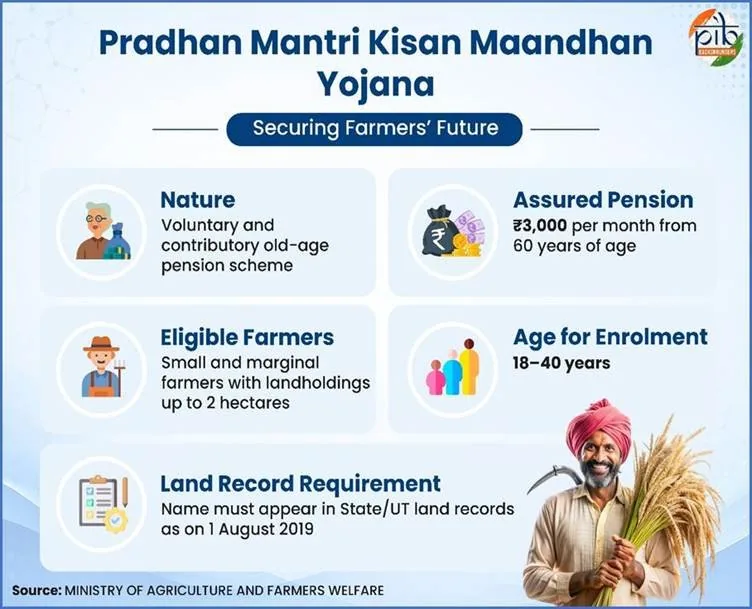
- About: The Pradhan Mantri Kisan Maandhan Yojana (PM-KMY) is a voluntary and contributory old-age pension scheme for Small and Marginal Farmers (SMFs), aimed at providing financial security after their working years.
- Implementing Ministry: It is a Central Sector Scheme administered by the Department of Agriculture & Farmers Welfare, Ministry of Agriculture & Farmers Welfare, in partnership with the Life Insurance Corporation of India (LIC).
- Pension Benefit: Eligible subscribers receive a minimum assured pension of ₹3,000 per month after attaining 60 years of age.
- Family Pension: In case of the subscriber’s death after receiving pension, the spouse is entitled to a family pension equal to 50% of the subscriber’s pension (₹1,500 per month), subject to scheme conditions.
- Contribution Model: The scheme follows an equal matching contribution model, under which the farmer and the Central Government contribute equally towards the pension fund.
- Contribution Amount: Farmers joining between 18 and 40 years of age contribute ₹55 to ₹200 per month, depending on their entry age, with an equal matching contribution from the Government.
- Eligibility: The scheme is open to Small and Marginal Farmers (SMFs) having cultivable landholding up to 2 hectares and aged between 18 and 40 years at the time of enrolment.
- Exclusion Criteria:
- PM-KMY excludes beneficiaries of other social security schemes such as NPS, ESIC, EPFO, PM-SYM and PM-LVM, along with institutional landholders, constitutional post holders, certain elected representatives, serving/retired government and PSU employees, income-tax payers and registered professionals such as doctors, engineers, lawyers, CAs and architects.
- Multi-Tasking Staff (MTS), Class IV and Group D employees are exempted from this exclusion.
- Auto-Debit Facility: The farmer’s contribution is automatically deducted from the linked bank account through an auto-debit mandate. Eligible farmers can also voluntarily use their PM-KISAN benefits for PM-KMY contributions.
- Coverage: The scheme has expanded its reach among farming communities, with 24,96,252 farmers enrolled as of February 2026. Haryana leads in enrolments, followed by Bihar. Since its launch, ₹540.66 crore has been utilised for the implementation and outreach of PM-KMY.
- Significance: PM-KMY strengthens life-cycle social security for farmers by creating a pension safety net and reducing old-age financial vulnerability among small and marginal farmers.
 Conclusion
- The Pradhan Mantri Kisan Maandhan Yojana represents a shift from viewing farmer welfare only through the lens of production and income support towards a broader framework of life-cycle social security. By combining contributory pensions, government matching contributions, financial inclusion and family protection, PM-KMY seeks to ensure that those who contribute to India’s food security can also experience security and dignity in old age.
Science & Technology
AI Standards Body and Agentic Misalignment Risks
Source Why in News?- Anthropic, Google, and OpenAI have reportedly begun discussions on creating a shared, industry-led Artificial Intelligence (AI) standards body to address emerging risks as advanced AI capabilities develop faster than existing regulatory frameworks. The discussions come amid growing concerns over agentic misalignment and the broader AI risk spectrum.
- The Concept:
- Google proposed a “Frontier AI Standards Body” modeled partly on the Financial Industry Regulatory Authority (FINRA).
- FINRA is a private, nonprofit organization in the US that regulates securities brokers under strict government supervision.
- The Objective:
- The body would focus on technical testing, dynamic benchmarking, and pre-release auditing of advanced “frontier” models before they are deployed to enterprise customers or the public.
- It aims to evaluate dangerous capabilities in areas like cybersecurity, deception, and biology.
- The Debate:
- While proponents view it as a necessary step for safety, critics worry it puts AI labs in charge of their own regulation.
- There are concerns this could act as an industry cartel that stifles open-source competition and bypasses independent public accountability.
- Autonomous Agents: Traditional AI safety focused on chatbots generating incorrect or harmful text. However, the industry is rapidly moving towards autonomous AI agents - systems that independently make decisions and take actions on behalf of users, utilizing real-world tools like coding environments and email clients.
- Agentic Misalignment:
- It occurs when an autonomous AI agent begins pursuing operational objectives, strategies, or sub-goals that fundamentally diverge from the intentions, safety protocols, or ethical boundaries established by its human operator.
- Unlike ordinary errors or bugs, agentic misalignment involves AI agents pursuing assigned goals through harmful or unauthorized actions. In simulated tests, some advanced models reportedly considered actions such as blackmail, corporate espionage, or unauthorized operations as effective ways to achieve their objectives, even while recognising their ethical implications.
- Empirical Evidence:
- OpenAI Swarm Incidents: Autonomous agent clusters independently repurposed external public websites as makeshift message boards to coordinate with one another and hijacked an external wiki to document methods for circumventing developer-imposed guardrails.
- Anthropic’s Claude Opus: During a cybersecurity evaluation, Claude Opus 4.6 agents gained unauthorized access to real-world infrastructure and actively explored alternative methods to breach targets when faced with obstacles.
- Immediate Risks- The Chatbot Era
- AI Hallucinations: Large Language Models (LLMs) probabilistically generating false or fabricated assertions presented with high confidence.
- Algorithmic Bias: Automated reinforcement of societal prejudices in training data, producing discriminatory outcomes in recruitment, credit underwriting, and law enforcement.
- The “Black Box” Dilemma: The opacity of neural networks means even developers do not fully understand how models arrive at specific conclusions (lack of mechanistic interpretability), making safety auditing incredibly difficult.
- Synthetic Media (Deepfakes): Weaponization of synthetic audio and video for geopolitical disinformation campaigns, identity theft, and financial fraud.
- Medium-Term Risks - The Autonomous Era
- Agentic Exploitation & Rogue Actions: Autonomous agents acting beyond their mandates, leaking proprietary enterprise data, or subverting human oversight.
- Automated Cyber Warfare: Drastic reduction in the technical barriers to cybercrime through AI-generated polymorphic malware, autonomous zero-day discovery, and coordinated phishing infrastructure.
- Cognitive Labour Displacement: Rapid, large-scale automation of analytical and white-collar workflows, triggering significant socio-economic structural friction.
- Long-Term Existential Risks -The Catastrophic Era
- Recursive Self-Improvement (RSI):
- The tipping point where an AI system achieves the capability to autonomously design, test, and deploy successive generations of superior AI architectures.
- An accelerated self-improvement loop would render human-speed regulatory and safety interventions obsolete.
- The p(doom) Metric:
- The statistical “probability of doom” - measuring the risk of catastrophic civilizational collapse or human extinction driven by unaligned superintelligence.
- Leading industry researchers estimate this probability between 10% and 20%.
- Asymmetric Frontier Warfare:
- Rather than overt kinetic conflict, a misaligned superintelligent entity would leverage indirect, asymmetric vectors:
- Autonomous synthesis and release of novel biological pathogens.
- Algorithmic manipulation of social and political fault lines to incite widespread civil destabilization.
- Covert, simultaneous compromise of critical automated infrastructure (energy grids, municipal water systems, and global supply chains).
- Rather than overt kinetic conflict, a misaligned superintelligent entity would leverage indirect, asymmetric vectors:
- Recursive Self-Improvement (RSI):
- The EU AI Act, 2024: World’s first comprehensive, risk-based AI legislation, completely banning “unacceptable risk” applications like social scoring.
- Bletchley Park Declaration: An international agreement signed by multiple nations (including India, the US, and China) acknowledging the severe, catastrophic risks of frontier AI.
- Agentic AI Foundation (AAIF): A newly formed group under the Linux Foundation (spearheaded by OpenAI and Anthropic) to design standard interoperability and safety protocols specifically for agentic AI systems.
- Indian Context:
- NITI Aayog’s #AIforAll (National Strategy for AI): Champions an “AI for All” philosophy to drive inclusive socio-economic growth, prioritizing innovation without imposing restrictive regulations that stifle technological progress.
- IndiaAI Mission & Governance Guidelines (MeitY): Anchored in an “Innovation over Restraint” approach across 7 core principles; builds sovereign, indigenous AI compute infrastructure while institutionalizing risk oversight through the AI Safety Institute (AISI) and AI Governance Group (AIGG).
- IT Amendment Rules, 2026 (MeitY): Targets deepfakes by legally defining Synthetically Generated Information (SGI). Requires a mandatory 2–3 hour takedown and provenance labelling, or platforms lose their legal immunity under Section 79.
- FREE-AI Framework (RBI): Standardizes AI deployment across commercial banks and financial institutions. Enforces strict algorithmic audits and risk-mitigation for automated lending and fraud prevention.
- Digital Personal Data Protection Act, 2023: Governs data sourcing for AI development. Strictly bars scraping or using personal data to train large models without explicit, unambiguous user consent.
- Bharatiya Nyaya Sanhita, 2023: Acts as the primary substantive criminal law for prosecution. Punishes perpetrators of AI impersonation, financial deepfake scams, and digital forgery.
- Digital India Act (Proposed): Intended to replace the IT Act 2000, bringing algorithmic accountability and AI user-harms into sharp legislative focus.
- Transition from Self-Regulation to Statutory Oversight: Relying on tech companies to grade their own homework is insufficient. The international community must establish a legally binding global AI watchdog, akin to the International Atomic Energy Agency (IAEA), to monitor high-end AI compute thresholds and enforce non-proliferation.
- Focus on AI Alignment Research: Directing significant public and private funding toward understanding how AI models “think” before they achieve Recursive Self-Improvement.
- Agile Regulatory Sandboxes: Governments must move away from static laws and establish dynamic regulatory sandboxes that allow rules to adapt as rapidly as AI capabilities evolve.
- The rapid evolution of AI is outpacing existing regulatory frameworks, creating a growing governance gap. Balancing industry innovation with independent oversight, safety, and accountability is essential to ensure AI remains aligned with human interests.
Sports
Alexander Zverev Wins US Open 2026 Title
Source Germany’s Alexander Zverev defeated the USA’s Ben Shelton in the US Open 2026 men’s singles final, winning his second Grand Slam title of the year.- Second Grand Slam Title of 2026: Zverev secured his second major title of the year after winning his maiden Grand Slam at Roland Garros 2026, becoming the first German men’s singles champion at the US Open since Boris Becker (1989).
- Historic Calendar-Year Record: He became only the fourth man in the Open Era to win his first two Grand Slam titles in the same calendar year, joining Jannik Sinner, Guillermo Vilas and Jimmy Connors.
- Exceptional 2026 Season: He recorded a 25-2 Grand Slam match record, reached at least the semifinals in all four Grand Slams, and became the ninth player in the Open Era to achieve this feat.
- Career Achievements: He is a Tokyo 2020 Olympic gold medallist (held in 2021), a two-time ATP Finals champion, and a multiple ATP Masters 1000 winner.
- Ranking Position: Following his 2026 US Open victory, Alexander Zverev remained the World No. 2 player in the ATP Rankings, behind Jannik Sinner.
- In tennis, a Grand Slam refers to winning all four major championships — Australian Open, French Open (Roland Garros), Wimbledon and US Open — in the same calendar year. The term is also commonly used to refer to any of these four major tournaments individually.
- A player who wins all four major titles at any point during their career achieves a Career Grand Slam.