Comrades Dispatch · 17 Sep 2026 (PDF)
In this edition
- India Electric Mobility Index 2025 Economic Scenario
- Dedicated Freight Corridors Infrastructure & Energy
- Kishau Multipurpose Project Nation & States
- National Conference on Quality and Safety of Biosimilars Science & Technology
- Data Centres in India Science & Technology
- SEMICON India 2026 Science & Technology
- Sanjukta Parasor: 1st Woman Officer to Lead CRPF’s CoBRA Unit Security
- Global Gender Gap Index 2026 Social Issues
Economic Scenario
India Electric Mobility Index 2025
Source Why in News?- The NITI Aayog released the 2nd edition of the India Electric Mobility Index (IEMI) 2025, with Delhi emerging as the top-performing State/Union Territory in the nation’s transition toward electric mobility.
- About:
- The IEMI is a composite index developed by NITI Aayog in collaboration with World Resources Institute India. It assesses the policy framework, infrastructure readiness, and implementation progress of electric mobility across Indian States and Union Territories.
- By providing a transparent benchmarking tool, it aims to foster cooperative and competitive federalism in India’s transition to clean mobility.
- Evaluation Framework:
- The index evaluates jurisdictions on a 0 to 100 scale, tracking 16 unique performance indicators categorized into three weighted thematic pillars:
- Transport Electrification Progress (50%): Measures the extent of actual EV adoption across private and commercial segments, along with the effectiveness of governance initiatives, purchase incentives, and operational support.
- Charging Infrastructure Readiness (30%): Evaluates physical and policy enablers, including the charger-to-vehicle ratio, power availability, integration of renewable energy, and capital subsidies for charging networks.
- EV Research and Innovation Status (20%): Assesses the regional innovation ecosystem by tracking the number of EV start-ups, generated patents, and institutional R&D initiatives.
- The index evaluates jurisdictions on a 0 to 100 scale, tracking 16 unique performance indicators categorized into three weighted thematic pillars:
- Performance Categories:
- Based on their overall scores, States and UTs are classified into four tiers:
- Top Performers: Scores ≥ 65
- Frontrunners: Scores 50–64
- Emerging Performers: Scores 35–49
- Aspirants: Scores < 35
- Based on their overall scores, States and UTs are classified into four tiers:
- Key Findings of IEMI 2025:
- Top Performers (Overall): Delhi retained the highest national score (84, up from 77 in 2024), followed by Maharashtra and Karnataka.
- Hilly & North-Eastern States: Manipur emerged as the highest-scoring state in this peer group with a score of 46, followed by Tripura and Assam.
- Thematic Leaders:
- Electrification Progress: Delhi topped this category, closely followed by Chandigarh.
- Charging Readiness: Karnataka led the nation, followed by Maharashtra and Haryana.
- Research & Innovation: Delhi recorded the highest score, alongside strong performances from Maharashtra and Karnataka.
- Most Improved: Madhya Pradesh registered the most significant advancement, climbing 16 positions from 23rd in the previous edition to 7th place overall.
- Surge in EV Adoption:
- Electric vehicle sales have grown remarkably, jumping from a mere 0.5% share in 2018 to 8.25% in 2025-26.
- This growth is heavily supported by Central initiatives like the FAME scheme, PM E-DRIVE, and the Production-Linked Incentive (PLI) scheme.
- Policy Momentum: The report highlighted that 29 out of India’s 36 States and UTs have now notified dedicated EV policies, indicating widespread administrative commitment.
- Strategic Significance:
- The index acts as an evidence-based roadmap for subnational governments to transition from initial EV policy formulation to effective implementation.
- Scaling up electric mobility is an economic and environmental imperative for India; it is critical for achieving the Viksit Bharat 2047 vision, reducing the nation’s 89% dependency on imported crude oil.
- Environmental and Economic Imperative:
- Road transport contributes 12% of India’s energy-related carbon dioxide emissions, making the e-mobility transition critical for decarbonisation.
- Simultaneously, the automotive sector is economically vital, contributing 7.1% to the national GDP and employing roughly 19 million people.
- Delhi EV Policy 2.0: Delhi is the first region in India to mandate 100% electrification of auto-rickshaws and light commercial vehicles (LCVs) by January 2027, and of two-wheelers by January 2028.
- Public Transport & Subsidies:
- As of early 2026, Delhi operates the largest electric-bus fleet in India and remains the first state to provide direct subsidies for electric cycles.
- To finance its ambitious Rs 4,000 crore EV subsidy program over the next four years, Delhi is actively seeking Supreme Court permission to utilize unused Environmental Compensation Charge (ECC) funds.
Infrastructure & Energy
Dedicated Freight Corridors
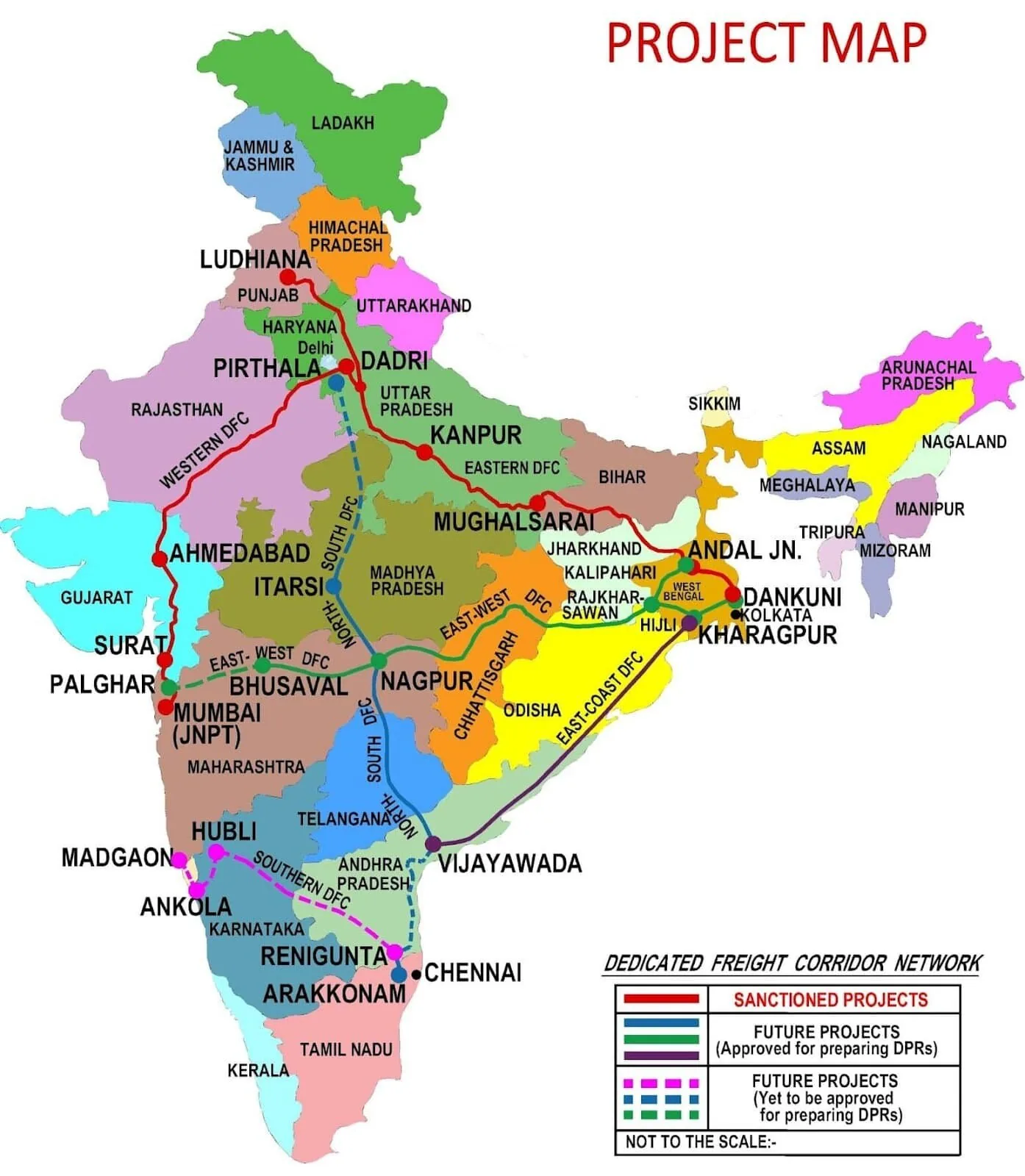
Source Why in News?- The Western Dedicated Freight Corridor (WDFC) has become fully operational, marking a major milestone in India’s freight infrastructure. Together with the Eastern Dedicated Freight Corridor (EDFC), India now has a 2,843-km dedicated freight rail backbone, strengthening the logistics architecture envisioned under PM GatiShakti.
- About:
- DFCs are a network of broad-gauge railway lines exclusively designed and built to handle freight (goods) trains in India. By segregating goods traffic from the conventional passenger railway network, DFCs facilitate the faster, heavier, and more efficient transport of cargo across the country.
- Freight trains on DFCs can operate at maximum speeds of up to 100 km/h (averaging 70-75 km/h), a massive upgrade from the conventional network’s average goods train speed of ~25 km/h.
- Implementation Agency:
- The Dedicated Freight Corridor Corporation of India Limited (DFCCIL) is a public sector undertaking under the Ministry of Railways, established as a Special Purpose Vehicle (SPV) under the Companies Act, 1956.
- It is responsible for the planning, construction, operation and maintenance of dedicated freight railway corridors designed to enable high-capacity and efficient movement of goods across India.
- India’s DFC Corridors and their Status:
- The 2,843-km completed network consists of two distinct segments:
- WDFC (1,506 km): Connecting Dadri (Uttar Pradesh) to Jawaharlal Nehru Port Trust (JNPT, Mumbai).
- EDFC (1,337 km completed):
- Connecting Ludhiana (Punjab) to Sonnagar (Bihar).
- The final 519-km stretch of the original EDFC plan, extending from Sonnagar to Dankuni (West Bengal), is slated for future development under a Public-Private Partnership (PPP) model.
- The 2,843-km completed network consists of two distinct segments:
- Proposed Corridors:
- East-West Corridor: Proposed to run from Dankuni (West Bengal) to Surat/Palghar (Maharashtra), linking the eastern mineral heartland directly to Gujarat’s ports.
- East Coast Corridor: Kharagpur (West Bengal) to Vijayawada (Andhra Pradesh).
- North-South Corridor: Itarsi (Madhya Pradesh) to Vijayawada (Andhra Pradesh) via Nagpur.
- Policy Backing:
- PM GatiShakti National Master Plan: DFCs align seamlessly with this Geographical Information System (GIS) -based multimodal connectivity initiative, acting as the primary rail arteries that link ports, industrial clusters, and Multimodal Logistics Parks (MMLPs).
- National Logistics Policy (NLP) 2022: DFCs support the NLP 2022, which aims to reduce India’s logistics costs to 8–9% of GDP by 2030 (from around 13–14%) and place India among the top 10 countries in the Logistics Performance Index (LPI) by 2030.
- Sagarmala Project: The corridors are deeply integrated with the Sagarmala initiative for port-led development, ensuring critical last-mile port-rail connectivity.
- National Rail Plan 2030: DFCs are the backbone of the government’s strategy to increase Indian Railways’ share in total national freight transport from the current ~27% to 45% by 2030.
 What is the Significance of DFCs for the Indian Economy?
- Drastic Reduction in Logistics Costs:
- India’s current logistics cost is around 13-14% of GDP, which makes exports uncompetitive compared to developed nations (where it is 7-8%).
- DFCs offer economies of scale by allowing double-stack containers and higher axle loads (25 tonnes), significantly bringing down the per-unit cost of transportation across the supply chain.
- Decongestion of the Passenger Network:
- Currently, passenger and freight trains share the same tracks, leading to delays for both.
- By shifting roughly 70% of freight traffic to DFCs, the conventional railway network is freed up, enabling the introduction of more high-speed passenger trains like the Vande Bharat Express and improving overall punctuality.
- Catalyst for Industrial Growth:
- The DFCs are not just transport routes; they act as economic arteries. They run parallel to major industrial initiatives like the Delhi-Mumbai Industrial Corridor (DMIC) and the Amritsar-Kolkata Industrial Corridor (AKIC).
- They facilitate the development of MMLPs, industrial townships, and PM MITRA textile parks along their routes.
- Environmental Sustainability: DFCs are completely electrified routes. By shifting freight from roads (trucks) to rail, DFCs are projected to save over 450 million tonnes of CO2 emissions over the next 30 years, aiding India’s target of achieving Net Zero emissions by 2070.
- Boost to Export Competitiveness:
- By seamlessly connecting the northern hinterland to major western ports (JNPT, Mundra, Kandla), the WDFC drastically slashes transit times (e.g., Dadri-JNPT journey cut from 66 to 58 hours).
- This creates a faster, predictable supply chain that reduces working-capital and inventory costs, allowing sectors like automobiles, engineering, petrochemicals, and textiles to meet global deadlines reliably and gain a massive competitive edge in international markets.
- The HDN Interface Problem:
- DFCs ultimately have to interface with the 7 High-Density Networks (HDNs) (most critical, heavily utilized passenger-freight routes of the Indian Railways), which carry over 40% of railway traffic.
- Several HDN sections operate at over 150% of capacity, creating a major choke point when DFC freight enters the conventional network.
- Without rapid multi-tracking/quadrupling of these routes, the time advantage of DFCs can be diluted.
- Last-Mile Connectivity Gap:
- The high-speed trunk corridor is only as efficient as the feeder roads and rail links connecting factories, warehouses and industrial clusters to DFC terminals.
- Poor local connectivity can make freight spend days reaching a terminal, effectively neutralising the time saved on the DFC.
- Reverse Cargo and Traffic Imbalance:
- Freight flows are currently skewed towards north-to-west export movement, while comparable return cargo from ports to the hinterland is limited.
- This creates empty return runs, lowering train utilisation and potentially weakening the financial viability of DFC operations.
- Future corridors therefore need two-way cargo aggregation, not merely higher one-way capacity.
- Land Acquisition and Cost Escalation:
- The WDFC and EDFC experienced delays due to land acquisition, litigation and local resistance across multiple States.
- These delays contributed to significant time and cost overruns, increasing project financing requirements and postponing the point at which corridor investments can generate adequate returns.
- Axle-Load and Interoperability Mismatch:
- DFCs are designed for higher axle loads, compared with conventional networks.
- Where heavy freight must transition onto conventional infrastructure, differences in infrastructure standards can create operational and handling constraints.
- This highlights the need for network-wide standardisation and technological upgradation, rather than treating DFCs as isolated corridors.
- Financing Future Corridors:
- The WDFC and EDFC benefited substantially from international financing, including Japan International Cooperation Agency (JICA) and World Bank support.
- Scaling up to proposed East-West, East Coast and North-South corridors will require large and sustained capital expenditure.
- The challenge is to secure long-term, affordable financing and viable PPP models without compromising project viability or placing excessive fiscal pressure on the public sector.
- Perishable Cargo Infrastructure: Many freight terminals lack cold storage, thermal separation, and reefer plug-in facilities, hindering the safe movement of perishable goods like food and medicines.
- Decongest High-Density Networks (HDNs):
- Accelerate multitracking/quadrupling of oversaturated HDN sections to prevent congestion at the DFC–conventional network interface.
- Multitracking is essential to meet the National Rail Plan’s ambitious target of increasing railway freight loading from 1,670 million tonnes (MT) in 2025-26 to 3,000 MT by 2030 and bringing India’s overall logistics cost down from 12-13% to 8-9%.
- Strengthen First- and Last-Mile Connectivity:
- Use PM GatiShakti’s GIS-based planning to integrate DFC nodes with Bharatmala feeder roads, manufacturing clusters, textile parks and agricultural hubs.
- Accelerate MMLPs around DFC nodes with warehousing, customs clearance and road–rail transfer facilities.
- Digital Tracking: Implementing end-to-end digital tracking (like RFID and IoT sensors) for containers so that exporters have real-time visibility of their cargo, matching international logistics standards.
- Solving the “Reverse Cargo” Problem:
- Promote Ro-Ro (Roll-on/Roll-off) services to increase two-way freight movement and reduce highway congestion.
- Rationalise freight tariffs through dynamic pricing and discounted return rates to attract port-to-hinterland cargo and reduce empty runs.
- Private Sector Participation: Leveraging Public-Private Partnerships (PPP) for the development of modern private freight terminals, rolling stock (specialized wagons), and mechanized loading/unloading facilities to reduce the capital burden on the government.
- European Union: The Trans-European Transport Network (TEN-T), specifically the Rhine-Alpine Corridor, seamlessly integrates railways, inland waterways, and short-sea shipping across major industrial regions.
- United States: Operates a highly efficient National Multimodal Freight Network, reinforced by the 2026 National Freight Strategic Plan, connecting ports, farms, and distribution centers largely through private enterprise.
- China: China’s 2030 intermodal program is actively upgrading connections at around 1,000 major freight hubs and integrating coastal and river transport.
- Singapore & The Netherlands: Both employ sophisticated GIS mapping, “digital-twin” technology, and spatial-planning systems to optimize port and rail efficiency - a model India is currently emulating via the digital tracking layers of the PM GatiShakti portal.
- The twin strategy of multitracking the High Density Networks and expanding the Dedicated Freight Corridors marks a paradigm shift in India’s infrastructure planning. By untangling the operational conflicts between passenger and goods trains, Indian Railways can reclaim its dominant share in freight transport, driving down national logistics costs and boosting the global competitiveness of Indian manufacturing.
Nation & States
Kishau Multipurpose Project
Source In a major push to resolve long-pending inter-state water disputes, six northern states Uttarakhand, Himachal Pradesh, Uttar Pradesh, Haryana, Rajasthan, and Delhi signed a historic Memorandum of Understanding (MoU) to pave the way for the Kishau Multipurpose Project.- Background:
- A MoU was signed in 1994, between the Yamuna basin states (undivided Uttar Pradesh, Haryana, Rajasthan, Himachal Pradesh, and Delhi) regarding the allocation of the river’s surface water.
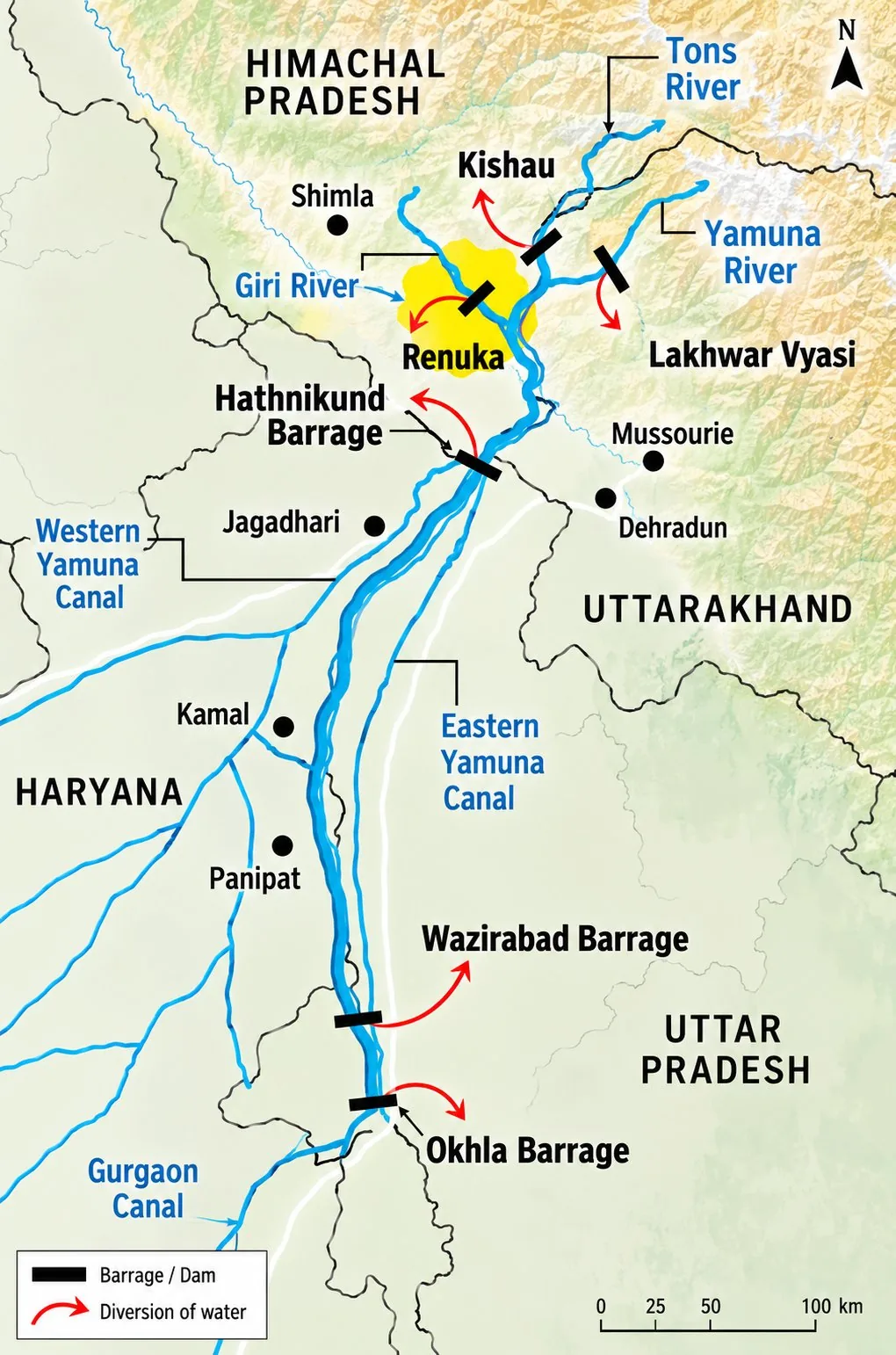
- Because the Upper Yamuna (from its source at the Yamunotri glacier to the Okhla barrage in Delhi) lacked major storage facilities, the 1994 agreement mandated the creation of three major storage projects on the Yamuna and its tributaries:
- Lakhwar Project: On the Yamuna River (Uttarakhand).
- Renukaji Project: On the Giri River (Himachal Pradesh).
- Kishau Project: On the Tons River (Himachal Pradesh/Uttarakhand border).
- Kishau Multipurpose Project: The Kishau Multipurpose Project entails the construction of a 232.6-metre-high concrete gravity dam on the Tons river (a major tributary of the Yamuna) situated along the Uttarakhand-Himachal Pradesh border.
- Dispute:
- Designated as a National Project, the Centre funds 90% of the water component, with the remaining 10% shared among the basin states under the 1994 Yamuna framework.
- However, the dispute centered on the power component, where Himachal Pradesh refused to bear its estimated Rs 2,000-crore liability, arguing that it was unfair to impose this fiscal burden on the state when it was already shouldering the displacement and ecological costs while downstream states received most of the water and irrigation benefits.
- Breakthrough:
- A consensus was reached through “cooperative federalism.” To relieve Himachal Pradesh’s financial constraints, the beneficiary downstream states agreed to cover its power-component liability.
- According to the agreement, Delhi (biggest beneficiary of the project) and Rajasthan will bear this expense in a 75:25 ratio, as they are major beneficiaries of the water supply.
- Socio-Economic Outcomes: The 422-MW project is designed to generate 1,476 million units of hydropower and will create vast irrigation potential covering 97,000 hectares of agricultural land.
- Water Security for the Capital: Delhi stands to be the biggest beneficiary, receiving 110 million cubic metres (MCM) of water, which will provide critical, long-term support for the city’s drinking water needs.
- Environmental Rejuvenation:
- Correcting historical allocation flaws, 25% of the project’s water is strictly dedicated to maintaining the environmental flow of the Yamuna river.
- This is a crucial step toward the government’s target of achieving a completely clean Yamuna by 2029, which is linked to the National Mission for Clean Ganga (NMCG).
Science & Technology
National Conference on Quality and Safety of Biosimilars
Source Recently, the Indian Pharmacopoeia Commission (IPC) organised a two-day National conference on “Quality and Safety of Biosimilars: Strengthening India’s Biopharma SHAKTI Vision” in Bengaluru focusing on strengthening India’s biopharmaceutical ecosystem through quality, innovation and regulatory excellence.- The conference focused on improving the quality, safety, regulatory evaluation and development of biosimilars through collaboration among regulators, industry, academia and research organisations.
- IPC released the Indian Pharmacopoeia Reference Substance (IPRS) for Enoxaparin Sodium for bioassays, providing an authenticated reference material for accurate and consistent testing of biological activity.
- About IPC: IPC is an autonomous institution under the Ministry of Health and Family Welfare responsible for developing standards for medicines and strengthening pharmaceutical quality infrastructure.
- About: Biosimilars are highly similar versions of approved biological medicines that provide safe and effective treatment options for various conditions, including cancer, arthritis, kidney diseases, psoriasis, Crohn’s disease and colitis.
- Benefits: They help improve patient access to essential medicines by offering additional treatment options and may reduce healthcare costs.
- Biopharma SHAKTI Vision: It was announced in the Union Budget 2025-26, with an outlay of ₹10,000 crore over five years to strengthen India’s ecosystem for biologics and biosimilars, promote domestic manufacturing and reduce import dependence.
- Research and Clinical Infrastructure: The initiative focuses on expanding biopharma capabilities through the establishment of three new National Institutes of Pharmaceutical Education and Research (NIPERs), upgradation of seven existing NIPERs, and creation of over 1,000 accredited clinical trial sites to support research, innovation and clinical development.
Data Centres in India
Source Why in News?- Data centres are emerging as critical infrastructure supporting India’s expanding digital economy by enabling digital services, e-Governance, cloud computing and other technology-driven applications through secure, reliable and scalable operations. As digitalisation accelerates across sectors, demand for computing capacity, data storage and high-speed connectivity is increasing rapidly, driving the need for robust data-centre infrastructure.
- About: A data centre is a secure facility that houses computing, storage and networking equipment used to store, process, manage and distribute large volumes of digital information.
- Role in Digital Services: Data centres support critical services such as online banking, e-Governance, digital payments, cloud computing, Artificial Intelligence (AI) applications and other emerging technologies.
- Rapid Capacity Expansion: India’s growing digital economy is driving demand for data infrastructure. Installed data-centre power capacity increased from around 375 MW in 2020 to 1.57 GW by August 2026 and is projected to reach nearly 8 GW by 2030, supported by rising demand for cloud computing, AI and digital services.
- Investment Growth: India’s data-centre sector is witnessing significant investment activity, with nearly USD 70 billion investments underway and an additional USD 90 billion in announced projects, reflecting the expanding role of digital infrastructure in India’s economy.
- NIC Data Centre Network: The National Informatics Centre (NIC) has established National Data Centres at Delhi (NIC Headquarters), Pune, Hyderabad and Bhubaneswar. It has also developed 37 smaller Data Centres at various State Capitals to support government digital services, system management and round-the-clock operations.
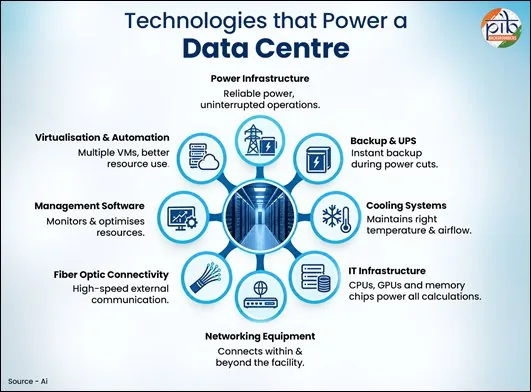
- About: Modern data centres integrate computing systems, networking infrastructure, power supply, cooling mechanisms, security systems and management tools to ensure reliable operations, data security and continuous service delivery.
- Power Infrastructure: Data centres require 24×7 uninterrupted power supply to ensure continuous operation of critical equipment. Uninterruptible Power Supplies (UPS) provide immediate backup during power interruptions, while backup generators and electrical distribution systems ensure operational continuity during prolonged disruptions.
- Cooling Systems: Continuous computing generates significant heat, requiring efficient cooling mechanisms. Heating, Ventilation and Air Conditioning (HVAC) systems, advanced airflow management and liquid cooling technologies maintain optimal operating temperatures and improve energy efficiency and reliability.
- IT Infrastructure:
- Servers: Process information and run digital applications.
- Storage Systems: Store large volumes of data using Hard Disk Drives (HDDs) and Solid-State Drives (SSDs).
- Security Systems: Protect equipment, networks and data from physical and cyber threats.
- Networking Infrastructure: Routers, high-speed switches and fibre-optic connections enable rapid communication within the data centre and with external networks.
- Management Software and Automation: Management tools monitor system performance and optimise resource utilisation. Virtualisation enables multiple virtual machines to operate on a single physical server, while automation tools manage workloads, support maintenance and detect operational issues.
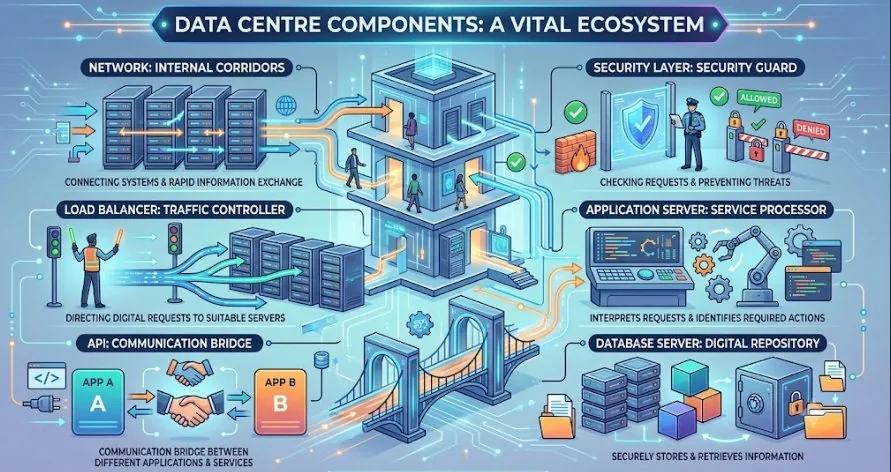
 How a Data Centre Processes a Digital Request?
- User Request Initiation: Every digital activity, such as opening an application, checking a bank balance or accessing a document, generates a request that travels through networks to a data centre for processing.
- Security Layer: The request passes through security checks to protect the infrastructure from unauthorised access, cyber threats and potential attacks.
- Load Balancer: The load balancer distributes incoming requests among available servers, preventing overload and ensuring efficient utilisation of computing resources.
- Application Server: The application server processes the request and determines the required service or information. It may use an Application Programming Interface (API) to communicate with other applications or services.
- Database Server: The database server retrieves the required information from stored data and sends it back to the application server for processing.
- Response Delivery: After processing, the information travels back through the network and reaches the user’s device, enabling fast and seamless digital services.
- Digital Request Processing Chain: The complete process follows the cycle: Connect → Receive → Network → Process → Store → Secure → Respond
 What Policy Measures are Enabling the Growth of Data Centres in India?
- Infrastructure Status for Data Centres: The Union Budget 2022–23 included data centres in the Harmonized List of Infrastructure, granting them infrastructure status. This enables easier access to long-term and lower-cost financing, encouraging investment and expansion of digital infrastructure.
- Benefits of Infrastructure Status: Recognition as infrastructure places data centres alongside sectors such as highways, airports and power infrastructure, improving their ability to access institutional credit and supporting large-scale capacity development.
- Tax Incentives for Cloud Infrastructure: The Union Budget 2026–27 introduced a tax holiday for eligible foreign cloud service providers until 2047 using India-based data-centre infrastructure. The benefit applies for Tax Years 2026–27 to 2046–47 for notified foreign companies, strengthening India’s attractiveness as a cloud and data-centre hub.
- Semicon India Programme 2.0: Approved in July 2026 with an outlay of ₹1,27,500 crore under the India Semiconductor Mission (ISM), the programme aims to build a trusted and resilient semiconductor ecosystem, which supports the hardware foundation required for data centres.
- IndiaAI Mission: With a budget allocation of ₹10,371.92 crore, the mission promotes development of a comprehensive Artificial Intelligence ecosystem. Growing AI applications are expected to significantly increase demand for high-performance computing and data-centre capacity.
- Electronics Components Manufacturing Scheme (ECMS): The financial support under ECMS has been increased from ₹22,000 crore to ₹40,000 crore to strengthen domestic electronics manufacturing and reduce dependence on imports.
- PLI Scheme 2.0 for IT Hardware: The scheme promotes domestic manufacturing of IT hardware such as servers, attracts investments, reduces import dependence and aims to position India as a trusted global supply-chain hub for digital infrastructure equipment.
- Growing Energy Demand: Rapid expansion of data centres is increasing the need for reliable electricity and efficient cooling systems. According to the Central Electricity Authority (CEA), Ministry of Power, electricity demand from data centres may reach 17 GW by 2031–32, highlighting the need for sustainable energy planning.
- Promotion of Renewable Energy:
- The Government is encouraging cleaner power sources for energy-intensive digital infrastructure through initiatives such as:
- Green Energy Open Access Rules
- Green Energy Corridor Scheme
- National Green Hydrogen Mission
- National Programme on High Efficiency Solar PV Modules
- Solar Park Scheme
- The Government is encouraging cleaner power sources for energy-intensive digital infrastructure through initiatives such as:
- SHANTI Act and Clean Energy Transition: The Sustainable Harnessing and Advancement of Nuclear Energy for Transforming India (SHANTI) Act strengthens the clean-power ecosystem by enabling reliable nuclear energy support for emerging sectors like Artificial Intelligence (AI) and data centres. It also provides a framework for future deployment of Small Modular Reactors (SMRs) and Micro Nuclear Reactors.
- BIS Standards for Data-Centre Efficiency: The Bureau of Indian Standards (BIS), through its technical committee LITD 31 (Cloud Computing, Information Technology and Data Centres).
- Energy Conservation Regulations:
- The Bureau of Energy Efficiency (BEE) has introduced:
- Energy Conservation Building Code (ECBC), 2017
- Energy Conservation and Sustainable Building Code (ECSBC), 2024 These frameworks promote energy efficiency and water conservation in buildings, including provisions relevant to data-centre infrastructure.
- The Bureau of Energy Efficiency (BEE) has introduced:
- Advanced Cooling Technologies: To reduce resource consumption, data centres are increasingly adopting efficient cooling solutions such as Direct-to-chip liquid cooling, Adiabatic cooling, Immersion cooling and Closed-loop liquid cooling systems.
- Water Resource Management: Data-centre water consumption depends on cooling technologies used. Groundwater extraction, including industrial use, is regulated under guidelines issued by the Ministry of Jal Shakti to ensure sustainable water utilisation.
- Data centres are becoming the backbone of India’s digital transformation, enabling governance, financial inclusion, AI innovation and economic growth. With supportive policies, clean energy integration and domestic technology development, India can build a secure, sovereign and sustainable digital infrastructure ecosystem aligned with the vision of Viksit Bharat by 2047.
SEMICON India 2026
Source Why in News?- Recently, Prime Minister Narendra Modi inaugurated SEMICON India 2026 at Yashobhoomi, Dwarka, bringing together global semiconductor companies, policymakers and investors to showcase India’s growing semiconductor ecosystem and technological capabilities.
- The event, centred around the theme “Silicon to Systems: Building the Ecosystem,” highlights India’s shift from developing chip manufacturing capabilities to building a complete semiconductor value chain, including design, fabrication, packaging and innovation.
- Role as a Foundational Industry: Semiconductors are the foundation of modern technology, powering sectors such as automobiles, healthcare, defence, aerospace, telecommunications and consumer electronics. Their availability influences the resilience of the broader digital and industrial ecosystem.
- Advanced Chip Technology: Modern semiconductor chips contain billions of transistors packed into extremely small areas. Leading-edge processors manufactured using 3-nanometre technology can integrate tens of billions of transistors, enabling high-performance computing, artificial intelligence and advanced digital applications.
- Global Economic Significance: The global electronics industry is valued at around USD 4.3 trillion, with semiconductors serving as a foundational component of this technology value chain.
- Geopolitical Dimension: The pandemic accelerated global efforts to develop domestic semiconductor manufacturing capabilities and strengthen supply-chain resilience, as countries sought to reduce dependence on a limited number of semiconductor-producing regions.
- About SEMICON India: It is an annual flagship semiconductor conference and exhibition that serves as a premier platform for showcasing India’s semiconductor ecosystem. The first-ever edition was held in 2022 at Bengaluru, while the 2026 edition marks the fifth edition of the event.
- Integrated Semiconductor Vision: The event highlights India’s complete semiconductor value chain, including chip design, fabrication, packaging, talent development and innovation ecosystems, while attracting global participation and showcasing India’s semiconductor ambitions.
- Evolution of Semiconductor Ambition: India’s semiconductor journey has been shaped by decades of attempts, policy learning and ecosystem development. Earlier efforts faced challenges due to limited manufacturing capabilities, inadequate supply chains and lack of supporting infrastructure.
- Policy Reforms and Ecosystem Development: Reforms in areas such as Foreign Direct Investment (FDI), taxation and customs created a favourable environment for global electronics companies to establish manufacturing operations in India.
- Growth of Electronics Manufacturing: India’s electronics production increased significantly from around ₹1.9 lakh crore in 2014–15 to ₹13.11 lakh crore in 2025–26, reflecting the rapid expansion of domestic manufacturing capacity.
- Expansion of Electronics Exports: Electronics exports witnessed a major rise from approximately ₹38,000 crore in 2014–15 to ₹4.24 lakh crore in 2025–26, indicating India’s growing integration into global electronics supply chains.
- Mobile Manufacturing Revolution: Mobile phone production expanded from around ₹18,000 crore in 2014–15 to ₹6.27 lakh crore in 2025–26, marking a 33-fold increase in manufacturing output.
- Rise in Smartphone Exports: Smartphone exports increased dramatically from about ₹1,500 crore to ₹2.59 lakh crore during the same period, transforming smartphones into one of India’s leading export commodities.
- Shift from Import Dependence to Export Capability: India has moved from being a net importer of mobile phones to a net exporter, with around 99% of domestic mobile demand now being met through local production.
- Global Manufacturing Position: India has emerged as the second-largest mobile phone manufacturer globally by volume, demonstrating the success of electronics manufacturing as a foundation for advanced technology sectors.
- Employment Generation: The electronics manufacturing ecosystem has created around 2.5 million jobs, contributing to industrial growth and skill development.
-
Semicon India Programme
- About: Semicon India Programme launched in 2021 with an outlay of ₹76,000 crore, the programme aims to build a complete semiconductor ecosystem in India by supporting the entire value chain, including chip design, fabrication, packaging, testing, semiconductor equipment, materials and skilled workforce development, while reducing dependence on global supply chains.
- Ecosystem-Based Approach: Instead of focusing only on chip fabrication, the programme aims to create an integrated ecosystem covering design, manufacturing, advanced packaging, research and development (R&D) and talent creation.
-
Semicon India Programme 2.0 (2026)
- The government approved Semicon 2.0 in July 2026 with an enhanced outlay of ₹1,27,500 crore to strengthen India’s semiconductor capabilities.
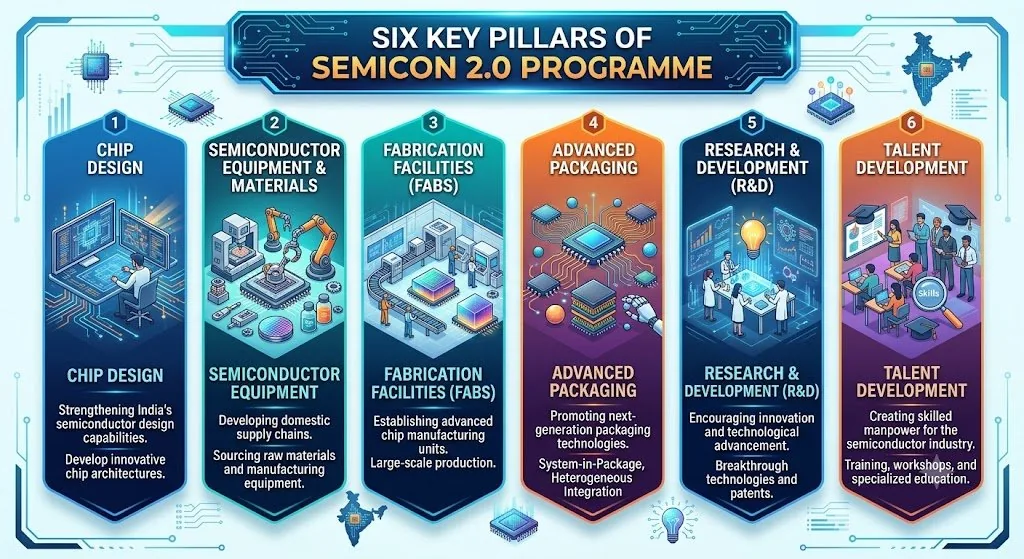
- Approved Semiconductor Projects: Under the programme, 12 semiconductor projects have been approved across six states, involving investment commitments exceeding ₹1.64 lakh crore.
- Diverse Manufacturing Capabilities: The approved projects cover silicon semiconductor fabs, compound semiconductor facilities, display fabrication and advanced packaging units.
- Shift from Policy to Production: With three semiconductor facilities entering commercial production, India’s semiconductor strategy has moved from policy planning towards actual manufacturing capability.
- Need for Skilled Workforce: Semiconductor manufacturing requires highly skilled engineers and researchers. India has set a target of creating a pool of 85,000 skilled semiconductor professionals within the current decade to support the growing chip industry.
- Chips to Startup (C2S) Programme: The programme aims to strengthen semiconductor design capabilities by providing access to Electronic Design Automation (EDA) tools, training facilities and design infrastructure across academic institutions.
- Expansion of EDA Tool Access: EDA tools have been deployed across 320 academic institutions, enabling more than 68,000 students to gain exposure to advanced semiconductor design technologies.
- Support for Design Projects and Startups: Under semiconductor development initiatives, 24 chip design projects have received financial support, while 105 startups and MSMEs have received EDA tool support under the Design Linked Incentive (DLI) Scheme.
- Growth of Indigenous Chip Design: By April 2026, 211 chips were taped out by 75 institutions, indicating the expansion of semiconductor design capabilities beyond traditional research centres.
- Fabrication of Designed Chips: Among these designs, seven chips have been fabricated at different technology nodes, including advanced nodes up to 12 nanometres, demonstrating progress from chip design to actual manufacturing.
- ChipIN Centre Initiative: The ChipIN Centre at C-DAC was established under the Chips to Startup (C2S) Programme and Design Linked Incentive (DLI) Scheme to provide shared access to advanced chip-design tools, fabrication services and specialised training.
- Democratising Chip Design: The facility has extended semiconductor design support to more than 1 lakh engineers from over 500 organisations, including 400 academic institutions and 100 startups.
- Strengthening Innovation Ecosystem: Supported organisations have developed 300+ chip designs for fabrication at facilities such as Semiconductor Laboratory (SCL), Mohali, and advanced global foundries, strengthening India’s indigenous design capability.
- Reducing Entry Barriers: By providing shared access to expensive design tools and fabrication services, initiatives like ChipIN Centre have reduced development costs, improved accessibility and accelerated semiconductor innovation.
- Pax Silica Coalition: India joined the Pax Silica coalition to strengthen global semiconductor supply-chain resilience. The coalition focuses on securing the complete “silicon stack”, covering areas such as critical minerals, semiconductor manufacturing, advanced artificial intelligence systems and related infrastructure.
- Strategic Significance: The initiative aims to diversify semiconductor supply chains, reduce dependence on limited sources and promote cooperation among partner countries to ensure secure access to critical technologies.
- SEMICON India 2026 represents India’s transition from being primarily an electronics manufacturing hub to developing a complete semiconductor ecosystem. Through investments in chip fabrication, design capabilities, skilled manpower and global partnerships, India aims to establish itself as a reliable participant in the global semiconductor value chain and strengthen its technological self-reliance.
Security
Sanjukta Parasor: 1st Woman Officer to Lead CRPF’s CoBRA Unit
Source Senior IPS officer Sanjukta Parasor has been appointed as the first woman Inspector General (IG) of the CRPF’s elite Commando Battalion for Resolute Action (CoBRA) unit, marking a significant milestone in India’s security forces. She will succeed 1996-batch IPS officer Danesh Rana.- About:
- A 2006-batch IPS officer, she is known as the “Iron Lady of Assam” for her counter-insurgency work in the Northeast, involving field policing, national security operations and handling of insurgency-related challenges.
- She previously served as a Deputy Inspector General in the National Investigation Agency (NIA), working on terrorism and extremism-related investigations.
- Significance: Her appointment marks a milestone in women’s leadership in India’s security forces, particularly in specialised counter-insurgency and jungle warfare operations.
- The Commando Battalion for Resolute Action (CoBRA) is a specialised unit of the Central Reserve Police Force (CRPF) established to conduct jungle warfare and guerrilla operations, particularly against Maoist insurgency. Its personnel are selected from the CRPF and receive intensive training in commando tactics and jungle warfare.
- Formation and Deployment: A total of 10 CoBRA units were raised between 2008 and 2011. These battalions are deployed in Left Wing Extremism (LWE)-affected and insurgency-prone areas across states such as Chhattisgarh, Odisha, Jharkhand, Maharashtra, Assam and Meghalaya.
- Role and Capabilities: CoBRA specialises in anti-Naxal operations, intelligence-based missions, long-range patrols, ambush and counter-ambush operations in challenging terrains, making it one of the CRPF’s key specialised operational forces.

Social Issues
Global Gender Gap Index 2026
Source Why in News?- India has retained its 131st rank out of 145 countries in the Global Gender Gap Index 2026, released by the World Economic Forum (WEF).
- India’s Report Card
- Gender Parity: India achieved an overall gender parity score of 64.5%, retaining its 131st rank out of 145 countries. Although this marks a 4.3% point improvement since the inaugural 2006 edition, the country still lags behind the global average of 69.2%.
- Political Empowerment: India has achieved 24.5% gender equality in political representation. However, female representation at the ministerial level stands at just 5.9%, down sharply from a peak of 30% in 2019.
- Economic Participation:
- A critical weak point, where women have achieved only 41.2% equality in the workforce compared to men.
- While female representation among professional and technical workers has doubled to 49.9% since 2006, women hold a dismally low 13.1% of senior leadership and managerial roles.
- Educational Attainment: India has achieved a high 96.6% equality score. The country maintains a complete balance between boys and girls in secondary and tertiary school enrollment, making this one of its most successful dimensions over the long term.
- Health and Survival: India achieved a 95.6% equality score. Though overall health metrics have improved, India’s sex ratio at birth in 2026 remains nearly one percentage point lower than it was in 2006.
- Key Global Takeaways
- Top Performers:
- Iceland maintained its top spot globally for the 17th consecutive year, closing 93% of its gender gap (the only nation to cross the 90% mark).
- It is followed by Finland and Norway. Australia broke into the top 10 for the first time.
- The Laggards: Chad ranked lowest (145th), joined by Pakistan and Iran in the bottom three.
- The 120-Year Wait: Globally, 69.2% of the gender gap has been closed, a slight 0.4% improvement from last year. However, at the current rate of progress, full global gender parity is still roughly 120 years away.
- Declining Female Leadership:
- While women hold 19.1% of CEO roles globally, the share of economies led by a woman has fallen back to 2016 levels.
- Furthermore, only one in ten ministerial portfolios held by women globally is considered “highly influential”.
- Career Breaks:
- Women are almost twice as likely as men to take career breaks, mainly due to parenting responsibilities.
- Women often face slower career growth after returning from a break, while men’s career breaks are more often linked to professional development.
- Women’s Political Representation:
- Women’s representation in legislatures has steadily increased since the 1970s, with larger gains becoming more frequent after 1995.
- Since 1995, over 80% of countries covered by the index have adopted gender quotas to increase women’s political representation.
- AI Gender Gap: Women remain severely underrepresented in emerging technology, accounting for fewer than one in five AI engineers globally.
- Top Performers:
- It is an annual flagship publication released by the WEF. First launched in 2006, it serves as a global benchmark to track how close countries are to achieving full gender equality.
- The report measures gender parity on a scale of 0 to 100 (where 100% means full equality) across four key dimensions:
- Economic Participation and Opportunity: Measures the percentage of women in the workforce, wage equality for similar work, and the presence of women in leadership/managerial roles.
- Educational Attainment: Looks at the literacy rate and the enrolment ratios of girls versus boys in primary, secondary, and higher education.
- Health and Survival: Evaluates the sex ratio at birth (to track issues like female infanticide/feticide) and healthy life expectancy.
- Political Empowerment: Measures the representation of women in parliament, at the ministerial level, and as heads of state over the last 50 years.
- Low Female Labour Force Participation (FLFPR): While the Periodic Labour Force Survey (PLFS) for August 2026 indicates that overall female LFPR has risen to 34.8% this growth is disproportionately driven by rural distress-driven agricultural work (rural FLFPR stands at 39.4%), whereas urban female LFPR has stagnated at 25.4%.
- The “Education Penalty”: Paradoxically, female unemployment rises alongside educational qualifications. This highlights a severe mismatch between skills, available jobs, and inflexible corporate ecosystems that fail to retain highly educated women.
- Burden of Unpaid Care Work:
- The “motherhood penalty” deeply fractures women’s career trajectories.
- Women bear a disproportionate burden of domestic chores and unpaid caregiving, preventing their transition from informal to formal sectors and reducing their competitive edge in the job market.
- Safety and Mobility Constraints:
- Rising concerns regarding gender-based violence, inadequate street lighting, and unsafe public transport severely restrict female mobility.
- This limits the geographical radius within which women can seek employment or higher education.
- Digital Divide: As the economy transitions towards the Fourth Industrial Revolution (Industry 4.0), a severe gender gap in digital literacy and smartphone ownership threatens to lock women out of the emerging gig and tech economies.
- Proxy Leadership at the Grassroots: Despite the 73rd and 74th Constitutional Amendments providing 33% reservation for women in local bodies, the pervasive “Sarpanch Pati” syndrome often reduces female leadership to mere tokenism.
- Implementation Gaps in Legislation: Laws like the Maternity Benefit (Amendment) Act, 2017, and the POSH Act, 2013, are robust on paper but poorly enforced in the unorganized sector, which employs over 85% of India’s working women.
- Intersectionality of Marginalization: The gender gap is acutely magnified for women belonging to Scheduled Castes (SCs), Scheduled Tribes (STs), and minority communities, who face a double burden of caste-based discrimination and gender disparity, particularly in land ownership and wage negotiation.
- Nutritional Deficits (The Anemia Crisis):
- The National Family Health Survey (NFHS-5) revealed that over 50% of women in the reproductive age group are anemic.
- Chronic malnutrition directly impacts cognitive development, labor productivity, and maternal mortality.
- Lack of Reproductive Autonomy:
- Limited access to family planning, menstrual hygiene infrastructure in schools, and the inability to dictate one’s own reproductive choices severely hinder educational continuity and career progression.
- Climate Change Vulnerability: Women bear the brunt of climate change (Ecofeminism).
- Depleting water tables and deforestation force rural women to walk longer distances for water and firewood, compounding their unpaid labor and reducing time available for education or paid work.
 What Measures are Needed to Overcome the Gender Gap in India?
- The 3R Framework for Care Work:
- Recognize unpaid work in national accounting, Reduce it through state-funded infrastructure (affordable public crèches, piped water), and Redistribute it by mandating equal paternity leaves to eliminate corporate hiring biases.
- The Maternity Benefit (Amendment) Act, 2017 inadvertently created a hiring bias against women in the private sector, as employers bear the full financial burden. The measure needed is a shift to shared, mandatory parental leave (like Nordic models) funded partially by a state-backed maternity fund, thereby eliminating the “motherhood penalty.”
- Gender-Responsive Budgeting (GRB): Move beyond nominal allocations. Track the actual outcomes of gender budgets across all ministries to ensure financial commitments translate into tangible safety, health, and skilling infrastructure.
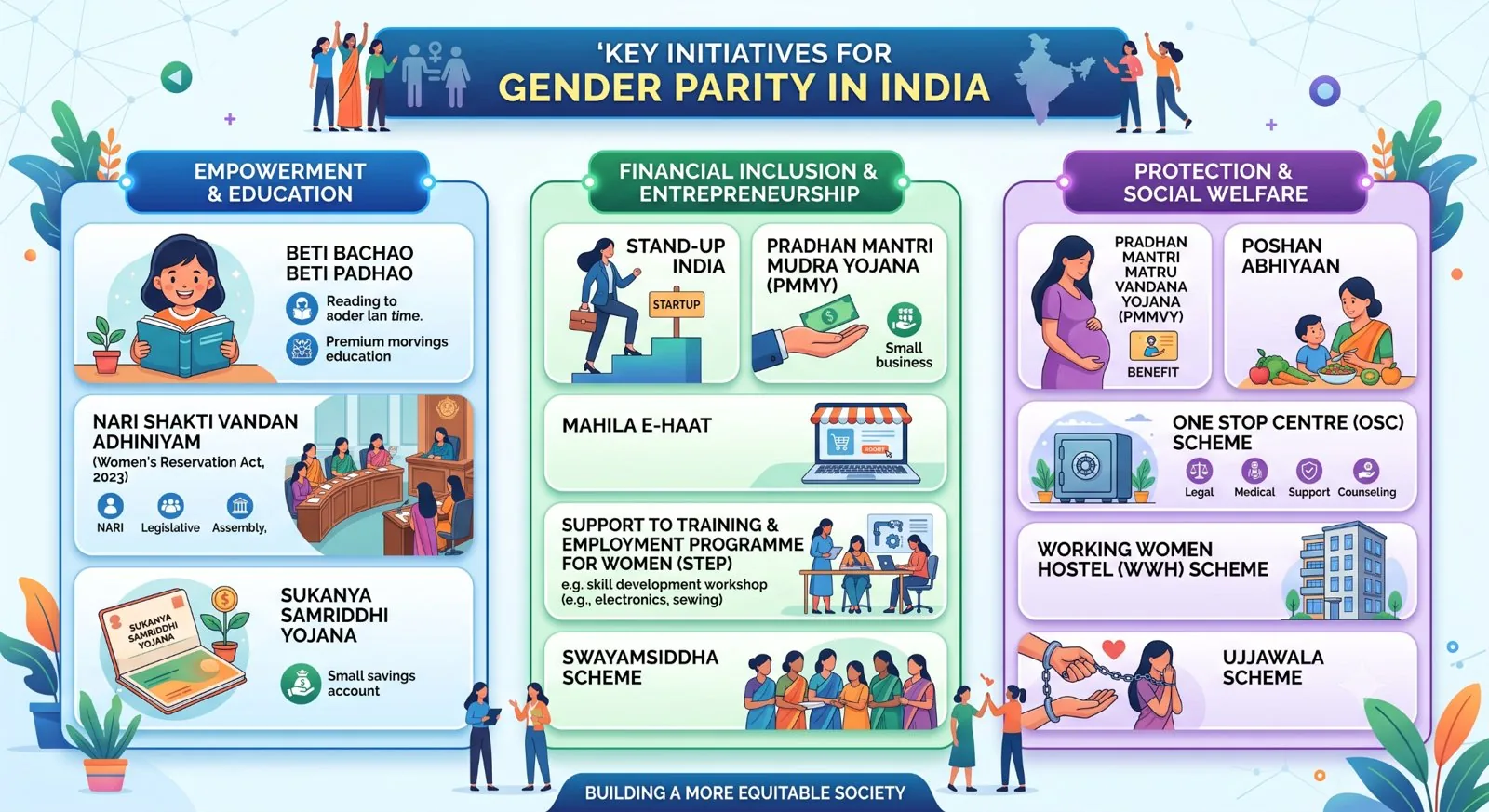
- Expediting Political Agency: Swift implementation of the Nari Shakti Vandan Adhiniyam, 2023 (Women’s Reservation Act) to ensure a critical mass of female legislators in Parliament and Assemblies, which will naturally reorient macro-policy toward health, education, and social infrastructure.
- Bridging the Digital & Skills Deficit:
- Launch targeted STEM scholarships for girls and incentivize corporate hiring of women in tech sectors.
- Expanding digital literacy drives specifically tailored for rural women is crucial for financial inclusion.
- Targeted Behavioural Nudges: Scale up grassroots campaigns like Beti Bachao Beti Padhao to systematically dismantle son meta-preference and patriarchal stereotypes regarding asset ownership and female education.
- Creating a ‘Care Economy Infrastructure Fund’:
- The ILO estimates that investing 2% of India’s GDP in the care economy could create 11 million new jobs (largely for women).
- This fund would be used to build affordable, state-regulated, high-quality crèches in industrial clusters and urban centers, freeing up women to re-enter the workforce.
- Health and Nutrition Parity: Strengthen the implementation of POSHAN Abhiyaan to specifically target the high anemia rates among adolescent girls and women, ensuring robust cognitive and physical development.
- Financial Inclusion & Credit: Expand accessible micro-credit and collateral-free loans through frameworks like the Stand-Up India scheme, which mandates bank branches to facilitate loans to women borrowers to foster greenfield entrepreneurship.
- Closing India’s workforce gender gap can boost GDP by 27% (IMF); as the World Bank underscores, no nation escapes the middle-income trap while sidelining half its talent pool out of the formal economy. Gender parity (SDG 5) is therefore the foremost economic prerequisite for Viksit Bharat 2047.