Comrades Dispatch · 23 Sep 2026 (PDF)
In this edition
- Rising Antifungal Resistance Health & Medicine
- 11th Ayurveda Day Important Days
- India-China Trade and Atmanirbhar Bharat International Relations
- SC Mandates Strict Safeguards for Arrest and Re-arrest Polity & Governance
- Partners for Multilateralism Summit and V4+India Visits & Conferences
- World Circular Economy Forum 2026 Visits & Conferences
- 9th India International Water Week 2026 Visits & Conferences
- World Rhino Day 2026 Wildlife
Health & Medicine
Rising Antifungal Resistance
Source The Centres for Disease Control and Prevention (CDC) hosted the 10th Annual Fungal Disease Awareness Week (FDAW) to highlight the growing threat of multidrug-resistant fungal infections, as scientists warn that pathogens such as Candida auris are increasingly resistant to conventional antifungal drugs, raising concerns over the effectiveness of existing treatments.- Fungi:
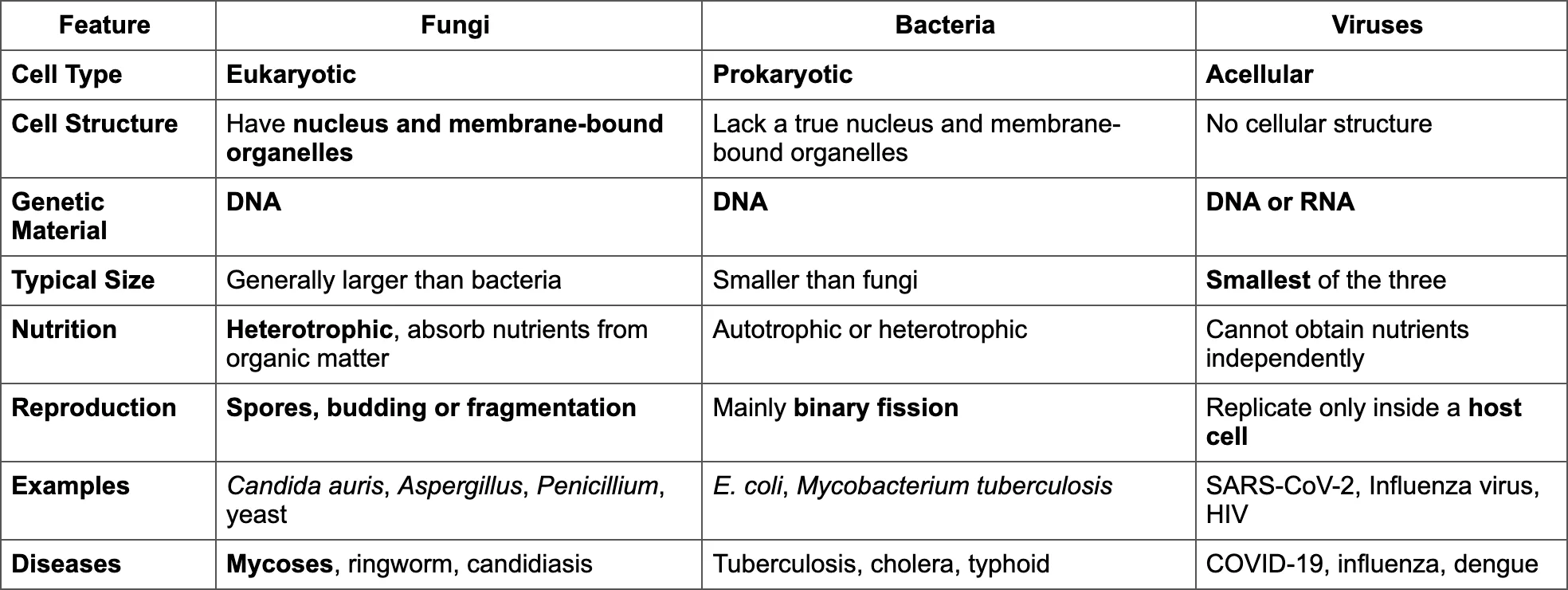
- These are eukaryotic, heterotrophic organisms that include yeasts, moulds and mushrooms. Unlike plants, they lack chlorophyll and obtain nutrients by secreting extracellular enzymes and absorbing organic matter.
- They play a vital role as decomposers, recycling nutrients, while also having applications in food production, biotechnology and pharmaceuticals, such as yeast in fermentation and Penicillium in antibiotic production.
- However, certain pathogenic fungi cause fungal infections (mycoses) ranging from superficial diseases such as ringworm and nail infections to severe systemic infections, particularly in immunocompromised individuals.
- Emergence of Candida auris:
- Originally reported in 2009, this yeast has become a multidrug-resistant pathogen in ICU facilities, causing severe bloodstream infections with a 30-40% mortality rate.
- The studies suggest that global warming puts selective pressure on fungi, allowing heat-tolerant variants to survive the human body’s 37°C temperature.
- Mechanisms of Drug Resistance:
- Gene Duplication: Fungi fight azole drugs by making extra copies of the Erg11 gene, increasing the production of ergosterol to negate the drug’s effect.
- Genetic Mutation: Mutations in the Fks1 gene allow pathogens to survive high doses of echinocandin drugs like caspofungin.
- The Eagle Effect: At exceptionally high drug doses, fungi activate compensatory pathways to produce massive amounts of chitin (the raw material of the fungal cell wall), allowing them to survive treatment paradoxically.
- Antifungal Drug Targets:
- Traditional azoles and polyenes target ergosterol in the fungal cell membrane, while echinocandins target the cell wall.
- Over 90% of Indian C. auris isolates are resistant to azoles, and 30% are resistant to polyenes.
- Healthcare Infrastructure Gap: While 20% of reported hospital infections are fungal, most Indian hospitals lack the capabilities to accurately identify and culture these pathogens.
- Alternative Approaches: Instead of total eradication, which drives rapid evolution, scientists advocate for combination therapies and targeting less critical molecular pathways to stop disease progression without forcing evolutionary resistance.
Important Days
11th Ayurveda Day
Source Why in News?- Recently, the 11th Ayurveda Day was celebrated by the Ministry of Ayush in Nagpur with the theme “Ayurveda for a Healthy Future.”
- The celebrations witnessed the release of Safety Dossiers on Gokshura (Tribulus terrestris) and Chandrashura (Lepidium sativum), Standard Treatment Guidelines for dermatological disorders, and the “From Traditional Wisdom to Global Leadership: Ayush Vision 2030” Report.
- About: Ayurveda is an ancient science of life (over 5,000 years old) with roots in the Rigveda, derived from Ayu (life) and Veda (knowledge). Its core aim is to maintain health in the healthy and treat illness in the diseased.
- Principles: Ayurveda defines health as a balance between doshas (bio-energies), agni (metabolic fire), dhatus (body tissues), malas (waste elimination), and harmony of body, mind and spirit.
- Therapeutic Foundations: Ayurveda uses the medicinal properties of plants, animal products and minerals, with classical knowledge documented in texts such as the Charaka Samhita and Sushruta Samhita.
- Ayurveda Day:
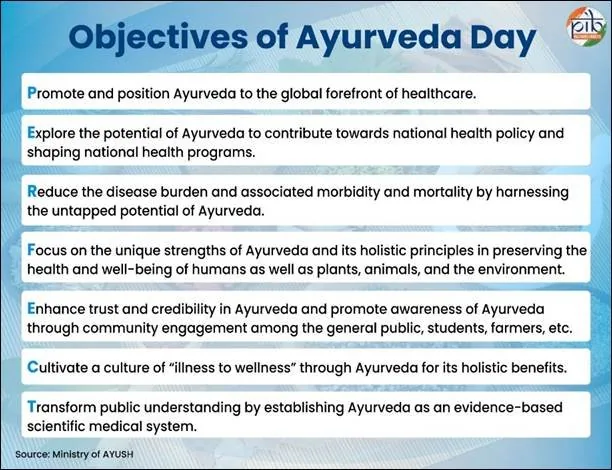
- Ayurveda Day is observed annually on 23 September to promote Ayurveda as an ancient Indian system of medicine and enhance its global recognition.
- The Ministry of Ayush notified a fixed date for Ayurveda Day in March 2025 to provide a uniform calendar identity and encourage wider participation worldwide.
- Earlier, Ayurveda Day was celebrated on Dhanvantari Jayanti (Dhanteras); the shift to 23 September, coinciding with the autumn equinox, reflects Ayurveda’s principle of balance between mind, body and spirit.
- Government Initiatives: India is developing an Ayurveda ecosystem through improved education, evidence-based research and development, drug standardisation, global outreach and integration with modern healthcare systems.
- Broader Traditional Medicine Ecosystem: Ayurveda is promoted along with other traditional systems such as Yoga & Naturopathy, Unani, Siddha and Homoeopathy to expand holistic healthcare approaches.
 How is India Building the Health Infrastructure for Ayurveda Integration?
- Budget Allocation: The Union Budget 2026-27 allocated ₹4,408 crore to the Ministry of Ayush to strengthen Ayush healthcare systems, promote evidence-based research and innovation, improve infrastructure and expand global outreach.
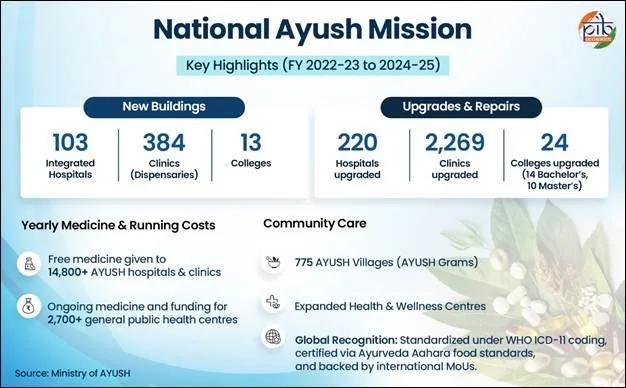
- National Ayush Mission (NAM): The Government is expanding Ayush healthcare through the National Ayush Mission (NAM) and integrating it with mainstream healthcare under the National Health Mission (NHM). Between 2014–15 and 2025–26, over ₹6,406.99 crore was released through NAM to strengthen Ayush infrastructure across States and Union Territories.
- Ayushman Arogya Mandirs (Ayush): Existing Ayush dispensaries are being upgraded into wellness centres. As of September 2026, 12,260 Ayush Arogya Mandirs were functional, with a target of 12,500 centres. Ayush services are also co-located with public health facilities, providing integrated healthcare.
- Public Health Integration: Under NHM, Ayush services are available alongside modern medicine in 13,249 public health facilities, including Primary Health Centres, Community Health Centres, District Hospitals and other healthcare facilities. The government supports 25,322 Ayush doctors and 5,666 Ayush paramedics.
- Integrated Healthcare Facilities: The government is establishing Departments of Integrative Medicine at institutions such as VMMC & Safdarjung Hospital and Lady Hardinge Medical College, offering preventive, promotive and therapeutic Ayush services, including Panchakarma facilities.
- Telemedicine Support: Through eSanjeevani, which has served over 50 crore patients, Ayush OPD services enable virtual consultations with Ayurveda and other Ayush practitioners.
- Insurance Coverage: The Insurance Regulatory and Development Authority of India (IRDAI) has mandated insurers to provide products or add-ons covering all systems of medicine, including Ayurveda. The All India Institute of Ayurveda (AIIA) has also entered into a common empanelment agreement with general insurance companies for cashless Ayush treatment.
 Development of Ayurveda Educational Infrastructure
- Educational Expansion under NAM: The National Ayush Mission (NAM) supports the establishment and upgradation of undergraduate and postgraduate Ayush institutions, including pharmacy and paramedical programmes, to meet the growing demand for trained Ayush professionals.
- Expansion of Ayurveda Education and Healthcare: The Union Budget 2026-27 announced the establishment of three new All India Institutes of Ayurveda (AIIA) to enhance Ayurveda education, clinical services and research capabilities.
- New Ayush Colleges: Under NAM, 17 new Ayush colleges have been approved across India, of which 12 are focused on Ayurveda education.
- Research Orientation: Alongside expanding educational capacity, greater emphasis is being placed on evidence-based research and scientific validation to strengthen Ayurveda’s credibility within contemporary healthcare.
- Quality Regulation of Ayurvedic Medicines: Ayurvedic medicines are regulated under the Drugs and Cosmetics Act, 1940 and Drugs Rules, 1945. Manufacturers must follow Good Manufacturing Practices (GMP), meet pharmacopoeia standards and ensure safety and efficacy. Quality control is supported through drug inspections and testing mechanisms.
- e-Aushadhi Portal: The government introduced the e-Aushadhi portal to enable paperless processing and real-time tracking of Ayurvedic drug manufacturing licence applications, improving regulatory efficiency.
- Ayurveda Aahara Regulation: The FSSAI, in collaboration with the Ministry of Ayush, introduced standards for Ayurveda Aahara to regulate traditional Ayurvedic food products based on classical texts, ensuring quality, transparency and consumer confidence.
- Quality Assurance and Standardisation: The Union Budget 2026-27 proposed the upgradation of Ayush pharmacies and Drug Testing Laboratories to improve quality control, standardisation of medicines and availability of skilled manpower.
- AYURGYAN Scheme: Launched in 2021–22 by the Ministry of Ayush, the AYURGYAN scheme provides financial support for Ayurveda research and development. Out of ₹17.79 crore allocated across 34 projects, Ayurveda received ₹9.38 crore for 17 projects focused on areas such as safety, efficacy and validation of Ayurvedic interventions.
- AYUR SWASTHYA Yojana: The AYUR SWASTHYA Yojana (2021–2026) supports Ayush organisations in clinical research, drug research, public health initiatives and upgrading institutions into Centres of Excellence. Out of 25 supported projects, 22 included Ayurveda interventions.
- Central Council for Research in Ayurvedic Sciences (CCRAS): CCRAS, an autonomous research body under the Ministry of Ayush, promotes scientific research in Ayurveda through a network of 30 national and regional institutes, along with fellowships, training programmes and research initiatives.
- SPARK Programme: The Studentship Programme for Ayurveda Research Ken (SPARK) encourages undergraduate Ayurveda students to undertake short-term research projects. Between 2022–23 and 2024–25, 289 Ayurveda colleges benefited from the programme.
- AI-Based Translation of Research: CCRAS collaborated with Anuvadini AI, an AI-based translation platform developed by AICTE, to translate Ayurveda research findings, educational resources and medical journals into 13 Indian languages, improving accessibility.
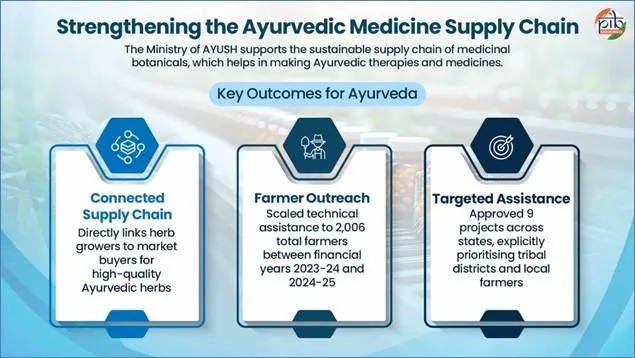
- Medicinal Plant Development: The government supports the conservation, cultivation and processing of medicinal plants by strengthening supply chains, encouraging farmers and ensuring availability of quality raw materials for Ayurveda.
 How is India Expanding International Partnerships and Global Recognition of Ayurveda?
- Bilateral and Institutional Collaborations: India has expanded global cooperation in traditional medicine through 27 country-to-country MoUs, 16 MoUs with international institutions for Ayush Academic Chairs, and 57 institute-to-institute MoUs for research and academic collaboration.
- Recent International Agreements: During 2025–26, India signed country-level MoUs with Angola, Kazakhstan and Tanzania, institute-level agreements with institutions in Ghana, South Africa, Réunion Island, Germany, Malaysia and Mongolia, and an Academic Chair MoU with Oman.
- Global Outreach Infrastructure: The international presence of Ayurveda is supported through 46 Ayush Information Cells across 43 countries and 104 scholarships for foreign nationals under the International Ayush Fellowship/Scholarship Programme.
- Global Recognition: Ayurveda gained international recognition through its inclusion in the WHO International Classification of Diseases (ICD-11) Module, enabling standardised coding of Ayurveda, Siddha and Unani diagnoses and supporting research, healthcare documentation and insurance processes.
- WHO Global Summit on Traditional Medicine: New Delhi hosted the Second WHO Global Summit on Traditional Medicine in 2025 with participation from over 100 countries and 22 health ministers. The summit adopted the Delhi Declaration, encouraging integration of scientifically validated traditional medicine into primary healthcare systems.
- International Standards and Research Cooperation: The WHO Global Traditional Medicine Centre at Jamnagar, Gujarat, serves as a global hub for traditional medicine research and policy. India has also collaborated with WHO on standard training guidelines for Ayurveda and Unani and participated in international workshops on herbal drug regulation.
- Promotion of Yoga and Cultural Diplomacy: The 11th International Day of Yoga (2025) witnessed around 2,000 events across 191 countries, while Yoga sessions at World Expo 2025, Osaka, Japan promoted India’s traditional wellness systems globally.
- Multilateral Cooperation: Traditional medicine has gained space in international platforms such as BRICS, where the 16th BRICS Health Ministers’ Meeting in Chandigarh established an Expert Working Group on Traditional, Complementary and Integrative Medicine.
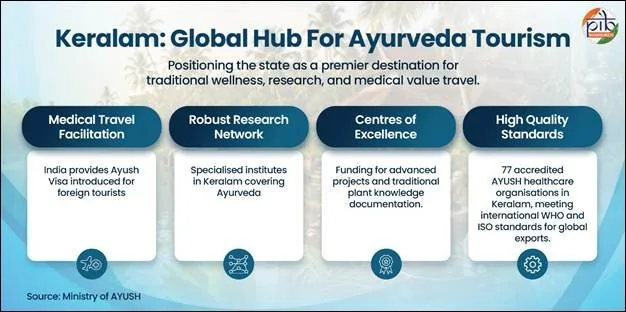
- Ayush as Medical Value Travel: India has introduced specialised Ayush Visa categories, including M-3 for patients and M-4 for caregivers, to facilitate international patients seeking Ayush-based healthcare and strengthen India’s medical tourism potential.
 Conclusion
- Ayurveda’s evolution from a traditional knowledge system to an integrated healthcare component reflects India’s approach of combining civilisational wisdom with modern scientific methods. Through infrastructure expansion, digital healthcare, research, quality regulation and international cooperation, Ayurveda is being positioned as a contributor to preventive healthcare and holistic well-being.
International Relations
India-China Trade and Atmanirbhar Bharat
Source Why in News?- India’s widening trade deficit with China has highlighted a key contradiction in Atmanirbhar Bharat: while India’s manufacturing capacity is expanding, much of this growth continues to depend on Chinese intermediate goods, components and capital goods, creating an “assembly trap” rather than deep manufacturing self-reliance.
- Surging Trade Deficit:
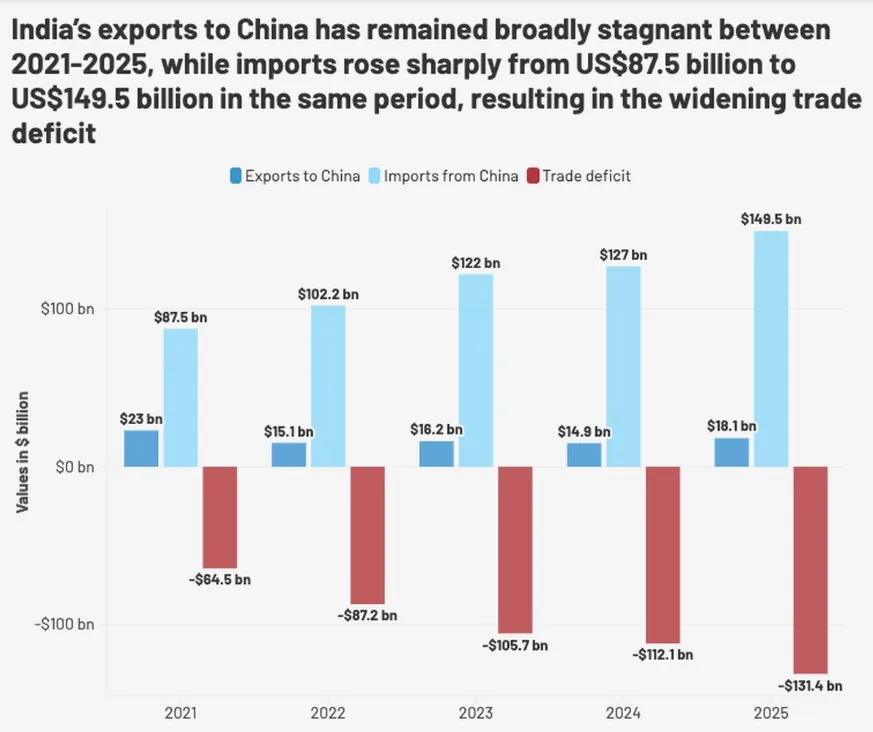
- Total bilateral trade reached USD 167.6 billion in 2025. India’s trade deficit with China widened to USD 112.16 billion in 2025–26, from USD 99.21 billion in 2024–25.
- Between 2021 and 2025, India’s exports to China remained largely stagnant, while imports surged by nearly 71%, from USD 87.5 billion to USD 149.5 billion.
- Nature of Imports: The deficit is not driven by Indian consumers buying finished Chinese retail goods. Rather, intermediate goods constitute nearly 70% of total imports, and capital goods account for another 22%.
- Sectoral Concentration:
- China supplied 80% or more of India’s imports in 636 tariff lines in FY26, compared with 461 tariff lines in FY19, indicating deeper penetration across multiple manufacturing segments.
- Approximately 80% of India’s imports from China are highly concentrated in just four groups: electronics, machinery, organic chemicals, and plastics. Electronics alone accounts for around USD 38 billion.
 What are the Key Concerns for India’s Self-Reliance Amid Rising Dependence on China?
- The “Assembly Trap” & Low DVA:
- Industrial policies such as Production Linked Incentive (PLI) scheme and the Phased Manufacturing Programme (PMP) have expanded downstream electronics assembly, but the lack of a strong domestic precision-component ecosystem has kept India dependent on Chinese inputs.
- In smartphone manufacturing, the share of imported parts and sub-assemblies in the China import basket rose from 3.3% in 2022 to 10.1% in 2025, indicating limited domestic value addition (DVA) despite rising production and exports.
- WTO ITA & Domestic Capability Gap: India’s participation in the WTO Information Technology Agreement (ITA) reduced tariffs on several IT products, while the absence of strong domestic electronics champions limited India’s ability to compete with Chinese manufacturers.
- Input-Driven Trade Deficit: Unlike Western consumer-driven deficits, India’s reliance on China is industrial. Complete disengagement would halt Indian factory lines, not just empty retail shelves.
- Colonial-Pattern Trade Basket: India primarily exports low-value-added primary commodities (raw iron ore, cotton, marine products) to China while importing high-value capital and intermediate technological goods, cementing an unequal terms-of-trade dynamic.
- Strategic Sector Vulnerabilities:
- Active Pharmaceutical Ingredients (APIs):
- India is the “pharmacy of the world,” yet it relies on China for 65% to 70% of its basic active pharmaceutical ingredients, intermediates, and key starting materials (KSMs).
- Earlier institutions such as Hindustan Antibiotics Limited (1954) and Indian Drugs and Pharmaceuticals Limited (1961) sought to build domestic API capacity, but their decline contributed to India’s growing dependence on imported pharmaceutical inputs.
- Green Energy Transition: Over 75% to 80% of solar cells and modules, along with critical components for electric vehicles (EVs) and lithium-ion battery cells, are sourced from China, leaving India’s climate goals externally leveraged.
- Advanced Electronics & Semiconductors: Integrated circuits, telecom equipment, and printed circuit board assemblies (PCBAs) account for almost a quarter of all imports from China, exposing India’s digital economy to foreign hardware dependencies.
- Critical Minerals & Rare Earths:
- China controls roughly 90% of global rare earth magnet manufacturing.
- Heavy reliance on a geopolitical rival leaves vital sectors exposed to strategic chokepoints. For example, when China imposed export controls on rare earth magnets in April 2025, Indian auto-manufacturers faced immediate production slowdowns.
- Active Pharmaceutical Ingredients (APIs):
- Weak MSME Ecosystem and R&D Deficit:
- Inverted duty structures can make raw materials costlier than imported semi-knocked-down kits, discouraging domestic tier-2 and tier-3 component manufacturers.
- Meanwhile, India’s R&D expenditure remains around 0.64–0.7% of GDP, while easy access to low-cost Chinese components can reduce incentives for firms to invest in indigenous technology and innovation.
- Export Competitiveness Dilemma:
- Decades of massive state subsidies, integrated industrial clusters, and economies of scale make Chinese components significantly cheaper than domestic or Western alternatives.
- Imposing high customs duties or blanket restrictions on Chinese intermediate inputs directly raises production costs for Indian manufacturers.
- Consequently, finished Indian exports (such as formulated generic drugs or assembled electronics) risk losing price competitiveness in global markets.
- Moreover, lower direct imports from China may not necessarily mean lower dependence if goods are rerouted through third countries such as Hong Kong.
- Unlike several East Asian economies that strengthened domestic industries before liberalising trade, India opened its markets without building sufficient manufacturing competitiveness, increasing vulnerability to import competition.
- Shifting Focus to Deep-Tier Manufacturing:
- Future iterations of PLI schemes must transition away from rewarding final assembly and explicitly incentivize Domestic Value Addition (DVA), precision tooling, and the creation of local supplier networks.
- Ministries running PLI schemes should rigorously map value chains to identify exact local value-addition gaps, targeting specific missing components (like specific mobile ICs or solar cells) for indigenization.
- From “Make in India” to “Design in India”:
- Expand Design-Linked Incentives (DLI) to critical sectors such as telecom and EVs, beyond semiconductors.
- Promote indigenous IP and product design to capture higher value and reduce technological dependence.
- Promoting Circular Economy:
- India generated 13.98 lakh tonnes of e-waste in 2024–25, up from 12.54 lakh tonnes in 2023–24.
- Strengthening the recycling of e-waste, solar panels and spent EV batteries can recover critical minerals such as lithium, cobalt and rare earths, reducing import dependence and providing a domestic buffer against Chinese export restrictions.
- Pursuing “Guarded Globalisation”: India must leverage friendshoring and the “China Plus One” strategy by building trusted supply-chain partnerships with tech hubs across Taiwan, Japan, South Korea, Europe, and ASEAN to de-risk critical component sourcing.
- Calibrated Tariff Strategy: Disruptive blanket import bans hurt domestic factories. Instead, the government should deploy phased, targeted tariffs only on specific components where viable domestic substitutes exist, giving MSMEs a protected incubation window.
- Building MSME Component Champions: India should shift policy focus from large final assemblers to tier-2 and tier-3 MSME suppliers by providing shared R&D facilities, plug-and-play manufacturing clusters and affordable credit, thereby strengthening the missing middle of the precision-component ecosystem.
- True Atmanirbharta requires moving beyond downstream assembly and blanket import restrictions. India must focus on upstream value addition, component manufacturing, R&D, precision engineering and supply-chain diversification to build a resilient and technologically self-reliant industrial base.
Polity & Governance
SC Mandates Strict Safeguards for Arrest and Re-arrest
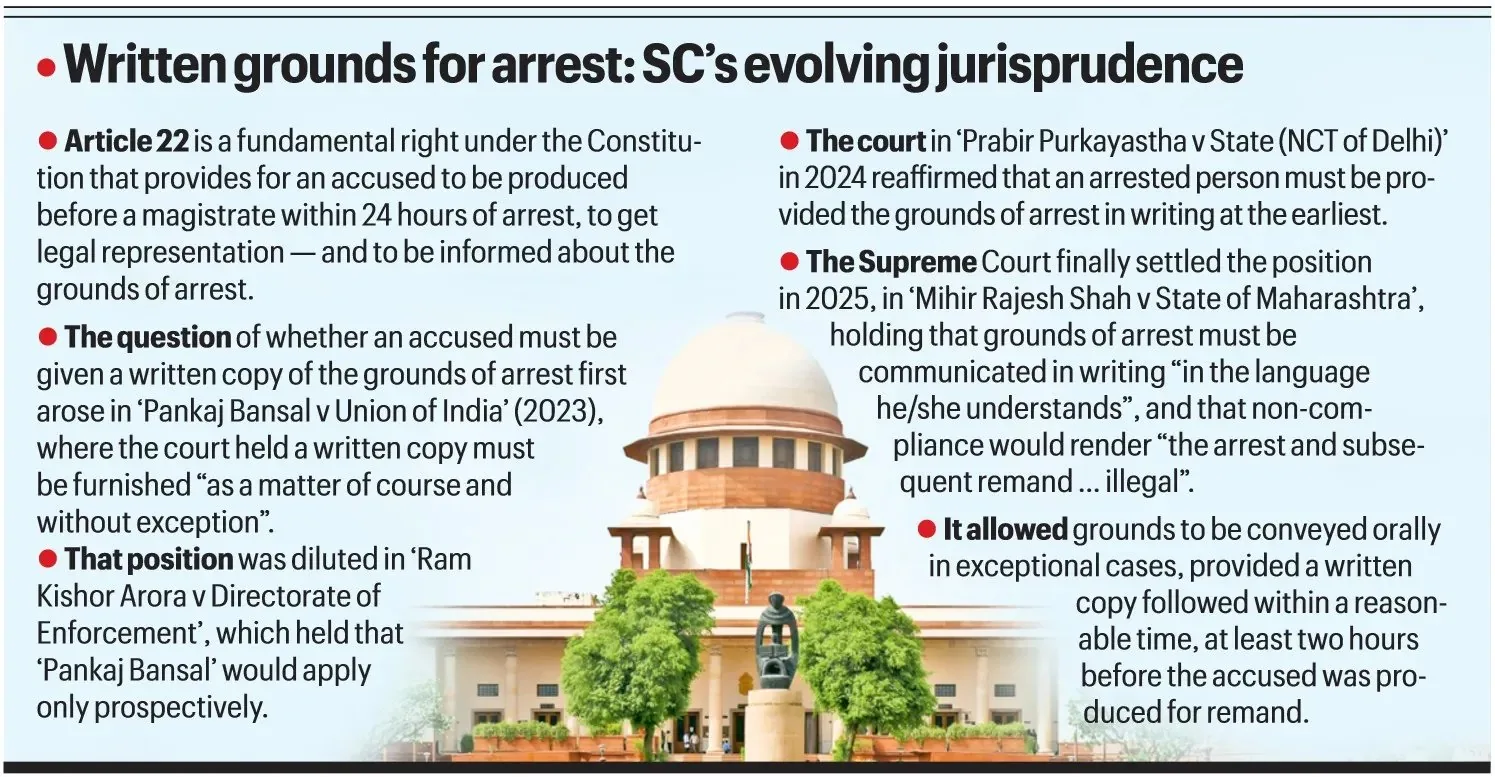
Source The Supreme Court, in Jaskaran Jeet Singh Deol v. State of Punjab (2026), has reinforced Article 22 safeguards, holding that failure to properly communicate the grounds of arrest can render the arrest and subsequent detention illegal and unconstitutional, while also prescribing safeguards against re-arrest.- Constitutional Mandate: Article 22(1) of the Indian Constitution guarantees that no arrested person shall be detained in custody without being informed, as soon as may be, of the grounds for such arrest, nor shall they be denied the right to consult a legal practitioner.
- Statutory Provisions: Under Bharatiya Nagarik Suraksha Sanhita (BNSS), 2023, police officers are duty-bound to communicate the full particulars of the offense to the arrested person.
- Release from Illegal Detention, Not Bail: The Court clarified that releasing an accused due to a violation of Article 22(1) is not a grant of bail, but a release from “illegal and unconstitutional detention,” legally treating the initial arrest as null and void.
- Mandatory Written Grounds: Expanding on the Pankaj Bansal v. Union of India (2023) judgment (which mandated written grounds under the PMLA , 2002), the Mihir Rajesh Shah v. State of Maharashtra (2025) ruling established that written grounds of arrest must be provided across all statutes in a language the arrestee understands.
- Stringent Re-arrest Procedure:
- Investigating agencies cannot unilaterally re-arrest an individual released on these grounds. A fresh arrest requires explicit judicial approval from a Magistrate.
- Any application for re-arrest must be endorsed by a superior police officer, the investigation must be transferred to another officer, and a departmental enquiry must be initiated against the officer responsible for the initial constitutional breach.
- Compensation for Rights Violation: The Court held that High Courts can award compensation as a public law remedy for violations of Article 22(2) (which requires production of the accused before a Magistrate within 24 hours), leaving the accused free to pursue private civil remedies as well.
- Judicial Supervision over Police Powers: The judgment reinforces that Article 22 safeguards are sacrosanct constitutional principles, not mere procedural formalities, strengthening judicial oversight over the State’s power to curtail personal liberty under Article 21.
Visits & Conferences
Partners for Multilateralism Summit and V4+India
Source Why in News?- The External Affairs Minister of India co-chaired the inaugural Partners for Multilateralism, International Law, Peace & Prosperity (P4M) Summit and attended the historic first V4+India Foreign Ministers’ meeting on the sidelines of the 81st United Nations General Assembly in New York.
- During these diplomatic engagements, India pressed for comprehensive reforms in global institutions, deepened ties with Central Europe, and secured unanimous backing from the Visegrad Group (V4) for its permanent membership in the UN Security Council.
- Background & Formation: The P4M initiative was first outlined by the leaders of the European Union, Brazil, Kenya, and Canada. It was launched to defend international law, promote peace, and ensure inclusive prosperity.
- Co-Sponsors: The inaugural summit in September 2026 was co-sponsored by India, Australia, Barbados, Brazil, Canada, Kenya, and the European Union (EU).
- Objective: The grouping explicitly stated that it is not aiming to create another “exclusive bloc” or international bureaucracy. Instead, its purpose is to create a flexible, open framework for countries across political traditions to build coalitions for reforming multilateral institutions.
- India’s Stand on Multilateralism
- The 4F Crisis: India highlighted that the global fallout of conflicts on Fuel, Food, Fertiliser and Finance (4F) cannot be left unchecked, as it disproportionately affects the Global South.
- De-risking and Diversification: India highlighted the threat of chokepoint dominance and supply-chain disruptions, calling for de-risking and diversification of economic dependencies to build resilient global supply chains.
- Reformed Multilateralism:
- India noted that geopolitical fragmentation and intensifying competition are placing the global order under severe stress.
- India highlighted that the current UN system, particularly the UNSC, is unrepresentative and paralyzed by the veto power of a few nations. It called for more inclusive deliberations and transparent decision-making to strengthen confidence in the UN-led multilateral system.
- India reiterated its demand for a permanent seat at the UNSC, advocating for the expansion of both permanent and non-permanent categories to include nations from Africa, Latin America, and Asia.
- Frameworks for Emerging Threats: India called for international frameworks and guardrails to govern emerging technologies and capabilities, including Artificial Intelligence, space security and digital technologies.
- About:
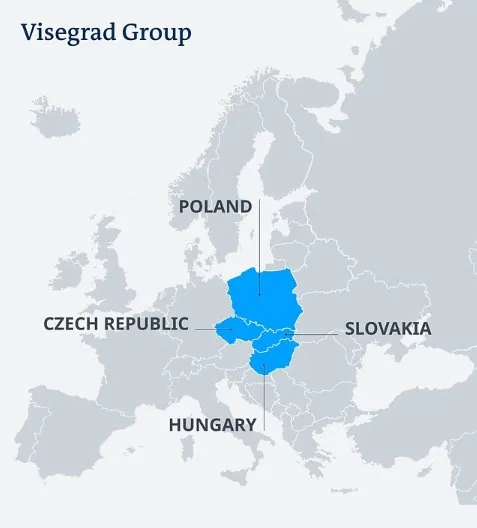
- V4 (Visegrad Group) is a cultural and political alliance of four Central European countries - Czech Republic, Hungary, Poland and Slovakia.
- It is named after the Hungarian town of Visegrad, where the leaders of the four countries met in 1991, following the collapse of the Soviet bloc, to strengthen regional cooperation.
- The group aims to advance cooperation in military, cultural, economic, and energy affairs, and to further their integration into the European Union (EU). All four members are part of the EU and NATO.
- Key Outcomes V4+India Meeting:
- Unanimous UNSC Endorsement:
- In a major diplomatic victory, the four V4 nations unanimously backed India’s inclusion as a permanent member of the UN Security Council.
- Slovakia stated that India, as a leading Global South country and an “upcoming superpower in the Indo-Pacific region, must be at the table”.
- Institutionalised Economic Ties: Recognizing India’s deepening relationship with the European Union, the leaders agreed to launch an Annual Business Forum and committed to holding V4+India Foreign Ministers’ meetings annually.
- Unanimous UNSC Endorsement:
 Significance of the V4 for India
- Gateway to Central & Eastern Europe (CEE):
- As global power dynamics shift due to the Ukraine conflict, the V4 acts as a strategic bridgehead.
- Engaging this bloc allows India to pivot its European diplomacy beyond traditional anchors (France, Germany) and anchor itself in the fast-growing, strategically crucial CEE region.
- Navigating the EU BTIA and Countering CBAM:
- The V4 functions as a formidable, unified voting bloc within the European Parliament.
- India can leverage this sub-regional influence to build consensus for the stalled India-EU Broad-based Trade and Investment Agreement (BTIA).
- Alternative Global Value Chains (GVCs):
- The Visegrad region is a manufacturing powerhouse, frequently dubbed the “Detroit of Europe” due to its massive automotive and emerging Electric Vehicle (EV) battery ecosystems (particularly in Hungary and Slovakia).
- Integrating with these clusters helps Indian manufacturers secure resilient supply chains and actively execute a “China Plus One” strategy.
- Niche Tech-Transfers and Defense Indigenization:
- Moving beyond standard buyer-seller defense relations, the V4 offers highly specialized technological synergies.
- India can target the Czech Republic’s legacy expertise in aviation, radar systems, and heavy engineering, alongside Poland’s advancements in mining technology and agri-tech, directly accelerating the Make in India and Atmanirbhar Bharat defense initiatives.
- Demographic Dividend and Mobility Pacts:
- As the industrialized V4 economies face aging populations and acute skilled labor shortages, they offer a lucrative market for India’s demographic dividend.
- This creates a strong geopolitical imperative to sign Migration and Mobility Partnership Agreements (MMPAs), facilitating the seamless entry of Indian STEM professionals, IT talent, and specialized workers into Central Europe.
- For global governance to remain credible and effective, multilateral institutions must evolve. India’s twin strategy at the UNGA (advocating Reformed Multilateralism at the global level while building regional coalitions such as V4+India) reflects a pragmatic approach to strengthening global cooperation. Going forward, India must translate these diplomatic initiatives into concrete outcomes in defence, clean energy and resilient supply chains.
World Circular Economy Forum 2026
Source Recently, the World Circular Economy Forum (WCEF) 2026 was held in Gandhinagar, Gujarat, under the theme “Circular Economy: Transition for People and Prosperity”. It was the first time WCEF was hosted in South Asia, focusing on practical and scalable circular economy solutions.- The Central Pollution Control Board (CPCB), the Ministry of Environment, Forest and Climate Change (MoEF&CC), the Government of Gujarat, the Gujarat Pollution Control Board (GPCB), and the Finnish Innovation Fund Sitra jointly organised WCEF 2026.
- About: WCEF is a global platform that brings together governments, businesses, researchers, innovators and civil society to discuss and promote solutions for a circular economy.
- Programme Structure: WCEF 2026 focused on four key tracks — people, business, governance and growth — through plenary sessions, parallel discussions, accelerator sessions and exhibitions showcasing practical circular economy solutions.
- Circular Economy:
- A circular economy is a sustainable model of production and consumption that focuses on reducing waste and extending the life cycle of products through practices such as reuse, repair, refurbishment, remanufacturing and recycling.
- It aims to keep materials and resources in circulation for as long as possible, creating additional value while reducing dependence on the traditional linear “take–make–consume–dispose” model.
- Circular Economy Approach: India promotes circular economy principles by integrating traditional practices of repair, reuse and resource conservation with modern strategies focused on sustainable lifestyles and efficient resource management.
- Policy Framework: India has strengthened circular economy efforts through regulatory reforms, improved waste management rules, Extended Producer Responsibility (EPR) frameworks and digital compliance systems to enhance recycling and resource recovery.
- EPR Implementation: Under various EPR frameworks, more than 83,000 producers and 4,802 recyclers were registered, with nearly 482.24 lakh metric tonnes of regulated waste processed, promoting a shift from waste disposal to resource recovery.
- Mission LiFE Linkage: The Forum emphasises Lifestyle for Environment (LiFE) as a foundation for promoting sustainable consumption patterns and making circular practices part of daily life.
- International Cooperation: India highlighted global cooperation through initiatives such as the Resource Efficiency and Circular Economy Industry Coalition (RECEIC) launched during India’s G20 Presidency.
9th India International Water Week 2026
Source The 9th India International Water Week (IIWW) 2026 concluded at Bharat Mandapam, New Delhi,with the theme “Climate-Resilient Water Management.”- India International Water Week (IIWW):
- Conceptualised in 2012 as India Water Week, the flagship initiative of the Ministry of Jal Shakti was rebranded as India International Water Week (IIWW) in 2026 to reflect its expanding global role.
- It serves as a multidisciplinary platform bringing together policymakers, researchers, industry, multilateral organisations and communities to promote sustainable water management and innovative solutions.
- Focus on Digital Public Infrastructure (DPI):
- The event underscored how DPI can revolutionize water governance by adopting a “Water as One Data” approach to overcome traditional data silos.
- Positioned “ Sujalam Bharat” as the foundational, interoperable digital architecture for rural drinking-water management. It aims to integrate foundational public platforms (like UPI and DigiLocker) with field-level IoT sensors and SCADA (Supervisory Control and Data Acquisition) networks.
- By leveraging systems like Jal Seva Analytics and the Rural Data Stack, the government aims to enable predictive asset maintenance, real-time leakage detection, and transparent tariff administration.
- At the grassroots level, Meri Panchayat can strengthen citizen participation through geo-tagged reporting, while AI-based platforms such as the Global Flood Hub can support predictive flood forecasting and routing.
- SURM Framework:
- The Sustainable Urban River Management (SURM) Framework and AI/ML-enabled Integrated Reservoir Sediment Management were launched.
- The SURM Framework expands the Urban River Management Plan (URMP) into a global model, providing cities with tools and metrics to control pollution, manage urban growth and protect river health.
- Meanwhile, the AI/ML-based reservoir initiative uses technology to predict and manage sediment accumulation, helping improve dam longevity, water storage and power generation.
- Major Launches:
- Irrigation Atlas: Developed by the Central Water Commission (CWC), it provides GIS-based mapping of river basins and water infrastructure for basin-level planning.
- Riverine Macroplastics Monitoring Protocol: Developed by National Mission for Clean Ganga, it standardises monitoring of macroplastic pollution in rivers and supports targeted pollution-control measures.
- 2nd India International WASH Conference:
- Held concurrently, this conference focused on Water, Sanitation, and Hygiene (WASH).
- It featured an India-Africa WASH Roundtable with diplomats from 22 African nations, focusing on capacity building, water-quality surveillance, and digital platforms.
- India’s Water Security Initiatives: The Union Minister of Jal Shakti highlighted major initiatives including Jal Jeevan Mission, Pradhan Mantri Krishi Sinchayee Yojana, Jal Sanchay Jan Bhagidari, Namami Gange, Atal Bhujal Yojana, National Aquifer Mapping and Management Programme (NAQUIM), Ken-Betwa Link Project and Dam Rehabilitation and Improvement Project (DRIP).
Wildlife
World Rhino Day 2026
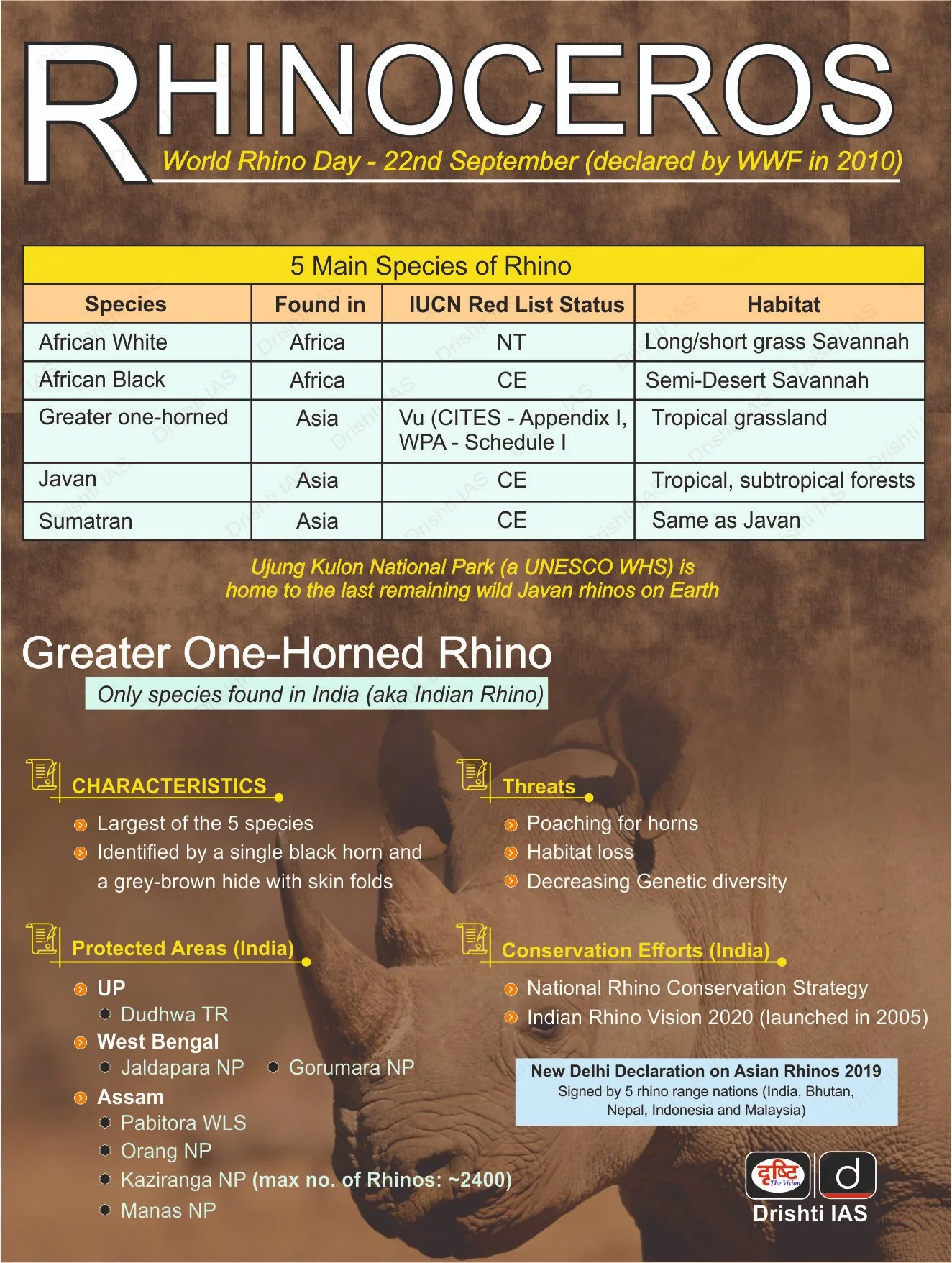
Source Why in News?- Recently, World Rhino Day was observed on 22nd September to raise awareness about the conservation of the world’s five remaining rhinoceros species. The 2026 theme, “Keep the Five Alive”, focuses on protecting rhino habitats, preventing poaching and curbing illegal rhino horn trade.
- On this occasion, the International Rhino Foundation (IRF) released its 2026 State of the Rhino Report, highlighting the status and conservation challenges of the five remaining rhino species.
- About:
- The International Rhino Foundation (IRF) State of the Rhino Report is an annual assessment of the status, population trends and conservation challenges of the world’s five remaining rhino species.
- It uses population estimates and wildlife crime data compiled by the IUCN Species Survival Commission’s African and Asian Rhino Specialist Groups and TRAFFIC.
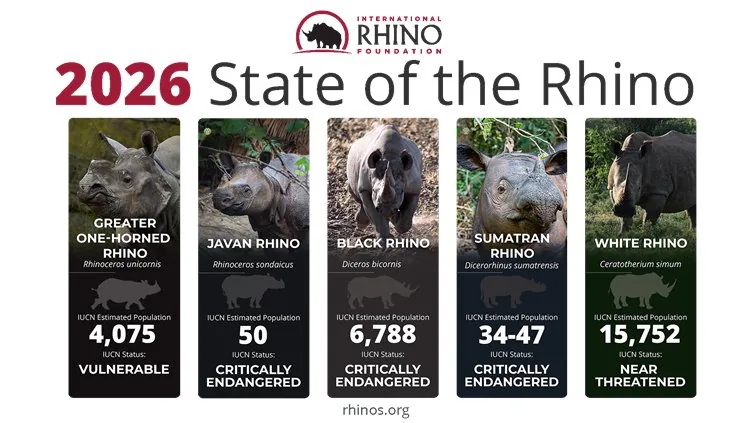
- Global Rhino Population: According to the latest estimates, the global rhino population stands at approximately 26,700 individuals. Conservation outcomes remain mixed, with some species showing recovery while others continue to face severe threats.
- Species-wise Trends:
- Greater One-Horned Rhino: Population increased to around 4,075, reflecting a major conservation success due to protection and recovery efforts.
- Black Rhino: Population increased from 6,195 in 2022 to 6,788 in 2024, showing continued recovery with sustained conservation action.
- White Rhino: Population declined from 17,464 in 2023 to 15,752 in 2024, mainly due to poaching pressure in South Africa.
- Javan Rhino: Remains critically threatened, with poaching between 2019 and 2023 causing a sharp decline; continued protection is essential to prevent extinction.
- Sumatran Rhino: Faces severe decline due to habitat loss and reproductive challenges, with captive breeding efforts providing hope for recovery.
- Major Conservation Threats: Rhino survival continues to be threatened by poaching, illegal horn trade, habitat degradation and fragmentation, particularly affecting Javan and Sumatran rhinos.
- Habitat Protection and Translocation: Rhino conservation increasingly focuses on restoring historical habitats through translocation programmes. However, habitat quality and availability remain major challenges, especially in Asian range countries.
- Breeding and Scientific Conservation: Programmes such as the Sumatran Rhino Sanctuary in Way Kambas National Park, Indonesia, support semi-wild breeding and provide hope for critically endangered Sumatran rhinos.
- Technology-Based Conservation: Monitoring tools such as camera traps, footprint tracking and ecological studies are being used to identify rhino populations, understand habitat requirements and improve protection strategies.
- Significance: The report highlights that while conservation efforts have helped recover species like the Greater One-Horned and Black Rhino, urgent global action is required to secure the future of critically endangered Javan and Sumatran rhinos.
 What are India’s Efforts towards Rhino Conservation?
- One- Horned Rhino: India is home to the Greater One-Horned Rhino, primarily found in Kaziranga National Park, Assam. Conservation success has been supported by habitat protection, anti-poaching measures and cooperation with Nepal.
- Zero Poaching Achievements: Assam (India) recorded zero known rhino poaching in 2025, only the second such achievement since the 1970s. Similarly, Nepal achieved zero rhino poaching in 2025, marking the 10th such achievement since 2011.
- Population Recovery in India: The Dudhwa Tiger Reserve (Uttar Pradesh) recorded an increase in its rhino population from 42 in 2022 to 53, reflecting the success of conservation efforts. Jaldapara and Gorumara National Parks (West Bengal) also reported a 50% increase in the greater one-horned rhino population over a decade.
- New Delhi Declaration on Asian Rhinos: India, Bhutan, Nepal, Indonesia and Malaysia have signed a declaration for the conservation and protection of the species.
- DNA Profiles of all Rhinos: The project will help in curbing poaching and gathering evidence in wildlife crimes involving rhinos
- National Rhino Conservation Strategy: It was launched in 2019 to conserve the greater one-horned rhinoceros.