Comrades Dispatch · 30 Sep 2026 (PDF)
In this edition
- New Additions to India’s UNESCO Tentative List Awards & Recognition
- Jharkhand’s Traditional Musical Instrument Mandar Gets GI Tag Awards & Recognition
- World Tourism Day 2026 Important Days
- 207th Birth Anniversary of Pandit Ishwar Chandra Vidyasagar Important Days
- 28th Session of the FAO Committee on Forestry (COFO 28) International Organisations
- 2nd ASEAN-India Maritime Exercise (AIME) 2026 Military Exercises
- India’s 1st Geological Museum Nation & States
- Rising Digital Frauds and the Challenge of Ensuring Cyber Justice Security
Awards & Recognition
New Additions to India’s UNESCO Tentative List
Source Why in News?- The Ministry of Culture and Tourism announced the inclusion of five new heritage properties and serial transnational proposals to India’s UNESCO Tentative List. With these new additions, India’s total count on the Tentative List has increased to 78.
-
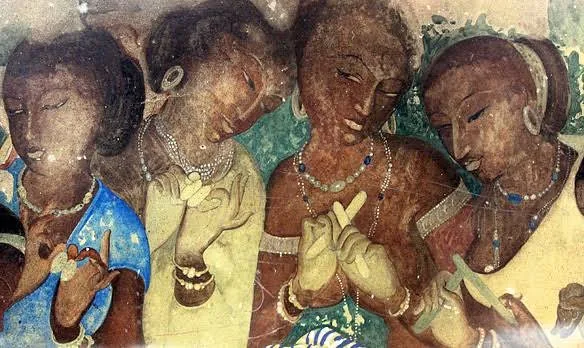
Bagh Cave Paintings (Madhya Pradesh)
- Geographical Uniqueness: Situated on the southern slopes of the Vindhyan range along the Baghni river, this site comprises nine rock-cut Buddhist caves carved into the only sandstone outcrop in an otherwise basaltic region.
- Chronology and Political Significance:
- Developed during the Gupta period (4th–6th century CE).
- Ancient inscriptions (358 to 487 AD) use terms like “Valkha” and “Vikha-adishthana” (powerbase of chiefdom), proving the site was a major political and administrative center, not merely an isolated retreat.
- Monastic Importance: Associated with the Buddhist monk Dataka, the complex functioned as a major Buddhist monastic retreat, featuring Chaityagrihas (assembly halls), Viharas (residential cells), pillared verandas, and Stupas.
- Mural Painting Techniques:
- The murals demonstrate technical continuity with the Ajanta Caves, while retaining a distinct regional artistic identity. They used earth and lime-based plasters and mineral pigments such as lapis lazuli, terre verte, red and yellow ochre, and carbon.
- Bagh’s murals form part of India’s wider mural-painting tradition alongside Ajanta, and can be compared with major mural traditions such as Sigiriya in Sri Lanka and Mogao in China.
-
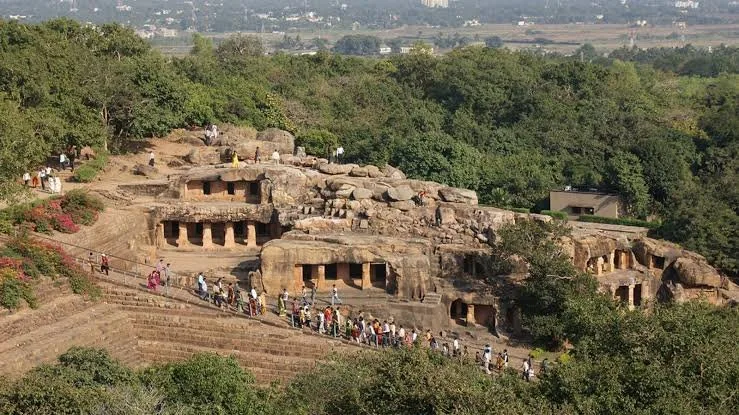
Udaigiri Caves (Madhya Pradesh)
- Chronology & Patronage: Excavated primarily between the late 4th and early 5th centuries CE, the site contains twenty rock-cut caves commissioned under the reigns of Gupta emperors Chandragupta II and Kumaragupta I.
- Iconographic Masterpieces: Renowned for classical Vaishnava iconography, most notably the colossal Varaha panel (symbolizing divine rescue of Prithvi/Bhudevi, cosmic restoration, and royal sovereignty) and the reclining Anantasayana Vishnu.
- Religious Co-existence: While predominantly dedicated to Vaishnavism and Shaivism, the ensemble also features Jain excavations, reflecting the religious pluralism of the Gupta period.
- Architectural Transition: Represents the pivotal bridge between early monolithic rock-cut traditions and later freestanding stone temples (featuring a carved sanctum, mandapa, and axial entrance planning).
- Artistic Synthesis: Reflects an artistic fusion of Mathura and Malwa regional styles with standard Gupta classical aesthetics, creating a template that influenced temple architecture across northern and central India.
-
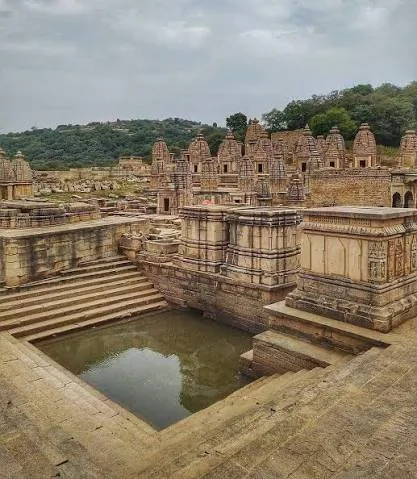
Group of Temples of the Chambal Valley (Madhya Pradesh)
- Historical & Dynastic Link:
- The Group of Temples of the Chambal Valley - comprising Bateshwar, Padavali, and Kakarmath in the Morena district of Madhya Pradesh.
- Built between the 8th and 11th centuries CE, these monuments illustrate the evolution of regional architecture under the patronage of the Gurjara-Pratihara and Kachchhapaghata dynasties.
- Architectural Style:
- The complexes represent an outstanding example of regional Nagara-style temple architecture.
- Key features include axial temple planning, prominent shikharas (spires), elaborate sandstone carvings, and advanced dry masonry construction (precisely interlocked stone blocks built entirely without mortar).
- Historical & Dynastic Link:
-
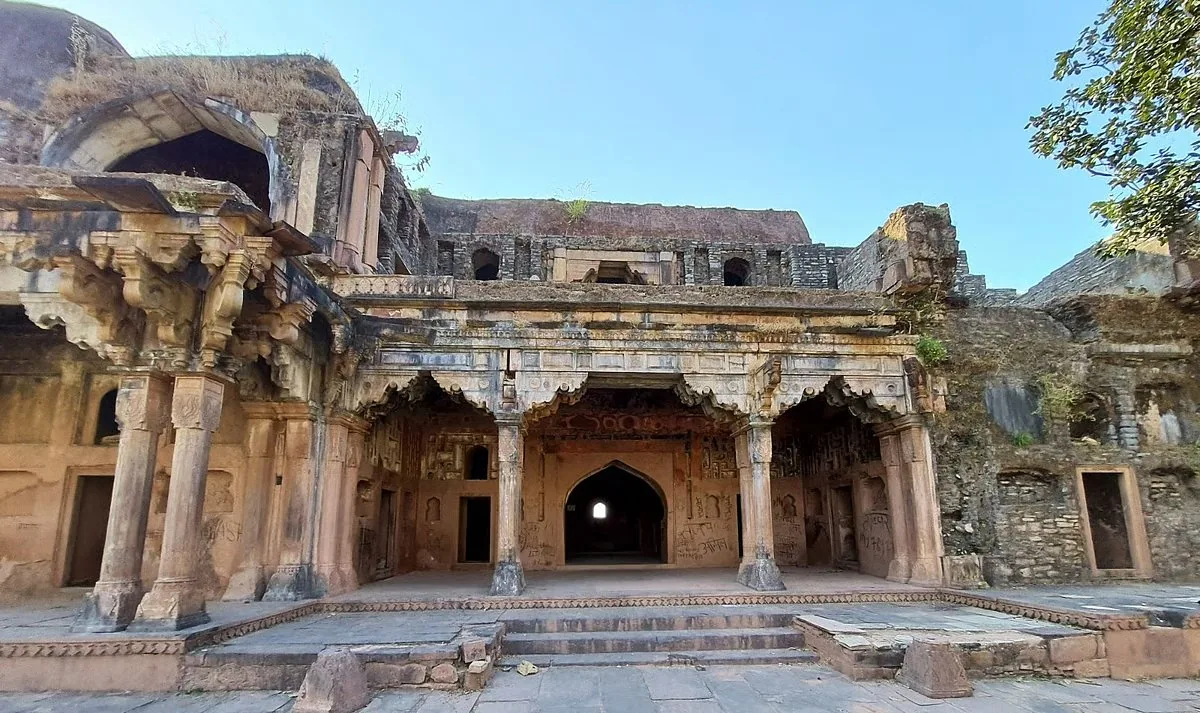
Ginnorgarh Fort (Madhya Pradesh)
- Location: A tribal hill-fort strategically situated inside the Ratapani Wildlife Sanctuary, utilizing dense forests, ravines, and steep slopes as natural defense mechanisms.
- Historical Significance: It served as the principal fortified capital of the Raj Gond rulers of the Garha Kingdom between the 15th and 18th centuries.
- Link to Rani Durgavati: Following the fall of the legendary Gond queen Rani Durgavati in 1564 CE, the region came under Mughal control but retained deep-rooted local Gond influence, creating a layered political history.
- Tripartite Spatial Organization:
- The fort reflects a highly sophisticated tribal social and military hierarchy, divided into three zones:
- Morcha: The outermost defensive and service zone.
- Amghera: The middle administrative and military residential zone.
- Inner Royal Core: The innermost zone housing palaces and elite residences.
- The fort reflects a highly sophisticated tribal social and military hierarchy, divided into three zones:
- Indigenous Building Techniques:
- It features ruins of the Rani Mahal—with rare Gond courtly wall paintings.
- Construction utilized locally sourced stone, lime, and surkhi, uniquely bound together with organic binders like natural jaggery and Bael pulp.
- Cultural Synthesis: The site represents a unique hybrid architecture where indigenous Gond planning absorbed Mughal/Indo-Islamic elements, such as engrailed arches and multi-faceted pillars.
-
Rangpur-Sivasagar Historical Ensemble (Assam)
- Historical Context:
- The Rangpur-Sivasagar Historical Ensemble represents the political, ceremonial, and architectural heart of the Tai Ahom kingdom in Assam.
- Led by Siu-ka-pha, the Tai Ahoms entered Assam from present-day Myanmar in 1228 CE and ruled the Brahmaputra Valley for 600 years.
- They successfully resisted Mughal expansion (notably the Battle of Saraighat in 1671) before declining due to Burmese invasions and British annexation via the Treaty of Yandaboo (1826).
- The ensemble centers on Rangpur (established as the Ahom capital in 1704) and Sivasagar, the later political and cultural hub.
- Architectural Evolution:
- Ahom architecture transitioned from wood and bamboo to permanent brick-and-stone construction.
- Ahom temples (Dols) feature an octagonal plinth (reflecting Ahom cosmology) topped by a distinctive hybrid shikhara (spire).
- Advanced Hydraulic Engineering:
- The Ahoms built massive reservoirs (Joysagar, Gaurisagar, and Sivasagar) using the Paik system (a form of corvée labor).
- They employed sophisticated indigenous technologies, including the Nagastambha (a wooden pillar driven into the ground to locate the water source) and surrounding moats (yamunas) to regulate water levels, ensure year-round supply, and prevent structural erosion.
- Key Monuments
- Rang Ghar: One of Asia’s oldest surviving amphitheatres, with an inverted Ahom boat-shaped roof, used for royal sports and Rongali Bihu celebrations.
- Talatal Ghar (Kareng Ghar): A royal palace and military citadel with four above-ground and three underground levels.
- Ghanashyam House: A Bengali atachala-style (eight-roofed) structure combining terracotta decoration with Islamic architectural elements.
- Unique Infrastructure: The ensemble includes Pohugarh (regarded as Asia’s first natural open-air zoo) and the Namdang Stone Bridge (built in 1703), constructed largely from a single stone monolith using traditional organic mortar, showcasing Ahom engineering resilience against floods and earthquakes.
- Historical Context:
-
Sites of Satyagraha (Serial Transnational Proposal)
- Transnational Scope: Proposed as a serial transnational property comprising nine components — two in South Africa, representing Gandhi’s 21-year stay (1893–1914), and seven in India, tracing the geographical spread and evolution of the Satyagraha movement.
- Inception and Exploratory Phase (South Africa)
- Pietermaritzburg Station: Site of Gandhi’s 1893 eviction from a first-class train, a pivotal experience in his fight against racial discrimination.
- Phoenix Settlement: Founded in 1904, Gandhi’s first ashram settlement and the base for Indian Opinion, promoting truth and Ahimsa (non-violence).
- Consolidation Phase (India)
- Champaran, Bihar: Site of Gandhi’s first Satyagraha in India (1917).
- Sabarmati Ashram, Gujarat: Established in 1917 and associated with the 1930 Dandi March (Salt Satyagraha).
- Mani Bhavan, Mumbai: Gandhi’s base during 1917–1934, associated with major movements including Non-Cooperation and Civil Disobedience.
- Institutionalization Phase (India)
- Harijan Sevak Sangh, Delhi: Founded in 1932 to promote social equality and combat untouchability.
- Sevagram Ashram, Wardha: Established in 1936, focusing on rural development, self-reliance and Swaraj.
- Aga Khan Palace, Pune: Served as Gandhi’s detention site during 1942–44; associated with Kasturba Gandhi and Mahadev Desai’s samadhis.
- Gandhi Smriti, Delhi: Gandhi’s last residence, where he was assassinated on 30th January 1948.
- About: The Tentative List is an inventory of cultural and natural heritage sites that a State Party considers to be of outstanding universal value and suitable for inscription on the World Heritage List.
- Significance: Inclusion on the Tentative List is a mandatory prerequisite. According to UNESCO guidelines, a site must remain on the Tentative List for at least one year before it can be officially nominated for World Heritage status.
- Current Status for India:
- With these additions, India now boasts 78 sites on the Tentative List.
- India currently has 43 inscribed World Heritage Sites (following recent additions like Santiniketan, the Sacred Ensembles of the Hoysalas, and Assam’s Moidams).
Jharkhand’s Traditional Musical Instrument Mandar Gets GI Tag
Source The traditional musical instrument Mandar of Jharkhand has received the Geographical Indication (GI) tag from the Geographical Indications Registry, Chennai, recognising its unique geographical, cultural and traditional identity.- About: Mandar is a traditional percussion instrument deeply associated with Jharkhand’s tribal culture, folk performances, community gatherings and celebrations.
- Distinctive Features: The GI application highlighted Mandar’s traditional craftsmanship, use of locally sourced red soil, indigenous manufacturing techniques and unique sound quality as key factors supporting its recognition.
- Unique Manufacturing Process: Unlike instruments such as dhol or dholak, Mandar has distinct features, including one side of the instrument being made entirely from soil, which contributes to its unique sound and design.
- Economic Significance: The GI status provides legal protection and a distinct identity to traditional Mandar artisans, helping expand market opportunities and promote Jharkhand’s cultural products nationally and internationally.
- Previous GI Recognition: Jharkhand has also received GI recognition for other traditional products, including Sohrai-Khovar painting (the state’s first GI-tagged product) and Koderma’s Kesariya Kalakand.

Important Days
World Tourism Day 2026
Source Why in News?- World Tourism Day 2026 was observed on 27th September 2026 under the theme “Digital Agenda and Artificial Intelligence to Redesign Tourism”, highlighting the role of technology in shaping the future of tourism.
- About: World Tourism Day is an initiative of the United Nations World Tourism Organisation (UNWTO). It was first observed in 1980 to highlight the contribution of tourism to socio-economic development, cultural exchange and the achievement of Sustainable Development Goals (SDGs).
- Background: 27 September was selected to commemorate the adoption of the UNWTO Statutes in 1970. The timing also coincides with the end of the peak tourism season in the Northern Hemisphere and the beginning of the tourism season in the Southern Hemisphere.
- India’s World Tourism Day Initiatives 2026:
- National Digital Tourism Stack: An open digital public infrastructure launched to improve the discoverability, accessibility and trustworthiness of tourism offerings.
- Dekho Apna Desh 2.0: An initiative aimed at promoting lesser-known destinations and ensuring balanced distribution of tourist footfall.
- Industry Partnerships: The Ministry of Tourism entered into MoUs with industry organisations to promote destination visibility, digital outreach, experiential tourism, sustainable tourism and community participation under the Incredible India framework.
- Economic Significance:
- Tourism connects people, places and cultures while creating livelihood opportunities and contributing to economic growth. In 2024, travel and tourism contributed US$10.9 trillion (10% of global GDP), supported 357 million jobs and generated US$1.9 trillion in international visitor spending.
- Tourism contributes 5.22% to India’s GDP, while employment in the sector increased from 6.94 crore in 2019-20 to 8.46 crore in 2023-24, highlighting its growing contribution to economic growth and livelihoods.
- Growth in Tourist Movement: India witnessed significant growth in tourist movement, with domestic and foreign tourist visits increasing substantially, accompanied by a rise in foreign exchange earnings from tourism.
- Role of Technology in Tourism: The tourism sector witnessed increasing digital transformation, with Artificial Intelligence (AI) emerging as a key tool to improve decision-making, enhance visitor experiences, strengthen skills and promote smarter, inclusive and sustainable tourism.
- Digital Transformation of Tourism
- Changing Travel Experience: Tourism is shifting from traditional travel planning to digital-first experiences, where technology enables travellers to discover, plan and personalise journeys. Artificial Intelligence (AI), digital platforms and data-driven services are emerging as key tools for improving convenience and visitor experiences.
- e-Visa Facility: India introduced the e-Visa facility in 2014 with Electronic Travel Authorisation for nationals of 43 countries. The facility has expanded to 172 countries and allows entry through 88 international ports comprising 37 airports, 38 seaports and 13 land ports.
- Incredible India Digital Platform:
- The revamped platform provides virtual experiences across cultural, heritage, adventure, gastronomical, wellness, art and craft, and rural tourism attractions.
- Its AI-enabled features provide personalised experiences through real-time weather updates, city exploration and travel services.
- It connects travellers with Online Travel Agents (OTAs) and tourism stakeholders for booking flights, hotels, transport services and ASI monument tickets.
- NIDHI+: National Integrated Database of Hospitality Industry (NIDHI+) provides a unified digital platform for registration, recognition and classification of tourism service providers. It enables online processing, integrated payments and transparent approvals, improving ease of doing business.
- Technology Partnerships and Tourism Innovation
- Google India Partnership: The Ministry of Tourism signed an MoU with Google India in June 2026 to strengthen tourism promotion through AI, digital technologies, data-driven insights and capacity building.
- Growth of Tourism Startups: As of 17th April 2023, the travel and tourism sector had 1,497 DPIIT-recognised startups across 262 districts. These startups generated employment for nearly 13,919 people, with 58% located in Tier II and Tier III cities.
- Tourist Support Services
- Multilingual Tourist Helpline:
- The Ministry of Tourism operates a 24×7 toll-free multilingual Tourist Helpline through 1800111363 and short code 1363.
- The service provides travel assistance in 12 international languages, including Arabic, French, German, Italian, Japanese, Korean, Chinese, Portuguese, Russian and Spanish.
- Multilingual Tourist Helpline:
- Spiritual and Pilgrimage Tourism: India’s spiritual tourism attracts visitors through destinations associated with Hinduism, Buddhism, Jainism and Sikhism. Places such as Ayodhya, Kashi, Bodh Gaya, Amritsar, Tirupati and Puri draw pilgrims from India and abroad. Initiatives like PRASHAD and Swadesh Darshan support infrastructure and visitor facilities at religious destinations.
- Buddhist Circuits and Cultural Linkages: India’s Buddhist tourism connects the country with Buddhist communities across Asia. Important sites such as Bodh Gaya, Sarnath and Kushinagar highlight India’s Buddhist heritage and historical links with the wider Buddhist world.
- Heritage and Cultural Tourism: India’s heritage tourism is built around forts, palaces, temples, archaeological sites, museums and historic cities. Cultural traditions such as classical arts, festivals, handicrafts and regional cuisines further enrich the visitor experience.
- Wellness, Yoga and Medical Tourism: India’s traditions of Yoga, Ayurveda and other traditional systems of medicine, along with modern healthcare facilities, strengthen its position as a destination for wellness, preventive care and medical tourism.
- Eco and Wildlife Tourism: India’s diverse ecosystems, including national parks, tiger reserves, wetlands, mangroves, forests and Himalayan landscapes, offer opportunities for wildlife safaris, trekking and nature-based tourism while supporting conservation and local livelihoods.
- Rural and Community-Based Tourism: Tourism is expanding beyond conventional destinations through homestays, village experiences, local cuisine, handicrafts and agriculture-based activities. These initiatives create livelihood opportunities for rural households, artisans and local enterprises.
- Coastal, Cruise and Experiential Tourism:
- India’s coastal and inland waterways are creating new tourism opportunities. Cruise passenger traffic increased from 1.08 lakh in 2014–15 to 4.62 lakh in 2025–26, registering 328% growth.
- International cruise terminals at Visakhapatnam, Mumbai and Chennai have been upgraded, while the East Coast Cruise Circuit has been expanded with Puducherry. Digital measures such as QR-based immigration clearance, digitised customs and e-Group Visit Visas are improving cruise experiences.
- Lighthouse Tourism: Lighthouses are being transformed from navigation facilities into tourism attractions under Section 23 of the Marine Aids to Navigation Act, 2021. Lighthouse museums at Chennai, Mahabalipuram, Alappuzha, Kannur, Muttom, Dwarka and Gopnath, along with tourism facilities at 75 lighthouses, promote maritime heritage and educational tourism.
- MICE Tourism: Meetings, Incentives, Conferences and Exhibitions (MICE) tourism is being promoted through the National Strategy and Roadmap for the MICE Industry. Infrastructure such as Bharat Mandapam, Yashobhoomi in Delhi and Jio World Centre in Mumbai supports business events. India aims to develop at least 10 cities as global MICE destinations.
- BRICS Tourism Cooperation: During India’s BRICS Chairship in 2026, the BRICS Tourism Ministers’ Meeting in Jaipur adopted the Jaipur Declaration, focusing on AI and tourism, sustainable tourism, tourism skilling, capacity building and seamless travel facilitation.
- G20 and Tourism Promotion: India’s G20 Presidency expanded tourism visibility by hosting more than 200 meetings across 60 cities. These events showcased India’s heritage, local crafts, cuisines and cultural experiences to a global audience while demonstrating its capacity to host international events across diverse destinations.
- Integrated Destination Development: India is moving towards creating integrated tourism ecosystems instead of developing isolated attractions.
- Improving Tourism Connectivity: Under the Regional Connectivity Scheme (RCS- UDAN), 687 routes connecting 95 airports have been operationalised to improve regional connectivity. The modified UDAN scheme (2026–27 to 2035–36) with an outlay of ₹28,840 crore aims to develop 100 airports and 200 modern helipads for better access to tourism destinations.
- Swadesh Darshan Scheme:
- Launched in 2014–15, the scheme focuses on developing tourism circuits based on identified themes. It has sanctioned 76 projects worth over ₹5,295.24 crore across 15 thematic circuits, with 75 projects physically completed.
- The circuits include Buddhist, Coastal, Desert, Eco, Himalayan, North East, Ramayana, Rural, Spiritual and Tribal circuits.
- Swadesh Darshan 2.0: The upgraded version adopts a destination-centric approach with emphasis on sustainable and experience-based tourism. Under the scheme, 53 projects worth ₹2,207.08 crore have been sanctioned for improving tourism infrastructure and visitor experiences.
- Challenge Based Destination Development (CBDD): A sub-scheme under Swadesh Darshan 2.0, CBDD promotes holistic development of tourism destinations through improved visitor facilities and sustainable tourism practices. So far, 37 projects worth ₹687.99 crore have been sanctioned under spiritual and eco-tourism categories.
- PRASHAD Scheme:
- The Pilgrimage Rejuvenation and Spiritual, Heritage Augmentation Drive (PRASHAD), launched in 2014–15, supports integrated development of pilgrimage and heritage destinations.
- Under the scheme, 54 projects worth ₹1,726.18 crore have been sanctioned for facilities such as tourist centres, parking facilities, ghats, waste management systems, solar panels and CCTV installations.
- Special Assistance to States for Capital Investment (SASCI):
- The scheme supports the development of iconic tourist destinations with improved infrastructure and visitor facilities.
- Under SASCI, 40 projects across 23 States have been approved, with ₹3,295.76 crore allocated in FY 2024–25 through 100% Central funding. Further, ₹250 crore each has been sanctioned and released to Nagaland, Mizoram and Himachal Pradesh for tourism projects in FY 2025–26.
- Capacity Building for Tourism Workforce: Under the Capacity Building for Service Providers (CBSP) scheme, the Ministry of Tourism provides training for skilling, upskilling and reskilling of tourism professionals, including local communities, tribal populations and youth from disadvantaged backgrounds.
- Paryatan Mitra/Paryatan Didi Initiative: Launched in 2024, the initiative trains local service providers in hospitality, cleanliness, safety and sustainability. Around 4,382 candidates have been trained, including guides, homestay owners, transport workers, hotel staff, vendors and students, with a focus on women and marginalised communities.
- Strengthening Tourism Skills: The Ministry is revising CBSP curricula according to industry requirements and expanding partnerships with 21 Central Institutes of Hotel Management and 8 leading hospitality groups to develop a skilled workforce for India’s growing tourism sector.
- India’s tourism sector is evolving from traditional travel experiences towards a technology-driven and sustainable ecosystem. The integration of Digital platforms, Artificial Intelligence, Infrastructure development, Skill enhancement and Community participation can transform tourism into a major driver of inclusive economic growth. World Tourism Day 2026 highlights the importance of combining technology with India’s cultural diversity to build a connected, sustainable and globally competitive tourism sector.
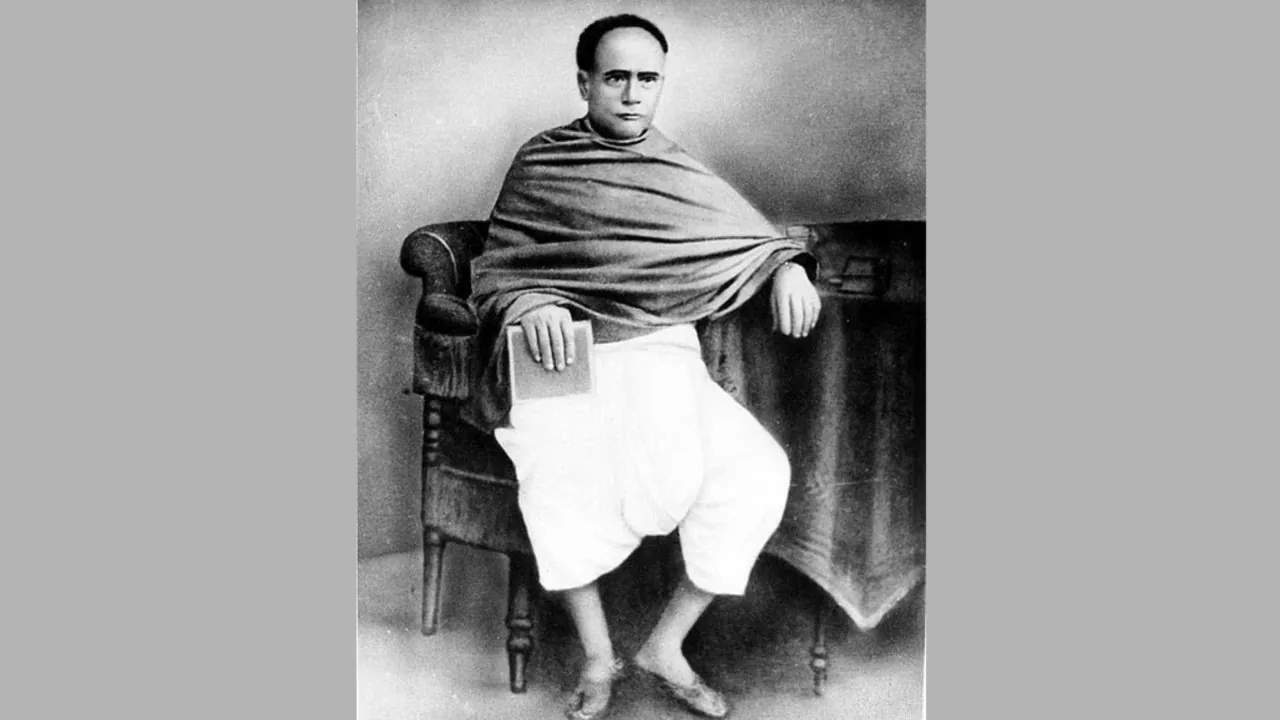
207th Birth Anniversary of Pandit Ishwar Chandra Vidyasagar
Source On 26th September 2026, India observed the 207th birth anniversary of Ishwar Chandra Vidyasagar, the eminent social reformer, philosopher, educationist, and polymath of the Bengal Renaissance, whose pioneering efforts in vernacular education, women’s rights, and social reform helped transform 19th-century Indian society.- Early Life & Scholarship: Born in 1820 in West Bengal, he enrolled at Sanskrit College in 1829. He mastered Vedanta, Hindu law, and Western philosophy, earning the title “Vidyasagar” (Sea of Knowledge) at age 21.
- Institutional Leadership: He began his career as head pandit at Fort William College and later became the Principal of Sanskrit College in 1851, using these platforms to reimagine Indian education.
- Educational Modernization:
- Rejecting elitist exclusivity, he championed mass education in the vernacular, established numerous schools for girls, and authored Barnaparichay (Introduction to Letters) to standardize the Bengali alphabet.
- He reconstructed and simplified the Bengali alphabet into 12 vowels and 40 consonants, removing unnecessary Sanskrit phonemes.
- His primer ‘Barnaparichay’ remains a foundational text for learning the Bengali alphabet.
- Promotion of Women’s Education: He was a pioneer of female education in India. Collaborating with Drinkwater Bethune (an English educator), he helped establish the Hindu Female School in 1849 (now Bethune College).
- Opposition to child marriage: Through writings in Sarva Subhakari (1850), he criticised child marriage on social, ethical, and health grounds.
- Widow Remarriage Act (1856): Drawing upon Smriti texts to prove scriptures did not prohibit the practice, his 1855 pamphlets and formal petition culminated in the British government passing the Hindu Widows’ Remarriage Act (Act XV) in 1856 (drafted during the tenure of Lord Dalhousie and enacted by Lord Canning).
- Crusade Against Polygamy: Combining rationalism with scriptural analysis, he led massive petition campaigns in 1857 and 1866 (gathering tens of thousands of signatures) to suppress Kulin Brahmin polygamy (marital and social system in Bengal where high-ranking Brahmin men married numerous wives).
- Pan-India Influence:
- Vidyasagar carried forward the reformist legacy of Raja Ram Mohan Roy by combining rational thought with scriptural interpretation.
- His writings and legislative victories inspired future reformers across India, including Jyotirao Phule and Vishnu Shastri Pandit, making him a foundational figure in India’s intellectual and moral history.
International Organisations
28th Session of the FAO Committee on Forestry (COFO 28)
Source India highlighted its significant achievements in sustainable forest management, ecological restoration, and climate action at the 28th Session of the Food and Agriculture Organization’s (FAO) Committee on Forestry (COFO 28) in Rome, Italy.- Committee on Forestry (COFO):
- COFO is the highest-level global intergovernmental statutory body on forestry within the FAO structure.
- It brings together 128 FAO Members and meets biennially at the FAO headquarters in Rome to identify emerging policy and technical issues, seek solutions, and advise the FAO and its member nations on effective sustainable forest management.
- It plays a crucial role in shaping agendas for the UN Decade on Ecosystem Restoration (2021–2030) and the proposed UN Decade for Afforestation and Reforestation (2027-2036).
- The COFO 28 session focused on the theme of “Forests for food, resilience and prosperity”, allowing India to present its progress on global climate commitments, biodiversity finance, and landscape restoration.
- India highlighted Sustainable Forest Management (SFM) as an integrated framework for landscape-level restoration while considering national circumstances and local community needs.
- Forest and Tree Cover: India’s total forest and tree cover has reached 82.74 million hectares, encompassing 25.17% of the nation’s geographical landmass.
- Global Rankings: According to the FAO’s Global Forest Resources Assessment (FRA) 2025, India ranks 9th globally in total forest area and 3rd globally in net annual forest area gain.
- The Bonn Challenge:
- India committed to restoring 26 million hectares of degraded and deforested land by 2030.
- Currently, 21.76 million hectares have already been brought under active restoration.
- Nationally Determined Contributions (NDCs):
- India successfully created an additional carbon sink of 2.29 billion tonnes of CO2 equivalent by 2021. India ranked 5th among the top global carbon sinks, with its forests removing 150 Mt of CO₂ per year during 2021-2025.
- India’s Nationally Determined Contribution (2031-2035) upgraded its target to achieve a cumulative sink of 3.5 to 4.0 billion tonnes by 2035 (relative to 2005 levels).
- Targeted Landscape Initiatives:
- Aravalli Green Wall Project: Identified approximately 6.45 million hectares of degraded arid land across Gujarat, Rajasthan, Haryana, and Delhi for eco-restoration to combat eastern desertification.
- MISHTI: The Mangrove Initiative for Shoreline Habitats & Tangible Incomes is actively restoring coastal ecosystems to bolster climate resilience and local livelihoods.
- Wetland Conservation: India successfully expanded its domestic network of internationally recognized Ramsar Sites to 101 designated wetlands.
- Mass Mobilization: The Ek Ped Maa Ke Naam (Plant4Mother) campaign was highlighted as a whole-of-society initiative, mobilizing nationwide participation to plant over 3.5 billion saplings.
Military Exercises
2nd ASEAN-India Maritime Exercise (AIME) 2026
Source The second ASEAN–India Maritime Exercise (AIME 2026) is being conducted in the Philippines to enhance maritime cooperation between India and ASEAN member states.- Participating Naval Ships: Indian Naval Ships Sahyadri and Kulish are participating along with BRP Jose Rizal, BRP Tarlac and RSS Justice from ASEAN member states.
- Organisers: The exercise is co-hosted by the Indian Navy and the Philippine Navy. The first ASEAN–India Maritime Exercise was conducted in Singapore in 2023.
- Focus Areas: The exercise includes expert-level exchanges on Humanitarian Assistance and Disaster Relief (HADR), Maritime Domain Awareness (MDA), Logistics cooperation and Women, Peace and Security.
- Maritime Drills: Sea exercises are being conducted off the coast of Zambales province, Philippines, involving Boarding operations, Helicopter cross-deck landings and Medical evacuation exercises.
- Significance:
- The exercise enhances maritime security cooperation, operational coordination and trust-building between India and ASEAN countries.
- It supports India’s vision of MAHASAGAR (Mutual and Holistic Advancement for Security and Growth Across Regions) and reinforces ASEAN centrality and the ASEAN Outlook on the Indo-Pacific.
Nation & States
India’s 1st Geological Museum
Source India’s first world-class geological museum is set to be developed at the Bhedaghat–Lamhetaghat area in Jabalpur, Madhya Pradesh, to showcase the geological history of the Narmada Valley.- About: The project will include a geological museum and interpretation centre with six galleries and more than 130 exhibits. It will explain the origin of the Earth and the geological evolution of the Narmada Valley through interactive displays.
- Major Attractions:
- The museum will feature 3D models, interactive touch tables, digital panels and an immersive theatre.
- Other attractions include Titanosaur Square, dinosaur park, fossil garden, geological maze, rock garden, tree-top walkway, glass floor, nature trails and viewing decks.
- Project Details: The Central Government has approved an ₹87 crore project under the Swadesh Darshan 2.0 scheme. The project will be implemented by the Madhya Pradesh Tourism Board and is targeted for completion by February 2028.
- Significance: The museum will promote geological education, scientific awareness and eco-tourism while showcasing the geological history of the Narmada Valley.
Security
Rising Digital Frauds and the Challenge of Ensuring Cyber Justice
Source Why in News?- According to data from the National Crime Records Bureau (NCRB), cybercrime cases in India rose sharply by 17.9% from 2023 - 2024, moving against the broader national trend where overall registered crime fell by 6%.
- Concurrently, the Status of Policing in India Report (SPIR) 2026 highlights citizens’ vulnerability to cyber fraud and systemic challenges in securing justice for cyber fraud cases.
- Unabated Surge in Digital Offences:
- According to the latest NCRB 2024 report, India recorded over 1.01 lakh cybercrime cases.
- The crime rate for digital offenses has escalated to 7.3 per lakh population. This highlights a definitive national transition from localized, physical offenses to sophisticated, borderless digital crimes.
- Low Conviction Rate: Despite the rising number of cybercrime cases, the cybercrime conviction rate remains below 18%, as per NCRB 2022, due to challenges in digital evidence collection, procedural lapses, and the transnational nature of cybercrimes.
- Nature and Modus Operandi of Cyber Frauds
- Social Engineering Over Technical Hacking:
- The contemporary nature of cyber fraud relies less on brute-force technical hacking and more on psychological manipulation (social engineering).
- Fraudsters exploit institutional credibility (impersonating police or bank officials), aspirational greed (high-return investment scams), and emotional distress.
- The “Tax on Connectivity”:
- Financial fraud is no longer just a penalty for carelessness; it has evolved into a byproduct of deep digital integration.
- Official surveys indicate that cybercriminals systematically track digital footprints to target individuals with resources, making highly educated professionals and affluent demographics highly vulnerable to financial extortion.
- Emergence of Next-Generation Scams:
- The NCRB and Indian Cyber Crime Coordination Centre (I4C) data point to a rise in complex typologies, including AI-enabled frauds, organized cyber syndicates, and “Digital Arrest” scams.
- Fraudsters are increasingly deploying AI-driven deepfakes, spoofing, and phishing campaigns to impersonate trusted sources and extract sensitive data.
- Criminals utilize Voice over Internet Protocol (VoIP) to mask locations and route stolen funds rapidly through layered “mule accounts,” making asset recovery exceptionally difficult for law enforcement.
- Payment System Vulnerabilities: The Unified Payments Interface (UPI) is frequently targeted using compromised mobile numbers.
- Primary Motive:
- The overwhelming majority of cybercrimes registered under the Information Technology Act, 2000 are driven by the motive of financial gain through forgery, cheating, and fraud (FCF), followed by extortion and cyberstalking.
- Over 80% of cybercrime victims suffered financial losses, with 23% losing upwards of Rs 20,000.
- Social Engineering Over Technical Hacking:
- Information Technology Act, 2000:
- The foundational statute penalizing identity theft, impersonation, and the dissemination of harmful material.
- It empowers authorities to block malicious applications and designates the protection of critical infrastructure (Section 70A).
- IT (Intermediary Guidelines and Digital Media Ethics Code) Rules, 2021: Ensures accountability for social media intermediaries and digital marketplaces, mandating the swift removal of unlawful content.
- Digital Personal Data Protection (DPDP) Act, 2023: Places strict security obligations on data fiduciaries, mandating lawful data handling and explicit user consent to prevent unauthorized access.
- Promotion and Regulation of Online Gaming Act, 2025: Promotes e-sports while imposing a complete ban on online money gaming, its promotion, and related financial transactions.
- Indian Computer Emergency Response Team (CERT-In): Monitors cyber threats, identifies vulnerabilities, and coordinates responses to cybersecurity incidents.
- Indian Cybercrime Coordination Centre (I4C): Facilitates real-time information sharing and coordination among law-enforcement agencies to combat cybercrime.
- National Critical Information Infrastructure Protection Centre (NCIIPC): Protects Critical Information Infrastructure (CII) in sectors such as banking, telecom, power, and transportation.
 What are the Challenges in Securing Justice for Cybercrime?
- Procedural Attrition and Under-Reporting:
- The formal justice system suffers from a massive attrition rate before investigations even begin.
- A large plurality of cybercrime victims never approach law enforcement, and many abandon their cases due to complex procedural hurdles and a lack of faith in the police machinery.
- Institutionalised Rent-Seeking and Inequitable Justice: Procedural delays often push victims, particularly economically disadvantaged, rural and female victims, to seek police intervention through bribes or personal networks, allowing informal influence to override legal procedures and creating unequal access to financial recovery and justice.
- The “Golden Hour” Failure:
- Cyber syndicates rapidly siphon stolen capital through complex layers of synthetic or “mule” bank accounts.
- The lack of automated, legally binding, and real-time coordination between local police and commercial banks means that illicit funds are often withdrawn before bureaucratic freeze orders are executed.
- Jurisdictional Fragmentation vs. Borderless Crimes:
- Indian law enforcement remains structurally bound to rigid territorial jurisdictions.
- In contrast, cybercriminals operate trans-nationally using Voice over Internet Protocol (VoIP) and virtual private networks (VPNs), making inter-state police coordination exceptionally slow and cumbersome.
- Forensic Capacity Deficit at the Grassroots: While apex bodies like the Indian Cyber Crime Coordination Centre (I4C) possess advanced cyber capabilities, standard police stations lack the specialized digital forensics, blockchain tracking skills, and electronic evidence preservation mechanisms required to secure convictions under the Bharatiya Sakshya Adhiniyam (BSA), 2023.
- Enforceable FIR Registration: The registration of First Information Reports (FIRs) for cyber fraud must be made mandatory and time-bound to eliminate arbitrary police discretion.
- Proactive Telecom Intelligence: Expand the Financial Fraud Risk Indicator (FRI) to flag high-risk numbers and block suspicious transactions before fraud occurs.
- Standard Operating Procedures (SOPs) for Asset Freezing:
- Create institutionalized, real-time coordination protocols between the I4C, the Reserve Bank of India (RBI), commercial banks, and telecom providers to freeze stolen funds within the “golden hour” without manual police intervention.
- Expanding the capacity of the 1930 Cybercrime Helpline and the National Cyber Crime Reporting Portal to ensure seamless, automated transaction blocking.
- Targeted Digital Literacy:
- Awareness campaigns should pivot from generic warnings to targeted education on specific psychological manipulations used by fraudsters.
- Scale the Sahyog Portal for rapid removal of phishing links, malicious apps and fraudulent content.
- Anti-Corruption Safeguards within Cyber Cells: Implement internal vigilance audits and automated tracking of recovered funds to remove transactional corruption and protect vulnerable citizens seeking administrative redress.
- India’s cybercrime challenge requires a shift from reactive investigation to proactive, technology-driven prevention and justice. A victim-centric and corruption-free cyber justice system can ensure that digitalisation strengthens trust rather than creating new vulnerabilities.